mermaidcamp
Keeping current in wellness, in and out of the water
You can scroll the shelf using ← and → keys
You can scroll the shelf using ← and → keys
You did not have to be psychic to know that Ho Chi Mihn would win. The United States had invaded a country in southeast Asia with no previous relationship with the people of that area. They had instituted a draft to conscript the youth of America to fight in a war of political insanity. Many died, many more became embittered and seriously addicted to opiates while fighting in a way made up by old white men to conquer Asia. Lyndon Johnson stood in the spotlight of this ill-conceived battle to create American supremacy throughout the world. He was a complete tool of what America stood for in the world…which all the youth of America quickly named bullshit. I was 17 years old, knew friends who joined the Marines, and found the entire idea despicable. I could not support this kind of slaughter of youth for the ego of old men in power. I did not want to sacrifice my high school friends to a stupid, ill-timed, ill-executed war for no reason.
I attended the University of Texas, not far from Johnson City, in 1968. Some high school friends had willingly joined the military, but more had done what they could to avoid being sent to Asia to kill people. I had no sympathy for those who thought our job was to police the world and make everyone pretend they are aligned with capitalism. I had already seen that capitalism and communism at that time were virtually the same thing…state capitalism. I wore a patch on the ass of my jeans that said war is not healthy for children and other living things, and I meant what I said. My young ass was not alone in expressing this sentiment. I have been to the war memorial in Washington,DC…I have been on Rolling Thunder weekend, during which ‘Nam Vets and others ride their bikes around our nation’s capitol to make a statement about defending this stuff. We do not have to believe in the motives or the politics of those who sent our young people into war to risk for no reason in order to honor the sacrifice made. Some are just loyal, even if the leadership is unethical and delusional. They die in large numbers throughout history to defend the popular ideas of a small privileged class. It is time for the United States of America to give up the role of moral police and defender of status quo in the entire word. It is time to honor those who serve by not sending them into useless and egotistical battles that defend nothing in the end. It is time to defend our ethics, out morals and our compassion, and in so doing defend the lives of those we put in danger. I marched on Washington and ae a little teargas but when the soldiers came back from Viet Nam, it was obvious they had suffered so much more. The big drug fling, including opiates, LSD, hashish, and more made the ‘Nam Vets the instant commandos of the drug scene upon return. They knew much more than civilians could know about drugs. These people had gone on killing sprees on LSD. This stuff does not just stop after the battle. PTSD and all the guilty feelings of being at war in somebody else’s country started in Viet Nam. The decline of the world’s respect for the United States also initiated with the Viet Nam War. In Viet Nam that war is known as the American War.



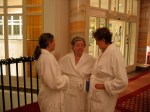





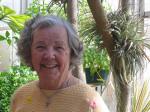



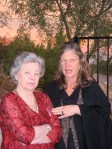
Ruby Lea Taylor was an orphan from Humble Texas who married my dad and escaped poverty. She never intended to look back or return to her roots. She visited her siblings, but retained distance both geographically and philosophically. She was ready to go anywhere at a moment’s notice, and adventured into anything my father proposed. They were world travelers and jet setters before there were jets. I always thought my parents were heavily repressive when I was at home, but in retrospect I know they came a long way, baby. They even tuned in turned on (with alcohol) and dropped out in the 60’s to travel around the Caribbean. They surprised me when they moved to Texas so my father could take up computer science before there was really any computer science. Ruby was a pioneer environmentalist while my father was busy perfecting fracking. She had a very green thumb, and followed first lady Ladybird into the Clean Up America campaign. Her love of gardens, botany, and flowers lasted a lifetime. When she was near the end of her life she adored spending time in her garden, and all other gardens. She died at home in Tucson, right around the corner from where I live now. The college aged girls who live in her house now told me they have a ghost, and that she is friendly. They say she likes to dance and party. That would definitely be my mother. I am pleased she has those college girls to keep her entertained. She doesn’t visit us because we are probably not lively enough for her.
I saw a doctor and a veteran on the national news who said the way to solve the VA problem is to dissolve it. I agree completely. I volunteered at the VA because I still believed I could raise the standard of care when I did it. Not only was it impossible to raise the standard of care for just one person to whom I was assigned, the entire institution is unethical and scary as hell. The electronic medical records system is abused constantly, as are the patients. As a taxpayer I was shocked and upset at the use of funds to do nothing for the patients. Money is used liberally, but the outcomes and the patients are the least of the agency’s concern. As featured in the recent Phoenix scandal, the employees at the VA are shooting for big bonuses rather than improving the lives of the Vets. They are so far off course that it can’t be remedied. There is a culture of extreme abuse and fraud. Those Veterans can just go to doctors of their choice and we can run it like the congressional health care system. We don’t need to institutionalize abuse any more than we already have.
I was assigned to visit patients at home. My fist dude lived at home with his wife. After he died I was assigned to my second patient who lived in a care home. Both of them mentioned problems with health care and thought I could help them. I thought so too, until I tried. The premise was that we would report unsafe of undesirable conditions, which the VA could fix. The problem was that no matter how much money was spent they never addressed the issues. They simply did something, with no consideration of the needs of the patient. It was a waste-o-rama. When I met my second patient I could hear the feedback from his hearing aid across the room. He asked if I might be able to help him get hearing aids that did not screech. That seemed simple enough, but after more than a year and several long hard visits to the hospital his hearing aid was still loud enough for me to hear it from across the room. He was suicidal and talked frequently about it, but after a few attempts at helping him with other VA problems I knew it was a mistake to tell them anything that would make them torture him any more. I finally threw in the VA towel when they directed me to leave him as I found him one day, unconscious and unresponsive in his care home. I had called a nurse, who looked at him for about a minute and left. I was instructed by the VA not to call 911 or take any action to save his life. I had to quit my official position and visited him myself without doing any reports to the VA. His health was in severe decline and he was not able to wake up most of the time, so I eventually stopped visiting him because it was emotionally draining and frustrating. Nothing he or I asked the VA to do for him was done, but plenty of people received salaries milling around pretending to care for him. I called the local senior care advocate to help him get out of some of his problems, which did work. The VA told me that was a conflict of interest, and I was never to seek real help for him from other institutions. I was working against my own beliefs by representing the VA, so I had to end that.
Being left on a waiting list for care is unacceptable, but sadly, so is the care given when they finally manage to give it. I have heard of those who have had good experiences with VA health care, but nothing recent. There is no reason to have a separate, corrupt and highly unregulated system that does not serve the patents well. If we can reform health care, we can eliminate the waste and abuse that the VA contains. Those who have risked everything deserve the best. Taxpayers deserve to know we are giving them the best care available. This situation is highly symbolic to me of the disrespect government frequently displays for the citizens who pay for it. I am a pacifist, so my concern for the soldiers is moral and ethical. I did not want to send them off to war, but since it has happened I sincerely believe we need to honor that sacrifice they made.
The liberator serves others in political and sometimes military capacities. Freeing others from injustice and adverse conditions is the role played by the archetype. The words terrorist and liberty have been used and diluted to the point that we are weary as well as wary of news of political freedom. Shadow liberation is often substitution of one violent group for another equally intolerant one. The kidnapping of the school girls in Nigeria has galvanized world opinion on the need for urgent action to find and free them. Jesus, Muhammad, and Buddha were liberators in their places and times in history. The goddess Tara is known as the swift liberator because her nature is to answer very quickly when she is called.
Mantra is a way to meditate and call on Tara to teach us to be free of the 8 fears. Green Tara is pictured with her right foot in front of her because she is symbolically ready to hurry to those who call her. If sound meditation is new to you, the power of it may come as a surprise. We need the swift and sure guidance of Tara to reach the girls and bring them to safety. The mantra above is easy to learn, but even if you simply listen with the idea of freeing the kidnappers as well as the girls from the situation, it is positive. Please join us, gentle reader, to #BringBackOurGirls. Let us create a worldwide mantra of liberation that will reach into the African jungle to bring them home.
Do you have enough stuff? What kind of stuff do you lack? Do you have goals that do not involve material stuff? My parents were heavily into possessions, and at the end of their lives it seemed that those things they loved so much robbed them of any kind of peace. They struggled to keep objects and wealth long after they even knew what any of the objects were. They wanted to keep an image of themselves in society, and other transitory status rather than seeking truth. There was nothing I could do to help them with that.
I am doing a meditative practice about abundance now. I have special feelings about one of the biblical phrases used in this practice. “All things that the Father hath are mine.” John 16:15. This is talking about the Father with a big F, not my dad. If I have all that my dad had I would be filled with greed, alcoholism, and relative anger at all times. If I concentrate on the Father, as in spirit, I can feel the difference. We inherit objects as well as traits from our parents. The kingdom of heaven is ours if we tune into it. How about you, gentle reader? Do you stand to inherit the earth?
Sports fans and all Americans need to be ashamed that this much institutionalized racism can exist in professional sports. When I was a child I was a Pittsburgh Pirates fan, with special emphasis on my love for Roberto Clemente. I went in person to many games at Forbes Field, and listed to the others on my transistor radio. I hold a big grudge against my dad for an incident that took place when I was about 10. We went to lunch at The University Club before games, then walked to the field. One such day Roberto himself was eating in the dining room at the University Club before a game. I wanted to get his autograph, naturally. My dad was very strict and gave a lecture about treating everyone with respect. Of course this was the first black person I had seen eating in that dining room, and it may have been many years before there was another. Richard Arden Morse was a bit of a racist in some ways, but he was firm about not disturbing Roberto to indulge me. I was angry (and still am, if truth be told), but I will always remember the point. It had to do with dignity, and making sure his visit to our snooty club was treated as a natural event. I loved Roberto for his athleticism, and was unaware until later in life of his fight to attain equality as a black baseball player. He is still me favorite athlete of all time.
This rings in my mind when I see this Sterling guy still living some horrible stereotype lifestyle that belongs in the distant past. The nasty truth about this story must be exposed. In no uncertain terms we must reject his behavior. Each of us has some part to play in this, if only by voicing an opinion. I am with Magic in thinking he needs to say he does not want to own a team now. What do you think, gentle reader? Does this freak you out?


Well, shut my mouth!!!! My 21st great grandfather was the 184th Pope of the Roman Catholic Church. Imagine my surprise when I investigated Theobald Visconti, aka, Pope Blessed Gregory X:
Pope Blessed Gregory X Also known as Teobaldo Visconti
Theobald Visconti Memorial 9 January formerly 10 January
Profile Archdeacon of Liege, Belgium. Assigned the preach the last Crusade. Accompanied the Crusaders to Palestine, and was still there when elected the 184th Pope; elected before he was ordained a priest.
Called the Council of Lyons which briefly reconciled the Orthodox and Latin Churches. Tried to restore peace between the Guelphs and Ghibellines in Tuscany and Lombardy. Crowned Rudolf of Habsburg as emperor.
Born 1210 in Piacenza, Italy as Theobald Visconti
Papal Ascension elected 1 September 1271; ordained and consecrated as pope in 1272
Died 20 January 1276 at Arezzo, Italy
Beatified 8 July 1713 by Pope Clement XI (cultus confirmed)
Writings Protection of the Jews, 7 October 1272
Theobald Visconti (1220 – 1276)
is my 21st great grandfather
Matteo I Visconti (1250 – 1322)
son of Theobald Visconti
Stefan Visconti (1289 – 1327)
son of Matteo I Visconti
Bernabo Lord Milan di Visconti (1319 – 1385)
son of Stefan Visconti
Veridis Duchess Austria Visconti (1352 – 1414)
daughter of Bernabo Lord Milan di Visconti
Ernst I “Ironside” Archduke of Austria Habsburg (1377 – 1424)
son of Veridis Duchess Austria Visconti
Katharina Archduchess Austria Von Habsburg (1420 – 1493)
daughter of Ernst I “Ironside” Archduke of Austria Habsburg
Christof I VanBaden (1453 – 1527)
son of Katharina Archduchess Austria Von Habsburg
Beatrix Zahringen (1492 – 1535)
daughter of Christof I VanBaden
Sabine Grafin VonSimmern (1528 – 1578)
daughter of Beatrix Zahringen
Marie L Egmond (1564 – 1584)
daughter of Sabine Grafin VonSimmern
Richard Sears (1590 – 1676)
son of Marie L Egmond
Silas Sears (1638 – 1697)
son of Richard Sears
Silas Sears (1661 – 1732)
son of Silas Sears
Sarah Sears (1697 – 1785)
daughter of Silas Sears
Sarah Hamblin (1721 – 1814)
daughter of Sarah Sears
Mercy Hazen (1747 – 1819)
daughter of Sarah Hamblin
Martha Mead (1784 – 1860)
daughter of Mercy Hazen
Abner Morse (1808 – 1838)
son of Martha Mead
Daniel Rowland Morse (1838 – 1910)
son of Abner Morse
Jason A Morse (1862 – 1932)
son of Daniel Rowland Morse
Ernest Abner Morse (1890 – 1965)
son of Jason A Morse
Richard Arden Morse (1920 – 2004)
son of Ernest Abner Morse
Pamela Morse
I am the daughter of Richard Arden Morse
Things were much different then. Dude was married and was elected Pope?????
Gregory X
1271-1276
Theobald Visconti
The interval which separates the reign of Clement IV from that of Gregory X was signalized by the death of Louis IX before Tunis.
The king was attacked by plague. On Monday, August 25, 1270, the sun had scarcely glinted on the sea when the lilied flags slowly descended. At this announcement the whole camp shuddered. Knights, men at arms, the sick, the wounded, all rushed from their tents in terror; one side of the royal tent was raised, and Louis, supported by attendants made his appearance, clad in haircloth to his feet; his already livid hands bearing a crucifix, and his eyes fixed upon a bed of ashes spread upon the parched earth. The last breath of the head of the army was to be drawn upon that humble couch; it was his last command, and he had scarcely strength enough left to lie down upon it and to motion for the crucifix to be again placed before him.
Horrible convulsions seemed to rack his frame, and yet no complaint, no regret, no murmur escaped his lips. All that his dying voice was heard to utter was: “Noble Sire, God, have mercy upon this people that has followed me to this shore! Oh, conduct it to its own land, lest it be forced to deny thy holy name.” The very last words of the king “Jerusalem! We will go to Jerusalem!”
The legate who should have attended the king had himself perished of plague; but the love of the cross was so deep in the heart of the monarch and of the French that Rome, not withstanding her widowhood, had not to deplore any misfortune to the faith. The throne of Peter was vacant, but, with the aid of Louis IX, religion had no tears to shed. Yet it were not good that the great moderator should often be wanting to his children. Had Gregory X been sooner elected, the expedition against Tunis would probably have been abandoned, and Louis, upon the road to Syria and in the port of Antipatris, would have preserved his strength to lead the Christians a second time.
Blessed Gregory X, originally called Theobald Visconti, was of the family of that name at Piacenza, supposed to derive its origin from the Flavia family, to which Constantine the Great belonged. Other authors maintain that the Visconti sprang from Desiderius, king of the Lombards.
Theobald, son of Hubert, a brother of Otho Visconti, Archbishop of Milan and lord of that city, was at of Lyons, archdeacon of Liege, and then became legate in Syria. While there he was elected pontiff at Viterbo, on the 1st of September, 1271. The fifteen cardinals who composed the Sacred College could not agree upon a candidate. One of them proposed to authorize six cardinals to name the pope, all promising to recognize the one thus named by compromise. It was necessary to have recourse to such an expedient, for the conclave had lasted three years. Gatti, captain of the city, had already had the roof uncovered so that the inclemency of the weather might dispose the cardinals to make a final choice. In proceeding by compromise, the six cardinals put an end to the longest vacancy of the Holy See that had taken place since the persecutions. At first they thought of Saint Philip Benizi, of the order of Servites, who was then famous for his miracles; but learning the design from Cardinals Ottobuono Fieschi and Ubaldino, who had proposed him, Saint Philip went and hid himself on the top of Mount Tuniato until another was elected.
The six cardinals having agreed upon electing Theobald Visconti on the 1st of September, 1271, a courier was despatched to Saint Jean d’Acre, where he was with Prince Edward, eldest son of the King of England, waiting for a favorable moment to go to Jerusalem. Theobald, having received the news on the 27th of October, took the road for Italy, and disembarked at Brindisi on the 1st of January, 1272.
Accompanied by Charles, King of the Two Sicilies, he went to Benevento, and thence, by way of Capua, to Viterbo, where he found the cardinals. Thence he proceeded to and was crowned at the Vatican by Cardinal John Orsini on the 27th of March, 1272. On the day of the coronation he took possession at Saint John Lateran, preceded by a magnificent cavalcade; the King of the Two Sicilies held the pontiff’s stirrup, and, at the solemn banquet which followed, presented him with water to wash his hands, and served him with the first dish.
In 1273 the German electors, excepting the King of Bohemia, elected as king of the Romans Rudolph, Count of Hapsburg, the head of the house of Austria. The Holy Father approved the election, and induced Alphonso X, King of Castile, to renounce his claims upon the imperial diadem, to which he believed himself entitled, which that prince generously and promptly did, to show himself obedient to the Holy Father.
The same year Visconti, who had taken the name of Gregory X, wrote to Philip the Bold, King of France, to thank him for restoring to the Holy See the Venaissin, situated between Provence and Dauphiny, which was left to the Roman Church by Raymond, Count of Toulouse, who died in 1249, and which the kings of France had since held.
It was a pious, able, and generous thought that led the cardinals to elect a pope whose duties had led him to the Holy Land and who knew the distress of that unfortunate country.
The recovery of the Holy Land almost exclusive engaged the thoughts of Gregory. On the 1st of the preceding April he published a decree convoking at Lyons the fourteenth general council, and the second of Lyons, which was celebrated in that city in 1274. The pope was there even in 1273. On his way he crossed Tuscany, and paused at Florence to endeavor to restore peace between the Guelphs and the Ghibellines of that city.
History cannot ignore the conduct of Gregory X at Florence. At first he was accompanied by Baldwin II, son of Henry, brother of Baldwin I, and afterwards by Charles of Anjou, King of Naples and brother of Saint Louis.
The pope, delighted with the coolness of the water and the purity of the air, proposed to his august companions to pass the summer in that beautiful city. The Guelphs at had exiled the Ghibellines and treated them with undue rigor. On the 2nd of July the pope assembled the people of Florence and vicinity on the banks of the Arno, foot of the Rubaconte bridge. A platform having been erected to afford seats for the two princes, the pope from his throne forbade, on pain of interdict, any distinction to be made in future between Guelph and Ghibelline, and commanded the syndics of the Guelphs to embrace in his presence the syndics of the Ghibellines (the pope was head and protector of the Guelph faction). Gregory in his address to the people said: “He is a Ghibelline—yes; but he is a Christian, he is a citizen, and he is your neighbor. Is so much that we have done to bring about a union to be ineffectual? Is the very name of Ghibelline, empty as it is, to be more powerful for hatred than so many clear and substantial reasons for charity? You declare that you have embraced this party spirit in favor of the popes and against their enemies? We, Roman pontiffs, we have received these men to our heart, although they formerly offended us—these men, your fellow-citizens, who have returned to us; we have pardoned their insults, and now regard them as our children. Will you disobey your pontiff, and in his presence?”
From Florence, which no doubt he secretly blessed, Gregory went to Piacenza, his native city, and arrived there on 3rd of October. He took with him Otho Visconti, made Archbishop of Milan by Pope Urban IV, who had not been able yet to take possession of his see, because the Turriani, a revolted family, desired an archbishop of their own name. Having entered Milan, Gregory could not induce the people accept Otho Visconti, though regularly appointed and the bearer of bulls recently confirmed, and he was obliged to leave Milan in the same grief that had afflicted Florence.
The direction of the General Council of Lyons was intrusted to Saint Bonaventure. This fact is attested by the bull of canonization of that saint, issued by Sixtus IV. In that assemblage there were fifteen cardinals, two Latin patriarchs, seventy archbishops, five hundred bishops, and more than a thousand prelates and abbots. Never had there a more numerous council. The Greeks confessed that Holy Ghost proceeded from both Father and Son, and, for the fourteenth time, were reconciled to the Latin Church.
It was first decreed that considerable succor should be sent to the Holy Land. It must have been an imposing scene when the pontiff said: “We have seen the sufferings of those pilgrims; one by one we have followed all their misfortunes. Their courage never tires, no piety can be more submissive than theirs; they are true children of Jesus Christ, like the companions of Godfrey, but they have not wherewith to support life. Those who had money when they went hence, have been robbed of that money, and even of their clothes. Can our brethren in the desert ask alms of the wild beasts? These give only death. The Turk and the Jew some hearken to a cry of distress; but on that long pilgrimage there are so many cries! It is to the Holy Land that aid must go; there must be no ambition for kingdoms and provinces of Asia; Jerusalem and the Holy Sepulchre must be delivered.”
The Flagellants, wherever they were not suppressed, asserted that baptism by water was useless; that flagellation alone was effectual, which they called baptism by blood; that all religion consisted in flagellation. Baronius, according to Novaes, reproached Saint Peter Damian with having been, if not the founder, at least the propagator of this sect, so censured by the Church, and so wrong in deducing from a simple ordinary penance the consequences of the Flagellants.
This council passed thirty-one canons on ecclesiastical discipline. All except the nineteenth concern the sixth book of the Decretals. It was this council that enjoined every Catholic to bow the head as often as he hears the holy name of Jesus.
The Holy Father, remembering the length of the conclave in which he at last had been elected, passed laws to prevent like delays in future. These laws were frequently suspended and then restored whenever there was too long a conclave.
During this council the great Saint Thomas Aquinas died in the monastery of Fossa Nuova, whence he was about to repair to Lyons.
The council having terminated its sessions, the pontiff set out on the 6th of March, 1275, for Italy. He met Rudolph of Hapsburg, king of the Romans, at Lausanne on the 10th of October, and that prince swore to guarantee to His Holiness the exarchate of Ravenna and other Italian lands belonging to the Roman Church.
Gregory had governed four years, four months, and ten months, reckoning from his election, when he died at Arezzo, aged sixty-six years, on the 10th of January, 1276 (a fatal year, in which four pontiffs died), and he was interred in the cathedral of that city.
Monsignor Benedict Falconcini de Volterra, Bishop of Arezzo in 1704, solicited and obtained, under Pope Clement in 1713, at his own expense, the beatification of this illustrious pontiff.
Gregory had but little learning, but he was endowed with rare prudence. He always was the courageous defender of the faith and of the divine worship, inclined to peace and a conciliatory spirit, and an enemy to all partiality.
Platina gives the following judgment upon Gregory: “He was a man illustrious in life for prudence in affairs; for the strength of soul with which he disdained money and all low considerations; for his humanity, clemency, benevolence to poor Christians, and especially those who took refuge in the bosom of the Apostolic See.”
With reference to Saint Thomas Aquinas, Fleury says:” the life of this saint, who died at forty-nine years of age, seems short in comparison to his writings. The five first volumes are commentaries on most of the writings of Aristotle; then come the commentaries on Peter Lombard, the master of sentences; then a volume of theological questions, Summa against the Gentiles, the Summa Theologiae, many commentaries on the Holy Scripture, and, finally, short treatises to the number of seventy-three, some of which are doubted. In general, the best critics believe that many works are attributed to Saint Thomas which are only notes of his public lectures, called reportata in those days, and that a similarity of name has confounded with him Thomas the Englishman, or Jorzi, a friar of the same order who lived in the same century and at the beginning next.”
This biographical data is from “The Lives and Times of the Popes” by The Chevalier Artaud De Montor. Published by The Catholic Publication Society of New York in ten volumes in 1911. The pictures, included in the volumes, were reproduced from ” Effigies Pontificum Romanorum Dominici Basae.”
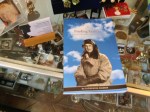
My neighbor, Cathy Harris, has written a fascinating book based on her uncle’s true experiences in as a pilot for the RAF in World War II. I interviewed her today in her shop about the new book, Finding Frances, Love Letters from a Flight Lieutenant. The way she has presented the book gives the reader a really good feel for his life and times. The letters are both historic and emotional because he tells what is happening in the war and pledges his love for Frances. The authentic snippets of his handwriting are a wonderful touch. I study family history so I am extra impressed with all the original documentation she has to show the reader. I was instantly in love with Eric as soon as I saw his pictures. I am sure with his accent and special British slang he must have been very exciting for a high school girl in Phoenix in the 1940s. I am glad she decided to put it all into book form to give us a glimpse into this dramatic part of our history in a personal, first hand account.







Athena is often mentioned as a war goddess because she was never defeated. She is also the goddess of wisdom and crafts. Her protection is important in firing the kiln. The ceramic demons that destroy a firing can take over without her blessing:
Homer’s Epigrams Fragment 14 (trans. Evelyn-White) (Greek epic C8th or C7th B.C.) :
“Potters, if you give me a reward, I will sing for you. Come, then, Athena [goddess of pottery], with hand upraised over the kiln. Let the pots and all the dishes turn out well and be well fired: let them fetch good prices and be sold in plenty in the market. Grant that the potters may get great gain and grant me so to sing to them. But if you turn shameless and make false promises, then I call together the destroyers of kilns, Suntribos (Shatter) and Smaragon (Smash) and Asbetos (Charr) and Sabaktes (Crash) and Omodamos (Crudebake) who can work this craft much mischief. Come all of you and sack the kiln-yard and the buildings: let the whole kiln be shaken up to the potter’s loud lament. As a horse’s jaw grinds, so let the kiln grind to powder all the pots inside.”
It is obvious to me that Rose Cabat made friends with Athena long ago in order to achieve such masterful results in the kiln. Her work is unique because her special glazes create a silky feel that is her secret weapon. The pots are vivid and beautifully shaped, inviting touch. The soft surface she creates is like no other. She calls the pots feelies, and has become famous for these special touchable forms. Her many collectors are happy to pay $400 and up for a tiny feelie because they only go up in value over time. Rose is still making pots from her wheel chair at age 100, and continues to be in very good standing with Athena. She has a show now at the Tucson Museum of Art featuring her work over her long career. It is incredible to see in person. I have seen her work over the years, but there are so many in one place that it delights the eye..and makes us wish we could feel them. There are some for sale in the Museum shop if you want your own to have and to hold.
We are not compatible. I am SO not adjusting to my iPhone and what it has to offer. I have now owned my smarty pants phone for 3 months, and have used it for a total of about 15 minutes. This is not a productive relationship, and the issues are all mine. The phone is and was neutral, but my use (or non-use) of it are a hold over from the past that makes no sense. I do not use my cell phone now although I was a very early adaptor of the technology. There is something I really do not like about the attachment to the phone I observe all around me. This is the turn off for me. I am amazed at the places I see smart phone addiction. The weight room is now a place where interval means lift some heavy stuff and then text for a few minutes. Needing to see the phone next to them on the floor next to the bench makes these big, strong, bovine guys look pretty wimpy.
I am not in danger of needing to be with my phone each moment, so I am not sure why I never even turn it on. I need to deal with my problems getting into this phone or stop paying $30 a month to have it hooked up all the time. My problem is not Apple operating systems. I just see the phone as a creepy distraction for so many that I have purposely bought and used all other iDevises. I use iPads, iPod touch 5, a couple of laptops and my original iPod full of tunes. I own stock in Apple. What is my resistance to this iThing?
The interruption factor I see in others appalls me so I am committed to avoiding it. People suffer from FOMO while they miss out on the world around them. I don’t really think that if I carry my phone and use it that I will be overwhelmed with bothersome unwanted news. I am only viewing the dark side of smart phones and therefore getting no benefit from the truly amazing technology. Either the thrifty part of me will start to use it to get my money’s worth or this silly aversion will continue. Don’t expect to see any real-time selfies any time soon. I have the opposite of FOMO…..FOBI….Fear of Being Inerrupted. I can’t be the only one. How about you, Gentle Readers? How is your relationship with your phone? I hope yours is less codependent than mine.

