mermaidcamp
Keeping current in wellness, in and out of the water
You can scroll the shelf using ← and → keys
You can scroll the shelf using ← and → keys
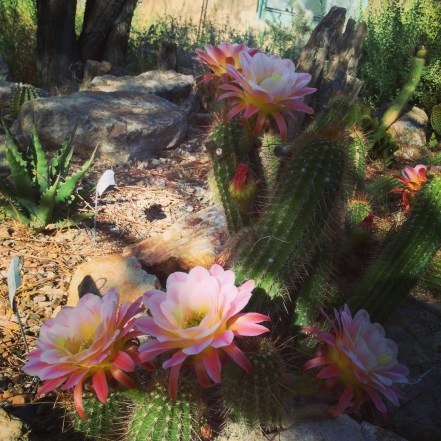
cactus blooming
Our memories are not accurate. Our self images are not well aligned with reality, and our sense of time is warped. This is true for almost everyone. I have embarked on some time line drawing exercises that have proven to me how far off base I am with a lot of my beliefs about my life and myself. The course in archetypes asks that I draw a time line for each of my dominant archetypes, including first meeting and how their powers entered and left the scene. I am surprised about the details I recall when I focus on only one aspect. This is also true if I draw a time line that includes all my physical injuries, surgeries, and illnesses. I have lead a healthy life, but I do see a pattern when I study the tendencies I have had. My doctors ask me to outline my injuries and illnesses, but I had never drawn them out on a paper with dates before. This chart alone tells a big story about your health and your life. There are other valuable time lines to draw for self knowledge:
When you have drawn these lines (all in the same scale) line up the sheets of paper under one another to see if they have any sequential patterns. Putting them all in a row shows detail that can sort out patterns in our lives. We tend to think of time in various delusional ways. We believe we have always been like this (whatever this may be), for instance. We often believe we were innocent when we were guilty, and sometimes believe just the opposite. The time line describes turning points and events that were pivotal in our development. If we then overlay the archetypes in our personalities, and which ones were dominant at what times the portrait becomes even clearer and more detailed. I started with the assignment of the archetype timelines, which is the most intricate and difficult of them all. By doing the easy ones above first we become accustomed to the focus it takes to really remember accurately. Then we are warmed up to question who was in charge and when. Time lines contain a great deal of power while still holding mystery in the line where it says nothing. Obviously there were constant events, but only some can be brought to mind. More practice brings better proficiency in stringing it all into place.







I had just learned about the #TucsonEatsLocal challenge from the Food Conspiracy when I ran into Cindy as she was about to open the Flying Leap Vineyards tasting room. I decided to step in and taste 6 Arizona wines. The quality has improved over the years, but I have been waiting for Arizona wines to really get good. There is excellent news….they have!! I enjoyed spending time focused on these very well balanced and delicious wines. I tasted:
All of the wines pleased me in their own way. The reds, which are really my favorite, had unusually broad flavors. They could all be drunk by themselves for enjoyment, but would bring out extra pleasure and flavor if enjoyed with food. I like the idea that our local wineries produce a wide variety of superb wines. The Flying Leapers will soon break ground in Elgin on a distillery. That is the new frontier in Arizona, distilled spirits. We are returning to our roots, and in a very tasty way. If you are in Tucson and want to sample wine from Arizona I encourage you to drop by the Flying Leap and take a leap into flavor town.

Citrus pardisii
My grapefruit tree is healthy and bears very well for months each winter. We enjoy fresh juice daily from January until about the end of March. The intoxicating aroma of the blossoms fills the air for about a month in March. The plant is ruled by the sun, like all citrus fruits. It has zingy, cooling and cleansing properties that are prized by health lovers. The fruit and the juice are delightful, but the essential oil of grapefruit has very useful qualities. Buy pure unadulterated oil and store it in the dark because it oxidizes quickly, therefore has short shelf life. Using it with a carrier oil, like jojoba, it can be very helpful to warm up and boost circulation. The benefits of using grapefruit in a massage oil include:
To use the oil for aromatherapy delivered by inhalation you can use a diffuser or use a few drops straight up on a handkerchief. The subtle and immediate effects of the inhalation include:
I never get tired of the smell and the flavor of grapefruit. It makes me happy and nourishes me. Cocktails made with grapefruit juice are very high on my favorites list as well. What is your favorite way to experience grapefruit?
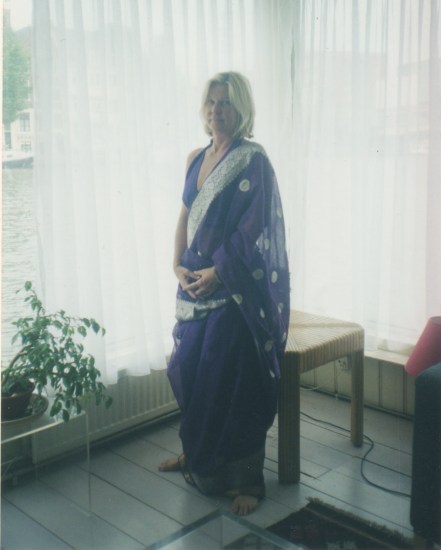
Being Blonde
Our bodies serve us as the vehicle with which and for which we live our lives. If we are strong, flexible, ambidextrous, and well coordinated we are likely to feel good and be healthy. Improving diet and exercise habits can bring about changes in attitude and vice versa. The key to being the best body you can be for your whole life is unconditional gratitude for the body you have now. You may train to become more graceful, more balanced, or more relaxed, but you must work with what you have. Start by loving your skin and everything inside of it. An understanding of basic anatomy is helpful in cultivating well-being. Learning about customs of folk medicine, healing techniques, or diets of foreign cultures can expand the options for self care. Knowledge and understanding are not the key ingredients in radiant health. Acceptance and love for all the ways your body serves you are the foundation on which strong healthy lives are created. What are the different aspects of our physical realm?
The body contains all these different ways of sensing life. Poise, grace, and fitness result from practice. Practice requires focus of mind and body to achieve results. To refine our movements as well as our thoughts we need training. Staying fit and flexible may be the best way to avoid injury. Feeling healthy does uplift the emotions and add to self confidence. Self image is a strong determining factor in the way health is pursued. To clean up and clear up some possible issues from the past answer for yourself these questions:
If you reflect well on these questions and your honest answers to them you may reach some enlightenment. Your thinking, feeling, remembering, and sensing selves can invest in better habits when they are grounded in a healthy self image. First do no harm to your own idea of your body. From there it is possible to heal misguided thoughts about wellness and self care. We deserve the best we can give our bodies for as long as we are in them. Clearing away false judgements from the past makes way for positive changes.


Planting by the moon is a simple way to increase your luck at growing anything. By planting annuals bearing fruit above the ground during the waxing phase of the moon ( new to full), and sewing plants that bear under the ground during the waning moon ( full to new) we follow ancient traditions of horticulture. To easily determine in what phase of the moon you find yourself, remember this rule: Crescent moon makes the shape of the letter C when the moon is on the wane. The moon has the shape of a capital D when it is on the rise. Think DOC–first D– then full moon–then C to remember the sequence.
Medicine was tightly constrained by local botany in history, limited to plants available and known. The natures of the plants were studied and knowledge of remedies was shared. However, before transport of goods became easy people used local plants as medicine because they had both access and some empirical evidence of the medicinal qualities. Astrology was part of pharmacology and medicine. Gardens and buildings were designed with healing and astrology in mind. Today there are ways to incorporate the heavens into garden design. The medicine wheel is one way to express the seasons and the heavenly connections. At Plimouth Plantation in Plymouth, MA a humoural garden is planted to display the relationship the Pilgrims had with plants and healing. They considered the relationship of the plants to the humors of the body. They had to rely on the plants they brought with them and those that the native people showed them.
Some gardens are designed to feature the four directions, or the elements. If you had unlimited time and money to create a symbolic garden what would you plant in it? What kind of medicine would you practice? I am fond of all the aromatic plants, so I have a vast array of herbs and flowers that can be used in tea, baths, cooking, and now in bitters. The creativity you invest in a garden returns to you many times.
Authority issues plague many of us. I am highly suspicious of all authority. There are a few instances that make the exception to the rule, but generally I think that power is a reason to investigate the motives of someone. My own upbringing has a lot to do with the issues I have today, since I grew up with quite a bit of sexism and some rigid nonsensical rules. There was violent insistence on the rules and on the concept that we were a happy family. I don’t think my parents were very happy, and I know I wasn’t pleased with my living conditions during childhood. This social mask imposed to hide the true situation included a strong dress code and many other elements designed to display perfection. I always felt repressed and restrained in various ways. When I was out of my parents’ world I never sought out any status symbols or social signs of belonging. I preferred to be a pleasure-seeking liberated person without the need for social approval. I respected no authority figures of any kind. As I look at it today I see an extreme reaction to rules and regulations, as well as to many institutions.
Trauma lives on in the feelings, thoughts, senses, and memories of everyone. It would be impossible to go through life without any shocking disruptive events. The way we process them depends on our circumstances at the time. If trauma is induced by parent or someone we must depend on for survival we may disassociate from reality in order to survive. Later the trauma continues in the body and the emotions if the appropriate anger is not found and processed for the serious betrayals of the past. Forgiveness is a part of the healing process, but it is not healthy to forgive without recognizing the wrongs and the disrespect we endured in childhood and early adulthood. Our personalities are mostly formed by the time we are 30, although we can have transformative events after that time also. If you draw a timeline of your life and include all the major emotional and physical traumas you have experienced you notice how your current reactive self was formed. We continue to react to the unresolved past, often by rebelling. To heal the trauma and stop the need to react we need to return to the times of greatest stress and damage, acknowledge the ways we were hurt, and come to the rescue of the helpless victim in the story, ourselves. Notice this situation may have been reconstructed a hundred different ways in life. To clean the slate and transform that trauma into understanding we need to look at the truth and take it into our consciousness. To stop repeating patterns that we continue out of reaction to the past we must examine the source and resolve to treat ourselves with confidence and love. We must rebel against unfair and unjust treatment both now and in the past in order to free ourselves from the damage it does.

My favorite herb in the garden is lemon verbena. I like to make tea with it all the time, but there are many other uses for this luscious herb. As a bath herb it brightens and refreshes the body and mind. The fragrance is used extensively in perfumery for the lemony zest it adds. In cooking it creates a lemon taste with no bitterness or aftertaste. It can be added to baked goods, salad dressings, drinks, sauces, and fruit salads to brighten a dish. Simple syrup of lemon verbena is useful for many drink and popsicle recipes with or without alcohol. Mixed with citrus fruit it becomes a big flavor enhancer. Rice pilaf, carrot cake, gazpacho, and other dishes can benefit from a pinch of this delicious herb. Store it in a glass jar in the dark to preserve freshness.
I love herbal bathing as retreat and meditative practice. The first one I tried about 20 years ago was rosemary bath. I brewed a strong tea of rosemary and added it to my bath. This method works well, as does the brewing of the tea in the tub by running hot water over a sachet, allowing it to steep, then filling the tub. When you choose the herbs and when you enter the water you can make the entire process a mindfulness experience. Drinking tea made with the same herbs will enhance the aromatic sensory intake. I am planning to take some baths this week with matching beverages and bath herbs. If you have a favorite herb you can try this at home. If the bath is taking place at the cocktail hour I think it is suitable to include the herb in a tasty concoction from the bar that aligns with the indented purposes.
These are ideas for you to design your very own aroma world to enliven your senses and change your mood. There is an art to choosing herbs for the desired mood, but there are very few side effects that inhibit experimentation. If you like an herb you can research it fully or simply determine that it is not toxic, then try it in a bath. The effectiveness may surprise you. When all the pores of your skin are soaking in the active ingredients the results are swift. Bringing to the mind’s eye the results you want to see is the strongest link that brings this practice into the meditational realm. By creating sensory stimulation and awareness at once we step out of our normal situation and into synesthsia of our own design. We use the aroma as an anchor for our meditation. At the least you can enjoy smelling and feeling bit better from the herbal bath. At the most it can be a rebirth and transformation.
 Basil
BasilThere is a long history of perfumes and incense used in ceremony and in popular culture. The Ancient Egyptians used many fragrant oils in the embalming process. It is said that when King Tut’s tomb was opened 3000 years after it had been sealed the urns still gave off the fragrance of frankincense and other spices. Ancient Greeks called all the aromatic products they used aromata. Athletes were anointed with scented oils before competing, and bay leaves were burned at Delphi to induce trance in the priestesses who foretold the future. The Romans raised the popularity and awareness of aromatherapy to new heights. Scented oil massage was the ritual ending at the communal baths in Julius Caesar’s time. Many Roman holidays involved great quantities of scented materials. Rose petals were strewn before men of stature as they walked, and perfume was sprayed on spectators at games. In China the herbal tradition is rich and deep, and it includes the use of oils extracted from plants. They believed that the extraction of the oil liberated the soul of the plant.
Artemisia vulgaris is used in Chinese medicine for moxibustion. In ancient China some people could afford a special room for childbirth. It was called the Artemisia room because the plant was burned during labor to attract kind spirits to the mother and child. The first uses of romantic plants in Chinese healing practices date back to about 2000 BC in The Yellow Emperor’s Book of Chinese Medicine. In Japan incense and the formal art of burning it is taken seriously and used in religion. Special schools, still in existence today, teach the art of Kodo, or perfumery.
Druids burned incense for ceremonial rites, and the Celtic people continued the use. Juniper was used frequently to banish spirits for healing or magic. In Britain monasteries grew medicinal herbs and shared knowledge of plants with other monks. The Crusades brought new plants and remedies traveling back from the Holy Land with the Knights Templar and others. The plague was a time when aromatic plants were used in amulets and strewn to deter fleas, the carriers of the dread disease. The Renaissance brought even wider use of perfumery and aromatic oils in healing.
Today we have many products and options available to us. The availability of pure essential oils is much more widely enjoyed than it was 10 years ago. Products for skin and hair that contain pure oils also abound. Bath sachets, herbal teas, and hair rinses are easy water based ways to absorb botanicals through the skin. Using oils can be simple too. Simply place a few drops on a cotton ball or piece of cloth and take a whiff. Here are a couple of common and inexpensive oils to try:


My 19th great-grandfather was Speaker of the House of Commons, and asked the king to excuse him from that duty. Richard II refused to excuse him. He is buried on the north side of the parish church St. Mary at Bures in Essex. These Waldegraves must be added to the buried in church tour of Europe I need to make someday.
Sir Richard II Lord Bures De Waldegrave (1335 – 1401)
is my 19th great grandfather
Sir Richard III Lord Bures Silveste DeWALDEGRAVE (1370 – 1434)
son of Sir Richard II Lord Bures De Waldegrave
Sir John William deWaldegrave (1397 – 1454)
son of Sir Richard III Lord Bures Silveste DeWALDEGRAVE
Lady Anne De Waldegrave (1429 – 1454)
daughter of Sir John William deWaldegrave
Knight Edmond Bedingfield (1450 – 1496)
son of Lady Anne De Waldegrave
Edmund Bedingfield (1483 – 1552)
son of Knight Edmond Bedingfield
Henry Bedingfield (1509 – 1583)
son of Edmund Bedingfield
Edmund Bedingfield (1534 – 1585)
son of Henry Bedingfield
Nazareth Bedingfeld (1561 – 1622)
daughter of Edmund Bedingfield
Elishua Miller Yelverton (1592 – 1688)
daughter of Nazareth Bedingfeld
Yelverton Crowell (1621 – 1683)
son of Elishua Miller Yelverton
Elishua Crowell (1643 – 1708)
daughter of Yelverton Crowell
Yelverton Gifford (1676 – 1772)
son of Elishua Crowell
Ann Gifford (1715 – 1795)
daughter of Yelverton Gifford
Frances Congdon (1738 – 1755)
daughter of Ann Gifford
Thomas Sweet (1759 – 1844)
son of Frances Congdon
Valentine Sweet (1791 – 1858)
son of Thomas Sweet
Sarah LaVina Sweet (1840 – 1923)
daughter of Valentine Sweet
Jason A Morse (1862 – 1932)
son of Sarah LaVina Sweet
Ernest Abner Morse (1890 – 1965)
son of Jason A Morse
Richard Arden Morse (1920 – 2004)
son of Ernest Abner Morse
Pamela Morse
I am the daughter of Richard Arden Morse
Sir Richard Waldegrave (died 2 May 1401) was a member of Parliament for Lincolnshire in 1376, and Speaker of the House of Commons from 1381 to 1382, during the reign of King Richard II.
Life
His father Sir Richard Waldegrave was returned to parliament in 1335 for Lincolnshire. Richard the son resided at Smallbridge in Suffolk, and was returned to parliament as a knight of the shire in the parliament of February 1376. He was elected to the first and second parliaments of Richard II and to that of 1381. In 1381 he was elected speaker of the House of Commons, and prayed the king to discharge him from the office; the first instance, according to James Alexander Manning, of a speaker desiring to be excused. The king, however, insisted on his fulfilling his duties.
During his speakership parliament was chiefly occupied with the revocation of the charters granted to the villeins by Richard during Wat Tyler’s rebellion. It was dissolved in February 1382. Waldegrave represented Suffolk in the two parliaments of 1382, in those of 1383, in that of 1386, in those of 1388, and in that of January 1389–90.
He died at Smallbridge on 2 May 1402, and was buried on the north side of the parish church of St. Mary at Bures in Essex. He married Joan Silvester of Bures, by whom he had a son, Sir Richard Waldegrave.
Referenc es
” Waldegrave, Richard”. Dictionary of National Biography, 1885–1900. London: Smith, Elder & Co.
Attribution
This article incorporates text from a publication now in the public domain: “Waldegrave, Richard”. Dictionary of National Biography, 1885–1900. London: Smith, Elder & Co.
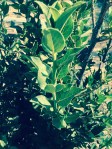

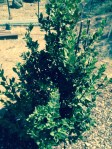
Laurus nobilis is a shrub or tree native to Asia Minor, popular in the Mediterranean, known and used for centuries. It was sacred to Apollo, the sun god in Greece, and had been used in Mesopotamia as protective incense. In the fourth century AD Greek magician and philosopher Proclus Diadochos stated that bay laurel branches were used in ceremonial work to banish spirits. The use of crowns of laurel leaves to award victors in the contests started at the Pythian games, in honor of Apollo who revered the plant. The custom spread and the laurel assumed a meaning of victory or triumph in Rome. A sudden withering or visible demise of a bay tree in the yard was considered to be a very bad omen for the owner.
The leaves are poisonous in large doses, and the sharp edges of the leaves can damage your digestive tract if ingested. They can be used in cooking either by themselves or in a bouquet garni that is removed before serving and thrown away. The flavor is exotic, lending deep flavor to sauces, stews, and pickles. Although it is less common to use bay leaves to season dessert dishes, here are some great ideas:
Try using bay leaf in new ways. Become the cook laureate of your kitchen.
 mermaidcamp