mermaidcamp
Keeping current in wellness, in and out of the water
You can scroll the shelf using ← and → keys
You can scroll the shelf using ← and → keys
April is for poets, and we are all poets. There are many ways to celebrate. I have taken the challenge to write a poem each day in April. My approach is zen. The weekend workshop on ekphrastic poetry helped me find a place to begin. By responding to art, the ekphrastic poet reflects, or echoes the artist by interpreting the artwork. Memorizing a poem is another way to participate in the fun this month. My father could recite almost all of the Cremation of Sam McGee by Robert W Service, which was always impressive. Stories told in rhyme stay in the mind’s eye.
Poets.org has a poetry party happening right now. You can make a commonbook with quotes and poems using resources on the site. If you are lucky enough to live in Tucson you can visit our Poetry Center to experience space completely dedicated to poetry. Docents there are happy to give tours of the rare books and more if you call for an appointment. Today in Tucson the 31st annual Poetry Festival invites the public for free readings and activities all weekend. Fluency and artistry enhance the lives of those who listen. Tune in this month to hear what you may have been missing.

coat of arms
My 9th great grandfather was born in Barnstable in 1648, the son of English immigrants. He fought in King Philip’s was against my Wampanoag ancestors. His parents were Pilgrims who settled in Barnstable. His father left England alone to come to America because of religious problems. He sent for his family to join him after arrival.
Eleazer Hamblen (1648 – 1698)
is my 9th great grandfather
Isaac Hamblin (1676 – 1710)
son of Eleazer Hamblen
Eleazer Hamblin (1699 – 1771)
son of Isaac Hamblin
Sarah Hamblin (1721 – 1814)
daughter of Eleazer Hamblin
Mercy Hazen (1747 – 1819)
daughter of Sarah Hamblin
Martha Mead (1784 – 1860)
daughter of Mercy Hazen
Abner Morse (1808 – 1838)
son of Martha Mead
Daniel Rowland Morse (1838 – 1910)
son of Abner Morse
Jason A Morse (1862 – 1932)
son of Daniel Rowland Morse
Ernest Abner Morse (1890 – 1965)
son of Jason A Morse
Richard Arden Morse (1920 – 2004)
son of Ernest Abner Morse
Pamela Morse
I am the daughter of Richard Arden Morse
Page 526 – Eleazer Hamblin, son of James, was a soldier in Capt. John Gorham’s company in King Philip’s war, and an original proprietor of the town of Gorham, in Maine. I have not carefully examined his record, and know but little of his history. His wife was an early member of the church, and he joined in 1686. I think he resided at Hamblen’s Plain. The Eleazer Hamblins patronized the lawyers more than all others of the name ; but I may be
GENEALOGICAL NOTES OP BAKNSTABLE FAMILIES. 527
doing injustice in making the remark in connection with the elder
Eleazer.
He married 15 Oct. 1675, Mehitabel, daughter of John Jenkins,
and had six children born in Barnstable :
The two last probably died young aud therefore their names do
not appear on the town record.

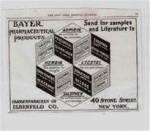

Drugs have won the war we have waged against them. Heroin is growing in popularity because it is a cheap substitute for the prescription drugs that are now the gateway. The profits are massive, and the corruption that accompanies the trade makes a joke of law enforcement. The name heroin was chosen by Bayer, the original marketers of the product, because it made the user feel like a hero. The company stopped manufacturing and selling heroin in 1913, and it was outlawed in the US in 1920. The Viet Nam war increased American use when 10-15% of our troops started using it while in Asia on deployment.
In the US today heroin use is on the rise . Young people between 18-25 are the fastest growing addict group. Mexican black tar heroin is smuggled in great quantity across the Arizona border. This corrupts our law enforcement and endangers our youth as it passes through on the way to it’s eventual market. The smuggling business includes all kinds of illicit drugs. It is organized by cartels run by very nasty individuals. The only way to pull the profit plug on the cartels is to reduce and eliminate demand on our side of the border. This is much easier said than done. From miracle cure to the ruin of our society, heroin has come a long way, baby.
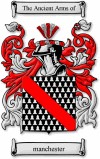
Manchester coat of arms
My 8th great grandfather was part of an unusual settlement in New Haven, Connecticut. He probably arrived in 1638 with a group of Puritans from England:
On April 24, 1638, a company of five-hundred English Puritans led by the Reverend John Davenport and Theophilus Eaton, a wealthy London merchant, sailed into the harbor. They soon discovered that the Quinnipiacks and other local tribes were much distressed by raiding bands of Pequots and Mohawks from surrounding areas. It was for this reason that Momauguin, the sachem of the Quinnipiacks, and other tribe members agreed to sell the tribe’s land to the Puritans. In return, the settlers pledged to protect the natives and to allow them the use of the lands on the east side of the harborNew Haven’s founders not only hoped to create a Christian utopia, they also saw in New Haven’s spacious harbor an opportunity to establish a commercial empire that would control Long Island Sound and possibly the coastline as far south as Delaware Bay. By 1640 a complete government had been established and the settlement, originally called Quinnipiac, was renamed Newhaven. The town plan was based on a grid of nine squares. In accordance with old English custom, the central square, now the Green, was designated a public common. By 1641 New Haven had grown into a community of approximately 800.
Over the next few years, however, the flow of newcomers began to weaken and trade with the outside world shifted more and more to Boston. In an attempt to establish direct trade with England, the settlers managed to assemble enough produce to fill a vessel which would become known as the “Great Shippe.” However, after setting sail in January, 1646, the ship and its crew were never heard from again. This disaster ended the dream of creating an economic empire and over the years New Haven became overshadowed by New Amsterdam and Boston.
from: http://www.cityofnewhaven.com/Mayor/History_New_Haven.asp
Thomas Manchester, the Manchester immigrant ancestor, was born in England, and was a resident of New Haven, Connecticut, in 1639, in the year following the planting of the colony. Afterward, however, he settled at Portsmouth, Rhode Island, where he is first mentioned in the land records, January 25, 1655, when he and his wife sold to Thomas Wood twelve acres of land. He married Margaret, daughter of John Wood.
In the settlement of her father’s estate, it was ordered March 17, 1655, that the son John pay his sister, Margaret Manchester, eight pounds. Eight acres of land were granted at Portsmouth to Thomas Manchester, December 10, 1657, and he sold to Richard Sisson one-three-hundredth right in Canonicut and Dutch Islands. In 1680 he was taxed four shillings. He and his wife testified, June 7, 1686, that they heard and saw Ichabod Sheffield married by William Paulstone. He deeded to his son John. July 9, 1691, his mansion house and lands at Portsmouth, except the place at the lower end of the ground, in possession of his son Thomas, one-half to be his at the death of grantor and the other after the death of grantor’s wife,mother of grantee, provided he pay to the sons Thomas, William and Stephen, ten shillings each, to Job twenty shillings and daughters Mary and Elizabeth ten shillings each. He also gave to John his personal property, including cattle, tools, etc.
Thomas Manchester died in 1691; his wife in 1693. Children: Thomas, born about 1650; William, 1654; John, died in 1708; George, admitted freeman in 1680; Stephen, mentioned in his own biography; Job, died 1713; Mary; Elizabeth.
Source:
New England families, genealogical and memorial
By William Richard Cutter (pgs. 853-854)
Thomas Manchester (1620 – 1691)
is my 8th great grandfather
Elizabeth Manchester (1667 – 1727)
daughter of Thomas Manchester
Dr. James Sweet (1686 – 1751)
son of Elizabeth Manchester
Thomas Sweet (1732 – 1813)
son of Dr. James Sweet
Thomas Sweet (1759 – 1844)
son of Thomas Sweet
Valentine Sweet (1791 – 1858)
son of Thomas Sweet
Sarah LaVina Sweet (1840 – 1923)
daughter of Valentine Sweet
Jason A Morse (1862 – 1932)
son of Sarah LaVina Sweet
Ernest Abner Morse (1890 – 1965)
son of Jason A Morse
Richard Arden Morse (1920 – 2004)
son of Ernest Abner Morse
Pamela Morse
I am the daughter of Richard Arden Morse
Thomas Manchester was born in England about 1620, and died at Portsmouth, R.I., about 1691. He was an early pioneer of Quinnipiac, called New Haven after 1640, in the Plantation of Connecticut: since he is found there in 1639, it would seem probable that he was of the company of Yorkshire settlers who in 1638 came to America with Ezekiel Rogers, the famous non-conformist minister, with the view of joining the Quinnipiac Plantation, although many of them eventually settled elsewhere.
The New Haven colony differed very much from other colonies. Many of the colonists put up large houses. As an explanation why this style of building was so general, it may be said that the founders of New Haven were mainly gentlemen and merchants, used to living in superior houses in London and other parts of England. For a period,Thomas continued at Quinnipiac, but removed to Portsmouth, R.I, before 1642.
On February 25/1642 he was appointed to serve on the next jury. From 1674 till his death, he was Town Sergeant. He became a considerable landed proprietor. Prior to 1655 he acquired land on the island of Aquidneck, and on January 25/1655, he made a deed of a tract of 12 acres there to Thomas Wood.
On December 10/1657, he shared in the land division and received eight acres at Portsmouth. He also had sharein Dutch Island and Quononoquet Island, and conveyed his interest in 1/300th right therein to Richard Sisson on July 6/1658. His mansion and homestead was built on his Portsmouth land.
On July 9/1691, Thomas deeded to his son John, his mansion house and all lands at Portsmouth, except the piece at the lower end, which had been theretofore deeded to his son Thomas. According to the deed, half was to be John’s on hisbrother Thomas’ death, and the remaining half upon the death of his Mother, conditioned always that pay to his brothers Thomas, William and Stephen, 10 shillings each, to Job 20/-, and to his sisters Mary and Elizabeth, ten shillings each. John also received from his father his personal property, cattle, chattels, implements, bonds, sums of money, and whatever belonged to him at the time of his death.
Thomas Manchester married, prior to 1650, Margaret Wood, who died about 1693, daughter of John Wood of Portsmouth, R.I., who bequeathed to his daughter Margaret the sum of œ8.
Next Saturday, 5 April, 2014 will be a big day in Dragoon, Arizona. The first run in Texas Canyon is organized to coincide with a food festival, a wine and brew fest, and a spring fling. Dragoon is just about an hour’s drive away from Tucson on I-10. The Amerind Foundation Museum is primo Native art displayed perfectly. The collections are impressive, and the galleries designed with the greatest of care. If you have not visited the museum next Saturday is a great day to do it. Admission will be free for the day, and the festivals will round out the activities. Runners should register early if they want to compete in the trail run.
Ryan Redcorn, an Osage entrepreneur, has produced this video of smiling Indians. It is dedicated to Edward Curtis whose Native American images dominate the web and the memory. Just yesterday I was at the Arizona State Museum viewing some Curtis photos shot in Arizona, and all were new to me. His seemingly endless portfolio was shot in the first decades of the 20th century. The work has become controversial. Mr. Redcorn believes in producing yourself, which inspired him to create this video as a counterpoint to Curtis.
I was in Pawhuska, Oklahoma a few years ago on an ancestry hunt. My cousin and I were trying to sort out a story that our great-grandmother as Cherokee. We never found any evidence pro or con, but we went to the tribal headquarters of both the Osage and Cherokee tribes to seek answers. My cousin (like many Americans) was stuck on the romantic notion that we are Cherokee. When I saw the tiny museum in Pawhuska and talked to the curators I wanted to be Osage. They were always distinct among the 5 civilized tribes. They got rich from oil and spent much of their wealth buying products from France, especially elaborate fashion items. My father told me when he was a kid the Osage used to drive around in Cadillacs with goats in the back seat. I am probably not descended from the Osage tribe, but I do really admire the way they are. I loved the art, the history, and their sense of humor on my visit with them. Now I also love Ryan Redcorn who has a sense of humor and a bigger sense of justice.
Today at the Tucson Botanical Gardens docents from the U of A Poetry Center offered a reading and workshop in Ekphrastic Poetry. This style of poem is a response to a piece of art, the Ek being from Greek and referring to echo. The group attending was a mixture of students, visual artists, and poets. By far the most emotional poem of the day was read by a Nam Vet who sat behind me. He chose to read War Photograph by Kate Daniels. His choked up emotions brought tears to his eyes which brought tears to the eyes of the audience. The other poems were discussed and analyzed but we were all very touched and had nothing more to say after he read. At the end of the session participants wrote poems about the photos in the gallery. All were striking. I apologize, gentle reader, for cutting off the very beginning of some of these gentle readings. It was a well produced and very well appreciated poetry experience, and we all have beautiful handouts to finish at home. There is one more session this spring of Poetry in the Gardens, Native poetry on April 26, 2014. These programs are included with garden admission. It is SUCH A DEAL!!


!
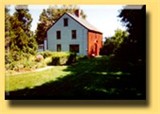
Philip Sherman’s house
My 8th great grandfather moved to Rhode Island as many of my ancestors did. He became a Quaker and the first secretary of Rhode Island Colony.
Philip Sherman (1610 – 1687)
is my 8th great grandfather
Eber Sherman (1634 – 1706)
son of Philip Sherman
Mary Sherman (1688 – 1751)
daughter of Eber Sherman
Thomas Sweet (1732 – 1813)
son of Mary Sherman
Thomas Sweet (1759 – 1844)
son of Thomas Sweet
Valentine Sweet (1791 – 1858)
son of Thomas Sweet
Sarah LaVina Sweet (1840 – 1923)
daughter of Valentine Sweet
Jason A Morse (1862 – 1932)
son of Sarah LaVina Sweet
Ernest Abner Morse (1890 – 1965)
son of Jason A Morse
Richard Arden Morse (1920 – 2004)
son of Ernest Abner Morse
Pamela Morse
I am the daughter of Richard Arden Morse
THE HON. PHILIP SHERMAN, WAS THE SON OF SAMUEL SHERMAN AND PHILIPPA WARD. HE MARRIED SARAH ODDING; THE DAUGHTER OF WILLIAM GEORGE ODDING AND MARGARET POTTER OF BRAINTREE, ESSEX CT, ENGLAND IN (1633/XX/XX),HE WAS A MAN OF MELANCOLY TEMPER WHO CAME TO BOSTON IN (1633/XX/XX) AND UPON A JUST CALLING HE WENT BACK TO ENGLAND AND RETURNED BETWEEN (1636-1637) WITH A BLESSING, IN (1637) BECAUSE OF HIS RELIGIOUS FEELINGS HE WAS BANISHED ALONG WITH JOHN COGGESHALL AND HENRY BULL FROM THE ROXBURY BAY COLONY, BOSTON, MASS, USA. LEAVING FOR RHODES ISLANDS WERE ALL BECAME RULING OFFICIALS CHOSEN TWONE CLERKE (JUNE 1649-1656), TOWNE MAGISTRATE (1656-1679), LAYER OUT OF HIGHWAYS (1683), MEMBER OF COMM. ADJUICATION (1684-1687), AND WAS THE FIRST SECRETARY AND RECORDER OF THE COLONY OF RHODES ISLANDS.
In Bertha L. Stratton’s book, “Sherman and Other Families,” she made the statement that Philip Sherman intended to settle in New Hampshre, but the climate proved too severe and so the lands there were abandoned. Upon discussion with Roger Williams at Providence, Rhode Island, the other people from Massachusetts bought Aquidneck Island in Narraganset Bay. Nineteen men signed the compact for the town in 1638. Upon leaving the church in Roxbury, Philip joined with the Friends. The Massachusetts Court ordered Philip to appear before them on 12 Mar 1638, he did not go. But he continued as a prominent figure in Rhode Island; he was the General Recorder in 1648-1652 & the Deputy to the Assembly in 1665-1667. Tradition says he was a “devout and determined man, and he was also a “neat and expert penman & an educated man,” and his Last Will & Testament “shows that he was wealthy for those times.”
Philip Sherman immigrated to Roxbury, MA and married Sarah Odding shortly after his arrival. He might have felt pressured to marry quickly, because bachelors especially of such an advanced age as 23 were looked upon with suspicion, and their single state could even effect business opportunities and social acceptance.
According to Representative Men of Old Families of Southeastern Massachussets, by J. H. Beers & Company, in a biographical entry of one of Philip’s descendants, Philip Sherman “took the side of Anne Hutchinson,” a brave woman in Salem, MA who maintained that women should be allowed to hold prayer meetings as well as men, and proceeded to hold such meetings in her home in defiance of the rules of the time and demands that she quit. She, with some members of her family including young grandchildren, were driven out of Salem into the wilderness of Rhode Island. Families in sympathy for her or in fear of retaliation for their past support and/or defense of her beliefs soon followed to Rhode Island, and Philip Sherman and his family were among the group that left Salem following her ouster.
In Providence, Philip met Roger Williams, founder of Rhode Island promising religious freedom to it’s citizens. Williams advised Philip andthe members of his party to purchase Aquidneck from the Indians, which they did on 1 Jul 1639. They created their own government with Coddington chosen to be the first governor of Rhode Island, and Philip chosen to be secretary.
Some historians believe that the death of Anne Hutchinson with most of her family during an attack of native Americans was the first act in several that led to the end of the Puritan Church. Members of the communities in all the colonies were horrified that she was banished for her beliefs and suffered so. Many felt banished themselves from England when their Puritan faith had been banned, and her treatment forced them to recognize their own harshness.
Philip left what is now called “the Congressional Church” and joined the Society of Friends, or Quakers.
He was the father of 13 children, and many of his descendants served America as congressmen and soldiers.
Pandora was created as a trophy bride for Prometheus’ younger brother, Epimetheus. She was intentionally created of earth and water to play havoc with humans. The gods endowed her with super powers, thus worthy of her name which means all-gifted. After her arrival at her husband’s house she opened her famous box (or jar) which was full of evil spirits. Like Eve, she had orders to keep the box closed but her curiosity was too strong. Unlike Eve, at the bottom of Pandora’s box one spirit remained, Elpis, the spirit or diamon of hope. While the evil spirits escaped and forced man to do hard labor, just like the expulsion from the Garden of Eden, hope remained in Pandora’s box. Her daughter, Pyrrha was the first mortal child born on earth. Pyrrha and her husband survived the Great Deluge to repopulate the earth, not unlike Noah and his family.
Can you think of events in your life or in history that remind you of Pandora’s box?
We are not compatible. I am SO not adjusting to my iPhone and what it has to offer. I have now owned my smarty pants phone for 3 months, and have used it for a total of about 15 minutes. This is not a productive relationship, and the issues are all mine. The phone is and was neutral, but my use (or non-use) of it are a hold over from the past that makes no sense. I do not use my cell phone now although I was a very early adaptor of the technology. There is something I really do not like about the attachment to the phone I observe all around me. This is the turn off for me. I am amazed at the places I see smart phone addiction. The weight room is now a place where interval means lift some heavy stuff and then text for a few minutes. Needing to see the phone next to them on the floor next to the bench makes these big, strong, bovine guys look pretty wimpy.
I am not in danger of needing to be with my phone each moment, so I am not sure why I never even turn it on. I need to deal with my problems getting into this phone or stop paying $30 a month to have it hooked up all the time. My problem is not Apple operating systems. I just see the phone as a creepy distraction for so many that I have purposely bought and used all other iDevises. I use iPads, iPod touch 5, a couple of laptops and my original iPod full of tunes. I own stock in Apple. What is my resistance to this iThing?
The interruption factor I see in others appalls me so I am committed to avoiding it. People suffer from FOMO while they miss out on the world around them. I don’t really think that if I carry my phone and use it that I will be overwhelmed with bothersome unwanted news. I am only viewing the dark side of smart phones and therefore getting no benefit from the truly amazing technology. Either the thrifty part of me will start to use it to get my money’s worth or this silly aversion will continue. Don’t expect to see any real-time selfies any time soon. I have the opposite of FOMO…..FOBI….Fear of Being Inerrupted. I can’t be the only one. How about you, Gentle Readers? How is your relationship with your phone? I hope yours is less codependent than mine.
 mermaidcamp