mermaidcamp
Keeping current in wellness, in and out of the water
You can scroll the shelf using ← and → keys
You can scroll the shelf using ← and → keys
We are not compatible. I am SO not adjusting to my iPhone and what it has to offer. I have now owned my smarty pants phone for 3 months, and have used it for a total of about 15 minutes. This is not a productive relationship, and the issues are all mine. The phone is and was neutral, but my use (or non-use) of it are a hold over from the past that makes no sense. I do not use my cell phone now although I was a very early adaptor of the technology. There is something I really do not like about the attachment to the phone I observe all around me. This is the turn off for me. I am amazed at the places I see smart phone addiction. The weight room is now a place where interval means lift some heavy stuff and then text for a few minutes. Needing to see the phone next to them on the floor next to the bench makes these big, strong, bovine guys look pretty wimpy.
I am not in danger of needing to be with my phone each moment, so I am not sure why I never even turn it on. I need to deal with my problems getting into this phone or stop paying $30 a month to have it hooked up all the time. My problem is not Apple operating systems. I just see the phone as a creepy distraction for so many that I have purposely bought and used all other iDevises. I use iPads, iPod touch 5, a couple of laptops and my original iPod full of tunes. I own stock in Apple. What is my resistance to this iThing?
The interruption factor I see in others appalls me so I am committed to avoiding it. People suffer from FOMO while they miss out on the world around them. I don’t really think that if I carry my phone and use it that I will be overwhelmed with bothersome unwanted news. I am only viewing the dark side of smart phones and therefore getting no benefit from the truly amazing technology. Either the thrifty part of me will start to use it to get my money’s worth or this silly aversion will continue. Don’t expect to see any real-time selfies any time soon. I have the opposite of FOMO…..FOBI….Fear of Being Inerrupted. I can’t be the only one. How about you, Gentle Readers? How is your relationship with your phone? I hope yours is less codependent than mine.
Gratitude is the practice. Liberation is the result.

















The second annual Grow Down competition was held over the weekend. Three designers had three days to complete an example of landscape design for our climate and region. Metal was the trending darling material, and chickens won the prize. I liked all of them very much, but the winner featured shade for the chickens in the coop, but none for the people. This year they added a feature I think is important to the viewing audience. Competitors are allowed to ask for donations from suppliers. The one who hustles up the most donations naturally wins. This happened last year as well. Now they make a note of the cost of materials only. The winner had a materials budget about 30% higher than the other two competitors. They all showed ingenuity and style. It is a wonderful way to check out new ideas to incorporate into our own gardens.

Cymburgis Masovia
My 16th great grandmother was Polish, and was the mother of a Holy Roman Emperor. My ancestor, her daughter, Katharina, was Archduchess of Austria:
Cymburgis Masovia (1391 – 1429)
is my 16th great grandmother
Katharina Archduchess Austria Von Habsburg (1420 – 1493)
daughter of Cymburgis Masovia
Christof I VanBaden (1453 – 1527)
son of Katharina Archduchess Austria Von Habsburg
Beatrix Zahringen (1492 – 1535)
daughter of Christof I VanBaden
Sabine Grafin VonSimmern (1528 – 1578)
daughter of Beatrix Zahringen
Marie L Egmond (1564 – 1584)
daughter of Sabine Grafin VonSimmern
Richard Sears (1590 – 1676)
son of Marie L Egmond
Silas Sears (1638 – 1697)
son of Richard Sears
Silas Sears (1661 – 1732)
son of Silas Sears
Sarah Sears (1697 – 1785)
daughter of Silas Sears
Sarah Hamblin (1721 – 1814)
daughter of Sarah Sears
Mercy Hazen (1747 – 1819)
daughter of Sarah Hamblin
Martha Mead (1784 – 1860)
daughter of Mercy Hazen
Abner Morse (1808 – 1838)
son of Martha Mead
Daniel Rowland Morse (1838 – 1910)
son of Abner Morse
Jason A Morse (1862 – 1932)
son of Daniel Rowland Morse
Ernest Abner Morse (1890 – 1965)
son of Jason A Morse
Richard Arden Morse (1920 – 2004)
son of Ernest Abner Morse
Pamela Morse
I am the daughter of Richard Arden Morse

Cymburgis Masovia
She was born in Warsaw and died in Lower Austria at an Abbey. It is said she contributed the protruding lower lip of the Habsburgs.
Cymburgis (also Cimburgis, Zimburgis or Cimburga) of Masovia (Polish: Cymbarka mazowiecka) (1394 or 1397 – September 28, 1429) in January 1412 became the second wife of the Habsburg Duke Ernest the Iron of Austria (since 1414 Archduke) and thus a Duchess/Archduchess of the Inner Austrian line in Styria, Carinthia and Carniola.
Cimburgis was born at Warsaw in the Duchy of Masovia to Duke Siemovit IV of the Masovian Piast dynasty and his wife Alexandra of Lithuania, daughter of Grand Duke Algirdas, a scion of the Gediminid dynasty, and sister of Władysław II Jagiełło, King of Poland.
Though his elder brother William’s engagement with the Polish princess Jadwiga had mortifyingly failed, Ernest after the death of his first wife Margaret of Pomerania proceeded to Kraków to court Cymburgis. Though not approved by the Habsburg family, the marriage turned out to be a happy one. As the mother of the later Emperor Frederick III, Cymburgis, after Gertrude of Hohenburg, became the second female ancestor of all later Habsburgs, as only his branch of the family survived in the male line. Although controversial, it has been claimed (since at least by Robert Burton in 1621) that she brought the distinctive protruding lower lip (progenism) into the family, a particular physical characteristic of most members of the family for many generations until the 18th century.[2] It can even be recognized in some of her distant descendants today (though not as markedly). Cymburgis’ statue in the Innsbruck Hofkirche church however does not show this feature.
Tradition has it that she was also known for her exceptional strength, which, for example, she showed by driving nails into the wall with her bare hands and cracking nuts between her fingers. Strength also distinguished one of her descendants, Augustus II the Strong, who allegedly broke a horseshoe bare fisted. Cymburgis outlived her husband and died at Türnitz in present-day Lower Austria. She is buried at Lilienfeld Abbey.
Descendants
5 children died at young age
Frederick III, Holy Roman Emperor (1415–1493)
Margaret, wife of Frederick II, Elector of Saxony
Albert VI, Archduke of Austria (1418–1463)
Catherine (1420–1493), wife of Charles I, Margrave of Baden-Baden
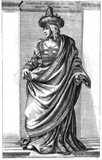
Cymburgis Masovia
How prescient was Sir Paul when he said of course it’s going to go well here when we talk about the Ukraine girls? This song was sarcastic when it was written, and is more ironic now than ever. We are back in a state very similar to the Cold War, and the joke is heavy. Was there ever true communism??? I say no, just state capitalism, which is a sorry substitute. Today we know that putting our heads down in the hall of the school will not protect us from a full blown nuke attack. Do you see a good way to end the Russian stand-off, gentle readers?














Pastiche opened in the neighborhood 16 years ago as a “modern eaterty”. This year it was closed for a couple of weeks in January to update and remodel the space. The bar was made larger, walls changed and removed for a new look. The colors are beautiful and the new bar very classy. We went for lunch and thoroughly enjoyed the new look and the old menu. Bob had a sirloin steak and I had a grilled Portobello with asparagus. I chose French fries as a first course, while Bob enjoyed a cup of the delicious shiitake mushroom soup. Service was impeccable, which we have come to expect from Pastiche. One addition they have made is to feature a very extensive list of whiskies by the glass. I tried the Hochstadter’s Rock and Rye with my mushroom dish and thought it was a perfect match for the flavors in my entrée. I like the fun of tasting the different kinds of whiskey without investing in a bottle. We left with some Irish whiskey pie to eat later at home. For me this restaurant rates an A plus in all categories. The menu is just the right size, and everything is always prepared perfectly. Service is friendly and seamless. The wine list and beers on tap make the patron choose from a very extensive selection, a pleasant problem the wait staff can help you solve. We are happy this is just a hop, skip and a jump from home. It has always been well run, and now is once more very modern.
Learning about archetypes has taught me to look at life more closely, and free myself of some old restrictive self images. We all play different parts in our own lives. As we age our desires naturally change and our personalities become more complex. In our history we can discern times when one role has been the dominant one, giving way to another as time passed. Some of us never outgrow our rebel, and some are artists whose latent talent is not discovered until a ripe old age. We all have within our psyches a child, a victim, a saboteur, and a prostitute that are brought to the spotlight by different circumstances.
Plato called this phenomena forms. Carl Jung coined the phrase and defined basic archetypes. He taught that these pure images arise in dreams and in reality as a result of the collective consciousness. Carolyn Myss has evolved the work to include many more archetypes, and has created books, cards, and courses to teach the concepts. It is a powerful practice to draw a timeline of your own life and remember when you encountered strong archetypes in yourself and other people, and how that may have been repeated. All religions use archetypes to teach lessons because they are memorable. The archetype in my first house is the hedonist. When that hedonist is good she is very very good, and when she is bad she is horrid. Such is the case with all of these eternal and universal roles. They have both a light and a dark side. The possibilities are endless. Do you have a strong dominant role you have played throughout your life?

Otto and Agnes
Agnes Countess Of Rhein (1202 – 1267)
is my 21st great grandmother
Elisabeth Wittelsbach Duchess Bavaria (1227 – 1273)
daughter of Agnes Countess Of Rhein
Consort Elisabeth the Romans Carinthia (1263 – 1313)
daughter of Elisabeth Wittelsbach Duchess Bavaria
Albrecht Albert II ‘The Wise’ Duke of Austria Habsburg (1298 – 1358)
son of Consort Elisabeth the Romans Carinthia
Leopold III “Duke of Austria” Habsburg (1351 – 1386)
son of Albrecht Albert II ‘The Wise’ Duke of Austria Habsburg
Ernst I “Ironside” Archduke of Austria Habsburg (1377 – 1424)
son of Leopold III “Duke of Austria” Habsburg
Katharina Archduchess Austria Von Habsburg (1420 – 1493)
daughter of Ernst I “Ironside” Archduke of Austria Habsburg
Christof I VanBaden (1453 – 1527)
son of Katharina Archduchess Austria Von Habsburg
Beatrix Zahringen (1492 – 1535)
daughter of Christof I VanBaden
Sabine Grafin VonSimmern (1528 – 1578)
daughter of Beatrix Zahringen
Marie L Egmond (1564 – 1584)
daughter of Sabine Grafin VonSimmern
Richard Sears (1590 – 1676)
son of Marie L Egmond
Silas Sears (1638 – 1697)
son of Richard Sears
Silas Sears (1661 – 1732)
son of Silas Sears
Sarah Sears (1697 – 1785)
daughter of Silas Sears
Sarah Hamblin (1721 – 1814)
daughter of Sarah Sears
Mercy Hazen (1747 – 1819)
daughter of Sarah Hamblin
Martha Mead (1784 – 1860)
daughter of Mercy Hazen
Abner Morse (1808 – 1838)
son of Martha Mead
Daniel Rowland Morse (1838 – 1910)
son of Abner Morse
Jason A Morse (1862 – 1932)
son of Daniel Rowland Morse
Ernest Abner Morse (1890 – 1965)
son of Jason A Morse
Richard Arden Morse (1920 – 2004)
son of Ernest Abner Morse
Pamela Morse
I am the daughter of Richard Arden Morse
AGNES ([1201]-16 Nov 1267, bur Scheyern). The Notæ Sancti Emeranni record the marriage of “Otto dux Bawarie” and “filiam Heinrici palatine Rheni”. The Altahenses Annales name “Agnes ducissa Bawarie” when recording the birth of her son Ludwig.
m (Worms May 1222) OTTO von Bayern, son of LUDWIG I Duke of Bavaria, Pfalzgraf bei Rhein & his wife Ludmila of Bohemia (Kelheim 1206-Landshut 29 Nov 1253, bur Scheyern). Pfalzgraf bei Rhein 1228. He succeeded his father in 1231 as OTTO II “der Erlauchte” Duke of Bavaria.
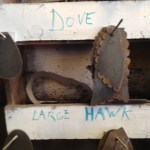
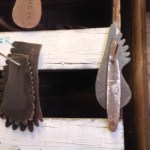
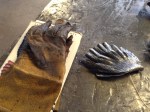
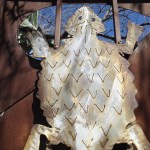
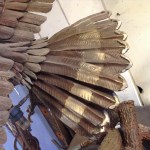
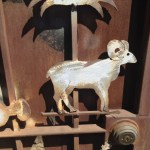
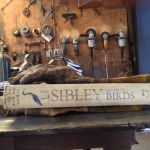
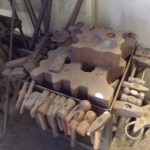
Hephaestus was the crafty, cunning metalworker son of Zeus and Hera. His difficult life began when his mother (or possibly his father) threw him off the planet at birth which pissed him off quite a bit and made him lame. His talent at the forge became obvious early in his life, and he was called upon to craft golden thrones for his parents. He used his extensive powers to revenge his rejection by creating a throne for his mother from which she could not escape. A deal was struck to release Hera from the throne by giving Aphrodite to Hephaestus as a wife. His marriage to the goddess of the sea was not blissful because she was unfaithful to him. He is the only god that was imperfect and the only god that worked. His mastery of fire was envied greatly by his father. His archetype as a loner craftsman can be seen in people who focus on great artistry, production and invention. In Rome he was known as Vulcan. In Tucson he is called Jerry Harris. He was an ancestor of Daedalus, who fashioned wings, as does Mr. Harris.

















Bayern COA
German Queen’s crown
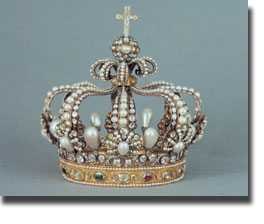
Elisabeth of Bavaria, Queen of Germany was married to Conrad IV in her hometown of Landshut, Bavaria in 1246. Her husband the king was at war with the pope which lead to his early demise in 1254. Her second husband, Duke of Carinthia, is my ancestor. She is one of the only royal ladies in my tree who managed to avoid the monastic life.
Elisabeth of Bavaria, Queen of Germany (Landshut, c. 1227 – 9 October 1273) was the Queen consort of Conrad IV of Germany.
She was the eldest daughter of Otto II Wittelsbach, Duke of Bavaria and Agnes of the Rhine. Her maternal grandparents were Henry V, Count Palatine of the Rhine and Agnes von Staufer.
The elder Agnes was a daughter of Conrad of Hohenstaufen and Irmingard of Henneberg.
Marriages and children
Her father Otto II had become a supporter of Frederick II, Holy Roman Emperor in 1241, following initial conflict between them. Their political alliance would lead to the marriage of the elder daughter of the Wittelsbach and the elder son of the Hohenstaufen. Said son was Conrad IV of Germany, son and heir of Frederick II. Their marriage took place on 1 September 1246, in her native Landshut.
Elisabeth and Conrad would only have one son:
Her father-in-law Frederick II died on 13 December 1250. He was still involved in a war against Pope Innocent IV and his allies at the time of his death. Conrad IV would continue the war until his own death of malaria at Lavello, Basilicata on 21 May 1254.
Elisabeth remained a widow for five years. She married her second husband Meinhard, Duke of Carinthia in 1259. They had six children:
Elisabeth Wittelsbach Duchess Bavaria (1227 – 1273)
is my 20th great grandmother
Consort Elisabeth the Romans Carinthia (1263 – 1313)
daughter of Elisabeth Wittelsbach Duchess Bavaria
Albrecht Albert II ‘The Wise’ Duke of Austria Habsburg (1298 – 1358)
son of Consort Elisabeth the Romans Carinthia
Leopold III “Duke of Austria” Habsburg (1351 – 1386)
son of Albrecht Albert II ‘The Wise’ Duke of Austria Habsburg
Ernst I “Ironside” Archduke of Austria Habsburg (1377 – 1424)
son of Leopold III “Duke of Austria” Habsburg
Katharina Archduchess Austria Von Habsburg (1420 – 1493)
daughter of Ernst I “Ironside” Archduke of Austria Habsburg
Christof I VanBaden (1453 – 1527)
son of Katharina Archduchess Austria Von Habsburg
Beatrix Zahringen (1492 – 1535)
daughter of Christof I VanBaden
Sabine Grafin VonSimmern (1528 – 1578)
daughter of Beatrix Zahringen
Marie L Egmond (1564 – 1584)
daughter of Sabine Grafin VonSimmern
Richard Sears (1590 – 1676)
son of Marie L Egmond
Silas Sears (1638 – 1697)
son of Richard Sears
Silas Sears (1661 – 1732)
son of Silas Sears
Sarah Sears (1697 – 1785)
daughter of Silas Sears
Sarah Hamblin (1721 – 1814)
daughter of Sarah Sears
Mercy Hazen (1747 – 1819)
daughter of Sarah Hamblin
Martha Mead (1784 – 1860)
daughter of Mercy Hazen
Abner Morse (1808 – 1838)
son of Martha Mead
Daniel Rowland Morse (1838 – 1910)
son of Abner Morse
Jason A Morse (1862 – 1932)
son of Daniel Rowland Morse
Ernest Abner Morse (1890 – 1965)
son of Jason A Morse
Richard Arden Morse (1920 – 2004)
son of Ernest Abner Morse
Pamela Morse
I am the daughter of Richard Arden Morse

 mermaidcamp