mermaidcamp
Keeping current in wellness, in and out of the water
You can scroll the shelf using ← and → keys
You can scroll the shelf using ← and → keys
Learning about archetypes has taught me to look at life more closely, and free myself of some old restrictive self images. We all play different parts in our own lives. As we age our desires naturally change and our personalities become more complex. In our history we can discern times when one role has been the dominant one, giving way to another as time passed. Some of us never outgrow our rebel, and some are artists whose latent talent is not discovered until a ripe old age. We all have within our psyches a child, a victim, a saboteur, and a prostitute that are brought to the spotlight by different circumstances.
Plato called this phenomena forms. Carl Jung coined the phrase and defined basic archetypes. He taught that these pure images arise in dreams and in reality as a result of the collective consciousness. Carolyn Myss has evolved the work to include many more archetypes, and has created books, cards, and courses to teach the concepts. It is a powerful practice to draw a timeline of your own life and remember when you encountered strong archetypes in yourself and other people, and how that may have been repeated. All religions use archetypes to teach lessons because they are memorable. The archetype in my first house is the hedonist. When that hedonist is good she is very very good, and when she is bad she is horrid. Such is the case with all of these eternal and universal roles. They have both a light and a dark side. The possibilities are endless. Do you have a strong dominant role you have played throughout your life?
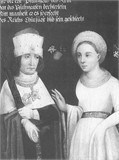
Otto and Agnes
Agnes Countess Of Rhein (1202 – 1267)
is my 21st great grandmother
Elisabeth Wittelsbach Duchess Bavaria (1227 – 1273)
daughter of Agnes Countess Of Rhein
Consort Elisabeth the Romans Carinthia (1263 – 1313)
daughter of Elisabeth Wittelsbach Duchess Bavaria
Albrecht Albert II ‘The Wise’ Duke of Austria Habsburg (1298 – 1358)
son of Consort Elisabeth the Romans Carinthia
Leopold III “Duke of Austria” Habsburg (1351 – 1386)
son of Albrecht Albert II ‘The Wise’ Duke of Austria Habsburg
Ernst I “Ironside” Archduke of Austria Habsburg (1377 – 1424)
son of Leopold III “Duke of Austria” Habsburg
Katharina Archduchess Austria Von Habsburg (1420 – 1493)
daughter of Ernst I “Ironside” Archduke of Austria Habsburg
Christof I VanBaden (1453 – 1527)
son of Katharina Archduchess Austria Von Habsburg
Beatrix Zahringen (1492 – 1535)
daughter of Christof I VanBaden
Sabine Grafin VonSimmern (1528 – 1578)
daughter of Beatrix Zahringen
Marie L Egmond (1564 – 1584)
daughter of Sabine Grafin VonSimmern
Richard Sears (1590 – 1676)
son of Marie L Egmond
Silas Sears (1638 – 1697)
son of Richard Sears
Silas Sears (1661 – 1732)
son of Silas Sears
Sarah Sears (1697 – 1785)
daughter of Silas Sears
Sarah Hamblin (1721 – 1814)
daughter of Sarah Sears
Mercy Hazen (1747 – 1819)
daughter of Sarah Hamblin
Martha Mead (1784 – 1860)
daughter of Mercy Hazen
Abner Morse (1808 – 1838)
son of Martha Mead
Daniel Rowland Morse (1838 – 1910)
son of Abner Morse
Jason A Morse (1862 – 1932)
son of Daniel Rowland Morse
Ernest Abner Morse (1890 – 1965)
son of Jason A Morse
Richard Arden Morse (1920 – 2004)
son of Ernest Abner Morse
Pamela Morse
I am the daughter of Richard Arden Morse
AGNES ([1201]-16 Nov 1267, bur Scheyern). The Notæ Sancti Emeranni record the marriage of “Otto dux Bawarie” and “filiam Heinrici palatine Rheni”. The Altahenses Annales name “Agnes ducissa Bawarie” when recording the birth of her son Ludwig.
m (Worms May 1222) OTTO von Bayern, son of LUDWIG I Duke of Bavaria, Pfalzgraf bei Rhein & his wife Ludmila of Bohemia (Kelheim 1206-Landshut 29 Nov 1253, bur Scheyern). Pfalzgraf bei Rhein 1228. He succeeded his father in 1231 as OTTO II “der Erlauchte” Duke of Bavaria.
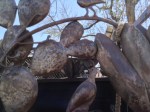
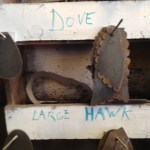
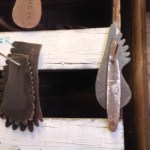
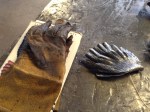
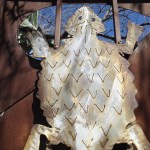
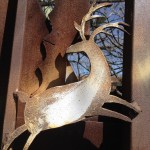
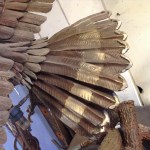
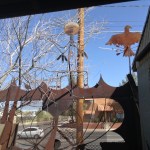
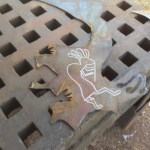
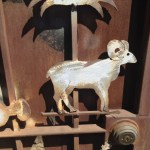
Hephaestus was the crafty, cunning metalworker son of Zeus and Hera. His difficult life began when his mother (or possibly his father) threw him off the planet at birth which pissed him off quite a bit and made him lame. His talent at the forge became obvious early in his life, and he was called upon to craft golden thrones for his parents. He used his extensive powers to revenge his rejection by creating a throne for his mother from which she could not escape. A deal was struck to release Hera from the throne by giving Aphrodite to Hephaestus as a wife. His marriage to the goddess of the sea was not blissful because she was unfaithful to him. He is the only god that was imperfect and the only god that worked. His mastery of fire was envied greatly by his father. His archetype as a loner craftsman can be seen in people who focus on great artistry, production and invention. In Rome he was known as Vulcan. In Tucson he is called Jerry Harris. He was an ancestor of Daedalus, who fashioned wings, as does Mr. Harris.













Bayern COA
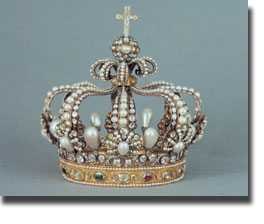
German Queen’s crown
Elisabeth of Bavaria, Queen of Germany was married to Conrad IV in her hometown of Landshut, Bavaria in 1246. Her husband the king was at war with the pope which lead to his early demise in 1254. Her second husband, Duke of Carinthia, is my ancestor. She is one of the only royal ladies in my tree who managed to avoid the monastic life.
Elisabeth of Bavaria, Queen of Germany (Landshut, c. 1227 – 9 October 1273) was the Queen consort of Conrad IV of Germany.
She was the eldest daughter of Otto II Wittelsbach, Duke of Bavaria and Agnes of the Rhine. Her maternal grandparents were Henry V, Count Palatine of the Rhine and Agnes von Staufer.
The elder Agnes was a daughter of Conrad of Hohenstaufen and Irmingard of Henneberg.
Marriages and children
Her father Otto II had become a supporter of Frederick II, Holy Roman Emperor in 1241, following initial conflict between them. Their political alliance would lead to the marriage of the elder daughter of the Wittelsbach and the elder son of the Hohenstaufen. Said son was Conrad IV of Germany, son and heir of Frederick II. Their marriage took place on 1 September 1246, in her native Landshut.
Elisabeth and Conrad would only have one son:
Her father-in-law Frederick II died on 13 December 1250. He was still involved in a war against Pope Innocent IV and his allies at the time of his death. Conrad IV would continue the war until his own death of malaria at Lavello, Basilicata on 21 May 1254.
Elisabeth remained a widow for five years. She married her second husband Meinhard, Duke of Carinthia in 1259. They had six children:
Elisabeth Wittelsbach Duchess Bavaria (1227 – 1273)
is my 20th great grandmother
Consort Elisabeth the Romans Carinthia (1263 – 1313)
daughter of Elisabeth Wittelsbach Duchess Bavaria
Albrecht Albert II ‘The Wise’ Duke of Austria Habsburg (1298 – 1358)
son of Consort Elisabeth the Romans Carinthia
Leopold III “Duke of Austria” Habsburg (1351 – 1386)
son of Albrecht Albert II ‘The Wise’ Duke of Austria Habsburg
Ernst I “Ironside” Archduke of Austria Habsburg (1377 – 1424)
son of Leopold III “Duke of Austria” Habsburg
Katharina Archduchess Austria Von Habsburg (1420 – 1493)
daughter of Ernst I “Ironside” Archduke of Austria Habsburg
Christof I VanBaden (1453 – 1527)
son of Katharina Archduchess Austria Von Habsburg
Beatrix Zahringen (1492 – 1535)
daughter of Christof I VanBaden
Sabine Grafin VonSimmern (1528 – 1578)
daughter of Beatrix Zahringen
Marie L Egmond (1564 – 1584)
daughter of Sabine Grafin VonSimmern
Richard Sears (1590 – 1676)
son of Marie L Egmond
Silas Sears (1638 – 1697)
son of Richard Sears
Silas Sears (1661 – 1732)
son of Silas Sears
Sarah Sears (1697 – 1785)
daughter of Silas Sears
Sarah Hamblin (1721 – 1814)
daughter of Sarah Sears
Mercy Hazen (1747 – 1819)
daughter of Sarah Hamblin
Martha Mead (1784 – 1860)
daughter of Mercy Hazen
Abner Morse (1808 – 1838)
son of Martha Mead
Daniel Rowland Morse (1838 – 1910)
son of Abner Morse
Jason A Morse (1862 – 1932)
son of Daniel Rowland Morse
Ernest Abner Morse (1890 – 1965)
son of Jason A Morse
Richard Arden Morse (1920 – 2004)
son of Ernest Abner Morse
Pamela Morse
I am the daughter of Richard Arden Morse
Each year the Tucson Botanical Gardens hosts an orchid, butterfly, and now tropical frog display for the public. It is popular with families and with me. I enjoy the humid tropical mist on my skin and the fun of watching the butterflies and people. Yesterday there was a lot of activity. Kids love to use the magnifying glass, no matter why they see in it. It is a small lesson in science, botany, biology, and ecology, adapted for all ages. Who doesn’t like butterflies?
My strong love of reading has compelled me to do many things, including restricting my book consumption on a 3 book diet last year. My consumer weakness it is for art and books. I never seem to have enough of either one, even though I have more than I can store in my present circumstances. The Kindle has helped me to reduce the space I dedicate to books, but the passion to read everything all the time was not diminished by the diet. If anything I am rebounding since November when I allowed myself to buy books once more. I have loaded up on both print and Kindle books, plus I had a big backlog from the book diet year that I had acquired and not opened. I am back in full force as crazy reading woman, proving once and for all that diets just do not work.
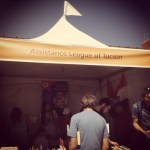
Attending the Tucson Festival of books for the first time was amazing to me. The super well-organized event takes place on the U of A campus in buildings and in various tents set up for the weekend. Windy weather did not deter the visitors or participants from having wonderful time. Presentations for readers as well as writers are given all day both Saturday and Sunday. A giant food court assures that spending the day there will require no sacrifice. I did not eat or attend a session, but I thoroughly enjoyed all the tents I visited. Volunteers make sure the crowd is informed. Families with kids can participate in several ongoing demonstrations, book give aways, and photo ops with favorite characters from children’s literature . I bought some great cookbooks, two of historical significance, from the Assistance League tent and a book of memoirs from an Albuquerque lawyer, Laws and Loves Part I, Real Stories of the Rattlesnake Lawyer. I am a sucker for books that contain the word rattlesnake in the title. I am also planning to attend a free introductory class by the Writer’s Studio in Tucson. I have some desire to write poetry, and this group offers workshops that are convenient and well priced. Who knows, gentle readers, where this may go. Maybe all this reading will help me learn to write. Stay tuned; the plot may thicken.







Our society is experimenting with self sustaining living. In recent decades focus has changed from local production of food and goods to a transportation heavy supply chain. We now pay little to produce our goods in countries with lax labor laws and spend fortunes shipping those goods around the globe. The skills of preserving food, and even growing food have been lost to a great extent, but there is new interest in reviving local farming and local cuisines. Popular classes and books are teaching:
These alternative practices offer students ways to save money and become more creative. Learning new skills can reap big benefits for society as well as individuals. The future will be shaped by the habits we develop now. Communities focused on improving local, self-sustaining economies are becoming more common. The trend is strong and, in my opinion, will grow in the future. Have you made any changes in your own life to create a more self sustenance?
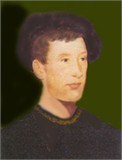
Thomas DeHoland
Battle of Najera
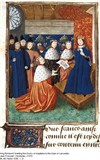
Richard II deeding Aquitaine to Lancaster
Thomas Deholand is my ancestor on both sides of my family. My maternal line looks like this:
Thomas DeHoland (1350 – 1397)
is my maternal 18th great grandfather
Edmund Holland (1383 – 1408)
son of Thomas DeHoland
Eleanor DeHoland (1405 – 1452)
daughter of Edmund Holland
Ann Touchet (1441 – 1503)
daughter of Eleanor DeHoland
Anna Dutton (1449 – 1520)
daughter of Ann Touchet
Lawrence Castellan of Liverpool Mollenaux (1490 – 1550)
son of Anna Dutton
John Mollenax (1542 – 1583)
son of Lawrence Castellan of Liverpool Mollenaux
Mary Mollenax (1559 – 1575)
daughter of John Mollenax
Francis Gabriell Holland (1596 – 1660)
son of Mary Mollenax
John Holland (1628 – 1710)
son of Francis Gabriell Holland
Mary Elizabeth Holland (1620 – 1681)
daughter of John Holland
Richard Dearden (1645 – 1747)
son of Mary Elizabeth Holland
George Dearden (1705 – 1749)
son of Richard Dearden
George Darden (1734 – 1807)
son of George Dearden
David Darden (1770 – 1820)
son of George Darden
Minerva Truly Darden (1806 – 1837)
daughter of David Darden
Sarah E Hughes (1829 – 1911)
daughter of Minerva Truly Darden
Lucinda Jane Armer (1847 – 1939)
daughter of Sarah E Hughes
George Harvey Taylor (1884 – 1941)
son of Lucinda Jane Armer
Ruby Lee Taylor (1922 – 2008)
daughter of George Harvey Taylor
Pamela Morse
I am the daughter of Ruby Lee Taylor
Thomas Holland, 2nd Earl of Kent (1350–April 25, 1397) was an English nobleman and a councillor of his half-brother Richard II.Thomas was the son of Thomas Holland, 1st Earl of Kent and Joan of Kent. His mother was a daughter of Edmund of Woodstock, 1st Earl of Kent and Margaret Wake. Edmund was in turn a son of Edward I of England and his second Queen consort Marguerite of France, and thus a younger half-brother of Edward II of England.
When his father died in 1360 Thomas became Baron Holand. His mother was still Countess of Kent in her own right. At sixteen, in 1366, Holland was appointed captain of the English forces in Aquitaine. He fought in various campaigns over the following years, and was made a Knight of the Garter in 1375.
Richard II became king in 1377, and soon Holland acquired great influence over his younger half-brother, which he used for his own enrichment. In 1381 he was created Earl of Kent.
Marriage and issue
Holland married Alice FitzAlan, daughter of Richard FitzAlan, 10th Earl of Arundel, and Eleanor of Lancaster. They had eight children:
Thomas Holland, 1st Duke of Surrey, who succeeded him
Edmund Holland, 4th Earl of Kent, married Constance of York
John Holland
Joan Holland, married Edmund of Langley, 1st Duke of York
Alianore Holland, married first Roger Mortimer, 4th Earl of March and second Edward Cherleton, 5th Baron Cherleton
Margaret Holland, married first John Beaufort, 1st Earl of Somerset and second Thomas of Lancaster, 1st Duke of Clarence
Elizabeth Holland, married Sir John Neville (eldest son of Ralph Neville, 1st Earl of Westmoreland)
Eleanor Holland, married Thomas Montacute, 4th Earl of Salisbury
Through the marriages of his daughters, he became the ancestor of many of the prominent figures in the Wars of the Roses, including Richard Plantagenet, 3rd Duke of York and Warwick the Kingmaker
Military career
At sixteen, in 1366, Holland was appointed captain of the English forces in Aquitaine. Over the next decade he fought in various campaigns, including the Battle of Nájera, under the command of his stepfather Edward, the Black Prince. He was made a Knight of the Garter in 1375.
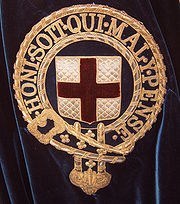
Order of the Garter
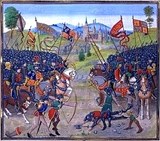
The Battle of Nájera, a k a the Battle of Navarrete, 3 April 1367
Fo ught between an Anglo-Gascon army and Franco- Castilian forces near Nájera, in the province of La Rioja, Castile. The English were led by Edward, the Black Prince, and John of Gaunt, Duke of Lancaster, allied with Peter of Castile (sometimes called “Peter the Cruel”) against his brother Henry of Trastámara (Spanish: Enrique II).
Peter and Henry had been in armed conflict, the Castilian Civil War, for some time before the intervention of foreign powers was sought. Peter begged assistance from the Black Prince in Bordeaux to restore him to his throne. James IV of Majorca also agreed to support Peter.
History
With 24,000 men, the Anglo-Gascon army marched south from Aquitaine and crossed the river Ebro at Logroño. They took control of the fortified village of Navarrete and continued towards Nájera to face Henry’s Franco-Castilian army, the latter’s strength being 60,000. Despite the large size of his army, Henry’s commander, Bertrand du Guesclin was later reported to have been reluctant to face the English in a pitched battle, but he was overruled.
The battle began with the English longbowmen gaining dominance over the French archers. Then, the English vanguard, led by Sir John Chandos and the Duke of Lancaster, attacked the French mercenaries commanded by Du Guesclin and Arnoul D’Audrehem. The chronicler Froissart gives detailed information about the participants in the battle.
Under the pennon of St. George, and attached to the banner of Sir John Chandos, were the free companies, who had in the whole twelve hundred streamers. Among them were good and hardy knights and squires, whose courage was proof; namely, Sir Robert Cheney, Sir Perducas d’Albret, Robert Briquet, Sir Garsis du Chastel, Sir Gaillard Viguier, Sir John Charnels, Nandon de Bagerant, Aymemon d’Ortige, Perrot de Savoye, le bourg Camus, le bourg de l’Esparre, le bourg de Breteuil, Espiote, and several others.
Th e Castilian cavalry, under heavy arrow fire from the English longbowmen, fled early, leaving Henry’s battle exposed to attack from the mounted English rearguard. The Franco-Castilian army disintegrated and retreated, pursued by the English, back to the bank of the river Najerilla. Du Guesclin was captured, but Henry escaped and fled.
Peter and the English completely routed Henry and the French, inflicting heavy losses. Unlike at other battles of the Hundred Years’ War, at Nájera it was the English who were attacking dismounted French troops. As with many other battles of the period, the English longbow proved a significant advantage, probably for the first time in the Iberian Peninsula. However, the battle was of dubious long-term significance as Peter and the Black Prince fell out over money, and Peter was not able to maintain his rule for long without foreign support.
References
Sir John Froissart; Translated from the French by Thomas Johnes. Chronicles of England, France and Spain and the Surrounding Countries. London 1808
My paternal connection to Sir Thomas looks like this:
Sir Thomas Holand Knight deHolland (1350 – 1397)
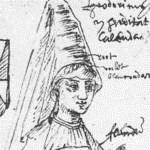
Sibilla Anjou
My 25th great grandmother was from the House of Anjou (like the pear) . Her father, Fulk, was a crusader who is buried at the Church of the Holy Sepulchre in Jerusalem, as King of Jerusalem, which is a very big deal, and pretty creepy. I have been there but did not think to look for my ancestors at the time. The Anjous are Plantagenets in that way that royal Euros had lots of different names and houses. The crusade thing is equally confusing. This is how the Anjous took over the English throne:
The Plantagenets are also called Angevins, because their immediate paternal progenitors were Counts of Anjou, an autonomous county in northern France. They descend in the male line from from the Counts of Gatinais, one of whom had married an heiress to the county, her Anjou ancestors deriving from an obscure 9th century nobleman named Ingelger. It is due to this lineage that the Plantagenets are sometimes referred to as the First House of Anjou. One of the more notable Counts was Fulk, a crusader who became King of Jerusalem. It was his son, Geoffrey, nicknamed Plantagenet, who gave his name to the dynasty, and Fulk’s grandson, Henry, was the first of the family to rule England.
Henry’ s claim to the English throne came through his mother, the Empress Matilda, who had claimed the crown as the daughter of Henry I of England. Empress Matilda’s brother William Adelin had died in the wreck of the White Ship, leaving Matilda her father’s only surviving legitimate child. However, on Henry’s death in 1135, Matilda’s cousin Stephen of Blois was supported by much of the Anglo-Norman nobility, and was able to have himself crowned instead. A tightly fought civil war known as The Anarchy ensued, with Matilda gaining support from her illegitimate half-brother, Robert, 1st Earl of Gloucester. The balance swayed both ways during the war, Matilda gained control at one point and carried the title “Lady of the English” before Stephen forced her out to Anjou. Unrest and instability continued throughout Stephen’s reign, while on the continent, Geoffrey managed to take control of the Duchy of Normandy for the Angevins in 1141 but seemingly showed no interest in campaigning across the Channel.
Sibilla went to Jerusalem where her father married the queen. Later she became a nun, like lots of my royal female ancestors:
Sibylla of Anjou (c. 1112-1165) was a daughter of Fulk V of Anjou and Ermengarde of Maine, and wife of William Clito and Thierry, Count of Flanders.
In 1123 Sibylla married to William Clito, son of the Norman Robert Curthose and future Count of Flanders. Sibylla brought the County of Maine to this marriage, which was annulled in 1124 on grounds of consanguinity. The annulment was made by Pope Honorius II upon request from Henry I of England, William’s uncle; Fulk opposed it and did not consent until Honorius excommunicated him and placed an interdict over Anjou. Sibylla then accompanied her widower father to the crusader Kingdom of Jerusalem, where he married Melisende, the heiress of the kingdom, and became king himself in 1131. In 1139 she married Thierry, Count of Flanders, who had arrived on his first pilgrimage to the Holy Land.
She returned to Flanders with her new husband, and during his absence on the Second Crusade the pregnant Sibylla acted as regent of the county. Baldwin IV, Count of Hainaut took the opportunity to attack Flanders, but Sibylla led a counter-attack and pillaged Hainaut. In response Baldwin ravaged Artois. The archbishop of Reims intervened and a truce was signed, but Thierry took vengeance on Baldwin when he returned in 1149.
In 1157 she travelled with Thierry on his third pilgrimage, but after arriving in Jerusalem she separated from her husband and refused to return home with him. She became a nun at the convent of St. Lazarus in Bethany, where her step-aunt, Ioveta of Bethany, was abbess. Ioveta and Sibylla supported Queen Melisende and held some influence over the church, and supported the election of Amalric of Nesle as Latin Patriarch of Jerusalem over a number of other candidates. Sibylla died in Bethany in 1165.
With Thierry she had six children:
Sibilla d’Anjou born about 1105 Anjou, France died 1165/67
father: *Foulques V “le Jeune” Count of Anjou & King of Jerusalemborn 1092 Anjou, France
died 10 November 1143 Jerusalem, Holy Landburied Church Of Holy Sepulchre, Jerusalem, Holy Land
mother: *Ermengarde (Ermentrude) du Maineborn about 1096 Maine, France
died 1126 Maine, Francemarried 11 July 1110 France
siblings:
*Geoffrey V “le Bon” Plantagenet born 24 August 1113 Anjou, France; died 7 September 1151 Chateau, France
Mathilde d’Anjou born about 1104 Angers, Maine-et-Loire, France; died 1154 Fontevrault Abbey, Fontevrault, Maine-et-Loire, France
Elias d’Anjou born about 1111 Anjou, France; died 15 January 1151 St Serge Abbey, Angers, Anjou, France buried L’Abbey des Sergela, Angers, France
spouse: *Dietrich (Thierry) d’ Alsaceborn about 1099 Alsace, France
died 17 January 1168married 1134
children:
*Marguerite de Lorraine born about 1135 Alsace, France died 15 November 1194
*Matthieu d’ Alsace born about 1137 Flanders, Belgium died 1214 buried St. Judoc, Ponthieu, France
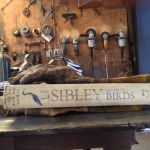
While hanging out in the steam room at my health club I noticed a man wearing a lot of silver jewelry and thought it must be hot on his skin. After a few steam room conversations I discovered that he is a metal sculptor who had worked in a shop in Tucson that I had later used as a pottery studio in the distant past. I have not worked with clay for a long time, but Jerry has evolved from making simple objects to producing very artful and complicated mixed media art. He worked as a ferrier. He played polo in Colorado. He bought the Village Blacksmith shop 30 years ago from another blacksmith. His art today is centered around birds in action. His knowledge about anatomy of birds has grown deeper as he has worked in this specialty field. I was very lucky to have a personal tour of the shop and sculpture on display. He participates in the Pima Arts Council open studio tours. Since there was no fire during my visit I thought my gentle readers would also enjoy watching the tools and Jerry in action:
 mermaidcamp