mermaidcamp
Keeping current in wellness, in and out of the water
You can scroll the shelf using ← and → keys
You can scroll the shelf using ← and → keys

Margaret Audley
My 14th great-grandmother was Duchess of Norfolk. Elizabeth I beheaded her husband, who was her 5th cousin. She is buried in a church in Norwich.
Lady Margaret Howard 1540-1563/4
“The Virtuous Lady Margaret” was the daughter and sole heir of Thomas, Lord Audley of Walden and Elizabeth Grey. Lord Audley was a prominent Politician whose roles included Lord Chancellor to Henry VIII. Her first husband Lord Henry Dudley died before she was eighteen.
She subsequently married her cousin, Thomas Howard, 4th Duke of Norfolk, who had been widowed in 1557. Thomas was extremely rich and powerful and has been described as the “Premier Peer” in England between 1558 – 1568. The marriage was initially delayed whilst Norfolk’s lawyer negotiated in Rome for a Papal dispensation that would allow him to marry his cousin. Following the death of Queen Mary in 1558 and the accession of the protestant Queen Elizabeth the marriage went ahead without Papal approval. Subsequently in Elizabeth’s first parliament in 1559 the marriage received statutory ratification. Margaret brought a rich inheritance to the alliance, including Audley End in Essex.
During her short marriage she bore five children: two sons and three daughters. She died on 10th January 1564 three weeks after giving birth to her second son Lord William Howard, born on 19th December 1563. The monument, however, states she died 7th February 1563 ! This could be because although Margaret was buried with great dignity on the North Side of the Chancel in St John Maddermarket , she had no memorial there until this tablet was erected in 1791 by her descendant Lord John Howard of Walden. Although the monument here is very plain her effigy lies beside that of the Duke’s first wife Mary Fitzalan, on a splendid tomb in St Michael’s church, Framlingham Suffolk. A space had been left between the two figures, presumably for the effigy of their husband. He was never placed here having brought disgrace to the family and being beheaded for treason by Elizabeth I because of his attempts to marry Mary Queen of Scots.
‘
The Monument
This rather humble tablet was erected by Lord John Howard of Walden in 1791 in a style typical of the time; it was restored by Lord Howard de Walden in 1903.
Under the shield is quoted the Howard family motto ” Sola Virtus Invicta” – which translates to “Bravery Alone is Invincible.” The reference to “The virtuous Lady Margaret” on the monument could, however, be reference to an alternative translation “Virtue Alone is invincible”
Margaret Audley (1545 – 1564)
is my 14th great grandmother
Margaret Howard (1561 – 1591)
daughter of Margaret Audley
Lady Ann Dorset (1552 – 1680)
daughter of Margaret Howard
Robert Lewis (1574 – 1645)
son of Lady Ann Dorset
Robert Lewis (1607 – 1644)
son of Robert Lewis
Ann Lewis (1633 – 1686)
daughter of Robert Lewis
Joshua Morse (1669 – 1753)
son of Ann Lewis
Joseph Morse (1692 – 1759)
son of Joshua Morse
Joseph Morse (1721 – 1776)
son of Joseph Morse
Joseph Morse III (1752 – 1835)
son of Joseph Morse
John Henry Morse (1775 – 1864)
son of Joseph Morse III
Abner Morse (1808 – 1838)
son of John Henry Morse
Daniel Rowland Morse (1838 – 1910)
son of Abner Morse
Jason A Morse (1862 – 1932)
son of Daniel Rowland Morse
Ernest Abner Morse (1890 – 1965)
son of Jason A Morse
Richard Arden Morse (1920 – 2004)
son of Ernest Abner Morse
Pamela Morse
I am the daughter of Richard Arden Morse
Source: Wikipedia
Margaret Howard (née Audley), Duchess of Norfolk (1540 – 1564) was the sole surviving child[1] of Thomas Audley, 1st Baron Audley of Walden and Lady Elizabeth Grey, daughter of Thomas Grey, 2nd Marquess of Dorset and Margaret Wotton. Lady Elizabeth Grey was the aunt of Lady Jane Grey, de facto Queen of England for nine days in 1553 and, therefore, Margaret and Queen Jane were first cousins.
Margaret was a wealthy heiress and married first, without issue, Lord Henry Dudley, son of John Dudley, 1st Duke of Northumberland. Henry Dudley was killed at the Battle of St. Quentin, 20 August 1557
In December 1558, she became the second wife of Thomas Howard, 4th Duke of Norfolk, who was her fifth cousin, through their descent from Jacquetta of Luxembourg and Richard Woodville. Margaret’s line of descent came from the marriage of Elizabeth Woodville and John Grey, while Thomas Howard’s line of descent came through Elizabeth Woodville’s sister, Catherine, who had married Henry Stafford. They had four children, Elizabeth (who died as a child), Thomas Howard, 1st Earl of Suffolk, William, and Margaret. She died 9 January 1564, three weeks after the birth of her last child. She was buried at St. John the Baptist’s church at Norwich.
Eros Ramazzotti is my favorite Euro pop star and this song was his first giant hit in Europe. I had not seen this video story of his quest to find the love of his life. It is like a treasure hunt or scavenger hunt in which the destination is not known, but clues are gathered. This love story has dream qualities in which strong symbols compel him to continue the search. The Roman god Eros was involved with much mystery and trickery. Eros fell in love with Psyche but concealed his identity while he courted her nightly. His mother Aphrodite was jealous of Psyche’s beauty, and wished her harm. The story has many dramatic twists and turns but in the end the couple does marry and live happily.
Eros has a sexual spark, but it can represent beauty, vitality and flow of life. When a person place or thing turns you on it reminds you of the vital force within your own body. To be sexy or feel attracted is to confirm your own mysterious connection to love and your destiny as a lover. To follow each tiny vital impulse would prove too much, but how can we be sensitive and respond when true love calls? It is possible that only at the end of your life will you be able to look back and identify your true loves, your true dreams, and your true beliefs? Is the treasure hunt for love so subtle and full of mysterious layers that we can only understand in retrospect? What will you hunt for on Valentine’s Day? Where will you find Eros?
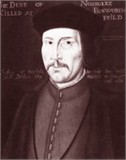
John Howard
My 16th great-grandfather died in battle in the War of the Roses:
John Howard, 1st Duke of Norfolk, 12th Baron Segrave, 11th Baron Mowbray, Earl Marshal (1421 – 22 August 1485) was an English nobleman, soldier, and the first Howard duke of Norfolk. He was a close friend and loyal supporter of King Richard III of England, with whom he died in combat at the Battle of Bosworth.
The Battle of Bosworth Field was the penultimate battle of the Wars of the Roses, the civil war between the House of Lancaster and the House of York that raged across England in the latter half of the 15th century. Fought on 22 August 1485, the battle was won by the Lancastrians. Their leader Henry Tudor, Earl of Richmond, became the first English monarch of the Tudor dynasty by his victory and subsequent marriage to a Yorkist princess. His opponent Richard III, the last king of the House of York, was killed in the battle. Historians consider Bosworth Field to mark the end of the Plantagenet dynasty, making it one of the defining moments of English history.http://en.wikipedia.org/wiki/Battle_of_Bosworth_Field
Retrieved on 7 May 2010 from:http://en.wikipedia.org/wiki/Battle_of_Bosworth_Field,http://en.wikipedia.org/wiki/John_Howard, _1st_Duke_of_Norfolk

Battle of Bosworth Field
John Howard (1421 – 1485)
is my 16th great grandfather
Lord Thomas HOWARD (1443 – 1524)
son of John Howard
Lady Katherine Howard Duchess Bridgewater (1495 – 1554)
daughter of Lord Thomas HOWARD
William ApRhys (1522 – 1588)
son of Lady Katherine Howard Duchess Bridgewater
Henry Rice (1555 – 1621)
son of William ApRhys
Edmund Rice (1594 – 1663)
son of Henry Rice
Edward Rice (1622 – 1712)
son of Edmund Rice
Lydia Rice (1649 – 1723)
daughter of Edward Rice
Lydia Woods (1672 – 1738)
daughter of Lydia Rice
Lydia Eager (1696 – 1735)
daughter of Lydia Woods
Mary Thomas (1729 – 1801)
daughter of Lydia Eager
Joseph Morse III (1752 – 1835)
son of Mary Thomas
John Henry Morse (1775 – 1864)
son of Joseph Morse III
Abner Morse (1808 – 1838)
son of John Henry Morse
Daniel Rowland Morse (1838 – 1910)
son of Abner Morse
Jason A Morse (1862 – 1932)
son of Daniel Rowland Morse
Ernest Abner Morse (1890 – 1965)
son of Jason A Morse
Richard Arden Morse (1920 – 2004)
son of Ernest Abner Morse
Pamela Morse
I am the daughter of Richard Arden Morse
Born around 1420, John Howard was the son and heir of Sir Robert Howard andMargaret, daughter of Thomas Mowbray, Duke of Norfolk. Through his mother and her female line, he was descended from Edward I, thus making him the premier Duke and heir to the title of Earl Marshall. Nothing is known of his childhood.
His first recorded service was in 1451, when he followed Lord L’Isle to Guienne. He was also present at the Battle of Chatillon in Jul two years later. It was at this time that he entered the service of John Mowbray, Duke of Norfolk.
On the first accession of Edward IV, Howard was knighted and appointed Constable of Colchester Castle, Sheriff of Norfolk and Suffolk. He was also one of the King’s Carvers.
Howard took an active part in John Mowbray’s quarrel with John Paston. In Aug 1461, he was involved in a violent brawl with Paston and used his influence withEdward IV against Paston. In Nov of the same year, Howard was imprisoned after giving offence at the election of Paston, causing many complaints against him.
The following year, he was appointed Constable of Norwich Castle and received grants of several manors forfeited by the Earl of Wiltshire. He was joined byWilliam Neville, Baron Fauconberg and Lord Clinton to “keep the seas“, taking Croquet and the Isle of Rhe. Later in the year, he was sent to help the Richard Neville, Earl of Warwick at Warkworth.
In the Spring of 1464, Howard helped Norfolk secure Wales for Edward IV. He bought the reversion of Bamburgh Castle in Jun of the same year and was withEdward IV and his court at Reading by the year’s end.
Howard was appointed Vice Admiral for Norfolk and Suffolk in 1466, and was charged with conveying envoys from England to France and the Duke of Burgundy. He remained in Calais from 15 May to 27 Sep.
He was elected Knight of the Shire for Suffolk in Apr 1467, having been elected Knight of the Shire for Norfolk in 1455. Nov 1467 saw him as an appointed Envoy to France as well as Treasurer to the Household, a post which he held until 1474. The following Jun (1468) he attended Margaret of York to Flanders for her marriage to Charles, Duke of Burgundy.
On the restoration of Henry VI, he was created Baron de Howard (15 Oct 1470). However, when Edward IV landed back in England in Mar 1471, after living in exile in Bruges, Howard proclaimed Edward to be King.
The following Jun, he was appointed Deputy Governor of Calais. When Edward IVinvaded France in Jul 1474, he was accompanied by John Howard, who was one of the commissioners who made a truce at Amiens. Howard received a pension from Louis XI and remained in France, briefly, as a hostage after Edward’s departure. On Howard’s return to England, he was granted manors in Suffolk and Oxfordshire forfeited by John de Vere, Earl of Oxford.
John Howard was also sent by Edward to treat with France on several occasions – Jul 1477, Mar 1478, and Jan 1479. Also, in 1479, he was put in charge of the fleet which was sent to Scotland.
At Edward IV’s funeral in Apr 1483, he carried Edward’s Banner. He then attached himself to Richard III. On 13 May 1483, he was appointed High Steward of the Duchy of Lancaster and was made a Privy Councillor. A month later, John Howard was created Duke of Norfolk and Earl Marshall.
He persuaded Elizabeth Woodville to let the young Duke of York join his brother Edward V in the Tower. He was possibly involved in the murder of the two princes in the Tower of London. At Richard III’s coronation, Howard performed many functions – he acted as High Steward, bore the crown, and, as Earl Marshall, was the King’s Champion. Shortly afterwards, he was created Admiral of England, Ireland, and Aquitaine, and was appointed Chief of Commissioners to negotiate with James III of Scotland on 12 Sep 1484 at Nottingham.
In Aug 1485, he summoned his retainers to Bury St. Edmunds and commanded the vanguard at the Battle of Bosworth, where he was killed. Howard was attainted at Henry VII’s first Parliament. Warned in the following distich: “Jockey of Norfolk be not too bold,/ For Dickon thy master is bought and sold“. He was buried in the conventual church at Thetford, Norfolk.
Juno is the Roman goddess of childbirth and marriage. She conceived and gave birth to her son, Mars, the god of anger, by taking an herb given to her by the goddess Flora. She acts as one of the three guardians of Rome together with Minerva and Jupiter. Both Juno and Jupiter are said to be able to throw thunderbolts. She was jealous when Jupiter gave birth to a fully armed Minerva from his head, so she gave birth to her own warrior son.
In Thomas Moore’s new book, A Religion of One’s Own, he explains that Juno can be perceived as a guardian angel spirit for women. Men have similar genius spirits, in a mythological sense. These guardian angels or personal spirit guides act to individuate and protect people. It is notable to me that either Jupiter or Juno can give birth to armed warriors for protection. Another key concept brought up in the book that is new to me is that Mars was considered to be a close friend of agriculture. Mars protected the crops from pests. Mars represents anger artfully directed, rather than repressed or exploded. That is why they are called martial arts, not lucha libre.
The idea of protection reminds me that it is fitting and healing to deal with dark emotions appropriately. The energy of the thunderbolt throwing parents of Minerva and Mars must be carefully directed and not treated lightly. War and anger may be a part of life, but they can be used to remove obstructions in an earthly or a spiritual realm. Primal anger, which we all have, is useful and instructive. It draws the line, but it can also cause great distress and confusion. I agree with the idea that we need to be aware of our anger and how we express and use it as an integral part of a personal awakening. I like the helpful imagery of my full time Juno guarding me, and plan to take her with me all the time. If you enjoyed a guardian angel as a child, or even if you never did, it is not too late to relate to yours.
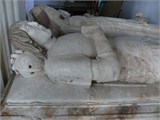
grave
My 16th great grandfather was the Sheriff of Essex at a very tricky time in history. I recently watched “the Tudors” on PBS. Those people were very wild. If Knight Wentworth was hanging out with Queen Katherine and the Emperor Charles he was close to Henry VIII, and we know how dangerous that could be. I had another ancestor who also attended the Cloth of Gold, but as a chaplain. I wonder if they knew each other. Sir Roger was:
Knight, of Cobham Hall, Wethersfield, and Gosfield, Essex, jure uxoris, Sheriff of Essex and Hertfordshire. Accompanied Queen Katherine at the Field of the Cloth of Gold in 1520; accompanied King Henry VIII to a meeting with Emperor Charles V at Canterbury in 1522.
Roger “Sir Knight””Sheriff of Essex” Wentworth (1460 – 1539)
is my 16th great grandfather
Margaret Wentworth (1492 – 1532)
daughter of Roger “Sir Knight””Sheriff of Essex” Wentworth
Isabell Harvey (1510 – 1594)
daughter of Margaret Wentworth
Edward Radcliffe (1535 – 1643)
son of Isabell Harvey
Lady Eleanor Elizabeth Radcliffe (Whitebread) (1550 – 1628)
daughter of Edward Radcliffe
Elizabeth Whitbread (1538 – 1599)
daughter of Lady Eleanor Elizabeth Radcliffe (Whitebread)
Thomas Spencer (1571 – 1631)
son of Elizabeth Whitbread
Thomas Spencer (1596 – 1681)
son of Thomas Spencer
Margaret SPENCER (1633 – 1670)
daughter of Thomas Spencer
Moses Goodwin (1660 – 1726)
son of Margaret SPENCER
Martha Goodwin (1693 – 1769)
daughter of Moses Goodwin
Grace Raiford (1725 – 1778)
daughter of Martha Goodwin
Sarah Hirons (1751 – 1817)
daughter of Grace Raiford
John Nimrod Taylor (1770 – 1816)
son of Sarah Hirons
John Samuel Taylor (1798 – 1873)
son of John Nimrod Taylor
William Ellison Taylor (1839 – 1918)
son of John Samuel Taylor
George Harvey Taylor (1884 – 1941)
son of William Ellison Taylor
Ruby Lee Taylor (1922 – 2008)
daughter of George Harvey Taylor
Pamela Morse
I am the daughter of Ruby Lee Taylor

A Religion of One’s Own
I just read A Religion of One’s Own by Thomas Moore, an author I admire. I met him in person last May when he had recently completed the book and was in the editing process. The workshop I took with him then was about soul, spirit, and the distinction between the two. This new book goes into detail on this subject. Like his other books I have enjoyed the subject matter is easily accessible although the reader becomes highly aware of Tom’s deep background and knowledge of world religions, art, music, history, and natural magic. He spent many years as a monk learning languages and music composition as he studied to be ordained as a priest. His knowledge of Greek and Latin always add depth to his concepts because he carefully traces true meanings in words. The words I learn from him stay in a special memory bank of super charged, precious possessions. They are magic words for me, with mystical value.
I read the book almost non stop on my Kindle paperwhite, a new gadget I now think is excellent. One feature of Kindle reading is the ability to look up words within the device as you read. The words you look up are added to your ongoing vocabulary list. Since I learn new words every time I read his work, this was fabulously useful. Here is my new vocabulary from this book:
Normally I would take the meaning from context and go on, but now I am a real vocabulary builder. What Thomas Moore is asking us all to do is to develop a much broader vocabulary and understanding of religion. The mystical and mysterious is essential to our fulfillment and happiness. Without soul, spirit, and practices that maintain the health and vigor of both in our lives we can become dead to the pleasure of being alive. Churches and formal religion have lost the leadership role they once maintained without question. Now it is important not to discard the sacred and the meaningful, but to make a unique personal system that is true to our own natures. Dogma and deterioration from institutions can be replaced by practices that feed our souls and our spirits, and nurture harmony in our communities.
I know all of Tom’s many fans will be happy to read this latest edition of his teaching. If you have not had the pleasure of meeting him in person or in writing you are missing a very special treat. He is a Renaissance Man in that he is honestly creating a renaissance vortex and map for his readers to follow. He is asking no less than a rebirth and re-empowerment of our sacred traditions so as not to loose the beauty and significance of them. He gives concrete suggestions and guidance to achieve this goal by treating all the religious traditions as one’s own. Personal wisdom and satisfaction are essential to living a blissful, peaceful life. Thomas Moore has once again created a meaningful and significant lesson we can all easily grasp. The book is short, compelling, and will leave you in a new frame of mind. It is worth reading, and even more worth practicing.
In Shakespeare’s Othello the protagonist Moor is a military commander and the action takes place during a time of war. The twists and turns of the story are typical of a tragedy written by The Bard. There is much misunderstanding and treachery leading to the deeply tragic ending. The play has been performed in all kinds of settings and time frames because it has eternal themes that work well for any time or place in history. Racism, betrayal, jealousy, and war are always in style, sadly enough. It has been adapted into movie and opera in the past, and now it is being presented as a modern fusion of the latest technology possible combined with an ancient story.
The star and creator in this new production is from Salvador do Bahia, Brazil and has deep cultural and artistic roots in that city. He has been fascinated with this play for many years. Elisio Pitta wanted to use his talent and experience as a dancer and artist to produce a sharp protest against domestic violence, a worldwide problem. He created a working collaboration of the most artistically gifted people he knew for this project. Working as a team, they focused on the ideas they wanted to portray. This new version of Othello has been merged with the cultural treasures and foundations of Bahia. Slavery, racism, liberation, and natural magic are strong themes in the artistic backgrounds of these artists. They intentionally explored the similarities and dramatic meaning present in Shakespeare’s drama, and adapted it to their own time and place to send a message and make an emphatic statement. They worked on it for over 3 years, and were ironically interrupted during rehearsal when Mr Pitta was badly injured in an incident of violence last August in his home city. Elisio is a master martial artist in capoeira, but 10 large young angry men were more than he could handle. This attack only strengthened his resolve to present his artistic response to violence, which is too common today. In this show, since it is based on modern issues, Othello kills himself in the end with a gun rather than a sword. It is fortunate for everyone that the young punks who beat him up did not have guns during that fight.
Now the show has opened in Brazil to sold out theaters and will be opening next week in Liverpool, England for an engagement. A giant celebration is planned all year for the 450th anniversary of the birth of the most famous poet of all time. I believe that William Shakespeare will be impressed with all the creative energy honoring his work and keeping it alive. If you want to know more the largest festival ever honoring him, check out The Year of Shakespeare. You can follow it on twitter and like it on Facebook to read and write reviews all year. Enjoy!

Chadbourne coat of arms
We are lucky to have the will of my 11th great-grandfather. He was a sawyer who lived in Lancashire and was brought up during the reign of Henry VIII. When Elizabeth I demanded that everyone attend church on Sunday Robert responded that he had not been to church for ages. Despite being married in the Anglican church and allowing his children to be baptized there, it is clear from the deposition in John Fisher’s book that Robert Chadbourne was a Roman Catholic. He clearly states that he was raised in the time of Henry VIII when there was a “different order” (officially-sanctioned Roman Catholicism). His words in the original Olde English thrill me.
Robert Chadbourne (1530 – 1622)
is my 11th great grandfather
William CHADBOURNE (1582 – 1652)
son of Robert Chadbourne
Patience Chadbourne (1612 – 1683)
daughter of William CHADBOURNE
Margaret SPENCER (1633 – 1670)
daughter of Patience Chadbourne
Moses Goodwin (1660 – 1726)
son of Margaret SPENCER
Martha Goodwin (1693 – 1769)
daughter of Moses Goodwin
Grace Raiford (1725 – 1778)
daughter of Martha Goodwin
Sarah Hirons (1751 – 1817)
daughter of Grace Raiford
John Nimrod Taylor (1770 – 1816)
son of Sarah Hirons
John Samuel Taylor (1798 – 1873)
son of John Nimrod Taylor
William Ellison Taylor (1839 – 1918)
son of John Samuel Taylor
George Harvey Taylor (1884 – 1941)
son of William Ellison Taylor
Ruby Lee Taylor (1922 – 2008)
daughter of George Harvey Taylor
Pamela Morse
I am the daughter of Ruby Lee Taylor
y have a descriptive meaning, such as “Chad’s brook,” or “Chad’s ford,” but it is generally thought to denote a person from the village of Chatburn in the parish of Whalley, near Clitheroe, about twenty miles northeast of Preston, Lancashire. At least one other place name in the area bears the prefix “Chad,” i.e., Chadswell.
A false clue has long obscured the true ancestry of immigrant William Chadbourne of Kittery, Maine (Sybil Noyes, Charles Thornton Libby, and Walter Goodwin Davis, Genealogical Dictionary of Maine and New Hampshire [Portland, Me.: The Anthoensen Press, 1928-1939 (reprinted Baltimore, 1972)], 134, 651-2). Libby, Noyes, and Davis repeated a speculation that William was from Winchcombe, Gloucestershire, and indeed, a William does appear in the baptismal register for that parish. An exhaustive search of the Winchcombe registers produced nearly one hundred Chadbourne entries between 1595 and 1635 and nineteen distinct Chadbourne families, but failed to reveal a William with children Humphrey and Patience, as seen in the Kittery family. Probably influenced by the Banks manuscripts at the Library of Congress, Libby, Noyes, and Davis went on to mention Tamworth, Staffordshire, a parish about 90 miles north of Winchcombe, in their Chadbourne entry.
That Tamworth was the true origin of the American Chadbournes was communicated sometime before April, 1959, by R.O. Wilson, then living in Richmond, Surrey, England, to the late Fred Babson Chadbourne of New York, New York, who hired Noel Currer-Briggs to look into the matter. Here we find the names Patience, Humprey, and William as children of a William Chadbourne, the exact combination which appears in the records of Maine, and this family disappears from English records at precisely the time we would expect the immigrants to Maine to do so. A short manuscript synopsis of Currer-Briggs’ work was compiled by Fred B. Chadbourne in May of 1959 and circulated privately to interested family members.
In 1972 the will of Robert Chadbourne of Tamworth, father of the immigrant William, was abstracted and published by Noel Currer-Briggs on page 80 in his English Wills of Colonial Families, (Cottonport, La.: Polyanthos, 1972). Since that time, several people have published sketchy outlines of the correct Chadbourne pedigree, most notably Helen and Evelyn Stager of Luverne, Minnesota (A Family Odyssey, The Ancestors and Descendants of Joseph Harrison and Ada Belle (Marsh) Stager [Pipestone, Minn.: The Authors, 1983]).
Tamworth straddles the border between Staffordshire and Warwickshire, but since the parish church of St Editha, where William Chadbourne’s family was recorded, is in the Staffordshire part of the city, references to Tamworth here will use Staffordshire for consistency. It is noted, however, that Robert Chadbourne, in his will, states his residence as Tamworth in Warwickshire, and it may be that the family resided in that portion of the parish.
The following are abstracts of all Chadbourne entries from the parish registers of the Church of St Editha, Tamworth (Percy W.L. Adams, ed., Staffordshire Parish Registers Society. “Deanery of Tamworth. Tamworth Parish Register. Part I – 1558-1614 [n.p.: all printed, 1917], and from the original parish register thereafter, as noted below.
Tamworth, StaffordshireBook I – 4 March 1556/7 to 19 July 1614 (all entries mixed)
1575, Aug 21 Thomas, s. of Thomas Chadburne, bpt1575, Aug 30 Thomas s. of Thomas Chadburne, bur.
1576, Sep 14 Robert, s. of Thomas Chadburne, bur.
1576/7, Jan 28 Robert Chadburn & Margaret Dooley, m
1578, Apr 9 Robert, s. of Robert Chadburne, bpt
1579/80, Feb 15 Margery, d. of Robert Chadburne, bpt
1582, Mar 30 Willm, s. of Robert Chadburne, bpt
1584, June 3 John, s. of Robert Chadburne, bpt
1586/7, Mar 17 Walter Chadborne, Tamworth, bur.
1587, Apr 9 Randall, s. of Robert Chadborne, bpt
1589, Aug 15 Willm Bawdwyn, Chadbornes servant, bur.
1590, May 11 Thomas, s. of Robert Chadborne, bpt
1604, Oct 9 Richard Hewer & Margery Chadburne, m
1609, Oct 8 William Chadburne & Elizabeth Sparry, m
1610, Sep 30 Willm, s. of Willm. Chadburne, bpt1612, Nov 8 Patience, d. of William Chadburne, bpt
Book I, and others – 19 July 1614 to 31 December 1675 searched
Baptisms
1615, Apr 23 Humfrey, s. of Wm Chadburne1617/8, Feb 22 Susanna, d. of Wm Chadburne
1619, Sep 6 Edward, s. of Thomas Chadburne
1619, Oct 29 Judeth, d. of John Chadburne
1620, Oct 15 Willm, s. of Wm Chadburne
1622, Sep 25 Anne, d. of Thomas Chadburne
1623, June 1 Robert, s. of Willm Chadburne
1623, Sep 28 Alice, d. of Randall Chadburne
1624/5, Feb 8 Robert, s. of John Chadburne
1625, Mar 29 Walter, s. of Randall Chadburne
1625/6, Jan 1 Eliz & Margarett, ds. of Thomas Chadburne of Wigginton
1627, 9 Dec John, s. of Randell Chadburne of Tamworth
1629, May 24 Margrait, d. of John Chadburne
1629, Aug 9 John & Isabell, children of Thomas Chadburn of Wiginton
1630, June 13 Mary, d. of Randle Chadburne of Tamworth
1632/3, Feb 17 Eliz, d. of Randle Chadburne of Tamworth
1633, July 28 Edward, s. of John Chadburne of Tamworth
1634, Dec 14 Thomas, s. of Tho Chadburn
1635, Apr 19 Sara, d. of Randle Chadburn: Tamworth
1635/6, Mar 20 Alice, d. of John & Jone Chadburne
1636/7, Mar 19 Barbra, d. of Thomas & Ann Chadburn
1638, May 20 Susanah, d. of Randle Chadburn
1642, May 1 Wm, s. of Thom Chadburne
1645, July 27 Sarah, d. of Edward Chadburne Tamw: sould
1646/7, Jan 24 Elizabeth, d. of Edward Chadburne Tamw
1648/9, Mar 7 Samuel, s. of Edward Chadburne
1650, Apr 10 Samuel, s. of Edward Chadborne
1651/2, Jan 24 Ann, d. of Edward Chadburne
1653, Dec 24 Joana, d. of Edward Chadborne was borne
1659/60, Feb 20 Robert, s. of Edward Chadburn was borne
1665, Apr 25 Ester, d. of Walter Chadburne of Tamworth & Margret ux
1669, Sep 12 Frances, d. of Walter Chadburne of Tamworth & Margret ux1670, Nov 20 Willm, s. of Tho Chadburne of Hoppas & Alice ux
Marriages
1618, Nov 10 Thomas Chadburne & Anne Mare1618/9, Jan 21 John Chadburne & Jone Owres
1632, Oct 1 Thomas Chadburne & Anne Bull
1648, Apr 15 Joseph Reignolds & Anne Chadburne
1653, June 1 Randl Fernsworth & Mary Chadbn
1655, June 14 William Smart & Isabell Chadburne both of Wiginton by banns
1656/7, Jan 26 James Jackson of the psh of Dronfield & Susana Chadburn of Tamworth by banns
1662, Apr 8 John Garnet & Alice Chadburne both of Tamworth
1665/6, Feb 27 William Burcher & Barbara Chadburne1671/2, Feb 8 John Ling & Johanna Chadburne
Marriage Banns
1654, Sep 24 William Battman sherman & Margret Chadboorneboth of Tameworth 3rd and last time
Burials
1616, Apr 18 William, s. of William Chadburne1618, Apr 26 Susanna Chadburne infant
1622, Dec 16 Robert Chadburne of Tamworth
1625/6, Jan 18 Margarett, d. of Thos Chadborn
1626, Sep 23 Margery Chadburne widdow Tamworth
1626/7, Jan 19 Robt, s. of Willm Chadburne of Tamworth
1629, June 9 Elizabeth, d. of Tho Chadburn
1630, June 26 Alice, d. of Randle Chadburne: Tamworth
1632, June 10 Anne, w. of Thomas Chadburne of Wigenton
1633, July 11 D. of Thomas Chadburne of Wiginton
1638/9, Mar 20 Sara, d. of Randle Chadburn of Tam
1647, May 3 The body of John s. of Randle Chadburn of Tam
1649, Apr 18 The body of Samuel s. of Ed Chadburn
1649, Apr 24 The body of a child of Edeth Chadburn – a bastard
1649, Sep 19 The body of Ann wife of Tho Chadburn
1650, May 30 The body of Elizah wife of Edward Chadburn
1650, Dec 5 Samuel, s. of Edward Chadbon
1652, Aug 31 The body of Mary the wife of Randle Chadbourne of Tamworth
1653, Aug 23 The body of Randle Chadborne
1653, Sep 17 Eedeth, d. of widow Chadburne
1660, May 4 Ann, d. of Edward Chadburne of Tamworth
1660/1, Feb 2 Edward Chadburne of Tamworth weaver
1644, May 17 Mary d. of widdow Chadburne of Tamw
1664/5, Jan 1 Sarah, d. of Walter Chadburne of Tamworth
1664/5, Jan 14 A female child of Edward Chadburne
1667, Oct 28 Joane Chadburne of Tamworth widdow
1672, Sep 19 Thomas Chadburne of Hoppa1673, Apr 29 Mary, d. of Thomas Chadburne of Hoppas
My search has turned up a most extraordinary account which gives us a rare insight into the background of the Chadbourne family. In The Book of John Fisher, Town Clerk and Deputy Recorder of Warwick 1580-1588, transcribed and edited by Thomas Kemp, Deputy-Mayor of Warwick, 1900, we find a very informative deposition by Robert Chadbourne, father of the immigrant, which survives in this day-to-day diary of a judicial officer. This rare manuscript shows the range of cases seen in the late 1500s before the justices of the peace, everything from horse stealing and complaints about beggars to the imposition of sanctions against Catholic recusants (report of John S. Griffiths to the writer, then the date 3 Sep 1985).
By the Act of Uniformity, Elizabeth I decreed that all persons were to attend church on Sundays and Holy Days or pay 12d per offense. Persons over 16 who defied this Act were fined £20 for every month of absence (The Book of John Fisher, 115). The deposition reads as follows:
primo die novembris Anno xxiiijo of Rne Elizabethe [1582] coram humfrid Crane Johni Fisher et Thome Powell
Robart Chadborne borne in Lancashire in Preston in Andens a Sawer being examyned when he was at the church to heare dyvyne servise saiith, That he was in the church at Tonworth within this half yere or there about in the company of one Richard dolphyn & many more only to goo through the church But he saith that he was not in any church to hear dyvyn servyce the space of foure or fyve yeres or there about as he remembreth.
And being askid whie he wold not come to the church he saith yt was bycause his father and mother brought him up in the tyme of King henry the eight and then there was other order And he myndith to observe that order and to serve the lord god above all things.
Being askid what is in the church that he mislikith, or thinkith is not wth the service of god he answreth that he praith the hearers to pardon him for he will say no more.
Being demaundid whither he thinks that the Quenes maty Q. Elizabeth is supreme governor over all causes as well ecclesiasticall or tmpall within this Realme of England he answeereth that he thinkiith so.
Being damaundid whither the quenes mats ought to be obeyed in those lawes that she makith and that those lawes which be made by her ought to be obsved and kept as well in matters ecclesiasticall as tempall, he aunswereth That first he is afrayd to displease god above all things. And then afraide to displease his mighty prynce.
Being demaundid whither the order set downe and agreed uppon & comaundid by the quenes maty to be & that is now comonly used in the Church of Englond is acording to gods institutyon or as it ought to be. he aunswerith that it is against his conscyens.
Being offred to be set at libtye upon condycion that he will this night goo to the church and resort to the church in the tyme of dyvyne sruice & sermons uppon Saboath and holy dayes he utterly refusith it & will not doo yt
(The Book of John Fisher…, pp. 114-115).
From his deposition, we learn that Robert Chadbourne was born in Preston, Lancashire, and brought up in the reign of Henry VIII. There are virtually no Lancashire wills prior to 1550, and although many were indexed in the 19th century, some have gone missing since that date. Many were transported to Richmond in open carts in 1748 and more than 10,000 were lost, large numbers disappearing when at least one cart overturned in Wensleydale. Almost all from the deanery of Amounderness were lost (Anthony J. Camp, Wills and Their Whereabouts [Bridge Place, near Canterbury: The Society of Genealogists, 1963], 35). Eight wills and administrations for Chadbournes between 1550-1650 were indexed, and those extant have been examined. The most promising was that of Thomas Chatburne of Elswick in the parish of St Michael on Wyre. Not only was it near Preston and in the Deanery of Amounderness, it also named a son Robert. No further supporting information has been found and it has been impossible to reliably connect this Thomas with our Robert from existing records.
This will is badly damaged and a large part of the right side of the sheet has been torn away. It is dated 7 July (possibly 1560), but the year is missing (presumably torn away); it was proved that year, but the probate clause is absent. A short abstract of the names found in the surviving fragment of this will was made by Dr. Alan G. Crosby of Preston, Lancashire, as follows:
1560 Thomas Chatburne of Elswick, parish of St Michael on Wyre, Deanery of Amounderness, Lancashire
Rowland…Henry…
…Brown
Robert Ballard
son Robert Chatburne to be sole executor
witnesses: …Kyrkby, Robert Ballard, Thomas Brown
a list of debts owed to the deceased names the following:
Edward Turner of Crossbrake (?)
William Swartbrecke of Risicar
Robert Horneby
Robert Ballard
Richard Bond
Thomas Browne
Henry KyrkebyeJohn Cotton
The will of Katherine Chatburne of Elswick, probated in 1561, might be that of Thomas’ widow, but this will has been missing for many years and not even an abstract survives. There are no manorial court records for Elswick at the Lancashire Record Office.
Some of the papers of the Earls of Derby are deposited there, but no mention of Chadbournes is to be found among them.
The absence of Preston parish registers for the 16th century made it impossible to follow the family of Robert Chadbourne there. The registers of St John, Preston, the only church there in the 16th century, do not begin until 1611, and the Bishop’s Transcripts only date from 1616. The parish registers of St Michael on Wyre do not start until 1659. Parishes adjacent to the latter were checked for Chadbournes, and although a few were found, none seemed relevant.
A thorough search of the Tamworth parish registers shows very few people named Chadbourne, but all appear to have been related. The repetition of the names Thomas, Walter, and Robert among each group supports this conclusion.
A. ROBERTA CHADBOURNE, born Preston, Lancashire, probably 1530s or later; buried Tamworth, Staffordshire, 16 December 1622; married there 28 January 1576/7, MARGARET DOOLEY who, as “Margery Chadburne widdow” was buried there on 23 September 1626. Her parentage has not been discovered.
Despite being married in the Anglican church and allowing his children to be baptized there, it is clear from the deposition in John Fisher’s book that Robert Chadbourne was a Roman Catholic. He clearly states that he was raised in the time of Henry VIII when there was a “different order” (officially-sanctioned Roman Catholicism). Henry reigned from 1509 to 1547 and declared the new order in 1537. There was considerable religious confusion at this time, and the subsequent reigns of Edward VI and his sister Mary did little to settle the matter. It was not until Elizabeth I succeeded to the throne in 1558 that things began to stabilize and the “new order” was identifiable. Robert Chadbourne may well have been referring to the “time of Henry VIII” in a very broad sense since, if he was truly brought up in that reign, he was unusually old at the time of his marriage.
We get few clues about the status of Robert’s family. From his deposition we know that he was a sawyer. The Preston Guild Merchant kept reliable records, updated every twenty years. These records were published and edited by W.A. Abram in 1882, but neither Robert nor anyone of the surname Chadbourne appears on the rolls.
The burial on 15 August 1589 of William Bawdwyn, “Chadbornes servant,” indicates that the household was at least of a size to support one servant.
Will of Robert Chadburne
Consistory Court of the Bishop of Lichfield and Coventry, 14 Dec 1622
In the name of God Amen In the yeare of or Lord god 1622 in the xxth yeare of the Raigne of or Sovraigne Lord king James the xiiijth day of December &c. I Robert Chadburne of Tamworth in the County of Warwicke Carpenter beinge sicke in bodie yet thanks be to god in good and parfit Remembrance remembringe the uncrtayne hower of Death Doe ordayne and make this to be my Last will & Testamt in manner and forme Followinge First I give & bequeath my soule to Almightie god and my bodie to be buried in Tamworth church yarde Item I give & bequeath unto Margret my wyfe all my worldlie goods wch I possesse moveable & unmoveable payinge unto evry one of my chilldren xijd apeece And alsoe that my sonne Randulphe and his wife shall have hold & quietlie enioye the one halfe of the house and Backeside Wt my aforesaid wife duringe the tearme of my Lease wthout any let or molestation And yf it happen that my wiffe duringe this tyme wch I have in my house shoulde be so mynded to sett or assigne over hir tyme wch is yet to come that then it shall be Lawfull for my Sonne Randulphe to have the refuse of the same givinge as another should give Alsoe I do ordayne & make to be my overseers of this my will to be Pformed Christopher Wilcox & my sonne William Chadburne Wittnesse unto the same
/s/ Christopher Wilcox/s/ William Rutter
fuit administrato scdum tenorum testamenti suprascripti Margarete Chadborne Relici & c.
Commissio mro Johanni Oldacre Clico Currato de Tamworth. Ob: dca Margareta Chadborne de Tamworth in Com Warw vide et Ranulphus Chadborne de ead Carpenter.
Ro. Master.
Entry from the Administration Act Book
Apud 31 dei decembris Ao Dni 1622. Comissa fuit administraco bonorum Robti Chadburni dum vixit paroch Tamworth defuncti Margarete eius Relict iurat curam mro Johanne Oldacres Jurat ibm &c Ad administrand ead iuxa tenorem testamti dci def lris administrator annex &c.
Inventory
The Imventtory of the goods and Cattaile of Roberte Chadburne of Tamworth Latte decessed preseid by Thomas Righte Copper Thomas Egginton day laborer as Followithe
First his parrell
0 -10s-0
Itm his linnene
2£ -3s-4d
Itm his beadinge
1£ -0 -0
Itm all hiss wooden Stuffe
1£ -3s-4d
Itm his Tulls and all yorne [iron] stuffe
0 -16s-8d
Itm peutter & brasse
1£ -10s-0
Itm a smalle lease of a house
1£ -10s-0
Itm Cowe
1£ -10s-0
Itm part of a pigge
0 -4s-0
Some-10£ -7s-4d
Thomas Righthis marke
Thomas Eggintonhis marke
Children, all baptized in Tamworth, Staffordshire, surname CHADBOURNE:
i. ROBERT1, bpt 9 Apr 1578; no further record.
ii. MARGERY, bpt 15 Feb 1579/80; m Tamworth 9 Oct 1604 RICHARD HEWER. Children, all bpt Tamworth, surname Hewer: 1. Alice, bpt 1 May 1605. 2. Margaret, bpt 11 Nov 1606; bur there 27 Dec 1606. 3. Richard, bpt 27 Dec 1607. 4. Robert, bpt 26 Nov 1609. 5. Elizabeth, bpt 29 June 1611. 6. Thomas, bpt 23 Apr 1613. 7. John, bpt 14 Aug 1618.
1. iii. WILLIAM, bpt 30 Mar 1582, became the emigrant to North America (q.v.).
iv. JOHN, bpt 3 June 1584; m Tamworth, 21 Jan 1618/9 JONE OWRES, bur Tamworth 28 Oct. 1667. If Jone is the widow Chadbourne mentioned in the burial of Edith Chadbourne, then John was deceased before 17 Sep 1653. Children, all bpt Tamworth, surname Chadbourne: 1. Judeth, bpt 29 Oct 1619. 2. Robert, bpt 8 Feb 1624/5. 3. (perhaps) Edith, bur there 17 Sep 1653. 4. Margaret, bpt 24 May 1629. 5. Edward, bpt 28 July 1633. 6. Alice, bpt 20 Mar 1635/6.
v. RANDALL/RANDULPHE, bpt 9 Apr 1587; bur Tamworth 23 Aug 1653; m MARY _____, who was bur. in Tamworth 31 Aug 1652. Children, all bpt Tamworth, surname Chadbourne: 1. Alice, bpt 28 Sep 1623, bur. there 26 June 1630. 2. Walter, bpt 29 Mar 1625. 3. John, bpt 9 Dec 1627, bur there 3 May 1647. 4. Mary, bpt 13 June 1630. 5. Elizabeth, bpt 17 Feb 1632/3. 6. Sara, bpt 19 Apr 1635, bur. there 20 Mar 1638/9. 7.Susanah, bpt 20 May 1638.
vi. THOMAS, bpt 11 May 1590; m1 Tamworth 10 Nov 1618 ANN MARE, who was bur. there 10 June 1632; m2 there 1 Oct 1632 ANNE BULL, who was bur Tamworth 19 Sep 1649. By the burial of his first wife in 1632, he was of Wigginton, a chapelry of Tamworth, one mile and three quarters north of the town. Children by his first wife, all bpt Tamworth, surname Chadbourne: 1. Edward, bpt 6 Sep 1619. 2. Anne, bpt 25 Sep 1622. 3. Elizabeth [twin], bpt 1 Jan 1625/6, bur there 9 June 1629. 4. Margaret [twin], bpt 1 Jan 1625/6, bur there 18 Jan 1625/6. 5. John (twin), bpt 9 Aug 1629. 6. Isabel (twin), bpt 9 Aug 1629. Children by his second wife, all bpt Tamworth, surname Chadbourne: 7. daughter, bur there 11 July 1633. 8. Thomas, bpt 14 Dec 1634. 9. Barbra, bpt 19 Mar 1636/7. 10. William, bpt 1 May 1642.
THOMASA CHADBOURNE, his marriage and further career are unknown. He is a contemporary and possibly a sibling of Robert. Two of his children are seen in the Tamworth parish register.
Children, surname CHADBOURNE:
i. THOMAS, bpt 21 Aug 1575; bur 30 Aug 1575.
ii. ROBERT, bur. 14 Sep 1576.
WALTERA CHADBOURNE, buried Tamworth 17 Mar 1586/7, was possibly a sibling of Robert, or some other adult relative. The first-born son of Robert’s son, Randall, was named Walter, as well (q.v.).
Research in England was funded through contributions by John Carleton Chadbourne, George Freeman Sanborn Jr., Theodore Saunders Chadbourne, Mrs Jack T Bennett, and the English Research Fund of the Chadbourne Family Association, to which many members generously donated. Searches were conducted in English records by John S Griffiths and Dr Alan G Crosby. Records in Salt Lake City, Utah, were searched by Gordon L Remington. Useful conversations with Jerome E Anderson, Melinde Lutz Sanborn, George Freeman Sanborn Jr, and Robert Charles Anderson are acknowledged. By prior agreement of the Chadbourne Family Association, a similar presentation of the English ancestry of William Chadbourne may be found in the July/October 1993 issue of The New Hampshire Genealogical Record.
Contributed by George Freeman Sanborn, Jr, F.A.S.G. of New England Historic and Genealogical Society, 101 Newbury St, Boston, MA.
GO TO 1ST GENERATION
Return to Home Page
http://www.chadbourne.org/English.html
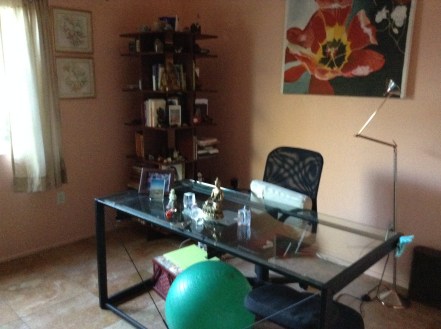
My Clean Office
Clean desk, clear mind, well defined goals, and a new practices are being planned for the new year. Finishing what one starts is a big lesson in my life since I like to start everything all the time. My declaration of the war on clutter has revealed how much of an overstock I had in some parts of my life and space. Dilligence to stay clean is a constant effort, since tax season is upon us and the paper will be flowing in and sorted for that fun activity. I know taxes are an excuse, and not a good one, to pile up papers rather than file or discard them on the spot. I have had a remedial session with a house keeper deep cleaning as I deep organize and toss. I have a box of paper I need to sort, but I created a temporary clean desk for the week, and will not return to the stack of paper lifestyle in 2014. I am dedicated to wasting less space and less time on distraction. Nothing is more distracting than a bunch of really important tax documents mixed and stacked in a pile of all the latest AARP junk mail and bank offers, taking up the space around you. It is very silly to allow that junk mail to get to the desk..Just like wiping one’s feet at the door, it is easier to keep the unwanted schmutz from entering in the first place.
In order to take off the runway must be cleared of any obstructions. The glass top of my desk is to remain clean and clear beyond National Clean Desk Day. I will not allow this achievement to drown in a sea of paper. I vow to throw it out at the mailbox and edit it before it comes to the office. Every day I will file, use or throw out the papers that I keep. Sticking to this practice will make me a happier person and therefore a better writer. I am enthusiastic about the #CleanDeskDay contest launched in celebration of this wonderful concept. Let’s get clean and stay clean all of 2014!!! I can’t wait to see what will be posted in instagram under #CleanDeskDay to enter the contest. The real prize is the clean desk.
Social Media is changing the way crime is done. Be aware of the connection. Keep yourself save and secure by knowing the odds and the methods, which are constantly evolving. Since the big fat Target at Christmas event we need to evaluate how and when we do anything on line.
 mermaidcamp