mermaidcamp
Keeping current in wellness, in and out of the water
You can scroll the shelf using ← and → keys
You can scroll the shelf using ← and → keys
Rewriting the script

It’s important to be deliberate and specific in what we want – often our stories have been shaped unconsciously. As a child you may have been told that you were lazy, selfish, useless, dumb, not creative, weak, pathetic… I know I was. It has taken me a long time to go over all these implanted limiting thoughts and re-examine them, discarding them when I realised that they were both untrue and harmful.
With Mars retrograde in Aquarius from now until September 2018, this is a great time to re-invent your story and re-write your narrative. Words are spells, and the stories we tell ourselves about our lives are powerful in shaping our experience. Limiting beliefs often stand in the way of us accomplishing what we want and need to accomplish in our lives. In this post I will share with you my ritual for re-writing my narrative this Mars retrograde.
View original post 1,935 more words
It is possible today to visit the home of my 11th great-grandfather, Augustine Steward. He was a successful mercer and mayor or Norwich.
Augustine Steward (1491 – 1571)
11th great-grandfather
Elizabeth Steward (1528 – 1575)
daughter of Augustine Steward
Augustine Jarnigo Sotherton (1553 – 1585)
son of Elizabeth Steward
Elizabeth Southerton (1582 – 1628)
daughter of Augustine Jarnigo Sotherton
Margaret Warner (1615 – 1649)
daughter of Elizabeth Southerton
Captain William GARTON (1635 – 1709)
son of Margaret Warner
Margaret Garton (1678 – 1773)
daughter of Captain William GARTON
Thomas Morris (1730 – 1791)
son of Margaret Garton
Joanna Morris (1762 – 1839)
daughter of Thomas Morris
John Samuel Taylor (1798 – 1873)
son of Joanna Morris
William Ellison Taylor (1839 – 1918)
son of John Samuel Taylor
George Harvey Taylor (1884 – 1941)
son of William Ellison Taylor
Ruby Lee Taylor (1922 – 2008)
daughter of George Harvey Taylor
Pamela Morse
I am the daughter of Ruby Lee Taylor
Augustine Steward was born in 1491 in the Tombland house opposite the Erpingham Gate of Norwich Cathedral. His father, Geoffrey, was a Norwich mercer and alderman. Shortly after Augustine’s birth the family moved from Tombland to a prestigious, stone-built house (Suckling House) in St. Andrews. Augustine was apprenticed to his father, who died in 1504. Augustine’s mother then married John Clerk, a rich merchant and grocer. John was mayor of Norwich in 1505 and in 1510. Augustine’s mother traded as Cecily Clerk with her own registered merchant’s mark.
A successful mercer
Augustine, known as Austen, became a highly successful Norwich mercer, who signed himself Awstyne Styward. He married twice and lived in the Tombland house where he was born. His first wife was Elizabeth Read of Beccles with whom he had a family of two sons and six daughters. His second wife, Alice Repps, from West Walton gave him a son and two daughters. Augustine was a Norwich councillor from 1522 to 1525, an alderman from 1526 to 1570 and Sheriff in 1526, He was Mayor in 1534, 1546 and 1556, a record that was only equalled by two other men within the sixteenth century. Augustine was also M.P for Norwich in 1542 and a Burgess in Parliament in 1547. During the sixteenth century, the office of mayor meant undertaking a demanding, full-time task for a year. A mayor’s own business had to be successful and so arranged that it could run without him. The mayor was expected to use his personal funds for some civic hospitality. However, the Corporation did stage a three-part show to mark Steward’s third term in office. It was recognised that Augustine had ‘allwayes ben a good and modest man, hee was beloved of poore and rich’.
Rebuilding the Guildhall
Steward’s influence was prominent in the 1534 rebuilding of the Council Chamber of Norwich Guildhall. He was involved with purchasing Black Friars Church, (St. Andrew’s Hall), from the Crown, for Norwich. A 1540 charter conveyed the Black Friar’s Monastery to the city for £81, paid by ‘our beloved Augustine Steward, of our city of Norwich, merchant.’ A portrait of Augustine in his mayoral robes can be seen in the Blackfriar’s wing of St. Andrew’s Hall.
Kett’s Rebellion
During Kett’s Rebellion in 1549, Augustine Steward played a leading part in negotiations between the rebels and the King’s army. Mayor Thomas Codde, who had been taken prisoner on Mousehold Heath by the rebels, appointed Steward his deputy. The Marquis of Northampton, representing the King, was entertained in Steward’s house. A plaque on the cathedral wall marks the spot, not far from Augustine’s house, where the rebels killed Lord Sheffield and Sir Thomas Cornwallis. Some of Kett’s followers ransacked Steward’s house but did not harm him. The Earl of Warwick used the house as his headquarters when he put down the rebellion.
Augustine Steward House
Steward’s home, opposite the cathedral, is a fine, surviving example of a successful Tudor merchant’s trading-house with goods stored in the stone undercroft and a shop or workshop at street level. The family lived in the upper storeys. Augustine’s house is jettied, and the timbers have warped over time giving the house a crooked appearance. An upper wing of brick, timber and plaster is built across Tombland Alley. Here you can see Augustine’s merchant mark and that of the mercer’s guild embossed on a corner stone, together with the date, 1549. Through the arch, the old house timbers are exposed and the carpenters’ marks can be seen, denoting the order in which the timbers were assembled on-site after being pre-cut in a timber yard. After Steward’s death in 1571, the house became in turn, a butcher’s, a broker’s, an antique dealer’s, a bookshop and a coffee house. At present it houses several antique dealers. Allegedly, there are underground passages leading from the crypt to the Cathedral and also to St. Gregory’s church. The ghost of a ‘Lady in Grey,’ a 1578 plague victim, is said to haunt the house.
A man of property
Augustine Steward owned Norfolk manors at Gowthorpe and at Welborne. His estate around Tombland extended along the north and west sides of St. George’s churchyard into Prince’s Street and included the site of an ancient inn. In later life he resided in a large, quadrangle house that he had built on Elm Hill, on the site of Paston Place originally owned by the Paston family. In 1507 all the houses on Elm Hill, except the modern Briton’s Arms, had been destroyed by fire. Augustine’s new house occupied the area now sub-divided into numbers 20, 22, 24 and 26. The carved beam over the archway of Crown Court bears Augustine Steward’s merchant mark on the right and the arms of the mercer’s guild on the left. Augustine Steward was buried in the church of St Peter Hungate.
Footnote
The house on Tombland where Augustine Steward was born still exists and has been called Augustine Steward House. It is generally reputed to date to 1530, however Marion Hardy, in an unpublished biography of Steward, discloses an earlier date for the house in the 1504 will of Augustine’s father, in which the house was mentioned as the location of Steward’s birth in 1491. Perhaps the 1491 house was damaged in the 1507 fires of Norwich and Augustine Steward re-built in 1530.
Further Reading
Blomefield F, The History of the City and County of Norwich, Volume 2. (Norwich 1745).
Hardy, M. Austen Steward of Norwich, unpublished partial manuscript.
Jones, W. H. A Quaint Corner of Old Norwich: Samson and Hercules and AugustineSteward’s Houses, Norwich, 1900.
Kennet, H. Elm Hill, Norwich: The Story of its Tudor Buildings and the People who Lived in them, ecollectit Ltd, Harleston, 2006.
Rawcliffe, C. and R. Wilson, (eds), Medieval Norwich, Hambledon and London, London, 2004.
Solomons, G. Stories Behind the Plaques of Norwich, Capricorn Books, Cantley,1981.
From “Genealogies of Virginia Families” vol. 5, page 546. Eldest son, Mercer, sheriff 1526, mayor 1534, 1546, 1556, M.P. 1541. Buried 1571 St. Peter Hungate.
 Nicholas (Mayor) Sotherton
My eleventh great-grandfather, Nicholas Sotherton, was a grocer by trade. He married Agnes, by whom he had six sons and five daughters.
Nicholas was sheriff in 1530 and Mayor in 1539. For twelve years he was a magistrate over which period he amassed a considerable fortune. He owned properties in both the Maddermarket parish (Strangers Hall), Hellesdon and Ludham
The Sothertons moved to the “Strangers Hall” after Thomas Caus. The property is now open to the public who can view Nicholas’s handiwork.. In particular in the 1530s he installed a crown-post roof and a stone-mullioned bay window in the Great Hall. He also had the external stone steps and porch built to give direct access to the hall without passing through the cellars beneath. Sotherton’s merchant’s mark and coat of arms can still be seen on the screen and on the carved roof timbers.
He has also left his merchant’s mark carved on the right-hand side of the oak fireplace beam in the “Sotherton Room.”
The undercroft at Strangers’ Hall is thought to date from the 1320s when Ralph de Middelton owned a house on this site. The undercroft was used to securely store, and possibly display, goods for sale.
The house on this site was seen as a prestigious dwelling and many merchants and mayors made their mark on the building – remodelling and extending it to reflect their wealth and status.
It is thought that the Great Hall was built during the 15th century, when William Barley, a mercer (cloth merchant) lived here.
During the 16th century, the house was owned by Norwich grocer and mayor, Thomas Sotherton and it is as a result of his entrepreneurism that the house eventually became known as Strangers’ Hall.
The first ‘strangers’ were Dutch, Walloon and Flemish refugee weavers who fled the low countries in the 16th century as a result of the persecution of Dutch Calvinists by their Spanish (Catholic) rulers.
Under Elizabeth I, England was a Protestant country and so welcomed the refugees. The asylum seekers first settled in Sandwich, Kent, in 1565. However Thomas Sotherton was keen to encourage these skilled workers to settle in Norwich because their skills in textile weaving made the immigrants of immense economic value. Documents show that some may have lodged at Strangers’ Hall and much of the prosperity of Norfolk after this period can be traced to this influx of refugees.
The Sotherton family made extensive improvements to the house, installing the crown post roof and stone-mullioned bay window. The front door, vaulted porch and steps were added to give direct access to the Great Hall without passing through the cellars.
Nicholas died in 1540 and is buried in St John Maddermarket , Agnes survived until 1576. In his will Nicholas directed a priest “honest and well learned to sing for him and to preach the word of God for three years ”
From Website: Norwich Historic Churches
http://www.norwich-churches.org/monuments/Nicholas%20Sotherton%201540/Nicholas%20Sotherton.shtm
Nicholas (Mayor) Sotherton (1485 – 1540)
11th great-grandfather
Thomas Sotherton (1523 – 1583)
son of Nicholas (Mayor) Sotherton
Augustine Jarnigo Sotherton (1553 – 1585)
son of Thomas Sotherton
Elizabeth Southerton (1582 – 1628)
daughter of Augustine Jarnigo Sotherton
Margaret Warner (1615 – 1649)
daughter of Elizabeth Southerton
Captain William GARTON (1635 – 1709)
son of Margaret Warner
Margaret Garton (1678 – 1773)
daughter of Captain William GARTON
Thomas Morris (1730 – 1791)
son of Margaret Garton
Joanna Morris (1762 – 1839)
daughter of Thomas Morris
John Samuel Taylor (1798 – 1873)
son of Joanna Morris
William Ellison Taylor (1839 – 1918)
son of John Samuel Taylor
George Harvey Taylor (1884 – 1941)
son of William Ellison Taylor
Ruby Lee Taylor (1922 – 2008)
daughter of George Harvey Taylor
Pamela Morse
I am the daughter of Ruby Lee Taylor
He and Agnes are buried at St. John Baptist’s Church in Madder-Market, where this very fancy monument can be found today:
 St. John Baptist’s Church in Madder-Market
 St. John Baptist’s Church in Madder-Market
On a mural monument on the south side of the altar,
Effigies of a man and woman, Sotherton quartering Steward,Norwich city, and nebulé a chief quarterly, one and four, a lion of England, two and three or, two roses gul. on each quarter.
Lege, Vir, ac Uxor, Titulo Nicolaus et Agnes, Gente Sothertoni, Quos humus una tegit, Sexta ad viginti confecit Junius illam Nona November Luce peremit eum. Illum annus Domini qui quadragesimus auxit Mille et quingentos jussit adire deum. Octo hijs trigintaque Annos super addidit illa, Quos omnes Viduo vidit abire thoro, Ille Urbis fuerat Pretor cum viveret hujus, Et bis sex Capitum non sine laude Pater; E quibus occumbens natos sex, Filiolasque Quatuor, Uxori liquerat ille sue.
http://www.british-history.ac.uk/topographical-hist-norfolk/vol4/pp287-329
Eclipse lore that appears in cultures around the world has a common theme; it’s always disruption of the established order. What that disruption is likely to be depends of beliefs held by people in the various cultures. Many eclipse stories explain eclipses as times when the Sun is devoured by something evil—demons, dragons, wolves, or […]
via Feeling the July 12 Eclipse of the Sun — Astrology Unfolding

Pausing for a moment to take a look at the past
I know those haunting mistakes will not be my last
No matter how long this takes it will be too fast
I see the future on the horizon shimmering and vast

Venus enters Virgo, and what we see, one way or another, is a shift toward wanting to be right, correct, or proper, to be able to stand confidently against criticism or critique–and that can prompt inventory-taking, a discriminating state of mind, and Self-criticism, among other things. Ruler of Virgo, Mercury, is involved in the only […] […]
via 9 July 2018 A Proper Virgin — Julie Demboski’s ASTROLOGY — Blue Dragon Journal

Landcaster County
Garton Bible records show Capt. William Garton’s father to be John Garton born 1615 and died 1698. He may be the son of a John Garton of Kingston-Upon-Hull (a wealthy merchant) who married Ann Hobson in 1614,
This Bible has an unbroken chain of possession in the same family. Captain William Garton was a planter, residing in Lancaster County, where he bought land in 1673. He is the oldest proven Garton in the line.
Will Of Captain William Garton, Will Book 10, pages 63-66, rec’d 8 Feb 1710.
“In the name of God, Amen, I Will Garton, of the parish of Christ Church in the County of Lancaster in Virginia, being sick, but in perfect memory, God be praised, I do make this my last will and testament, in manner and form following.
First – I bequeath my soul to Almighty God that made it, hoping to be saved by the meritorious death and resurrection of our Saviour Jesus Christ, my redeemer.
Item – to my son URIAH GARTON I bequeath a parcel of land beginning at a Pine tree at the head of the first long branch issuing out of Nanty Poyson Creek, running northeast to a corner tree at the first little branch that issues out of Deuber Cove.
Item – to my son JAMES GARTON I bequeath a parcel of land beginning in Black Sows Neck near Carel’s line so running up Carel’s line to a corner Maple northeast upon a marked line to a corner Red Oak thence northeast to the head of Deuber Cove concluding all within the said lines aforesaid.
Item- to my son ANTHONY GARTON I bequeath a parcel of land beginning at a corner Red Oak from thence to a corner stone in Tark [or Tarll].
Item – to my daughter KATHERINE GARTON I bequeath a parcel of land beginning at a Red Oak at the head of the spring branch issuing out of Tab’s Creek, all concluding within the aforesaid courses and corner line.
Item – All my land bequeathed to my sons and daughter aforementioned I bequeath to them and their heirs forever.
Item – It is my will that my three negroes shall tarry upon the plantation I now live upon, till my debts is paid and then to be equally divided along with my personal estate among my sons and daughters MARGARET and KATHERINE GARTON.
Item – to ESTHER MUGG, I bequeath a full share of my personal estate with my sons and daughters aforementioned if she comes.
I do appoint my sons and daughters aforementioned to see this my last will and testament performed.
Witness my hand and soul this twentieth day of December One Thousand Seven Hundred and Nine.
his
Will [+] Garton
Witnesses mark –
Murler [+] Noulin
William Buttery
Katherine (+) Buttery
Elizabeth [+] Rebelow
Item – To my sons and daughters I bequeath all bounds of Thomas Thompson’s patent lying between Tab’s Creek and Nanty Poyson Creek.
Item – To my son-in-law, Will Cutter, I bequeath more ______ which is on my plantation.
Such GOOD news to share! Our star, the Sun, is forming a gorgeous TRINE (120°) to Jupiter. LIGHT (Sun) and JOY (Jupiter) are in total harmony! You are embracing leadership from the HEART. The Sun trine Jupiter effect keeps the focus on inner happiness– internal LIGHT that directs with LOVE. Smiling, laughing, any positive stimulation instantly dissolve negativity.…
via Sun Trine Jupiter; Fortunate Blessings — Era of Light
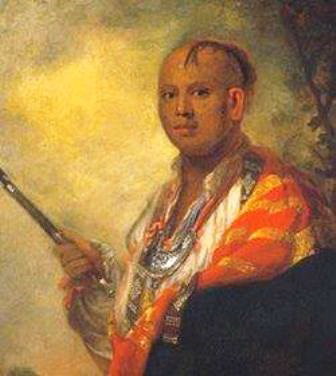
Chief Amatoya “Water Conjurer”

Chief Amatoya “Water Conjurer”
My 11th great-grandfather was half British and half Shawnee. He married a Shawnee woman and lived as a leader of her tribe. Natives were treated very badly by the colonists, who normally thought of them as inferior. This is one success story I am pleased to have in my family’s history.
Trader Carpenter (Amatoya / Moytoy I) married a Shawnee named Locha in 1668. Trader’s sister Pasmere Carpenter married the grandfather of Cornstalk Hokolesqua (Shawnee) in 1660. That same year the clan was driven south by the Iroquois. They moved along the Tennessee river, starting the villages of Running Water (where Thomas died in 1675), Nickajack, Lookout Mountain, Crowtown and Chota. Chota was created as a merging place of refuge for people of all tribes, history or color. It became similar to a capital for the Cherokee Nation. These villages had grown to about 2000 people by 1670 when the Carpenter clan moved to Great Tellico. Here Trader (Amatoya / Motoy I) married Quatsy of the Wolf Clan in 1680. Though Amatoya (Trader) was chief of the above mentioned villages, it was his son Moytoy II (sometimes called “Trader-Tom”) most people refer to as Moytoy and who many claim was crowned “Emperor of the Cherokee”.
CHRONOLOGY
1540
Hernando De Soto’s expedition to the Mississippi River is the first time Europeans are seen by American Indians in Kentucky.
1629
British colonists in Virginia establish a trade network with Cherokee living in the Appalachian Mountains.
1690
King William’s War begins.
1697
The Ryswick Treaty is signed at the end of King William’s War. Territories remain the same as before the War.
1702
The Cherokees and Creeks side with the French during Queen Anne’s War.
1716
Cherokee strengthen their alliance with the British.
1717
This date is engraved in a sandstone rockshelter in eastern Kentucky.
1730
Cherokee Chiefs Attakullakulla, Clogoittah, Kollannah, Onancona, Oukah Ulah, Skalilosken Ketagustah, and Tathtowe travel to Great Britain with Alexander Cuming.
1722
The Treaty of Albany is made between the Haudenosaunee and Great Britain. The Haudenosaunee are joined by the Tuscarora and they expand by alliance and conquest to control an area from southern Canada to Kentucky.
Chief Amatoya “Water Conjurer” (Trader Tom CARPENTER) aka MOYTOY I (1635 – 1693)
11th great-grandfather
Aganonitsi Quatsy Woman Wolf ClanTellico Cherokee Tellico (1650 – 1692)
daughter of Chief Amatoya “Water Conjurer” (Trader Tom CARPENTER) aka MOYTOY I
Delaware Indian Fivekiller (1674 – 1741)
son of Aganonitsi Quatsy Woman Wolf ClanTellico Cherokee Tellico
Solomon John Cherokee Kimborough (1665 – 1720)
son of Delaware Indian Fivekiller
Mourning Kimbrough (1689 – 1756)
daughter of Solomon John Cherokee Kimborough
Jane Jeanette Little (1713 – 1764)
daughter of Mourning Kimbrough
Andrew Armour (1740 – 1801)
son of Jane Jeanette Little
William Armor (1775 – 1852)
son of Andrew Armour
William Armer (1790 – 1837)
son of William Armor
Thomas Armer (1825 – 1900)
son of William Armer
Lucinda Jane Armer (1847 – 1939)
daughter of Thomas Armer
George Harvey Taylor (1884 – 1941)
son of Lucinda Jane Armer
Ruby Lee Taylor (1922 – 2008)
daughter of George Harvey Taylor
Pamela Morse
I am the daughter of Ruby Lee Taylor
Amatoya Trader Moytoy was a half white half Shawnee who went on to be a prominent chief and leader for the Cherokee people. His family line would lead the Cherokee for many years to come. This was a testement to the views of the Cherokee people before being abused by the English for many years. They took in a English settler as one of there own, He wed a Shawnee woman and became a member of the tribe.

Can you feel it? It’s a CHIRON-ic week and month, dear Astro~News Reader! Quick flash-back for context: CHIRON crossed over the Spring Equinox a.k.a. ‘Emergence’ Point on APR 17, to ‘Come Alive’ in ARIES. Here’s a link to the blog post for CHIRON’s entry into ARIES – The Medicine of Being Authentically YOU. It’s a try-on […]


