mermaidcamp
Keeping current in wellness, in and out of the water
You can scroll the shelf using ← and → keys
You can scroll the shelf using ← and → keys

The Flock
We sat on the hill above the flooded river
Watching as towns and farms washed away
Floating downstream on the big cresting waves
Water overflowed the banks and destroyed trees
That had stood on the shore for centuries
Their roots were severed by the current rushing
Swelling, moving the earth beneath their giant limbs
That crashed into the water with furious destructive
Sounds of nature taking her revenge on civilization
The only hopeful sign we could see from our perch
Was the flock of birds flying over their former homes
Taking to the sky to look for a new place to build nests
We envy them their ability to keep the flock together
They fly in tight formation, in search of fairer weather

#writephoto
This poem was written in response to this weeks photo prompt by Sue Vincent on her blog , The Echo. Join bloggers from around the globe for more stories about this photo and last week’s.
I have rediscovered Peppermint Butler tea this summer. I ordered it in the winter, enjoying it immensely as a cup of hot tea. It is mildly caffeinated, so I sometimes drank it instead of morning coffee for a change. It contains vanilla flavored Ceylon tea, vanilla flavored oolong tea , peppermint, and candy canes. Even though it has been in the tin for a long time, the mint flavor is still strong, probably because of the candy canes crushed in the mix. It is not overly sweet or too minty, but has a unique taste. It is my current favorite iced tea. Summer is intense in Arizona, so we need cool and refreshing beverages. This tea lifts my spirits as well as my taste buds.
I had no idea this tea had been named for a cartoon character until I started to write this review. This is one of Adagio’s signature blends, which I like to sample from time to time. They are more complex and exotic combinations, more expensive ingredients, with a slightly higher price point. I have never been disappointed with the quality of the signature blends. They pack a punch that makes them worth a few extra cents per cup. Peppermint Butler is an excellent example of that value for dollar. The 5 oz tin, which I purchased, is priced at about 38 cents a cup, very reasonable, especially in comparison to tea you purchase in a bottle, already brewed and shipped across the country. Adagio lets customers create their own custom signature blends. This lets you become a tea blend expert with the highest quality ingredients.
If you are looking for some new iced tea excitement this summer I highly recommend this blend. The creamy minty taste goes down well all day long. It compliments salad, chilled soup, and sandwiches very well. Today I will pair it will chilled corn vichyssoise for lunch. The crisp tea will be a nice contrast to the rich cool soup. Both have a richness that make them a good couple on a hot day.

Peppermint Butler Tea

Alexios I
Alexios I Komnenos, or Comnenus (Greek: Αλέξιος Α’ Κομνηνός) (1048 – August 15, 1118), Byzantine emperor (1081–1118), was the son of John Comnenus and Anna Dalassena and the nephew of Isaac I Comnenus (emperor 1057–1059). The military, financial and territorial recovery of the Byzantine Empire began in his reign.
Life
Alexius’ father declined the throne on the abdication of Isaac, who was accordingly succeeded by four emperors of other families between 1059 and 1081. Under one of these emperors, Romanus IV Diogenes (1067–1071), he served with distinction against the Seljuk Turks. Under Michael VII Ducas Parapinaces (1071–1078) and Nicephorus III Botaneiates (1078–1081), he was also employed, along with his elder brother Isaac, against rebels in Asia Minor, Thrace and in Epirus.
Alexius’ mother wielded great influence during his reign, and he is described by his daughter, the historian Anna Comnena, as running next to the imperial chariot that she drove. In 1074, the rebel mercenaries in Asia Minor were successfully subdued, and, in 1078, he was appointed commander of the field army in the West by Nicephorus III. In this capacity, Alexius defeated the rebellions of two successive governors of Dyrrhachium, Nicephorus Bryennius (whose son or grandson later married Alexius’ daughter Anna) and Nicephorus Basilakes. Alexius was ordered to march against his brother-in-law Nicephorus Melissenus in Asia Minor but refused to fight his kinsman. This did not, however, lead to a demotion, as Alexius was needed to counter the expected Norman invasion led by Robert Guiscard near Dyrrhachium.
While the Byzantine troops were assembling for the expedition, Alexius was approached by the Ducas faction at court, who convinced him to join a conspiracy against Nicephorus III. Alexius was duly proclaimed emperor by his troops and marched on Constantinople. Bribing the western mercenaries guarding the city, the rebels entered Constantinople in triumph, meeting little resistance on April 1, 1081. Nicephorus III was forced to abdicate and retire to a monastery, and Patriarch Cosmas I crowned Alexius I emperor on April 4.
During this time, Alexius was rumored to be the lover of Empress Maria of Alania, the daughter of King Bagrat IV of Georgia, who had been successively married to Michael VII Ducas and his successor Nicephorus III Botaneiates, and was renowned for her beauty. Alexius arranged for Maria to stay on the palace grounds. It was also thought that Alexius may have been considering marrying the erstwhile empress. However, his mother consolidated the Ducas family connection by arranging the Emperor’s marriage to Irene Ducaena, granddaughter of the Caesar John Ducas, the uncle of Michael VII, who would not have supported Alexius otherwise. As a measure intended to keep the support of the Ducae, Alexius restored Constantine Ducas, the young son of Michael VII and Maria, as co-emperor and a little later betrothed him to his own first-born daughter Anna, who moved into the Mangana Palace with her fiancé and his mother.
However, this situation changed drastically when Alexius’ first son John II Comnenus was born in 1087: Anna’s engagement to Constantine was dissolved, and she was moved to the main Palace to live with her mother and grandmother. Alexius became estranged from Maria, who was stripped of her imperial title and retired to a monastery, and Constantine Ducas was deprived of his status as co-emperor. Nevertheless, he remained in good relations with the imperial family and succumbed to his weak constitution soon afterwards.
This coin was struck by Alexius during his war against Robert Guiscard.
Byzantine-Norman Wars
Alexius’ long reign of nearly thirty-seven years was full of struggle. At the very outset, he had to meet the formidable attack of the Normans (led by Robert Guiscard and his son Bohemund), who took Dyrrhachium and Corfu, and laid siege to Larissa in Thessaly (see Battle of Dyrrhachium). Alexius suffered several defeats before being able to strike back with success. He enhanced this by bribing the German king Henry IV with 360,000 gold pieces to attack the Normans in Italy, which forced the Normans to concentrate on their defenses at home in 1083–1084. He also secured the alliance of Henry, Count of Monte Sant’Angelo, who controlled the Gargano Peninsula and dated his charters by Alexius’ reign. Henry’s allegiance was to be the last example of Byzantine political control on peninsular Italy. The Norman danger ended for the time being with Robert Guiscard’s death in 1085, and the Byzantines recovered most of their losses.
Alexius had next to deal with disturbances in Thrace, where the heretical sects of the Bogomils and the Paulicians revolted and made common cause with the Pechenegs from beyond the Danube. Paulician soldiers in imperial service likewise deserted during Alexius’ battles with the Normans. As soon as the Norman threat had passed, Alexius set out to punish the rebels and deserters, confiscating their lands. This led to a further revolt near Philippopolis, and the commander of the field army in the west, Gregory Pakourianos, was defeated and killed in the ensuing battle. In 1087 the Pechenegs raided into Thrace and Alexius crossed into Moesia to retaliate but failed to take Dorostolon (Silistra). During his retreat, the emperor was surrounded and worn down by the Pechenegs, who forced him to sign a truce and pay protection money. In 1090 the Pechenegs invaded Thrace again, while the brother-in-law of the Sultan of Rum launched a fleet and attempted to arrange a joing siege of Constantinople with the Pechenegs. Alexius overcame this crisis by entering into an alliance with a horde of 40,000 Cumans, with whose help he crushed the Pechenegs at Levounion in Thrace on April 29, 1091.
The Byzantine Empire at the accession of Alexius I Comnenus, c. 1081
This put an end to the Pecheneg threat, but in 1094 the Cumans began to raid the imperial territories in the Balkans. Led by a pretender claiming to be Constantine Diogenes, a long-dead son of the Emperor Romanos IV, the Cumans crossed the mountains and raided into eastern Thrace until their leader was eliminated at Adrianople. With the Balkans more or less pacified, Alexius could now turn his attention to Asia Minor, which had been almost completely overrun by the Seljuk Turks.
Byzantine-Seljuk Wars
As early as 1090, Alexius had taken reconciliatory measures towards the Papacy, with the intention of seeking western support against the Seljuks. In 1095 his ambassadors appeared before Pope Urban II at the Council of Piacenza. The help which he wanted from the West was simply mercenary forces and not the immense hosts which arrived, to his consternation and embarrassment, after the pope preached the First Crusade at the Council of Clermont later that same year. Not quite ready to supply this number of people as they traversed his territories, the emperor saw his Balkan possessions subjected to further pillage at the hands of his own allies. Alexius dealt with the first disorganized group of crusaders, led by the preacher Peter the Hermit, by sending them on to Asia Minor, where they were massacred by the Turks in 1096.
The second and much more formidable host of crusaders gradually made its way to Constantinople, led in sections by Godfrey of Bouillon, Bohemund of Taranto, Raymond IV of Toulouse and other important members of the western nobility. Alexius used the opportunity of meeting the crusader leaders separately as they arrived and extracting from them oaths of homage and the promise to turn over conquered lands to the Byzantine Empire. Transferring each contingent into Asia, Alexius promised to supply them with provisions in return for their oaths of homage. The crusade was a notable success for Byzantium, as Alexius now recovered for the Byzantine Empire a number of important cities and islands. The crusader siege of Nicaea forced the city to surrender to the emperor in 1097, and the subsequent crusader victory at Dorylaion allowed the Byzantine forces to recover much of western Asia Minor. Here Byzantine rule was reestablished in Chios, Rhodes, Smyrna, Ephesus, Sardis, and Philadelphia in 1097–1099. This success is ascribed by his daughter Anna to his policy and diplomacy, but by the Latin historians of the crusade to his treachery and falseness. In 1099, a Byzantine fleet of 10 ships were sent to assist the Crusaders in capturing Laodicea and other coastal towns as far as Tripoli. The crusaders believed their oaths were made invalid when the Byzantine contingent under Tatikios failed to help them during the siege of Antioch; Bohemund, who had set himself up as Prince of Antioch, briefly went to war with Alexius in the Balkans, but was blockaded by the Byzantine forces and agreed to become Alexius’ vassal by the Treaty of Devol in 1108.
Personal life
During the last twenty years of his life Alexius lost much of his popularity. The years were marked by persecution of the followers of the Paulician and Bogomil heresies—one of his last acts was to publicly burn on the stake Basil, a Bogomil leader, with whom he had engaged in a theological dispute. In spite of the success of the crusade, Alexius also had to repel numerous attempts on his territory by the Seljuks in 1110–1117.
Alexius was for many years under the strong influence of an eminence grise, his mother Anna Dalassena, a wise and immensely able politician whom, in a uniquely irregular fashion, he had crowned as Augusta instead of the rightful claimant to the title, his wife Irene Ducaena. Dalassena was the effective administrator of the Empire during Alexius’ long absences in military campaigns: she was constantly at odds with her daughter-in-law and had assumed total responsibility for the upbringing and education of her granddaughter Anna Comnena.
Succession
Alexius’ last years were also troubled by anxieties over the succession. Although he had crowned his son John II Comnenus co-emperor at the age of five in 1092, John’s mother Irene Doukaina wished to alter the succession in favor of her daughter Anna and Anna’s husband, Nicephorus Bryennius. Bryennios had been made kaisar (Caesar) and received the newly-created title of panhypersebastos (“honoured above all”), and remained loyal to both Alexius and John. Nevertheless, the intrigues of Irene and Anna disturbed even Alexius’ dying hours.
Legacy
Alexius I had stabilized the Byzantine Empire and overcome a dangerous crisis, inaugurating a century of imperial prosperity and success. He had also profoundly altered the nature of the Byzantine government. By seeking close alliances with powerful noble families, Alexius put an end to the tradition of imperial exclusivity and coopted most of the nobility into his extended family and, through it, his government. This measure, which was intended to diminish opposition, was paralleled by the introduction of new courtly dignities, like that of panhypersebastos given to Nicephorus Bryennius, or that of sebastokrator given to the emperor’s brother Isaac Comnenus. Although this policy met with initial success, it gradually undermined the relative effectiveness of imperial bureaucracy by placing family connections over merit. Alexius’ policy of integration of the nobility bore the fruit of continuity: every Byzantine emperor who reigned after Alexius I Comnenus was related to him by either descent or marriage.
Family
By his marriage with Irene Ducaena, Alexius I had the following children:
Anna Komnene, who married the Caesar Nicephorus Bryennius.
Maria Komnene, who married (1) Gregory Gabras and (2) Nicephorus Euphorbenos Katakalon.
John II Komnenos, who succeeded as emperor.
Andronikos Comnenus, sebastokratōr.
Isaac Comnenus, sebastokratōr.
Eudocia Komnene, who married Michael Iasites.
Theodora Komnene, who married (1) Constantine Kourtikes and (2) Constantine Angelos. By him she was the grandmother of Emperors Isaac II Angelos and Alexios III Angelos.
Manuel Komnenos.
Zoe Komnene.
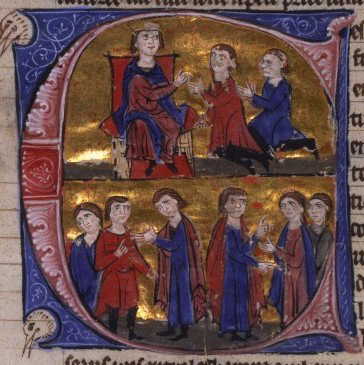
Council of the Crusaders

pool with rainbow
This Sunday I did some work very early in the day to free myself for the rest of the day, and into tomorrow. I have my big indulgence of the month scheduled for tomorrow morning, my facial. This is my biggest self indulgence, without which I believe I would feel deprived. I go to a fantastic esthetician I have trusted for many years. She is the bomb. When I worked at spas I indulged in body work, facials, and all kinds of treatments on a very regular basis. I no longer feel the need for the entire high maintenance line up, but my skin and my mental attitude really benefits from my facial.
One reason I reduced the time and money spent on spa and health endeavors was budget. However, once I noticed how much time was returned to my schedule for any activity I choose I think I reduced my consumption more just to regain the unscheduled time. If I had unlimited funds to spend on treatments I would add a few things, but would probably not want to devote as much time as I used to for that sort of thing. I would rather have time to go to the gym and the steam room regularly because that is essential to my wellbeing. I would probably also spend large chucks of time at hot springs. For now I am happy with my condo village’s pool and jacuzzi, which I access with only a short walk. When I get up before dawn and watch the day begin from the deep end all is right with the world.
I think it is important to indulge oneself in healthy ways. The real question is what is indulgence. I know I have redefined it for myself and am happier for it. I had a large carbon footprint and the “need” for all kinds of services when I was younger. Now I like a good walk in the botanical garden with my neighbor better than a class, and a long soak in my own tub on Sunday evening better than any spa ritual I have bought and paid for in the past. The kingdom of spa is within you.
What is your best and favorite indulgence? Have you changed the way you look at that over time? I think it is good to compare value for time/money with everything in existence in order to hone one’s own best ways to pamper and sooth body and soul.

pool with reflection
If we were having coffee this weekend in Tucson I would bring a pitcher of water and another of iced beverage of your choice out to the pool. The only place to be on a day when the temperature reaches 106 degrees is in the pool. I have all manner of flotation devices, and there is a table in the shade where we can sit for a chat after we get wet. If you feel energetic we could chat while we do some exercise in the water. I have taught swimming and water exercise for years, and although I am not currently certified in lifesaving I will keep you safe. Come on in. The water is perfect.
This week was relatively uneventful, if you exclude all the political action in Washington, DC. I do watch with interest while Micheal Bloomberg, the states, and cities step up to fight climate change. I am happy to see all the marchers for science but in Arizona this is not possible at the moment. We must protest fro the pool. I think the best way for me to contribute to the entire issue of environmental protection is to act personally. I think I am carbon conservative, but there are probably a few more items I could buy locally or go without for the good of the planet. Rather than review the international scene, although that is of interest, I am looking for ways I can reduce my personal consumption of water, gasoline, and electricity.
While I fill your ice water glass again please tell me about your writing projects and your week. Did you finish or start any new writing? I admire those of you who write long works of fiction. I may attempt it someday, inspired by your success. It takes discipline as well as talent to do a long write. I have written a few short pieces of fiction, but this week I created a poem in response to Sue Vincent’s photo prompt. It was about death, and was fully depressing like the previous week’s. I do wonder at my creative self when I come up with all this dark gloomy haunted stuff. I also wonder if that is a direction I should try to go for a longer story..haunted and creepy is a genre, after all. I also wrote about my ancestors and tea, so it was not all gloom and doom…except the ancestors are dead, of course. I wrote about some from the Byzantine Empire this week.
I think perhaps I am haunted by the politics playing out before me, but that does not matter. Creative responses to horror and terror have always been used to change things. Satirists are having a having a hay day with all the crazy times in which we live. I wish I could draw cartoons, but I think this talent will be for another lifetime. I will have to stick to poems to express my distaste, rage, or general revolt. How do you best protest, gentle reader?Do tell, what makes you revolt (silently or otherwise)?
If you are in the mood, feel free to cannonball before you go. Hydrate fully, and stay safe. Please join the coffee party on the weekend hosted by Emily at Nerd in the Brain. Contribute a post, or read, comment, and visit here.

Weekend-Coffee-Share-Pic
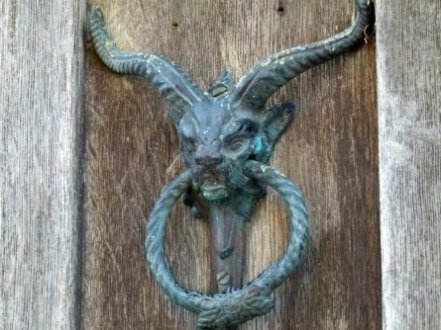
knock knock
This is inspired by Sue Vincent’s Thursday photo prompt
Knock knock, Who’s there? I don’t want to get up from my chair
If you have come to beg for candy I can tell you that the cupboard is bare
If you wanted entertainment you can pass through to the cellar room
Where dangerous characters sit around and complain about the gloom
We have no happy servant to greet you, seat you and serve champagne
These days we are lucky to find a few morsels of food to feed the pain
We brought it all upon ourselves, never caring about the fate of others
Sinister side effects of concentrated self delusion eventually smother
The life out of the privileged and those forced into perpetual service
The end of the road comes to everyone, which makes us all very nervous
#writephoto
Please join writers around the world on Thursdays to read, comment, or submit your own post based on these photos.

Byzantine Empire
John Komnenos (Greek: Ἰωάννης Κομνηνός; ca. 1015 – 12 July 1067) was a Byzantine aristocrat and military leader. The younger brother of Emperor Isaac I Komnenos, he served as Domestic of the Schools during Isaac’s brief reign (1057–59). When Isaac I abdicated, Constantine X Doukas became emperor and John withdrew from public life until his death in 1067. Through his son Alexios I Komnenos, who became emperor in 1081, he was the progenitor of the Komnenian dynasty that ruled the Byzantine Empire from 1081 until 1185, and the Empire of Trebizond from 1204 until 1461.
Life.
John Komnenos was born ca. 1015 as the younger son of the patrikios Manuel Erotikos Komnenos, a senior military commander in the late reign of Basil II (ruled 976–1025). He is first mentioned in 1057, the year his elder brother Isaac I Komnenos, at the head of a group of generals, rebelled against Michael VI and forced him off the throne. At the time of the revolt, John held the post of doux, but after his brother’s victory, he was raised to the rank of kouropalates and appointed as Domestic of the Schools of the West.
Nothing is known of John’s activities during his brother’s reign, although Nikephoros Bryennios the Younger, who married John’s granddaughter Anna Komnene, says that in his capacity as Domestic of the West he left his (unspecified) acts as an “immortal monument” to the people of the Balkan provinces.
Isaac’s reign was cut short by his clash with the powerful Patriarch of Constantinople,Michael Keroularios, who had been instrumental in securing Michael VI’s abdication, and the powerful civil aristocracy of the capital. Keroularios and his supporters led the opposition against Isaac’s stringent economizing policies, forcing him to resign on 22 November 1059, after which he withdrew to the Stoudios Monastery.
The crown then passed to Constantine X Doukas (r. 1059–67), although Bryennios asserts that it was first offered to John, who refused it, despite the pressure of his wife, Anna Dalassene, to accept. According to the historian Konstantinos Varzos, however, this version is suspect, and may well be a post-fact attempt at legitimizing the eventual usurpation of the throne by John’s son, Alexios I Komnenos (r. 1081–1118).
John is not mentioned in the sources during the reign of Constantine X, perhaps indicating, according to Konstantinos Varzos, that he was in imperial disfavour, despite Bryennios’ assertion that both he and his brother remained much honoured by the new emperor.The late 12th-century typikon of the Monastery of Christ Philanthropos, founded by Alexios I’s wife Irene Doukaina, is the only source to record that John Komnenos retired to a monastery, probably at the same time as his wife, Anna Dalassene. He died as a monk on 12 July 1067.
Family..John Komnenos married Anna Dalassene, the daughter of Alexios Charon, most likely in 1044. Anna, born ca. 1028, long outlived her husband and after his death ran the family as its undisputed matriarch. Anna became involved in conspiracies against the Doukas family, whom she never forgave for taking the throne in 1059. Later she also played a major role in the successful overthrow of Nikephoros III Botaneiates (r. 1078–81) and the rise of her son Alexios to the throne. After that, and for about fifteen years, she served as the virtual co-ruler of the empire along her son. She then retired to a monastery, where she died in 1100 or 1102.
With Anna, John had eight children, five boys and three girls:
IOANNES Komnenos, son of MANUEL Erotikos Komnenos & his wife — ([1015]-12 Jul 1067). Nikephoros Bryennios names “maiori natu Isaacio…iunior Ioannes” as the two sons of “Comneni Manuelis” . His parentage is confirmed by the Alexeiad which describes Emperor Isaakios Komnenos as brother-in-law of Anna Dalassena, an earlier passage naming him Ioannes [43]. Patrikios. Skylitzes records that Emperor Isaakios created “Joannem fratrem et Catacalon Combustum curopalatas” and “fratrem suum magnum domesticum” after his accession, in 1057 . His brother abdicated in his favour 25 Dec 1059, but Ioannes refused the throne. He became a monk as IOANNES. The list of obituaries of Empress Eirene Doukas’s family records the death “12 Jul, monk John father of Emperor”.
m ([1042]) ANNA Dalassena, daughter of ALEXIOS Kharon Prefect of Italy & his wife — Dalassena (-1 Nov/27 Apr 1100/01). Nikephoros Bryennios records the marriage of “Ioanni” and “filia Charonis Alexii…Anna”, recording that her mother was “genus a Dalassenis”. The Alexeiad names “Anna Dalassena, the mother of the Komneni” when recording that she arranged the marriage of “the grandson of Botaneiates and the daughter of Manuel her eldest son”. Despoina 1048/57. Regent of Byzantium 1081 and 1094-1095. She became a nun at Pantopopte convent which she founded. The list of obituaries of Empress Eirene Doukas’s family records the death “1 Nov, Anna, mother of the Emperor”.
Ioannes Komnenos & his wife had eight children:

rooibos lemon cloud

Roiboos Lemon Cloud
Today I am enjoying the lilting lemon flavor of Roiboos Lemon Cloud tea from Adagio. The weather is hot and my day will be busy. I don’t need any extra caffeine. This delightful tea has zero to put me on edge as a breeze through the afternoon. I will probably consume half a gallon of this on ice to stay cool and hydrated. The natural lemon flavor is highlighted with vanilla and lemon grass. This blend reminds me of lemon merengue pie, but has no fat or calories. I think the creamy vanilla adds the dessert touch to this tea without adding any sweetener.
I will drink it for lunch with a big salad. Roiboos tea has no bitter aftertaste, and therefore combines well with any meal. The fresh light taste combines perfectly with fresh raw vegetables and fruits. Hot or cold with dessert of any kind Lemon Cloud provides a sweet yet tangy contrast. We have some blueberry cheesecake ice cream in the freezer that will be superb with the vanilla/lemony tea. I have some rhubarb to stew that will also taste great with this tea. My flavor profile for the day promises to be healthy and delicious.
I like gin and tea cocktails, but think that fruit flavored rum would be a fun way to create a Lemon Cloud tea cocktail. A coconut rum shot would compliment the flavors nicely. You can use your imagination and discretion. I use a little alcohol to tea, but you can use the ratio you prefer during your cocktail hour. Experiment. There is a world beyond Long Island Iced Tea waiting for you to discover.
I recommend this tea to everyone. It is a good calorie and caffeine free choice for kids as well as adults. The sophisticated flavor blend might convert some soda pop drinkers to iced tea. It could be served at high tea with milk and sugar for a twist. I buy it in the 16 ounce pouch, which prices out to about 10 cents a cup. It is a thrifty and delightful alternative to bottled drinks. The high mineral content and antioxidants contained in roiboos give the body a healthy boost while delivering sweet, slightly nutty flavor. Santé!
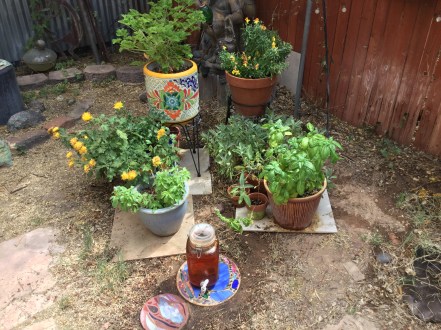
Roiboos Lemon Cloud


If we were having coffee this week in Tucson I would point out to you how dead the city is now. Obviously people leave to escape the heat. The snowbirds, the students, and everyone who can afford to go elsewhere for the summer have left the city. The businesses cut hours and do what they can to stay in business when their regular customers are basically all gone. If you were here now I would recommend you spend the night in a resort for less than half the winter rate, or dine at one of our fancier restaurants offering a summer special. For those of us who stay all year, this is a time to take advantage of the off peak bargains and less crowded streets. Everything is air conditioned, so you will not melt.
Please sit down and let me pour you some iced tea from the extensive collection. I have place an order for new teas, arriving any day, so I am taking inventory of all the teas I need to use in the order they were purchased. I have so many flavors, but this is a basic pleasure in our lives, as well as a healthy way to consume herbs and water. I get really excited about the prospect of new teas I have not tried. Next week my collection will have expanded to about 40 choices. I am drinking a honey bush mango with a fruity taste. What is your favorite kind of tea? I probably have it on hand. I hope you like the Allman Brothers Band. I am playing a tribute until further notice. I will turn down the volume because I want to listen to your stories. What is happening in your life and writing this week? I had an average writing week. I took one day off (yesterday) and produced nothing of great note. I wrote anther tea review, and am starting to like that segment. Are you trying any new ideas in your writing?


We enjoyed a superb brunch downtown yesterday in the spirit of off-peak excursions. We went to the Coronet, a restaurant we really enjoy but seldom frequent. We like the decor in a restored historical property. The service is always excellent, but with fewer customers it is even better now. The real reason we go is for the innovative menu and bar choices. Yesterday’s brunch was a perfect example. Bob loved his eggs Florentine with gravlax. I had a wonderful dish of poached eggs over grits served with black beans. Bob’s Bloody Mary had fabulous garnishes, including a picked tomatillo. That is the item I plan to knock off and use at home. I had never thought of doing that, but am a huge fan of the tomatillo, a green fruit that is NOT a tomato. We not only had the restaurant almost to ourselves, but the entire 4th Avenue shopping district was empty. We spent some time in a used book store, where I managed to buy just a single book. On the way home we stopped for ice cream at our favorite parlor, The Screamery. We each had full punch cards for a free scoop. We loved our dessert then took home a pint of blueberry cheesecake. All in all, it was a superb little holiday with all the gourmet trimmings. I am in the minority but I honestly love summer in Tucson. The hot ghost town suits me perfectly. You may want to jump in the pool before you head out. Stay hydrated. Take an iced tea with you. By any measure it is hot outside. You may want to stop and get some ice cream.

book shopping

ice cream
This movable digital beverage drinking party is hosted each week by Emily at Nerd in the Brain. Please join writers from around the world for a chat and a digital drink each weekend. Read, write, comment and share.

#WeekendCoffeeShare

On the 26th, Love is Wise. It’s the answer for everything. Oh, and ignore the darkness, your fear of change, and the Powers-That-Be; just for today, they can’t touch you. And you’re welcome. (That’s my answer to you thanking me for not posting an MC Hammer video). Instead we’ve got Today’s word image:a Tarot card […]
via Your Week 26 May-1 June 2017 A Thousand Suns — Julie Demboski’s ASTROLOGY
 mermaidcamp