mermaidcamp
Keeping current in wellness, in and out of the water
You can scroll the shelf using ← and → keys
You can scroll the shelf using ← and → keys

William and Lucinda
My maternal great-grandfather fought for the Confederacy in the Civil War. I have a copy of the military records and pension applications for my maternal great-grandfather, William Ellison Taylor. He enlisted in the Civil War on April 26, 1861, Company C, 4th Regiment, Alabama Regiment of Volunteers, under the command of Captain N.H.R. Dawson. He was injured at the Battle of First Manassas, Virginia, on July 21, 1861. He was discharged October 22, 1861. His great-grandfather, Jonathan Aaron Taylor, fought in the Revolutionary War in South Carolina. After the Civil war William and his wife’s family moved to East Texas and bought land. He became a preacher.

William Ellison Taylor
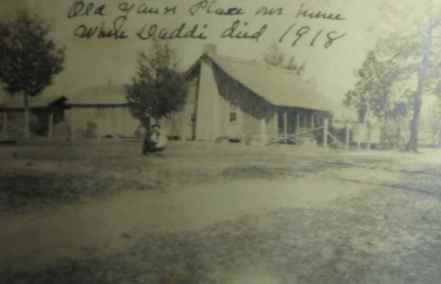
The following is from Gospel Preachers Who Blazed the Trail by C. R. Nichol, 1911.
William Ellyson Taylor was born in Alabama, November 22, 1839, and was reared in that state. His education was received in the common schools. When the war broke out between the states he enlisted in the 4th Alabama Regiment and went to Virginia. In the battle of Manassas. July 21, 1861, he was wounded, which made him a cripple for life.
Dec. 27. 1864, he was married to Lucinda Armer, who has been his faithful help-meet, and to the present shares his joys and sorrows. To this union six boys and two girl have been born.
November, 1869, he moved to Texas. In August, 1874, Dr. W. L. Harrison preached the first sermon he ever heard. Afterward and and David Pennington became a Christian. In 1877 he began preaching and though he works on the farm, he has preached as he found opportunity. Entering the firgin field he has established congregations in Montgomery, San Jacinto and Walker counties and is now preaching monthly for congregations at Willis, Bethan and Ne Bethel, Montgomery County. When confined for nearly two years through sickness his brethren administer to his every need. All who know Bro. Taylor love him for his intrinsic worth and work in the Lord.
Gospel Preachers Who Blazed the Trail by C. R. Nichol, 1911.

Lower Surry Church
Lawnes Creek Parish Church was the first church erected on Hogg Island in 1628 for the citizens of James City County who lived on the south side of the James River. Surry formed from James City County and the first parish for the area now encompassed by Surry County was known as “Lawnes Creek.”
The parish church members would have been buried at their place of worship as was the custom in those days.
This site is now occupied by the Surry Nuclear Plant.
No access permitted.
LAWNES CREEK PLANTATION, Rts 650 & 628
The peninsula of land about 2 miles in width and 8 in length between Lower Chippoakes Creek and Lawnes Creek and south of Hog Island, was, together with the lands adjoining upper Chippoakes Creek and opposite Jamestown, the first to be settled in Surry away from the James River. Virtually all this land had been patented before 1635, mainly by William Spencer, Captain William Pierce, Roger Delke, and Captain Lawrence Baker.
My 8th great-grandfather, John Holt was born in 1664 in Surry County, Virginia, a British colony. He died in 1705 Surry County, Virginia, hung by his own hand. His 8th great-grandson, George Harvey Taylor, committed the same “Felonious homicide of a man’s self” by drinking carbolic acid in 1941. George Harvey was my maternal grandfather. It is said that suicide reoccurs in families.
He was listed in the 1687 Cavalry of Surrey County, Virginia. John M. Holt was born in 1664 in Lawnes Creek Parish, Hog Island, Surry County, VA. John died 1705 at the age of 41 in Surry County, VA. John Holt committed suicide.
On Feb 24, 1685 Mr. John Holt and his wife were fined for not going to church by the Surry County Court. (This may have been rather harsh as she most probably was pregnant.)
In 1703 he petitioned the Legislature to be Keeper of the Ferry settled on James River to Archer’s Hope Creek on the north side. Appears on the 1704 Rent Roll for Surry County, VA On November of 1706 the Surry County Court Records state that “John Holt upon his petition is admitted to keep a ferry in Hog Island pursuant to a Law made to that purpose and for his better compliance therewith ordered that he forthwith provide and maintain one substantial flat bottom boat of at least fifteen feet by the keel for carrying over of horses as also one other boat of at least twelve or thirteen feet by keel for passengers with three able men constantly to attend the said service ant that he enter into a bond with good and sufficient security duly to perform the same. In May of 1710 John Holt petitioned the Court and they “exempted him from payment from his bond for keeping a ferry at Hog Island. (Surry County, Virginia Court Records, 1707-1711, Book VI
By 1704 the Holt family would own 2,768 acres in Surry County. Of this, 1,450 acres were controlled by Elizabeth Holt, wife of Randall Holt, Jr.. The remainder was owned by the sons of Randall and Elizabeth..
John Holt (1664 – 1705)
8th great-grandfather
David Holt (1685 – 1749)
son of John Holt
Sarah Holt (1740 – 1792)
daughter of David Holt
James Truly (1755 – 1816)
son of Sarah Holt
Elizabeth Betsy Truly (1782 – 1851)
daughter of James Truly
Minerva Truly Darden (1806 – 1837)
daughter of Elizabeth Betsy Truly
Sarah E Hughes (1829 – 1911)
daughter of Minerva Truly Darden
Lucinda Jane Armer (1847 – 1939)
daughter of Sarah E Hughes
George Harvey Taylor (1884 – 1941)
son of Lucinda Jane Armer
Ruby Lee Taylor (1922 – 2008)
daughter of George Harvey Taylor
Pamela Morse
I am the daughter of Ruby Lee Taylor
By 22 September 1705 John Holt “laid violent hands upon himself”
Suicide was against the law. Without regard to the rights of the heirs, the estate and property of the perpetrator reverted back to the crown. Govenor of Virginia Colony was Edward Nott decribes John as a man “who being under some indisposition of mind lately hanged himself…troubled with lunacy and distraction of mind.”
John’s eldest son David, had already received a substantial land grant from his grandfather David Crafford prior to David’s twenty-first birthday. John’s sons John Jr., Charles, Benjamin, and Joseph attended the hearing. The deposition of the court read in part: “Having labor’ d long under a very great Indisposition of Mind, and at last layd violent hands upon himself”, a coroner’s jury found that his estate was forfeited as “Felo de Se.” {Latin for “Felonious homicide of a man’s self”}
Governor Edward Nott appealed to the Crown for the family. He inventoried the estate at: 159I, 16s, 6d, and “his Five Surviving Children are fit Objects of Our Mercy and Compassion.”.
Queen Anne commanded the restoration of his estate to them on 7 Jan. 1706. “the said estate consisting chiefly in cattle proper for plantations and other perishable good is hereby to be restored to his five children John, David, Charles, Joseph and Benjamin. ibid, p.512.”
Source: I want to Especially THANK Charles Lindley Holt for sending me his research on this Virginia Colony HOLT family. THANK YOU. I used his dates and many of his ” ” ‘s.
Also:: Familysearch had some of this “(taken from the book “Adventurers of Purse and Person”.}” .

Sherman Coat of Arms
My 7th great-grandfather was born in Massachusetts, but moved with his parents to Rhode Island as baby. His father was a judge and prominent Quaker in Rhode Island after being driven out of Salem for religious differences. The family quit the Puritan Church and joined the Quaker Church. We have a copy of his will.
EBER SHERMAN WAS THE SON OF THE HON. PHILIP SHERMAN AND SARAH ODDINGS OF PORTSMOUTH, RHODES ISLAND, USA. HE MARRIED HIS FIRST WIFE MARY WILCOX, THE DAUGHTER OF EDWARD AND SUSANNA THOMPSON, AND SOPHIA A. BROWN HIS SECOND WIFE. HE WAS ADMITTED FREEMAN, TUESDAY, JUNE 08, 1658, IN PORTSMOUTH, RHODES ISLAND, HE WAS ONE OF THE FIRST SETTLERS IN THE NARRAGANSETT COUNTY, “DECB’R 05, 1679 AN ACCO’T OF LANDS LAID OUT & ALLWED TO MR. SAM’LL WILBORE & COMPA. TO JARED BULL, AND SEVERAL OTHERS”, SHOWS 500 ACRES TO EBER SHERMAN. (FONES RECORD-1894. PP36-7) ” HE WAS A PROMINENT AND INFLUENTIAL MAN, AND HELD MANY OF THE LOCAL OFFICES”. F.D. SHERMAN LISTS ABIGAIL AS A DAUGHTER WITH A QUESTION MARK, F.D.S. 602; A LETTER, MRS. THOMAS O. TREHARNE, TROY NY. HE SETTLED ON THE WEST SIDE OF
NARRAGANSETT BAY AT NORTH KINGSTON. “GOING TO PALMYRA; SHERMAN DEEDS” BY MARGARET SHERMAN, LUTZVICK, 1977.
Eber Sherman (1634 – 1706)
7th great-grandfather
Mary Sherman (1688 – 1751)
daughter of Eber Sherman
Thomas Sweet (1732 – 1813)
son of Mary Sherman
Thomas Sweet (1765 – 1844)
son of Thomas Sweet
Valentine Sweet (1791 – 1858)
son of Thomas Sweet
Sarah LaVina Sweet (1840 – 1923)
daughter of Valentine Sweet
Jason A Morse (1862 – 1932)
son of Sarah LaVina Sweet
Ernest Abner Morse (1890 – 1965)
son of Jason A Morse
Richard Arden Morse (1920 – 2004)
son of Ernest Abner Morse
Pamela Morse
I am the daughter of Richard Arden Morse
WILL OF EBER SHERMAN OF NORTH KINGSTON, RI.
GOD SO BLEST ME IN THIS LIFE I GIVE AND BEQUEATH THE SAME IN THE FOLLOWING MANNER AND FORM FIRST MY DEBTRS AND FUNERALL CHARGES BE PAID ( ) I GIVE TO MY BELOVED SON EBER SHERMAN ONE HUNDRED ACRES OF LAND JOYNING TO THE HOUSE WHICH JO ( ) TO BE TO HIM AND TO HIS HEIRES LAWFULLY BEGOTTEN OF HIS OWN BODY ITEM; I GIVE TO MY BELOVED SON SAMUEL SHERMAN ACRES OF LAND JOYNING AND BOUNDING UPON MY SON EBER SHERMANS LANDD THAT IS ABOVE MENTIONED TO BE TO HIM AND TO HIS HEIRES LAWFULLY BEGOTTEN OF HIS OWN BODY. ITEM I GIVE TO MY BELOVED SON STEPEN SHERMAN ONE HUNDRED ACRES OF LAND JOYNING AND BOUNDING UPON THE LAND GIVEN TO SAMUEL SHERMAN MY SONTHAT IS TO SAY TO HIM AND TO HIS HEIRES LAWFULLY BEGOTTEN OF HIS OWN BODY. I GIVE TO MY BELOVED SON ELISHA SHERMAN ONE HUNDRED ACRES OF LAND JOYNING AND BOUNDING UPON THE LAND GIVEN TO SON STEPEN SHERMAN BEFORE MENTIONED TO BE TO HIM AND HIS LAQFULLY GEGOTTEN OF HIS OWN BODY. ITEM I GIVE TO MY BELOVED SON WILLIAM SHERMAN ONE HUNDRED ACRES OF LAND ADJOYNING AND BOUNDING UPON THE LAND WHICH I HAVE GIVEN TO MY STO ELISHA SHERMAN TO BE TO HIM AND TO HIS HEIRES LAWFULLY BEGOTTEN OF HIS OWN BODY.ITEM. I GIVE TO MY BELOVED SON PELEG SHERMAN ONE HUNDRED AND EIGHTY & TWO ACRES OF LAND ( ) BOUNDED UPON JOHN SWEETS LAND NEAR ( ) TO BE TO HIM AND TO HIS HEIRES LAWFULLY BEGOTTEN OF HIS OWN BODY BUT IN CASE ANY OF THEM W ( ) ENTIONED SHAL DEPART THE ( ) I HEREBY UTTERLY DIALLOW AND REVOKE ALL OTHER TESTAMENTS AND WILLS BY ME FORERLY ANY WISE NAMED WRI( )ING AND CONFIRMING THIS & NOE OTHER TO MY LAST WILL AND TESTAMENT; IN WITNESS WHEREOF I HAVE HERE UNTO SETT MY HAND AND SEALE THE DAY AND YEAR ABOVE WRITEN SIGNED SEALED PUBLISHED AND DECLARED TO BE THE LAST WILL AND TESTAMENT IN THE PRESENCE OF THE SUBSCRIBERS BY EBER SHERMAN. EBER ( HIS MARK) SHERMAN CAPTAIN JESSE ( HIS MARK) CHAMPLIN PELEG MUMFORD THEOPHILUS WHALE CAPT. JEFFERY CHAMPLIN AND PELED MUMFORD BOTH OF KINGSTOWNE IN THE COLONY OF RHOOD ISLAND AND PROVIDENCE PLANTATIONS DID BOTH APPEAR BEFORE THE COUNCIL OF KINGSTOWNE THE 14TH DAY OF ( ) DID DECLEAR THAT THEY DID SEE AND HEAR EBR SHERMAN OF KINSTOWNE (LATE DECEASED) SETT HIS MARK AND SEAL UPON THE ABOVE WRITEN INSTRUMENT AND DECLARED THE SAME TO ( ) HIS LAST WILL AND TESTAMENT AND THAT THEY SETT THEIR NAMES THERTO AS WITNESSES TO THE SAME. ENTERED UPON RECORD THE 13TH DAY NOVERMER 1706 SAMUEL FFONES CLARKE
INVENTORY OF EBER SHERMANS ESTATE LATE DECEASED BY US JUSTICE CHAMPLIN, JONATHAN SHERMA; OXEN FIVE COWS TWO THREE YEAR OLDS ONE CALF- – NORTH KINGSTOWN, R.I. PROBATE RECORDS V. 1-5, PP. 81-82 F.D.S. 603,604
THE ABOVE WILL CAN BE FOUND IN “SOME OF THE DESCENDANTS OF PHILIP SHERMAN, THE FIRST SECRETARY OF RHODE ISLAND” BY ROY V. SHERMAN, PP. 26-28—
Child of PHILIP SHERMAN and SARAH ODDING is:
5. i. EBER5 SHERMAN, b. December 1634, Roxbury, Suffolk Co., MA; d. 1706, North Kingstown, Washington Co., RI.
Generation No. 5
Notes for EBER SHERMAN:
Will of EBER SHERMAN of North Kingston, RI
(Margins destroyed by fire, Dec. 1870)
God so blest me in this life I give and bequeath the same in the following manner and form
first my debts and funerall charges be paid ( )
I give to my beloved Son Eber Sherman one hundred acres of land joyning to the house which jo ( )
to be to him and to his heires lawfully begotten of his own body ( )
Item: I give to my beloved son Samuel Sherman ( ) acres of land joyning and bounding upon my son Eber Shermans land that is above mentioned to be to him and to his heires lawfully begotten of his own body. Item I give to my beloved son Stephen Sherman one hundred acres of land joyning and bounding upon the land given to Samuel Sherman my son that is to say to him and to his heires lawfully begotten of his own body.
Item: I give to my beloved son Elisha Sherman one hundred acres of land joyning and bounding upon the land given to son Stephen Sherman before mentioned to be to him and his lawfully begotten of his own body. Item. I give to my beloved son William Sherman one hundred acres of land adjoyning and bounding upon the land which I have given to my son Elisha Sherman to be to him and to his heires lawfully begotten of his own body. Item. I give to my beloved son Peleg Sherman one hundred and eighty & two acres of land ( ) bounded upon John Sweets land near ( ) to be to him and to his heires lawfully begotten of his own body but in case any of them w( ) entioned shal depart th ( ) I hereby utterly disallow and revoke all other testaments and wills by me formerly any wise named wri( ) ing and confirming this & noe other to be my last will and testament; In witness whereof I have here unto sett my hand and seale the day and year above writen ( ) signed sealed published and declared to be the last will and testament in the presence of the subscribers by Eber Sherman.
Eber (his mark) Sherman
Captain Jesse ( his mark) Champlin
Peleg Mumford
Theophilus Whale
Capt. Jeffery Champlin and Peled Mumford both of Kingstowne in the colony of Rhood Island and Providence Plantations did both appear before the Council of Kingstowne the 14th day of ( ) did declear that they did see and hear Eber Sherman of Kingstowne (late deceased) sett his mark and seal upon the the above writen instrument and declared the same to ( ) his last will and testament and that they sett their names thereto as witnesses to the same.
Entered upon record the 13th day
November 1706
Samuel ffones Clerke
Inventory Follows
Kingstown October the 11th day 1706
Inventory of Eber Shermans Estate late deceased
By us Justice Champlin, Jonathan Sherman:
Oxen five cows two three year old
olds one calf–
North Kingstown, R.I. Probate Records V. 1-5, pp. 81-82
F.D.S. 603, 604
Eber was the son of the immigrant Philip Sherman and his wife, Sarah Odding. Secondary sources say Eber was born in Roxbury, Mass. December 1634; however, a “Heber Sherman” cosigned a deed in Portsmouth, RI on 1 March 1649 [/50?], and if that was this individual, then Eber would have been born no later than 1629. He d. N. Kingstown, RI 1706, and married late in life. c. 1677 Mary, b. c. 1650, living in Oct 1719 when named in the will of Eber’s brother, Peleg Sherman. Mary, in many sources, has been called the daughter of Edward Wilcox, but that Mary was born about 1639, and would be too old to be the mother of Eber’s younger children.
In his 1968 genealogy of the Sherman family, Roy V. Sherman asserts that Eber had another wife named Sophia Brown. If this is the case, then Sophia would have been a first wife, since Mary was the widow of Eber in 1719.
Though Eber grew up in Portsmouth, Rhode Island where his father settled, by 1670 he was living across the Narragansett Bay in Pettaquamscutt (now S. Kingstown), where he and four others were appointed to set a tax rate. In 1687 he was taxed in Kingstowne (which was spilt between North and South in 1722).
Eber’s will was proved in (North) Kingstown on 13 Nov 1706. Alden Beaman provided a good rendition of this family in his Rhode Island Genealogical Register, vol. 9, pages 1-12. However, I take exception to the son Stephen being placed as one of the older children, because he was the last of the children to marry. I have therefore re-arranged the children slightly from Beaman’s account. Children:

Coat of Arms of Scotland(1660-1689).
Latin is sometimes the most technical as well as the most expressive way to convey a concept. The phrase Nemo Me Impune Lacessit means “Wha daur meddle wi’ me?” in Scottish. This is the motto of the Scottish Dragoon Guards. It translates literally into English as “No one cuts me with impunity.” I like the way it makes clear where the line has been drawn. This was also the motto of my ancestors in the Stewart clan. I like all my ancestral warriors, but I think I like the Scotsmen the best. Even when they came to America to be Presbyterians they were badass Revolutionary War heroes in South Carolina. They had a super strong sense of independence.
This phrase was taught to me by one of the gentle readers of this blog, and I treasure it, along with my ancestors who embodied it. Thank you John Holton for this tasty and meaningful piece of history. I hope to go someday to Edinburgh Castle where it is written above the entrance.
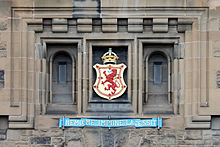
Edinburgh castle Nemo me
impune lacessit

resting place
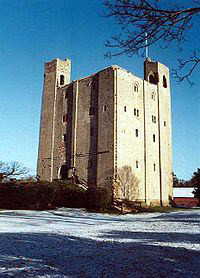
Birth Place-Hedingham Castle
Richard de Vere, 11th Earl of OxfordKG (15 August 1385 – 15 February 1417) was the son and heir of Aubrey de Vere, 10th Earl of Oxford. He took part in the trial of Richard, Earl of Cambridge and Lord Scrope for their part in the Southampton Plot, and was one of the commanders at Agincourt in 1415.
Richard de Vere, born 15 August 1385, was the eldest son of Aubrey de Vere, 10th Earl of Oxford, and his wife Alice Fitzwalter, daughter of John, 2nd Baron Fitzwalter, by Eleanor Percy, daughter of Henry de Percy, 2nd Baron Percy. The 10th Earl died on 23 April 1400 while Richard was underage. His wardship was initially granted to his mother, but after her death on 29 April 1401, King Henry IV granted it to his mother-in-law, Joan de Bohun, Countess of Hereford. Oxford had livery of his lands on 21 December 1406 without proof of age.
From 1410 onwards Oxford was appointed as a commissioner in Essex on various occasions, and in November 1411 was a Trier of Petitions from overseas in Parliament.
In August 1412 Oxford was among those who sailed to Normandy under Thomas of Lancaster, 1st Duke of Clarence, to aid the Armagnac party against the Burgundians. According to Pugh, the members of the nobility who accompanied the Duke of Clarence on this expedition did so in hope of financial gain, Oxford’s earldom in particular having suffered from forfeitures and attainders during the lives of his predecessors which had made him ‘the poorest member of the English higher nobility’. Another member of the Duke of Clarence’s expedition was Richard, 3rd Earl of Cambridge, and three years later, on 5 August 1415, Oxford was among the peers at the trial, presided over by the Duke of Clarence, which condemned to death Cambridge and Lord Scrope for their part in the Southampton Plot on the eve of Henry V’s invasion of France. A few days later Oxford sailed to France with the King, and was one of the commanders at Agincourt on 25 October 1415.
In May 1416 Oxford was invested with the Order of the Garter, and in that year sailed with the fleet to relieve Harfleur, taking part in the naval battle at the mouth of the Seine on 15 August.
Oxford died 15 February 1417, aged 31, and was buried at Earls Colne, Essex. His widow, Alice, married Sir Nicholas Thorley (d. 5 May 1442). She died 18 May 1452, and was buried at Earls Colne.
Oxford married firstly, before 1400, Alice Holland, daughter of John Holland, 1st Duke of Exeter by Elizabeth, sister of King Henry IV and daughter of John of Gaunt, Duke of Lancaster. There were no issue of the marriage.
Oxford married secondly, about 1406-7, Alice Sergeaux (c.1386 – 18 May 1452), the widow of Guy St Aubyn of St Erme, Cornwall, and daughter of Sir Richard Sergeaux of Colquite, Cornwall by his second wife, Philippe (d. 18 May 1452), the daughter and co-heiress of Sir Edmund de Arundel,who had been bastardized by the annulment in 1344 of the marriage of his parents, Richard Fitzalan, 10th Earl of Arundel and Isabel Despenser. They had three sons:
John de Vere, 12th Earl of Oxford.
Sir Robert Vere (1410-1461), of Haccombe, Devon, who married Joan Courtenay (d. before 3 August 1465), daughter of Sir Hugh Courtenay by Philippa Archdekne, and widow of Sir Nicholas Carew (d. before 20 April 1448). Sir Robert Vere and Joan Courtenay had one son, John Vere (d. before 15 March 1488), who married Alice Colbroke, and by her was father of John de Vere, 15th Earl of Oxford.
Sir Richard Vere, who married Margaret Percy (d. 22 September 1464), widow of Henry Grey, 6th Baron Grey of Codnor (d. 17 July 1444), and daughter and co-heiress of Sir Henry Percy ‘of Atholl’ of Harthill, Yorkshire, and his wife Elizabeth Bardolf, daughter of William Bardolf, 4th Baron Bardolf by Agnes Poynings.
References
· Cokayne, George Edward (1945). The Complete Peerage, edited by H.A. Doubleday X. London: St. Catherine Press.
· Castor, Helen (2004). Vere, John de, twelfth earl of Oxford,(1408-1462), magnate. Oxford Dictionary of National Biography. Retrieved 15 March 2011.
Sir Richard, 11th Earl of Oxford DeVere KG (1385 – 1417)
19th great-grandfather
Sir John 12th Earl of Oxford DeVere (1408 – 1462)
son of Sir Richard, 11th Earl of Oxford DeVere KG
John DeVere (1447 – 1509)
son of Sir John 12th Earl of Oxford DeVere
John DeVere (1490 – 1540)
son of John DeVere
Frances DeVere (1517 – 1577)
daughter of John DeVere
Thomas Howard (1536 – 1572)
son of Frances DeVere
Margaret Howard (1561 – 1591)
daughter of Thomas Howard
Lady Ann Dorset (1552 – 1680)
daughter of Margaret Howard
Robert Lewis (1574 – 1656)
son of Lady Ann Dorset
Robert Lewis (1607 – 1644)
son of Robert Lewis
Ann Lewis (1631 – 1686)
daughter of Robert Lewis
Joshua Morse (1669 – 1753)
son of Ann Lewis
Joseph Morse (1692 – 1759)
son of Joshua Morse
Joseph Morse (1721 – 1776)
son of Joseph Morse
Joseph Morse III (1756 – 1835)
son of Joseph Morse
John Henry Morse (1775 – 1864)
son of Joseph Morse III
Abner Morse (1808 – 1838)
son of John Henry Morse
Daniel Rowland Morse (1838 – 1910)
son of Abner Morse
Jason A Morse (1862 – 1932)
son of Daniel Rowland Morse
Ernest Abner Morse (1890 – 1965)
son of Jason A Morse
Richard Arden Morse (1920 – 2004)
son of Ernest Abner Morse
Pamela Morse
I am the daughter of Richard Arden Morse
Hedingham Castle
middle ages to the present , Essex, England
Aubrey de Vere was one of William the Conqueror’s most favoured knights. After the Battle of Hastings he was given land in many counties including Middlesex where he owned Kensington and Earls Court. His son Aubrey II built a huge castle at Hedingham c.1140 using the Archbishop of Canterbury as his architect. Aubrey III was created Ist Earl of Oxford by Queen Matilda and the castle remained the stronghold of the de Veres for 550 years and is still owned by a descendant. The Norman keep with its magnificent banqueting hall and minstrels’ gallery is now the only remaining evidence of this great medieval castle and its later extensive Tudor buildings.
The immensely rich and powerful de Veres were one of the most important medieval families who, as Lord Great Chamberlains, gave loyal service and military leadership to their kings and queens for over 500 years. Hedingham had many royal visitors including King Henry VII, King Henry VIII and Queen Elizabeth I.
The Earls of Oxford were great crusaders and Aubrey, 2nd Earl fought with Richard Coeur de Lion and Robert, 3rd Earl was one of the barons who forced King John to sign the Magna Carta in 1215. The following year Hedingham Castle was besieged by King John, and again by the Dauphin of France in 1217. The de Veres were commanders throughout history and featured at the Siege of Caerlaverock and the famous battles of Crecy, Poitiers, Agincourt and Bosworth. John, 15th Earl took part in the Battle of the Spurs and accompanied King Henry VIII at the Field of the Cloth of Gold, and as Lord
Great Chamberlain bore the crown at Anne Boleyn’s coronation. John, 16th Earl escorted young Elizabeth from Hatfield to London for her coronation in 1559 and his wife Margery became her maid of honour. In 1561 Queen Elizabeth I aged twenty-eight stayed at Hedingham from August 14th-19th, and Edward,17th Earl, became one of her favourites and was acclaimed to be the best of the courtier poets.
Aubrey, 20th Earl of Oxford, had no sons and when he died in 1703 this famous title became extinct. His daughter Diana married Charles, the illegitimate son of Nell Gwynne and King Charles II who was created 1st Duke of St. Albans. In 1713 the castle was purchased by Sir William Ashhurst, M.P., Lord Mayor of London. He landscaped the grounds and built a fine country house which was finished in 1719. The estate passed to his great granddaughter, Elizabeth Houghton who married Lewis Majendie. This family owned Hedingham for 250 years until Miss Musette Majendie left it to her cousin, The Honourable Thomas Lindsay, who is descended from the de Veres through both his mother and his father. His son Jason and his wife Demetra now live at Hedingham with their three small children.
The castle is now available to be seen and explored by visitors. It is even possible to have weddings and banquets there.
His monumental effigy was removed from the ruined priory at Earls Colne and placed at St Stephen’s Chapel in Bures, Suffolk.

A cenotaph is an “empty tomb” or a monument erected in honour of a person or group of people whose remains are elsewhere. The word derives from the Greek: κενοτάφιον = kenotaphion (kenos, one meaning being “empty”, and taphos, “tomb”).

headstone
My 8th great-grandfather came to America as young boy with his parents and became a founder of Hartford, Connecticut.
John was born about 1628 in England and came to Connecticut with his parents as a young child. He married Hannah Potter, daughter (or possibly stepdaughter) of William Potter of Stamford. John and his brother Joseph moved from Stamford to Hempstead, Long Island, and returned to Connecticut by 1664. John died 5 Feb 1699, probably in Connecticut. John was one of seven original proprietors of Greenwich, CT, as described at http://www.rootsweb.com/~ctfairfi/pages/greenwich/greenwich_index.htm
“On February 5, 1664, the Seven Proprietors made a formal request to the General Assembly in Hartford to be allowed to separate from Stamford and to support its own minister and lay out its own lands. The Seven Proprietors were John MEAD, Jonathan RENALDS, John HOBBY, Joseph FERRIS, Joshua KNAPP, Angell HUSTED, and Jeffrey FERRIS.
On May 11, 1665, the General Assembly in Hartford declared Greenwich a separate township, and authorized funds for the hiring and support of an orthodox minister. In 1672, the so-called “27 Proprietors” bought land from the few remaining Indians to the west of the “Myanos River.” This land became known as “Horseneck” because of the neck of land now known as Field Point was the common HORSE PASTURE. ”
John signed all documents with a mark, but had several books in his estate inventory, so he could probably read but not write.
John and Hannah had eleven children:
John, b. abt 1658, married Ruth Hardey in 1681.
Joseph, b. 2 May 1660, married Mary.
Hannah, b. abt 1661, married John Scofield 12 Jul 1677.
Ebenezer, b. 1663, married Sarah Knapp in 1691.
JONATHAN, b. abt 1665, married Martha Finch.
David, b. abt 1665, married Abigail Leane 16 Dec 1707.
Benjamin, b. May 1666, married first Sarah Waterbury, second Rachel Brown.
Nathaniel, b. abt 1669, married Rachel.
Samuel, b. abt 1673, married Hannah.
Abigail, b. abt 1675. Fairfield Probate Records cited in The Ancestry of Elizabeth Barret Gillespie, “reveal that she was incompetent to manage her own affairs: ‘Whereas John Mead Sen’r, deceased, of Greenwich, haveing not made Satisfieing provision in his will for his daughter Abegaile Mead, She being not Capable of doing for her Self as may be desired by Reason, whearof Ebeneaz Mead of Greenwich dos hereby, in the presence of ye Prerogative Court, Engage to pay unto ye s’d Abegaile Mead, his sister, ye Sum of therty and five pounds, to be paid unto her According as he Shall Apprehend She Shall stand in Need of it for her Comfortable subsistence.”

Tomac Burying Ground
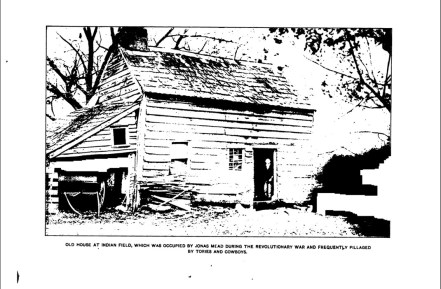
John Mead’s House
John Mead (1634 – 1699)
8th great-grandfather
Benjamin Daniel Mead (1667 – 1746)
son of John Mead
Mary Mead (1724 – 1787)
daughter of Benjamin Daniel Mead
Abner Mead (1749 – 1810)
son of Mary Mead
Martha Mead (1784 – 1860)
daughter of Abner Mead
Abner Morse (1808 – 1838)
son of Martha Mead
Daniel Rowland Morse (1838 – 1910)
son of Abner Morse
Jason A Morse (1862 – 1932)
son of Daniel Rowland Morse
Ernest Abner Morse (1890 – 1965)
son of Jason A Morse
Richard Arden Morse (1920 – 2004)
son of Ernest Abner Morse
Pamela Morse
I am the daughter of Richard Arden Morse
The following anecdote, which has been preserved by tradition, shows his character: One day when he was quite an old man, as he was going for his grist on horseback to the mill at Dumpling Pond, before he reached the Mianus River he overtook and old Quaker jogging slowly along, loaded with a heavy budget. In a real spirit of kindness he offered to take the Quaker’s load upon his horse, and thus give him a lift on his journey. No,replied the Quaker, thee don’t get my bundle, for I can read men’s thoughts. Thee wants to get my bundle, and then thee’ll run off. Thee don’t get my bundle. Very well, was the simple reply, and so they went slowly on together. At last they came to the brink of the Mianus River. Here the Quaker was really in trouble. How to cross a river, two or three feet deep, dry shod, was quite a puzzle. But he gladly accepted a second offer of assistance from the horseman. The bundle was mounted in front, John in the middle, and the Quaker behind. Arriving at the centre of the river, in pretending to adjust his stirrup John caught the Quaker by the heel and gave him a gratuitous bath. Such treatment was too much, even for Quaker forbearance, and the victim, with his hands full of pebbles, would have taken summary vengeance, had not the other party threatened to put the bundle under a similar course of treatment. This threat, and the lecture following it, gradually cooled off the Quaker’s anger. John informed him that all had been done for his good, to teach him a lesson. And the lecturer said he hoped the stranger would never again profess to read men’s thoughts. For, said he, I asked you to ride, kindly in the first place, when you refused; but at the second time of asking, I really intended to do as I have just done. So saying, and tossing the bundle back, he rose on, leaving his companion to apply the moral as he thought best.

Margaret Howard
Margaret Howard was the daughter of Thomas Howard, 4th duke of Norfolk (March 10, 1538-June 2, 1572) and his second wife, Margaret Audley (1539-January 10, 1564). Her father’s execution for treason when she was ten limited her choice of husbands but in February 1569 she married Robert Sackville of Bolbrooke and Buckhurst, Sussex and Knole, Kent (1561-February 27, 1609), later Lord Buckhurst and earl of Dorset. They had three sons and three daughters, including Richard (1590-1624), Edward (1591-1652), Anne, and Cecily. After her death, Robert Southwell published a small volume in her honor and Sackville described his late wife as “a lady . . . of as great virtue . . . as is possible for any man to wish to be matched withal.” He asked to be buried at Withyham “as near to my first dearly beloved wife . . . as can be” and ordered that £200 to £300 be spent on their tomb, with effigies of them both. A devout Catholic, she influenced his religious beliefs.

Robert Sackville and Margaret Howard
Margaret Howard (1561 – 1591)
13th great-grandmother
Lady Ann Dorset (1552 – 1680)
daughter of Margaret Howard
Robert Lewis (1574 – 1656)
son of Lady Ann Dorset
Robert Lewis (1607 – 1644)
son of Robert Lewis
Ann Lewis (1631 – 1686)
daughter of Robert Lewis
Joshua Morse (1669 – 1753)
son of Ann Lewis
Joseph Morse (1692 – 1759)
son of Joshua Morse
Joseph Morse (1721 – 1776)
son of Joseph Morse
Joseph Morse III (1756 – 1835)
son of Joseph Morse
John Henry Morse (1775 – 1864)
son of Joseph Morse III
Abner Morse (1808 – 1838)
son of John Henry Morse
Daniel Rowland Morse (1838 – 1910)
son of Abner Morse
Jason A Morse (1862 – 1932)
son of Daniel Rowland Morse
Ernest Abner Morse (1890 – 1965)
son of Jason A Morse
Richard Arden Morse (1920 – 2004)
son of Ernest Abner Morse
Pamela Morse
I am the daughter of Richard Arden Morse
Robert Sackville, 2nd Earl of Dorset, married first, in February 1580, Lady Margaret, by then only surviving daughter of Thomas Howard, 4th Duke of Norfolk, then suspected as a crypto-Catholic. By her he had six children, including:
Richard Sackville, 3rd Earl of Dorset (18 March 1589 – 28 March 1624)
Edward Sackville, 4th Earl of Dorset (1591 – 17 July 1652)
Anne, married Sir Edward Seymour, eldest son of Edward Seymour, Viscount Beauchamp, and, secondly, Sir Edward Lewis (d.1630) by whom she had issue
Cecily, married Sir Henry Compton, K.B.
Lady Margaret died on 19 August 1591; Robert Southwell, who never met her, published in her honour, in 1596, Triumphs over Death, with dedicatory verses to her surviving children
My 15th great-uncle, Thomas Sackville, inherited a calendar house, Knole House, in Kent, where they, no doubt, all visited. The house became famous:
Knole is an English country house in the town of Sevenoaks in west Kent, surrounded by a 1,000-acre (4.0 km2) deer park. One of England’s largest houses, it is reputed to be a calendar house, having 365 rooms, 52 staircases, 12 entrances and 7 courtyards. It is known for the degree to which its early 17th-century appearance is preserved, particularly in the case of the state rooms: the exteriors and interiors of many houses of this period, such as Clandon Park in Surrey, were dramatically altered later on. The surrounding deer park has also survived with little having changed over the past 400 years except for the loss of over 70% of its trees in the Great Storm of 1987.
In 1566, during the reign of Queen Elizabeth I, it came into the possession of her cousin Thomas Sackville whose descendants the Earls and Dukes of Dorset and Barons Sackville have lived there since 1603 (the intervening years saw the house let to the Lennard family). Most notably, these include writer Vita Sackville-West (her Knole and the Sackvilles, published 1922, is regarded as a classic in the literature of English country houses); her friend and lover Virginia Woolf wrote the novel Orlando drawing on the history of the house and Sackville-West’s ancestors. The Sackville family custom of following the Salic rules of primogeniture prevented Sackville-West herself from inheriting Knole upon the death of her father Lionel (1867–1930), the 3rd Lord Sackville, and her father bequeathed the estate to his brother Charles (1870–1962).
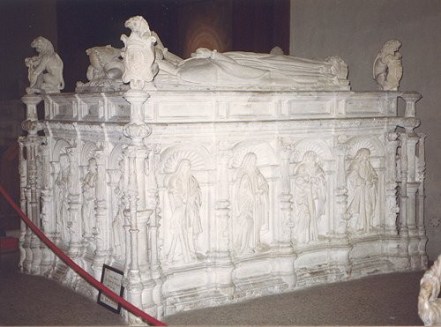
Tomb of Thomas Howard – 3rd Duke of Norfolk St. Michael’s Church; Suffolk,England Thomas Howard was buried here after his death on Aug. 25, 1554. It is possibly the best preserved ornate stonework in Europe. Although both Thomas and his wife, Elizabeth Stafford appear on the same monument, only he is buried there. She was interred in the Howard Chapel in St. Mary’s Church, Lambeth. This was due to the unhappy marriage and final separation.
Thomas Howard, 3rd Duke of Norfolk (1473 – 25 August 1554) was a prominent Tudor politician. He was uncle to two of the wives of Henry VIII, Anne Boleyn and Catherine Howard, and played a major role in the machinations behind these relationships. After falling from favor he was imprisoned in the Tower of London with his dukedom forfeit, and was released on the accession of Mary I. He aided in securing Mary’s throne, setting the stage for alienation between his Catholic family and the Protestant royal line that would be continued by Elizabeth I.
As with all the Dukes of Norfolk, Thomas Howard was descended from Edward I. He was the son of Thomas Howard, 2nd Duke of Norfolk, and Elizabeth Tilney. Thomas Howard succeeded his younger brother Edward as Lord High Admiral in 1513. Until 1524 he was styled Earl of Surrey.
Norfolk first married Anne of York, daughter of Edward IV of England and Elizabeth Woodville on 4 February 1494 at Greenwich Palace. The couple had at least two children: Thomas Howard (c. 1496-1508) and a stillborn child (c. 1499). There are also suggestions of short-lived Henry Howard and William Howard resulting from this marriage.
Following Anne’s death in 1511 he married Elizabeth Stafford, daughter of Edward Stafford, 3rd Duke of Buckingham and Alianore Percy on 8 January 1512. They had three children: Lady Mary Howard (c. 1513-1555) who married Henry Fitzroy, illegitimate son of Henry VIII; Henry Howard (1517-1547) was one of the founders of Renaissance poetry; and Thomas Howard (c.1520-1582). The marriage with Elizabeth was unhappy. When Elizabeth complained about his mistress, Bess Holland, the Duke beat her. The couple remained estranged until Norfolk’s death.
On his father’s death in 1524 he inherited the dukedom of Norfolk and was named Lord High Treasurer and Earl Marshal, making Howard one of the most premier nobles in the kingdom. He distinguished himself many times in battle, and was an able soldier. His power increased somewhat after his niece Anne Boleyn became Henry VIII’s mistress, sometime around 1527. However, their relationship was fraught with difficulty since Anne found her uncle to be selfish and untrustworthy. Although they were political allies throughout the late 1520s alongside Howard’s brother-in-law Thomas Boleyn, Anne’s father, Norfolk once complained that Anne used words to him “that one would not use to a dog.” She was crowned queen in 1533, and was probably influential along with Queen Anne in securing the marriage of Norfolk’s daughter Mary to Henry Fitzroy.
Queen Anne’s religious and political vision was more radical than Norfolk’s, and their relationship deteriorated throughout 1535 and 1536 as Henry VIII became increasingly unfaithful, including with Anne’s cousin, Mary Shelton. Putting his own security before family loyalties, he presided over Queen Anne’s trial in 1536, giving a death sentence despite her probable innocence. The next day, he condemned to death his nephew, Anne’s brother George for the crime of incest with his own sister, the Queen.
After the death of Jane Seymour he used another of his nieces, the teenaged Catherine Howard to strengthen his power at court by orchestrating an affair between her and the 48 year-old king. He used Henry’s subsequent marriage to Catherine as an opportunity to dispose of his long-term enemy Thomas Cromwell, who was beheaded in 1540. Queen Catherine’s reign was a short one, however, since Thomas Cranmer, the Archbishop of Canterbury, discovered that she was already secretly betrothed before her marriage to Henry and had been extremely indiscreet since. Catherine was beheaded in February 1542, and numerous other Howards were imprisoned in the Tower – including the duke’s stepmother, brother, two sisters-in-law and numerous servants.
Catherine Howard’s execution was his downfall, despite Norfolk’s desperate efforts to heal the rift. He had become the leader of the premier family in England; as the uncle of Anne Boleyn and Catherine Howard, and the great-uncle of Jane Seymour[1] He had also benefited from the influence of several of the King’s mistresses, his nieces Mary Boleyn and Elizabeth Carew and his wife’s aunt, Anne Stafford, Countess of Huntingdon. In 1546, Norfolk allegedly hatched a plot to make his daughter, Mary Howard, the King’s mistress, even though she was the widow of Henry’s illegitimate son.[2] In December 1546, he was arrested in company with his son Henry and charged with treason. Henry VIII died the day before the execution was due to take place, and Norfolk’s sentence was commuted to imprisonment. The Earl of Surrey was less fortunate and had been executed a few days previously.
Norfolk remained in the Tower throughout the reign of Edward VI of England and his dukedom remained forfeit. He was released by Mary I in 1553, due to the Howards being an important Catholic family, and the dukedom was restored. The Duke showed his gratitude by leading the forces sent to put down the rebellion of Thomas Wyatt, who had protested against the Queen’s forthcoming marriage to Philip II of Spain and had planned to put Anne Boleyn’s daughter, the future Elizabeth I on the throne in Mary’s place. The result of Norfolk’s suppression of the Wyatt Rebellion was Princess Elizabeth’s imprisonment in the Tower (although there was not enough evidence to convict her on treason, since she clearly had not been party to the rebels’ precise intentions) and the execution of the Queen’s cousin Lady Jane Grey. Norfolk died not long after the Wyatt Rebellion and was succeeded by his grandson Thomas. The 4th Duke, also a Catholic, was executed on Elizabeth’s orders for illegally plotting to marry Mary Queen of Scots.
Thomas Howard’s tomb is situated in Framlingham Church, Suffolk. It is among the best preserved example of ornate stonework in Europe
Lord Thomas Howard (1473 – 1554)
15th great-grandfather
Lady Katherine Howard Duchess Bridgewater (1495 – 1554)
daughter of Lord Thomas Howard
William ApRhys (1522 – 1588)
son of Lady Katherine Howard Duchess Bridgewater
Henry Rice (1555 – 1621)
son of William ApRhys
Edmund Rice (1594 – 1663)
son of Henry Rice
Edward Rice (1622 – 1712)
son of Edmund Rice
Lydia Rice (1649 – 1723)
daughter of Edward Rice
Lydia Woods (1672 – 1738)
daughter of Lydia Rice
Lydia Eager (1696 – 1735)
daughter of Lydia Woods
Mary Thomas (1729 – 1801)
daughter of Lydia Eager
Joseph Morse III (1756 – 1835)
son of Mary Thomas
John Henry Morse (1775 – 1864)
son of Joseph Morse III
Abner Morse (1808 – 1838)
son of John Henry Morse
Daniel Rowland Morse (1838 – 1910)
son of Abner Morse
Jason A Morse (1862 – 1932)
son of Daniel Rowland Morse
Ernest Abner Morse (1890 – 1965)
son of Jason A Morse
Richard Arden Morse (1920 – 2004)
son of Ernest Abner Morse
Pamela Morse
I am the daughter of Richard Arden Morse
My 15th great-grandfather, Thomas Howard, 3rd Duke of Norfolk, KG (1473 – 25 August 1554) aided Mary in securing her throne, which ended him and his family in a world of trouble. He was fully immersed in the politics of Henry VIII, and paid the price for it. Those were treacherous times to be close to the king.

Thomas Howard

Marriage of Henry I of England (1068-1135) to Princess (Eadgyth) Matilda of Scotland. Engraving c1880.
My 27th great-grandmother was Princess of Alba/Albany. She was christened Edith, but adopted the name Matilda upon her marriage to Henry. It was thought the Norman barons might not respect a queen with a Saxon name.
The marriage to Henry represented the union of Norman & Saxon royal lines.
She was crowned Queen Consort 11/14 Nov 1100 at Westminster Abbey.
Henry married Matilda (daughter of Margaret) to appease his Saxon subjects. She is interred at Westminster Abbey, London, England (or Winchester).
Christened Edith, but adopted the name Matilda upon her marriage to Henry I. It was thought the Norman barons might not respect a queen with aSaxon name. The marriage to Henry represented the union of the Norman &Saxon royal lines. She is also known by the diminutive of that name – Maud (which had been the name of Henry’s mother). She was the sister of Edgar, King of Scotland 1098-1107.
Edith – Margaret (Matilda) of Scotland, born in 1080 and died in 1118, married Henry I. Beauclerc, King of England, son of William I The Conqueror (ruler from 1066 to 1087) and his wife, Matilda of Flanders,who died in 1083… Matilda was educated at Wilton and Romsey Abbey where she said that her aunt, Christina, forced her to wear a black veil. She threw it on the ground whenever left alone, in spite of beatings. When her mother died she came to England to Edgar Atheling, her uncle. She was a sister of King David of Scotland; she was a correspondent of Anselm and Hildebert, Bishop of Le Mans, who wrote poetry about her. She was asymbol of the union of Saxon and Norman. She was Henry’s Queen for seventeen years and six months, and died in her prime like most of herfamily. Henry and Matilda had a son and a daughter.

Matilda Princess of Scotland
Matilda of Scotland (born Edith; c. 1080 – 1 May 1118) was the first wife and queen consort of Henry I of England. Matilda was born around 1080 in Dunfermline, the daughter of Malcolm III of Scotland and Saint Margaret. She was christened Edith, and Robert Curthose stood as godfather at her christening. Queen Matilda was also present at the font and may have been her godmother.When she was about six years old, Matilda (or Edith as she was then probably still called) and her sister Mary were sent to Romsey, where their aunt Cristina was abbess. During her stay at Romsey and Wilton, the Scottish princess was much sought-after as a bride; refusing proposals from William de Warenne, 2nd Earl of Surrey, and Alan Rufus, Lord of Richmond. Hermann of Tournai even claims that William II Rufus considered marrying her.She had left the monastery by 1093, when Anselm, Archbishop of Canterbury, wrote to the Bishop of Salisbury ordering that the daughter of the king of Scotland be returned to the monastery that she had left. After the death of William II Rufus in August 1100, his brother, Henry, soon seized the royal treasury and crown. His next task was to marry and Henry’s choice was Matilda. Because Matilda had spent most of her life in a convent, there was some controversy over whether she was a nun and thus ineligible for marriage. Henry sought permission for the marriage from Archbishop Anselm of Canterbury, who returned to England in September 1100 after a long exile. Professing himself unwilling to decide so weighty a matter on his own, Anselm called a council of bishops in order to determine the legality of the proposed marriage. Matilda testified that she had never taken holy vows, insisting that her parents had sent her and her sister to England for educational purposes, and her aunt Cristina had veiled her to protect her “from the lust of the Normans.” Matilda claimed she had pulled the veil off and stamped on it, and her aunt beat and scolded her for it. The council concluded that Matilda was not a nun, never had been and her parents had not intended that she become one, giving their permission for the marriage. Matilda and Henry seem to have known one another for some time before their marriage — William of Malmesbury states that Henry had “long been attached” to her, and Orderic Vitalis says that Henry had “long adored” Edith’s character.Her mother was the sister of Edgar the Ætheling, proclaimed but uncrowned King of England after Harold, and through her, Matilda was descended from Edmund Ironside and thus from the ancient royal family of Wessex, which in the 10th century, became the royal family of a united England. This was very important as Henry wanted to make himself more popular with the English people and Matilda represented the old English dynasty. In their children, the Norman and English dynasties would be united. Another benefit was that England and Scotland became politically closer; three of her brothers became kings of Scotland and were unusually friendly to England during this period.After Matilda and Henry were married on 11 November 1100 at Westminster Abbey by Archbishop Anselm of Canterbury, she was crowned as “Matilda”, a fashionable Norman name. She gave birth to a daughter, Matilda, in February 1102, and a son, William, in November 1103.As queen, she maintained her court primarily at Westminster, but accompanied her husband on his travels around England, and, circa 1106–1107, probably visited Normandy with him. She also served in a vice-regal capacity when Henry was away. Her court was filled with musicians and poets; she commissioned a monk, probably Thurgot, to write a biography of her mother, Saint Margaret. She was an active queen and, like her mother, was renowned for her devotion to religion and the poor. William of Malmesbury describes her as attending church barefoot at Lent, and washing the feet and kissing the hands of the sick. She also administered extensive dower properties and was known as a patron of the arts, especially music.After Matilda died on 1 May 1118 at Westminster Palace, she was buried at Westminster Abbey. The death of her only adult son and Henry’s failure to produce a legitimate son from his second marriage led to the succession crisis of The Anarchy.After her death, she was remembered by her subjects as “Matilda the Good Queen” and “Matilda of Blessed Memory”, and for a time sainthood was sought for her, though she was never canonized.Matilda and Henry had four children:
Matilda of England (c. February 1102 – 10 September 1167), Holy Roman Empress, Countess consort of Anjou, called Lady of the English
William Adelin, (5 August 1103 – 25 November 1120), sometimes called Duke of Normandy, who married Matilda (d.1154), daughter of Fulk V, Count of Anjou.
Euphemia, died young.
Richard, died young.
She is known to have been given the name “Edith” (the Old English Eadgyth, meaning “Fortune-Battle”) at birth, and was baptized under that name. She is known to have been crowned under a name favored by the Normans, “Matilda” (from the Germanic Mahthilda, meaning “Might-Battle”), and was referred to as such throughout her husband’s reign. It is unclear, however, when her name was changed, or why. Accordingly, her later name is used in this article. Historians generally refer to her as “Matilda of Scotland”; in popular usage, she is referred to equally as “Matilda” or “Edith”. References
Chibnall, Marjorie. The Empress Matilda: Queen Consort, Queen Mother, and Lady of the English, 1992
Hollister, Warren C. Henry I, 2001
Parsons, John Carmi. Medieval Mothering, 1996
Parsons, John Carmi. Medieval Queenship, 1997
Huneycutt, Lois L. “Matilda of Scotland: A Study in Medieval Queenship”.” 2004.
Matilda Princess of Scotland (1079 – 1118)
27th great-grandmother
Matilda, Empress of England Beauclerc (1102 – 1167)
daughter of Matilda Princess of Scotland
Henry II “Curtmantel” PLANTAGENET, “King of England” (1133 – 1189)
son of Matilda, Empress of England Beauclerc
Eleanor Spain Plantagenet (1162 – 1214)
daughter of Henry II “Curtmantel” PLANTAGENET, “King of England”
Berenguela CASTILE LEON (1181 – 1244)
daughter of Eleanor Spain Plantagenet
Saint Ferdinand Castile amp Leon (1199 – 1252)
son of Berenguela CASTILE LEON
Alfonso X Wise Castile Leon amp Galicia (1221 – 1284)
son of Saint Ferdinand Castile amp Leon
Sancho Brave Castile Leon (1258 – 1295)
son of Alfonso X Wise Castile Leon amp Galicia
Beatrice Sanchez Infanta Castile (1293 – 1359)
daughter of Sancho Brave Castile Leon
Peter I Portugal Cruel Algarve (1320 – 1367)
son of Beatrice Sanchez Infanta Castile
John I DePinto (1358 – 1433)
son of Peter I Portugal Cruel Algarve
Beatrix DePinto (1403 – 1447)
daughter of John I DePinto
John Fettiplace (1427 – 1464)
son of Beatrix DePinto
Richard Fettiplace (1460 – 1511)
son of John Fettiplace
Anne Fettiplace (1496 – 1567)
daughter of Richard Fettiplace
Mary Purefoy (1533 – 1579)
daughter of Anne Fettiplace
Susanna Thorne (1559 – 1586)
daughter of Mary Purefoy
Gov Thomas Dudley (1576 – 1653)
son of Susanna Thorne
Anne Dudley (1612 – 1672)
daughter of Gov Thomas Dudley
John Bradstreet (1652 – 1718)
son of Anne Dudley
Mercy Bradstreet (1689 – 1725)
daughter of John Bradstreet
Caleb Hazen (1720 – 1777)
son of Mercy Bradstreet
Mercy Hazen (1747 – 1819)
daughter of Caleb Hazen
Martha Mead (1784 – 1860)
daughter of Mercy Hazen
Abner Morse (1808 – 1838)
son of Martha Mead
Daniel Rowland Morse (1838 – 1910)
son of Abner Morse
Jason A Morse (1862 – 1932)
son of Daniel Rowland Morse
Ernest Abner Morse (1890 – 1965)
son of Jason A Morse
Richard Arden Morse (1920 – 2004)
son of Ernest Abner Morse
Pamela Morse
I am the daughter of Richard Arden Morse
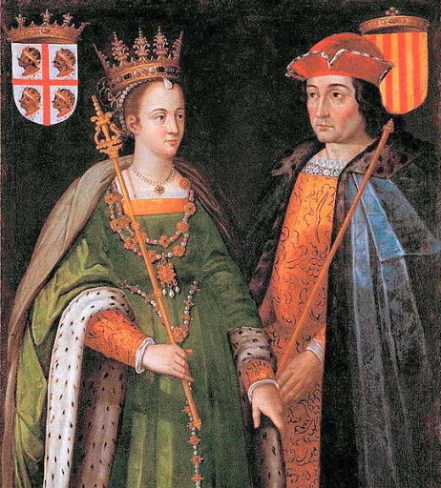
Ramon Berenguer & Beatrice of Savoy
My 23rd great grandfather was a nobleman born in France in 1198. He died Jul. 19, 1245 and is buried at Eglise Saint Jean de Malte, Aix-en-Provence, Departement des Bouches-du-Rhone, Provence-Alpes-Cote d’Azur, France. I want to visit his grave someday. I love the Cote d’Azur.
Ramon was Count of Provence and Forcalquier. He was the only son of Alfonso II de Provence, who died 1209 during an epidemic in Palermo and Gersend de Sabran, Countess of Forcalquier. He married Beatrice of Savoy in 1220 who bore him five children. Their only son Raymond died young and their four daughters Marguerite, Eleanor, Sanchia and Beatrice were all married to kings.
Ramon Berenguer IV de Provence Saint (1195 – 1245)
23rd great-grandfather
Eleanor Berenger (1223 – 1291)
daughter of Ramon Berenguer IV de Provence Saint
Edward I “the Longshanks” Plantagenet (1239 – 1307)
son of Eleanor Berenger
Elizabeth of Rhuddlan Princess of England Plantagenet (1282 – 1316)
daughter of Edward I “the Longshanks” Plantagenet
William Earl of Northampton De Bohun (1312 – 1360)
son of Elizabeth of Rhuddlan Princess of England Plantagenet
Lady Elizabeth Countess Arundel Countess DeBohun (1350 – 1385)
daughter of William Earl of Northampton De Bohun
Elizabeth Duchess Norfolk Fitzalan (1366 – 1425)
daughter of Lady Elizabeth Countess Arundel Countess DeBohun
Lady Joan De Goushill Baroness Stanley (1402 – 1459)
daughter of Elizabeth Duchess Norfolk Fitzalan
Countess Elizabeth Sefton Stanley (1429 – 1459)
daughter of Lady Joan De Goushill Baroness Stanley
Thomas Sir 8th Earl of Sefton Molyneux (1445 – 1483)
son of Countess Elizabeth Sefton Stanley
Lawrence Castellan of Liverpool Mollenaux (1490 – 1550)
son of Thomas Sir 8th Earl of Sefton Molyneux
John Mollenax (1542 – 1583)
son of Lawrence Castellan of Liverpool Mollenaux
Mary Mollenax (1559 – 1598)
daughter of John Mollenax
Gabriell Francis Holland (1596 – 1660)
son of Mary Mollenax
John Holland (1628 – 1710)
son of Gabriell Francis Holland
Mary Elizabeth Holland (1620 – 1681)
daughter of John Holland
Richard Dearden (1645 – 1747)
son of Mary Elizabeth Holland
George Dearden (1705 – 1749)
son of Richard Dearden
George Darden (1734 – 1807)
son of George Dearden
David Darden (1770 – 1820)
son of George Darden
Minerva Truly Darden (1806 – 1837)
daughter of David Darden
Sarah E Hughes (1829 – 1911)
daughter of Minerva Truly Darden
Lucinda Jane Armer (1847 – 1939)
daughter of Sarah E Hughes
George Harvey Taylor (1884 – 1941)
son of Lucinda Jane Armer
Ruby Lee Taylor (1922 – 2008)
daughter of George Harvey Taylor
Pamela Morse
I am the daughter of Ruby Lee Taylor
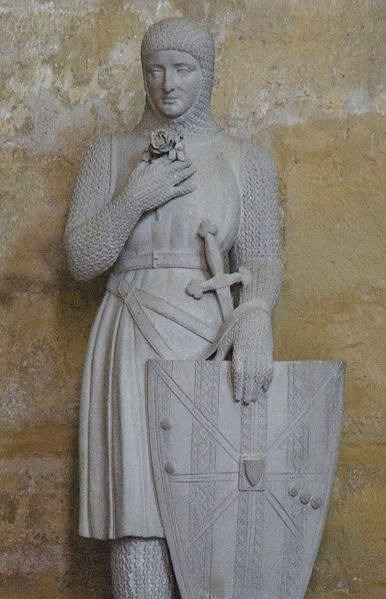
in Church Saint-Jean-de-Malte, Aix-en-Provence, France
Ramon Berenguer IV (1195 – 19 August 1245), Count of Provence and Forcalquier, was the son of Alfonso II of Provence and Garsenda of Sabran, heiress of Forcalquier. After his father’s death (1209), Ramon was imprisoned in the castle of Monzón, in Aragon until he was able to escape in 1219 and claim his inheritance. He was a powerful and energetic ruler who added Forcalquier to his domain. Giovanni Villani in his Nuova Cronica had this to say about Raymond:
Count Raymond was a lord of gentle lineage, and kin to them of the house of Aragon, and to the family of the count of Toulouse, By inheritance Provence, this side of the Rhone, was his; a wise and courteous lord was he, and of noble state and virtuous, and in his time did honourable deeds, and to his court came all gentle persons of Provence and of France and of Catalonia, by reason of his courtesy and noble estate, and he made many Provençal coblas and canzoni of great worth.
On 5 June 1219, Ramon married Beatrice of Savoy, daughter of Thomas I of Savoy. She was a shrewd and politically astute woman, whose beauty was likened by Matthew Paris to that of a second Niobe. Along with two stillborn sons (1220 & 1225), Ramon and Beatrice had four daughters, all of whom married kings.
Margaret of Provence (1221–1295), wife of Louis IX of France
Eleanor of Provence (1223–1291), wife of Henry III of England
Sanchia of Provence (1228–1261), wife of Richard of Cornwall, king of Germany
Beatrice of Provence (1234–1267), wife of Charles I of Sicily
Ramon Berenguer IV died in Aix-en-Provence. At least two planhs (Occitan funeral laments) of uncertain authorship (one possibly by Aimeric de Peguilhan and one falsely attributed to Rigaut de Berbezilh) were written in his honour.
 mermaidcamp