mermaidcamp
Keeping current in wellness, in and out of the water
You can scroll the shelf using ← and → keys
Dream state leading to broad daylight, lingering impressions
Trace history down long corridors of power, sorrows, laughter
Holding on to feelings while letting go of rigid definitions
Jumping into the stream of flowing light at the heart of the matter
Poetry is flowing profusely this month. Enjoy the creative thrills available at #NaPoWriMo during April. Ride the poetry train here.
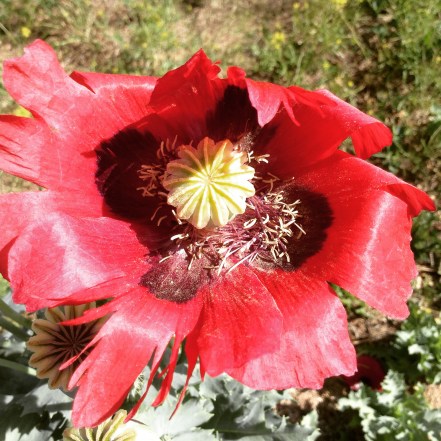
Poppy pollen is a magnet for the bees
Outfitted with tiny sacks on their legs
To carry pollen back to the hive
They work the center of the blossom
Harvesting the precious particles
Loaded with heavy fragrant flower dust
The flight home is an odyssey for a hero
At the end of her brief and useful life
Wings flutter with all their might
Enjoy reading and writing poetry during the month of April here.
My dear gentle readers, it is with some trepidation that I embark on a voyage that will take this blog into new territory. During the month of April, National Poetry Writing Month, I will be publishing 30 poems in 30 days right here. It has been my desire to portray my persona in a writing. I like covering subjects like my family tree and current events because it gives me a fact based framework, like news reporting. I do enjoy that kind of research, so I will resume my prose posting when my 30 poems have been produced. Do not fear. I will not turn this into my own little garden of verses. I think it is fun to be a scribe, choosing subjects that I find intriguing. Your fact finding reporter will return in May.
One aspect of creativity and psychic phenomena I notice and follow is the way willingness to practice opens new frontiers. I believe we are all psychic, and all poets. These talents or gifts can’t develop unless they are used. Another belief that I hold strongly is that we create art that has a specific audience. The audience can only find us if we publish or otherwise give them a chance to read it. During April contests and events will be held to teach and share poetry writing. By following the hashtag #NaPoWriMo on social media you can tune into happenings in your area and share fun with folks from around the world. You may decide to participate in a group poem or attend a reading. Of course you do not need to publish 30 poems to enjoy reading them. I started on my path by tuning into this a couple of years ago and writing only a few of my own. I think it is contagious in a very good way.
I was a production potter for years, selling my pots to make a living. Some of the best and most interesting pottery I made was done when I was a beginner and had very little skill. Later I made technically better pieces, but I was always producing something to sell, so I was influenced by that thought. I hope that my poetry will follow that pattern. My April adventure is intended to break out some new area of my ability in order to stay truly creative. I count on beginner’s luck, but am working hard to find good subjects. Please stay tuned to find out where this leads. I appreciate any suggestions you may have.
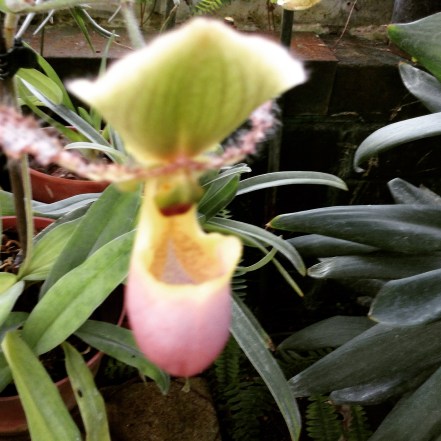
On this last check in to #ROW80 I am taking stock of the bountiful benefits I harvested from this program. I tried it on a lark in order to revive my dead tumblr blog and work on poetry. Results have surpassed my wildest imagination even though I did not fully complete every goal I set at the start. There is the goal, and then there is the spirit of the goal. I am pleased to have established:
For me this means I am primed and ready for #NaPoWriMo in April. Taking the plunge into poetry during National Poetry Month is a pleasure. There are poems everywhere, tweeting across the universe at lightening speed, during the month of April. You don’t need to write them to enjoy reading the participants’ creations. If you follow the hashtag #NaPoWriMo you may be inspired to contribute. Last year PBS wrote a group poem on twitter which turned out to be very good. I can’t wait to see what creative events might be in store this year. I find the energy and the generosity of #ROW80 to be similar to the poetry month program. Maybe some of my colleagues from here will migrate, or just pop in to enjoy. It is a non judgmental, creative canvass with major potential for fun.
March happens to be National Nutrition Month, which has made me think about the metaphor of feeding the body and feeding the soul. We need to ingest calories to stay alive, but there are other qualities to nourishment. A home-grown lovingly prepared meal has extra positive energy and support that cannot be found at a drive through window. Joyful play and movement bring circulation to the blood as well as to the senses. We do not live by bread alone. The similarities I see between delicious healthy food and a carefully crafted poem may not be obvious. They are both nourishing to the spirit, and necessary to life. I plan to write some cooking and eating poems in April as I expand my repertoire. Thank you all very much for sharing these 80 days with me.
I will end with a nourishing metaphor by William Shakespeare in his Sonnet 75:
So are you to my thoughts as food to life,
Or as sweet-seasoned showers are to the ground;
And for the peace of you I hold such strife
As ‘twixt a miser and his wealth is found.
Now proud as an enjoyer, and anon
Doubting the filching age will steal his treasure;
Now counting best to be with you alone,
Then bettered that the world may see my pleasure;
Sometimes all full with feasting on your sight,
And by and by clean starvèd for a look;
Possessing or pursuing no delight
Save what is had, or must from you be took.
Thus do I pine and surfeit day by day,
Or gluttoning on all, or all away.
Our 80 day writing exercise has flown by quickly for me. I planned to write a poem every day, but have managed to do so about half the time. I am not at all discouraged by this result because I have also managed to expand my repertoire of subjects and formats in my poetry. Last April I wrote daily and all of my poems were inspired by works of art, ekphrastic in nature. This was fun because I visited artist friends and took photos to use as the subjects. When I began this challenge all of my poems were ekphrastic, but I created the art myself rather than finding it. First I tired making the art followed by the words, then I tried it in reverse. It does not seem to matter which way I do it now, which is sort of silly to me. If you are inspired by it, it seems like it should exist before you write…but I am practicing both ways, trying them both to monitor results.
Lately I am happy because I attempted very unusual subjects and did some slightly representational drawing about them. I wrote about a lady who was ditched by her Euro-spy boyfriend in a restaurant. She was presented with a giant plate of raw meat, steak tartare, and a note saying her boyfriend had never existed. Now this might seem macabre or in bad taste, and perhaps it is. What is interesting is that I finally put a character and plot into a poem. My first attempt at this involved a swarm of ladybugs around a cabin. These might not have come up if I had not been following my fiction writing friends who work on plot and character all the time. My desire to make poems from historical figures and history itself lends itself to this practice. If I want to turn my dead ancestors into epic poems I need to employ some of the devices used to flesh out characters and thicken the plot. Since I endeavor to bring dream images into my poetry my technique will now expand to outlining plots and characters, then working on lucid dreaming to give me some vivid imagery with which to work. I can embellish the true stories of my family in my dreams and use the impressions to create poetic versions of historical events.
As the solar eclipse tomorrow brings us a dramatic illustration of light and shadow, I see a metaphor for the known and the unknown. What is obscured from view is often the most important part of the plot, and revealing it is the point of the story. What I do not know about my ancestors leaves room for invention and fancy. Here are some of the real people I think can become interesting poems:
I also have a true contemporary story I want the public to hear and remember. The Emperor’s New Neighborhood Watch is a rap poem about city government running amok. If I do this with rhyme and humor it will be more impactful. A good (digital) friend of mine told me this week that hexameter was the form used by Homer in his classic epics, not because it was great language, but so the actors could easily remember it. I have written about just the facts in this case for years, but what this story needs is some memorable rhyming truth. After the solar eclipse I will start outlining these stories for Poetry Month in April. It is a fun new way for me to paint with words. I am grateful to my fellow writers for teaching my some of their process. Check out the diversity of this group here. There is a lot of talent in this creative group of people. Thanks for sharing these 80 days with a beginner. Your support has been very inspirational. I aspire to be like you.
We have no idea what tomorrow will bring, but today is overflowing with potential.
Allan Lokos
Through the Flames
This quote by Mr Lokos perfectly describes my current position on my poetic future. By starting to investigate life and learning through poetry I have opened a vast area of artistic and intellectual study that I am just beginning to understand. Turning my attention to it has automatically turned some poets’ attention to me. One or two people post poems on my Facebook wall every day, which adds a social element to the mix. I don’t believe these writers have read any of my poems, but they have decided to share theirs directly to/with me. I follow more poets all the time who blog. Calligraphy with word significance has also come to my attention. This is a wonderful way to make words larger than life and more colorful than just typing. I have not tried it myself but am thinking of doing some writing by hand instead of always on a keyboard. It may stimulate something new.
I have thought about working with my ancestors as characters to create epic poems or stories, and have done a little work in that direction. People work with notes and written outlines, but I have yet to put these to work for me. I still contemplate images in my head for a while before I begin, but think I can benefit from a notebook with handwritten notes and drawings. When this 80 days has come to a full circle I plan to start a notebook and handwriting practice. I want to see if random idea trapping and tracking will help me kill my darlings and move on to deeper subjects. If I start pages for different times in history or branches of my family tree I think I can develop some themes from which to write fiction or poetry. I like mind mapping, but have not employed it to the task of writing. I believe it can unlock a boat load of potential material using this method. I have no idea what I may do with it, but it will be fun to find it.
Allan Lokos was in a plane that crashed and burned leaving him injured. His book was written to help others find compassion and patience in the face of challenging circumstances. His attitude about potential is key because every day is full of potential. Many of our lives contain too much repetition, little true bliss, and a lack of compassion. We are all recovering from something, although normally nothing so severe as an airplane crash. Honoring potential today by writing is a tribute to collective creativity. Rarely do plans for tomorrow work out exactly as we imagined. Writing creates a trail of breadcrumbs for the soul to trace its’ way. Poetry celebrates the way each of us is gifted with our own set of talents and perspectives. Leaving our stories and thoughts recorded for others to read may turn out to be uplifting or helpful to someone. This journey has contributed greatly to my ability to tap into the overflowing potential all around us. I appreciate the chance to interact with magic, words, and power. Cheers, gentle readers!
The book I am the Beggar of the World is a collaborative effort by Eliza Griswold and Seamus Murphy. Last night at the U of A Poetry Center Seamus was present for the opening of an exhibit on the book. He spoke to the audience about the process they had followed to find the landays in the book. He explained the cultural significance and historical tradition of these spoken couplets specific to Pashtun women in Pakistan and Afghanistan. The two journalists had served in the region as reporters. They wanted to bring a deeper insight into culture and life than they could offer in a news story. Their investigative trip involved finding women who know the poems and convincing them to share them. Ms. Griswold handled the interview tasks while Mr Murphy shot photos and video footage of the region. They did not attempt to shoot the women reciting themselves for various reasons. This poetry is spoken, forbidden, and often critical. Any image of the women identified with landay might cause them great danger.
There are about 40,000 landays in use at any given time. They are 22 syllables, 9 in the first line, and 13 in the second. They are general statements on life from a woman’s point of view. They remind me of the Mexican dicho, a short philosophical statement that explains the situation at hand. My favorite dicho (saying) is, “Cuando hay dinero baila el perro.” When there is money the dog dances (anything is possible). Landays do sometimes contain great humor, but in general I think they are more haunting and pithy than dichos. Here is one example translated into English: “When sisters sit together, they always praise their brothers. When brothers sit together they sell their sisters to others.” The repression of women is a theme, since this real problem plagues family life. The landay is a way to express emotions as well as outrage at the political systems that are unfair to women.
One of my favorite poets, Piet Hein, wrote short works like these called Grooks. He started in Danish, and worked his way into English. The reception last night was catered with beautiful food and wine for the guests. They had outrageously ripe strawberries and chunks of fresh pineapple, which I enjoyed immensely while standing in line to purchase a copy of the book. I was reminded of what may be my favorite poem of all time, a Grook. “Love is like a pineapple, sweet and undefinable.” I had amazing dreams in my sleep last night. I was wandering around in some other ethnic zone searching for poets, just like in the book. I found some and there was great dreamy party about saving the poems and being anthropologically correct. I was in a fancy tent with a spread that look suspiciously like the food at the reception. I woke up with no pineapple, but a distinct taste of liberation in my mouth. I have my copy of the book to savor and enjoy. I would recommend it to anyone. This is a story of inspiration from history and daily life. The most important thing to remember about them is that their authors are illiterate. This sentiment is shot straight from the heart with no filter, publisher, or even permission. This is the birthplace of all poetry. Edited over centuries, these couplets reflect an accurate and poignant view of Pashtun women and their culture. I believe any reader would enjoy the book.
I still publish short quickly composed poems with art. This practice that I set up here has been a good platform for discovery of my strengths and weaknesses. I need to keep the mojo going by posting a poem almost daily. This is the first step to being constant and nourishing to my poet persona. First of all I need to convince myself that creative writing is within my ability. In order to move up from my current level of unpolished, slightly redundant writing I need to follow more steps and enjoy deleting at least as much as I enjoy first drafting. I improvise well in many modes. In real life this leads to using creativity to approach many things that I do. I like to play chef and meet the creative challenge of using all the left-overs to make something delicious. I like to eat the result and start on something new. My preference for finishing fast is an impediment to becoming a better writer. I don’t need to count words as much as I need to spend more time editing and improving the initial writing. I have learned that from both my own critique of my situation as a poet, and from reading the works and works in progress presented by my fellow ROW80 writers.
The time we have spent has gone by quickly, with only a couple of weeks left in our 80 day challenge. Each writer has a different style of check in. Some are describing works in progress and sometimes sharing excerpts. There are novelists, poets and fantasy writers here, each with a different point of view, environment, and level of experience. As one of the least experienced participants I am lucky to hear from those of you who have wisdom to share. You give me confidence as well as tools for the job before me. After the challenge has ended your inspiration will still be with me forever. I believe I can go right into NaPoWriMo, the poetry challenge for April, with better preparation than ever before. This challenge is simply to write a poem daily during National Poetry Month (April). I started as a fluke two years ago, but last year I thought I needed to do it again. Now I am looking forward to it this time with happy anticipation. It will not be a chore, but part of this regular practice I have established.
Thank you all for inspiring and challenging me to discover more about the crafty and powerful world of words!! The fun has just begun. As a tribute to the importance of editing I am going on a big clean/clear/organize binge in my office. I did this to my bedroom in December with spectacular results. I expect cleaning out the office can only bring joy and space to operate. This is a spring cleaning of both a physical and mental kind. This edit is a metaphor for the editing I will do in my process in the future. Less really is more.
My week has been graced by the presence of a real writer. I went to hear the poet Simon Ortiz who was in Tucson for a reading of his work. I was deeply moved and highly impressed with his writing, which he delivered with lavish explanations about his process. He is now writing an epic poem, an idea he joked about by saying there is no real rule about exactly how long an epic has to be. He will include within the epic some of his older works, which he shared with the group who had come to the U of A Poetry Center to listen to him. I purchased his book, Sand Creek, which he signed for me after the reading. I told him how much I loved hearing him and he responded that he really loved reading to us. His genuine joy in sharing his work was evident. We were all truly blessed to be there. Some of his poems are funny, and some carry tragic stories from history, like Sand Creek.
The Poetics and Politics of Water series has evolved. Dr. Ofelia Zepeda is a poet and professor who collaborates to put together this very special program of Native American writers. She and her colleague Larry Evers introduced Politics and Poetics in 1992. I look forward to the next reading which will be given by Dr. Zepeda herself. She uses her native language from this region, Tohono O’odham, to welcome the visitors to her land and bless the participants. It is beautiful. She translates the traditional greeting in to English when she is done.
I have written and read some this week with mixed results. I believe the most profound thing that happened to set my poetic self on the path was my chance to hear Mr Ortiz. He said prose and poetry are all the same, and in the end, all language is poetry. He certainly was all poetic in every part of his being. He talked about his own recovery from alcoholism, and his father’s inability to recover from it. His identity as Acoma with deep religious and cultural heritage is important to him. His father exposed Simon to sorrow through addiction, but he also taught him his traditional language and mystical history. The last poem he read to us was about his father’s death. It was sung as a song, a chant, a rhythmic tribute to the spirit of his father and all he had inherited. It was a wonderful way to show his talent and end on a solemn, serious, meaningful note.
This week I invite you all to join me for Saturday brunch at Maker House downtown Tucson. They serve very good coffee and tea all the time. On Saturday there is a special brunch menu and mimosas are on special for $1. A DJ plays in the courtyard, and vendors are set up selling art,clothing, jewelry, and more. This is, by far, the most hipster of hip places to be in town. Please join me outside to enjoy the warm cloudy weather. There are plenty of tables, and some are equipped with paper and tins of colored pencils for our amusement. In the announcement I read for the event art classes were advertised, but I saw no evidence that they were being taught. This may happen later in the day. I had a good time drinking a cappuccino and doodling to the music. Other drinking doodlers soon appeared, some with coffee and others with mimosas. Those on a budget could buy 4 mimosas for the price of a cappuccino, so they are popular with many of the customers. Since your are arriving by transporter cloak they will be digital, so you can have as many as you like and still cloak home. I can highly recommend the breakfast sandwich on the house made croissant. Everything I have ever ordered here has been fresh and delicious. Next time I plan to try the breakfast pizza.
I look forward to hearing about your week and seeing your drawings. It feels good to enjoy the music and take time to relax. I am in no rush. The week has been low key. My tax preparation is in order for the accountant, so I feel accomplished if not giddy. I don’t know why I always dread the tax thing..it is really not all that bad. When I am done for the year it is supremely liberating to me. Other than that mundane task I have written poetry and attended a wonderful poetry reading by Simon Ortiz at the U of A Poetry Center. That was the highlight of my week. I bought his book Sand Creek and he signed it for me. He said he can’t tell the difference between poetry and prose. That was liberating for me and I thanked him for it as well as his beautiful reading.
Before you leave Tucson I hope you will look around the historic mansion that is Maker House. It has special murals and wonderful detail, like copper ceilings. There is a classic game arcade, free wifi, and craft beer. We love the events they host and their constantly evolving food service. Now they deliver food, coffee and beer downtown, which should prove to be popular. We are happy the architecture is being preserved while serving a diverse and extremely hip customer base. It is one reason our downtown has become much more desirable. If you have cloaked in from up north you will probably like the weather best of all. It is rodeo week for those of you who want to feel that you have truly been way out west. Head south and buzz the rodeo grounds on your way home for a total Tucson tour. We hope you will like your digital visit enough to come in real life someday.