mermaidcamp
Keeping current in wellness, in and out of the water
You can scroll the shelf using ← and → keys
You can scroll the shelf using ← and → keys
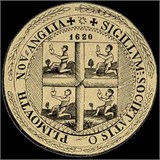
Mayflower seal
My 15th great-grandfather was a big adventurer in the New World. He sailed to Jamestown in 1609, and was on the ill fated voyage to Bermuda that inspired William Shakespeare to write the Tempest. His wife died while he was in Virginia, so he returned to England to care for his three children. He brought his family to Plymouth on the Mayflower. As an experienced colonist he was an important part of the Pilgrim’s diplomatic mission to the Wampanoag tribe. He fell from grace when he opened a shop selling alcohol. He went down a slippery slope from allowing drinking and shuffleboard playing on Sunday to selling beer for twice what it was worth. He managed to stay in town, but did some jail time for defying the court. I am thankful to you, Grandpa Stephen, for attempting so many grand adventures and defying your odds of survival.
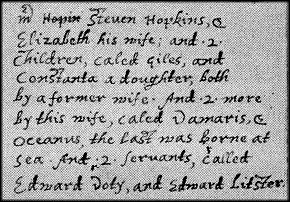
Stephen Hopkins was from Hampshire, England. He married his first wife, Mary, and in the parish of Hursley, Hampshire; he and wife Mary had their children Elizabeth, Constance, and Giles all baptized there. It has long been claimed that the Hopkins family was from Wortley, Gloucester, but this was disproven in 1998. Stephen Hopkins went with the ship Sea Venture on a voyage to Jamestown, Virginia in 1609 as a minister’s clerk, but the ship wrecked in the “Isle of Devils” in the Bermudas. Stranded on an island for ten months, the passengers and crew survived on turtles, birds, and wild pigs. Six months into the castaway, Stephen Hopkins and several others organized a mutiny against the current governor. The mutiny was discovered and Stephen was sentenced to death. However, he pleaded with sorrow and tears. “So penitent he was, and made so much moan, alleging the ruin of his wife and children in this his trespass, as it wrought in the hearts of all the better sorts of the company”. He managed to get his sentence commuted. Eventually the castaways built a small ship and sailed themselves to Jamestown. How long Stephen remained in Jamestown is not known. However, while he was gone, his wife Mary died. She was buried in Hursley on 9 May 1613, and left behind a probate estate which mentions her children Elizabeth, Constance and Giles. Stephen was back in England by 1617, when he married Elizabeth Fisher, but apparently had every intention of bringing his family back to Virginia. Their first child, Damaris, was born about 1618. In 1620, Stephen Hopkins brought his wife, and children Constance, Giles, and Damaris on the Mayflower (child Elizabeth apparently had died). Stephen was a fairly active member of the Pilgrims shortly after arrival, perhaps a result of his being one of the few individuals who had been to Virginia previously. He was a part of all the early exploring missions, and was used almost as an “expert” on Native Americans for the first few contacts. While out exploring, Stephen recognized and identified an Indian deer trap. And when Samoset walked into Plymouth and welcomed the English, he was housed in Stephen Hopkins’ house for the night. Stephen was also sent on several of the ambassadorial missions to meet with the various Indian groups in the region. Stephen was an assistant to the governor through 1636, and volunteered for the Pequot War of 1637 but was never called to serve. By the late 1630s, however, Stephen began to occasionally run afoul of the Plymouth authorities, as he apparently opened up a shop and served alcohol. In 1636 he got into a fight with John Tisdale and seriously wounded him. In 1637, he was fined for allowing drinking and shuffleboard playing on Sunday. Early the next year he was fined for allowing people to drink excessively in his house: guest William Reynolds was fined, but the others were acquitted. In 1638 he was twice fined for selling beer at twice the actual value, and in 1639 he was fined for selling a looking glass for twice what it would cost if bought in the Bay Colony. Also in 1638, Stephen Hopkins’ maidservant got pregnant from Arthur Peach, who was subsequently executed for murdering an Indian. The Plymouth Court ruled he was financially responsible for her and her child for the next two years (the amount remaining on her term of service). Stephen, in contempt of court, threw Dorothy out of his household and refused to provide for her, so the court committed him to custody. John Holmes stepped in and purchased Dorothy’s remaining two years of service from him: agreeing to support her and child. Stephen died in 1644, and made out a will, asking to be buried near his wife, and naming his surviving children.
Pilgrim Stephen Hopkins (1581 – 1644)
is my 15th great grandfather
Constance HOPKINS (1600 – 1677)
daughter of Pilgrim Stephen Hopkins
Sarah Snow (1632 – 1704)
daughter of Constance HOPKINS
Sarah Walker (1622 – 1700)
daughter of Sarah Snow
Sarah Warren (1649 – 1692)
daughter of Sarah Walker
Elizabeth Blackwell (1662 – 1691)
daughter of Sarah Warren
Thomas Baynard (1678 – 1732)
son of Elizabeth Blackwell
Deborah Baynard (1720 – 1791)
daughter of Thomas Baynard
Mary Horney (1741 – 1775)
daughter of Deborah Baynard
Esther Harris (1764 – 1838)
daughter of Mary Horney
John H Wright (1803 – 1850)
son of Esther Harris
Mary Wright (1816 – 1873)
daughter of John H Wright
Emiline P Nicholls (1837 – )
daughter of Mary Wright
Harriet Peterson (1856 – 1933)
daughter of Emiline P Nicholls
Sarah Helena Byrne (1878 – 1962)
daughter of Harriet Peterson
Olga Fern Scott (1897 – 1968)
daughter of Sarah Helena Byrne
Richard Arden Morse (1920 – 2004)
son of Olga Fern Scott
Pamela Morse
I am the daughter of Richard Arden Morse
Richard and his second wife had a child born at sea on the Mayflower. They named her Oceanus.
Mayflower record

descendants of Massasoit
The Thanksgiving story is told in November to commemorate the precarious situation in which the Pilgrims of Plymouth Colony found themselves. By the good graces of the local tribe these English people managed to survive very far from home. They were not ready for the harsh winter and new surroundings. They were able to negotiate a treaty for mutual protection with Massasoit, the leader in the area. The meal shared to celebrate the treaty has been told for centuries, but there are a few written words from the time documenting this meeting. Most of us have an image from our school days of happy well dressed Pilgrims entertaining Native Americans at an extensive potluck supper. There is some mention that the Wampanoags supplied all the vittles, but we tend to gloss that over while we celebrate our highly revised impression of history and the Pilgrims.
These Pilgrim heroes soon broke down into all kinds of crazy religious infighting and banished each other for infractions. My own ancestors were banished to Sandwich and other little settlements on Cape Cod. Some had to leave because they had been secret Quakers, and one was banished to Barnstable for marrying a Native woman. We imagine Plymouth as some pure attempt at religious freedom because we have not looked very closely at what happened. Many of my ancestors went to Rhode Island to look for religious freedom and fair dealings with the Native Americans. I had several ancestors who fought on both sides of King Philip’s War, which I am sure we did not study in school. We just move on quickly to Boston and tea party and America without stopping to think what became of those people who gave the Pilgrims dinner and protection.
The big news that has been edited is all about that treaty. The pact worked for a while, but as time passed the English population grew and the agreements became strained. The English proved to be less than honorable when it came to keeping their word. The Wampanoags who survived King Philip’s War were shown no mercy. I have extra interest in the Native version of this event because I went to Cape Cod expecting to find traces of my Wampanoag family tree. I found that records do not exist to trace it although my Mayflower ancestors are very well documented. Intermarriage was very common so I am not the only one with a mystery branch in my tree. There is a very small group of people who are members of the Wampanoag tribe today, and their last names came from England. Survival for them meant adapting. This year, for a change, imagine the entire Thanksgiving story from the perspective of the original people.
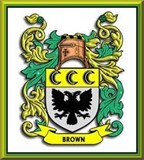
Brown Coat of Arms
Deliverance Brown was born in 1656 in Stamford, Fairfield, Connecticut. His father, Peter Brown, came to America in 1638 and settled in New Haven. In 1647 Peter moved the family to Stamford, Ct, where his wife died in 1657. Young Deliverance was a baby when his mother died. We don’t know much about him, but his brother is also my ancestor.
He owned land in Rye, NY (1678) and in Greenwich.
– In 1691 Deliverance was elected a vestryman in Rye.
– In 1697 Deliverance Brown and Thomas Merrit where sent to Hartford to convince the General Court of CT to take Rye back into it’s juristiction and in 1707 the two men were selected to settle a boundary question between Rye and Greenwich.
Deliverance Brown (1656 – 1727)
is my 8th great grandfather
Rachel Brown (1700 – 1716)
daughter of Deliverance Brown
Mary Mead (1724 – 1787)
daughter of Rachel Brown
Abner Mead (1749 – 1810)
son of Mary Mead
Martha Mead (1784 – 1860)
daughter of Abner Mead
Abner Morse (1808 – 1838)
son of Martha Mead
Daniel Rowland Morse (1838 – 1910)
son of Abner Morse
Jason A Morse (1862 – 1932)
son of Daniel Rowland Morse
Ernest Abner Morse (1890 – 1965)
son of Jason A Morse
Richard Arden Morse (1920 – 2004)
son of Ernest Abner Morse
Pamela Morse
I am the daughter of Richard Arden Morse

My parents
The idea that both glory and vengeance belong only to God is an often repeated concept. In the bible this is a giant theme that runs throughout both testaments. This is the keystone of the golden rule, “Do unto others” that we have heard so often in all religious teachings. Repressing anger and believing God is taking care of your personal earthly pay back is not the essence of this idea. Truly trusting that justice eventually prevails in ways we can’t imagine or fathom is a relief. Carrying our own grudges rather than letting go and trusting that the universe will provide both punishment and reward exactly in the perfect portions is senseless. If you step back and look at a bigger version of any drama on this earth you must notice that every action does have an equal and opposite reaction. Some understanding is within our reach, and plenty of mystery still abounds. We actually do not know enough to be effective in this realm.
I have been meditating on the idea that Everything that is the Father’s is mine because the Father and I are one. This, of course is the big father, not my personal dad, Richard Arden Morse. The meditation makes me consider that I do have traits, talents, and even possessions from my earthly father that are mine. I have worked hard not to inherit his anger and greed. The end of my parents’ lives would have been more peaceful and happy if my father had not considered himself to be righteously wrathful. He was angry at entire nations and at anyone he suspected of disrespecting him (the list only grew, never diminished). He used to sing the song “I Have a Little List” from the Mikado which makes fun of this phenomena. By the time he was old and demented his list was so long it tortured him and everyone around him.
Now that Richard has been dead and in the ground for 10 years I am sure he is over his violent feelings. He wants me to know that both glory and vengeance are not mine at all. He warns me with his memory about personally taking on too much anger. He assures me that the truth does set us free and there is no point in crying over spilled milk (this was a favorite expression of his). If you have started a list of those you find responsible for all evil, work to eliminate those beliefs before they make you very crazy. Also, remember, gentle readers, you are on somebody else’s list.

King’s Colors
My 10th great-grandmother was a midwife who outlived two husbands before she arrived in America. I am a descendant of her first husband, John Potter who died in England. Her immigration to America was tragic, and she survived to the age of 75. The reason the colonists gave her the land belonging to her dead husband was her profession as a midwife. Since they needed her services they wanted her to stay.
John BEECHER was born on 28 Mar 1594 in Kent, England. He died in 1637/38 in New Haven, Connecticut. He immigrated on 26 Jun 1637 to Boston Harbor. Arrived April 26, 1637 from Steldhurst County, Kent, England. In Governor Eaton’s Company. The first Beecher to reach New England was John Beecher, who came from Kent, England in 1637. He was in the company led by Rev. John Davenport and Theophilus Eaton who had been the Ambassador to Denmark and Deputy-Governor of India. The company crossed the ocean on the “Hector” and another sister-ship. These two ships, after a two month voyage, dropped anchor in Boston harbor. The company consisted of 50 men and 200 women and children and was the most prosperous that ever arrived in New England. Unfortunately, they landed in the midst of a quarrel about Anne Hutchinson who had set herself up as a preacher, irregardless of her sex. Not wishing to become involved, they sent out a scouting party to find another location to settle. They decided upon Quinnipiack on the Long Island Sound, the site of present day New Haven, Conn. The party built a hut and left seven of their men to hold the post for the winter and to prepare for the arrival of the rest of the company in the spring. John Beecher was one of the seven and he failed to survive the winter. Hannah arrived in the spring with her son Isaac and found her husband in an unmarked grave. Since she was the only midwife among them, and thus relied upon by the others in the company, she was given her husband’s allotment of land for herself and her son Isaac. One hundred and twelve years later, in 1750, when David Beecher was a boy of twelve, workmen who were digging a cellar for a house at the corner of George and Meadow Streets in New Haven came upon human bones, believed to be those of John Beecher. Hannah Mead was born in 1600 in Spaldhurt, Kent, England. She died on 5 Apr 1658/59 in New Haven, Connecticut.
Hannah Beecher sailed from England with her son Isaac and was a widow at the time she left England. Husband John Beecher, one of the seven whom Eaton sent to New Haven in advance of the colony ,died before the colony arrived. He did not survive the first winter. It is established that this ship load of people was rather wealthy landowners from Steldhurst County, Kent, England. Since the company was rather young, it was felt that Hannah’s services of midwife would be greatly needed. She therefore was offered her husband’s land right in the new world if she would agree to go and fulfill this need, which she did.
The will of Hannah Beecher was proved April 5, 1659 and is recorded in first part, vol i., p 80 of New Haven Probate Records as follows: “I Hannah Beecher of New Haven, expectying my great change do make this my last will and testament, I bequeath my soul unto the hands of my Lord Jesus Christ by whose meritt I hope to be saved and my body to be burried at the discretion of my Son William Potter my Executor. And for my worldly goods I give unto John Potter my Grand child twenty shillings and to Hannah Blackly, my Grand child twenty shillings to be paid to them within three months after my decease. And for the rest of my estate I give one third part to my son Isaac Beecher and two thirds to my eldest son William Potter, making him my Executor, desiring him to be as a father to his younger brother and his children. And in dividing my goods my will is that my son William should have my feather bed with that belongeth to it, unto his part and that the rest be divided at the discretion of my Overseers with the assistance of Sister Wakeman and sister Rutherford and I desire my loving friends Mr Mathew Gilbert and Job Wakeman to be overseers of this my last will whereunto I have set my hand this 13th day of June, Anno 1657. Witnesses, the mark of Mathew Gilbert, Hannah Becher John Wakeman, Sarah Rutherford. This source also indicates that the inventory of Hannah’s estate following her death in 1659 amounted to 55 pounds, 5 shillings, and 6d.
Hannah (Potter) Beecher appears in early New Haven as a widow with sons: John Potter, William Potter, and Isaac Beecher. She has been considered to be the mother of Isaac Beecher, for she calls him her son in her will and gave him one third of her property, but recent investigations (source unproven ) suggest that Isaac was a step son, the son of her second husband by a former wife.
Note: There was in New Haven, says G.F. Tuttle, as early as 1641, a widow Hannah Potter, known as widow Potter the midwife. In 1643 she had two persons in the family, thirty pounds estate and twenty and one quarter acres of land. She is called “sister Potter the midwife,” in seating the meeting house in 1646. She is supposed to have been akin to the other Potters, but there is no record to show it. She has often been confounded with the widow Hannah Beecher, but the records clearly show that they were two different persons. -Per “Families of Ancient New Haven”
Hannah Mead (1584 – 1659)
is my 10th great grandmother
William Potter (1608 – 1684)
son of Hannah Mead
Hannah Potter (1636 – 1700)
daughter of William Potter
Benjamin Daniel Mead (1667 – 1746)
son of Hannah Potter
Mary Mead (1724 – 1787)
daughter of Benjamin Daniel Mead
Abner Mead (1749 – 1810)
son of Mary Mead
Martha Mead (1784 – 1860)
daughter of Abner Mead
Abner Morse (1808 – 1838)
son of Martha Mead
Daniel Rowland Morse (1838 – 1910)
son of Abner Morse
Jason A Morse (1862 – 1932)
son of Daniel Rowland Morse
Ernest Abner Morse (1890 – 1965)
son of Jason A Morse
Richard Arden Morse (1920 – 2004)
son of Ernest Abner Morse
Pamela Morse
I am the daughter of Richard Arden Morse
I am descended from Hannah two different ways. She is also my 11th great-grandmother. Two of her second great grandsons, Ebenezer and Benjamin Daniel, have contributed to my DNA.
Hannah Mead (1582 – 1659)
is my 11th great grandmother
William POTTER (1608 – 1684)
son of Hannah Mead
Hannah Potter (1636 – 1700)
daughter of William POTTER
Ebenezer Mead (1663 – 1728)
son of Hannah Potter
Ebenezer Mead (1692 – 1775)
son of Ebenezer Mead
Amos Mead (1730 – 1807)
son of Ebenezer Mead
Abner Mead (1749 – 1810)
son of Amos Mead
Martha Mead (1784 – 1860)
daughter of Abner Mead
Abner Morse (1808 – 1838)
son of Martha Mead
Daniel Rowland Morse (1838 – 1910)
son of Abner Morse
Jason A Morse (1862 – 1932)
son of Daniel Rowland Morse
Ernest Abner Morse (1890 – 1965)
son of Jason A Morse
Richard Arden Morse (1920 – 2004)
son of Ernest Abner Morse
Pamela Morse
I am the daughter of Richard Arden Morse
This is always tricky and requires a lot of switching and updating to make the tree accurate. The Meads and the Potters married each other, and so did the Meads and the Meads. It is too late now to worry about inbreeding. This happens more than once in my ancestry.

Ebenezer Mead II
Ebenezer Mead II was the son of Ebenezer I, who ran a tavern and served as justice of the peace in Fairfield County during his lifetime. He did military service and stepped into his father’s shoes as justice of the peace. His political career also included holding the office of deputy to the assembly. He is buried in the Union Cemetery in Greenwich, Connecticut next to many of his family members, and some of my ancestors. He lived a very long life. He married a young wife to spend his last 16 years with him. I bet she was surprised he made it to the age of 83. He died the year before the Declaration of Independence. I really wonder what his politics were, since all his service had been to the crown of England in a technical sense. His son Amos was a soldier in the Revolutionary War.
Ebenezer Mead (1692 – 1775)
is my 8th great grandfather
Amos Mead (1730 – 1807)
son of Ebenezer Mead
Abner Mead (1749 – 1810)
son of Amos Mead
Martha Mead (1784 – 1860)
daughter of Abner Mead
Abner Morse (1808 – 1838)
son of Martha Mead
Daniel Rowland Morse (1838 – 1910)
son of Abner Morse
Jason A Morse (1862 – 1932)
son of Daniel Rowland Morse
Ernest Abner Morse (1890 – 1965)
son of Jason A Morse
Richard Arden Morse (1920 – 2004)
son of Ernest Abner Morse
Pamela Morse
I am the daughter of Richard Arden Morse
Ebenezer Mead II was born in Greenwich on October 25, 1692, the eldest son of Ebenezer Mead and Sarah Knapp. He was married on December 12, 1717, to Hannah Brown, the daughter of Peter Brown of Rye NY, and they had Ebenezer, Silas, Abraham, Jonas, Solomon, Deliverance, Amos, Edmund, Hannah, Jabez, Jared and Abraham.
On May 9, 1728, Ebenezer was commissioned a Lieutenant of the East Company, or Train-band, at Horseneck. On May 11, 1738, he was commissioned a Captain of the same company.
He was a Justice of the Peace for Fairfield County from 1733 to 1758, and was a deputy to the assembly in 1733, 1734, 1737 and 1738.
Late in life, in 1759, when he was approaching 70, he was married for a second time, this time to Naomi Weed, the daughter of Abraham Weed. She was about twenty years old at the time. Ebenezer Mead’s will was dated June 3, 1772, and probated June 15, 1775. In it he mentions his wife Naomi and children Deliverance, Jared, Silas, Jonas, Solomon, Amos, Abraham, Jr.; his grandson Enoch Mead, granddaughter Hannah, and grandson Ebenezer, the children of his son Ebenezer, who had predeceased him. His executor was his son Jared. The witnesses were Daniel Smith, Joshua Smith, and Jesse Parsons.
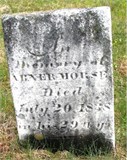
Abner Morse grave

Vega, Delaware County, NY
My 3rd great-grandfather was Abner Morse. He lived a short life in Delaware County, New York. He is buried in the Vega Cemetery which is right across the road from Batavia Kill, where Abner’s ancestors had established themselves in a homestead. His parents are also buried there, and maybe more generations, I am not sure. This place would be very significant to me, I know. I don’t know the cause of Abner’s death, but the date is tragic. He died when his young son Daniel Rowland ( my 2nd great) was only 4 months old. His wife did remarry and take care of Daniel and his older brother in New York. Daniel took off for Illinois when he was less than 20 years old with his wife-to-be’s parents. Before the Civil War it was a difficult trip, hard to survive all the way from New York to Illinois. The young family returned to New York to farm in the same place they had left a few years earlier. Many generations of Morses farmed the area around Roxbury and are buried there. I think it is a super Morsey place that I want to visit and see if I can feel the Morses. Vega Cemetery is on the National Register of Historic Places, so it will not be disturbed…good news. This will be a very specific trip to arrange and manage, all about dead Morses in New York, not of much interest to most people, but for me it will be a blast. These are the adventurers who made my life possible. Thanks Abner, and all my relations.
Abner Morse (1808 – 1838)
is my 3rd great grandfather
Daniel Rowland Morse (1838 – 1910)
son of Abner Morse
Jason A Morse (1862 – 1932)
son of Daniel Rowland Morse
Ernest Abner Morse (1890 – 1965)
son of Jason A Morse
Richard Arden Morse (1920 – 2004)
son of Ernest Abner Morse
Pamela Morse
I am the daughter of Richard Arden Morse
What is spooky to you? I find that old cities are full of ghostly remnants. I am not sure if the spirits of people, or just the weight of history is what makes a place feel haunted. There are those places that capitalize on their haunted nature. Jerome, Arizona is such a place. With a haunted hotel and tours of the old ghost town for visitors, spooks are a real value to the business people. The history of the mining town is fascinating and easily lends itself to ghost stories. Today artists and services catering to tourists keep the economy thriving.


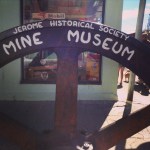





My own feeling there was not so haunted by the dead but by the living. I like the architecture and only stayed a short time, walking around and eating at a Mexican restaurant where I disliked the food and service. Something felt great about leaving the town and driving off the hill. Later I reflected on that whole experience. I do plenty of planning when I travel, and then allow instinct to guide me when I arrive as much as possible. I went up to Jerome on a whim, just to see it. I bought a beautiful glass from an artist, walked around town and bought a 15 minute psychic reading in the basement of the Jerome Historical Society building. I have not often done readings. This was the 5th time in my life. I was allowing my gut feeling to operate since I had no agenda and was not expecting a reader to be sitting in the history museum with a little tent for privacy. I thought, “Why not? This is as good a way as any to get in touch with the spooks of the area.” Her price was reasonable and she did not try to put me on in any way. A good psychic insight sinks in over time, and that is how her reading is working for me. Leaving and pondering the message I wavered about making a decision to eat in a restaurant. I was not sure I wanted to stay. I entered a Mexican place that really suited my taste in decor. I was instantly put off by very unfriendly service and a feeling this was not the place for me to eat. The server ignored me for a full 5 minutes while talking and joking with locals at the bar. I sat through that clear message and ordered food anyhow. I liked nothing about the food and felt the service deserved an F. That was one reason I felt good leaving the town. I ended Jerome on a bad note, and had only myself to blame. I blatantly ignored my own intuition.
Spooks always have the exact same message for me, in a few different forms. I have the ability to size up situations accurately and much more quickly than most people. I don’t say this to boast, but it is a gift I have. I instantly know if someone is lying, even before they say the words. I believe we all come with assorted psychic gifts or talents that we may ignore or develop as we go through life. Our own trust is all we need to check the accuracy of our gut feelings. Upgrade yourself to a belief in your own instincts. If ghosts are around, that is where you can find them. If you are looking for a great view and some possible paranormal activity I highly recommend you go to Jerome, AZ.


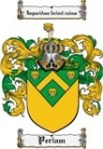
My 13th great-grandfather was an English judge who, in 1593, rose to the top position of Lord Chief Baron of the Exchequer and was knighted by Queen Elizabeth I. He was one of the judges who tried Mary Queen of Scots in 1586, and was involved in several other big treason trials of the age and was given the office of Chief Baron of the Exchequer in 1593. He was a Governor of Crediton Church and twice church warden. educated in Exeter and then at Exeter College, Oxford where on 25 April 1551 he was elected fellow. He resigned his fellowship some months later and went to London where he eventually studied law at the Middle Temple, being called to the bar in 1565. A slight wobble in his career occurred in 1568 when, after being summoned to Ireland by Sir Peter Carew to help him prosecute an ultimately successful claim to an Irish barony, he received an unexpected appointment as judge under the prospective President of Munster, Sir John Pollard. By writing to Sir William Cecil and earnestly petitioning the Privy Council, mentioning his wife and children and delicate state of health, he seems to have been able to avoid the transfer to Ireland altogether. Thereafter his rise through the legal ranks was steady—in 1575 he became serjeant-at-law for the Michaelmas term, and on 13 February 1581, a Judge of the Common Pleas. The ultimate honor came in January 1593, when he was promoted to Lord Chief Baron of the Exchequer, and knighted.
William Periam (1534 – 1604)
is my 13th great grandfather
John Periam (1510 – 1573)
son of William Periam
Mary Periam (1531 – 1552)
daughter of John Periam
Robert Sweet (1552 – 1578)
son of Mary Periam
John Issac Sweet (1579 – 1637)
son of Robert Sweet
James Sweet (1622 – 1695)
son of John Issac Sweet
Benoni Sweet (1663 – 1751)
son of James Sweet
Dr. James Sweet (1686 – 1751)
son of Benoni Sweet
Thomas Sweet (1732 – 1813)
son of Dr. James Sweet
Thomas Sweet (1759 – 1844)
son of Thomas Sweet
Valentine Sweet (1791 – 1858)
son of Thomas Sweet
Sarah LaVina Sweet (1840 – 1923)
daughter of Valentine Sweet
Jason A Morse (1862 – 1932)
son of Sarah LaVina Sweet
Ernest Abner Morse (1890 – 1965)
son of Jason A Morse
Richard Arden Morse (1920 – 2004)
son of Ernest Abner Morse
Pamela Morse
I am the daughter of Richard Arden Morse
Crediton Parish Church
Sir William Peryam
1534 – 1604Introduction
On the north side of the chancel of the church (on the left-hand side, looking towards the altar), is the big tomb of Sir William Peryam, an important individual both in local and national terms in the last years of the reign of Elizabeth I. Peryam was one of the judges who tried Mary Queen of Scots in 1586, was involved in several other big treason trials of the age and was given the office of Chief Baron of the Exchequer in 1593. He was a Governor of Crediton Church and twice church warden; he bought the estate of Little Fulford, east of Crediton in the 1580′s and built a manor house there, the estate being renamed Shobroke Park in the early eighteen-hundreds.
The Tomb
The tomb shows the judge reclining, his head arms propped up with his right hand, beneath him the seven ladies of his life – his three wives and four daughters (he had no sons); above him are the Peryam arms.
Family
William Peryam was born in Exeter in 1534, second son of John and Elizabeth Peryam. His family was a well-connected one, he was a cousin of Sir Thomas Bodley, founder of the famous Bodlean Library in Oxford. His father was a man of means and was twice mayor of Exeter (he died during his second term of office in 1572).William’s brother, John, was also twice mayor of the city and was in office when the Spanish Armada appeared off Devon in 1588.
Education & Career
William Peryam was educated at Exeter College, Oxford, where he was elected fellow in 1551 at the age of 17.
A Lawyer Still Quoted Today
In 1553 he was admitted to the Middle Temple and was one of Plymouth’s MP’s from 1562 until 1567, being called to the bar whilst at Westminster – the duties the average backbencher weren’t particularly arduous in Tudor times! His arms, which can be seen at the top of the tomb, are still to be found in the hall of the Middle Temple. There are records of his involvement in some mid-Devon cases around the time of he became a QC; in one (1566) he became a trustee of the locally important Dowrish estate in Sandford. In 1568 he was appointed as a justice in Ireland, serving Sir John Pollard, President of Munster. Quite a lot of correspondence from his time in Ireland survives in State Papers. An amusing letter tells of his reluctance to return to Ireland without Sir John, who was suffering from gout. Also on record from this time is the successful attempt he made (with the help of John Hooker, the Exeter antiquary) in 1569, to reclaim the Barony of Odrone on behalf of Sir Peter Carew – from whose family he was to buy his land in Crediton ten years later. He was made a serjeant-at-law in Michaelmas term of 1579 and in February 1581 was appointed a Judge of the Court of Common Pleas. In 1586 he was one of the judges at the trial of Mary Queen of Scots . When Sir Christopher Hatton retired from office in 1591, Peryam was named as one of the Judges of the Chancery Court and during the last two decades of the sixteenth century and the first years of the seventeenth was involved in a number of “show” trials of State offenders including, among others, those of the Earl of Arundel (originally imprisoned in 1585 for helping Mary, then accused of having a mass said in support of the Armada in the Chapel of the Tower of London in 1588 and tried for, and found guilty of, treason – although the death sentence was never carried out, in 1589), Sir John Perrot (tried and found guilty for what could be described as “mild” treason in 1592, but not executed) and that of the Earl of Essex (found guilty of treason for organising an attempted coup; he was tried and executed in 1601). The precedents Peryam set and legal decisions made in these and other cases are still quoted in the legal textbooks. In 1593 Peryam was appointed Chief Baron of the Exchequer, where he presided for twelve years. He received the knighthood which was usual with that office.
Peryam’s Death
He died at Fulford Park on 9th October, 1604. The date of his death is shown on his tomb inscription as 1605. It seems likely that the tomb was erected as many as fifteen years after his death (ie during the lifetime of his widow), by which time her memory may have been fading a little because, although the Parish Registers for 1603 – 7 are missing from the Devon Record Office, papers in the National Archive clearly show that the grant of his office of Chief Baron of the Exchequer was made void on October 9th, 1604, so the earlier date of death should be taken as the valid one.
Wives
Peryam married three times. His first wife was Margery, daughter of John Holcot of Berkshire; there were no children of this marriage.
His second wife was Anne, daughter of John Parker of North Molton by whom he had four daughters, Mary, Elizabeth, Jane and Anne who all married “well”.
His last wife was Elizabeth, a daughter of Sir Nicholas Bacon (a fellow government law officer) – who outlived William by twenty years. She was related by marriage to William Cecil, Lord Burghley – in fact, Peryam was related either directly, or by marriage, to many court figures of Elizabeth’s reign.
Shobroke & Holy Cross
Peryam had bought Little Fulford, or Fulford Park (which became Shobroke Park) from Sir Richard Carew in the early 1580′s and had constructed “a fayre dwelling house” there – a predecessor of the Georgian house which was burnt down in the 1940′s. He left the house and the estate to his daughters who sold it to his brother, Sir John Peryam. He in turn sold it to the Tuckfields, whose descendants, the Shelleys, still own the estate. Peryam was a churchwarden of Holy Cross in 1589 and 1600 and was also a Governor. In 1578 he leased a manor in Sidmouth from Sir Walter Raleigh and his two sons, Carew and Walter The document still survives in the Devon Record Office. It is carefully preserved because the signatures of the Raleighs are on it! That house is now the Woodlands Hotel in Sidmouth, which, although it was substantially altered in the early nineteenth century, preserves much of the Elizabethan fabric. His widow, Elizabeth, endowed a fellowship and two scholarships in his name in Balliol College, Oxford in 1620. William Peryam’s only sibling, his brother, John, also had a very distinguished career. He was mayor of Exeter in 1587/8 and in 1598/9. Also knighted, he was a liberal benefactor to the city and to Exeter College, Oxford – and his widow endowed fellowships and scholarships to that college A panel portrait of an enrobed Sir William hangs in the National Portrait Gallery.
He can be found buried with his family. The inscription on his elaborate tomb says:
Heere lyeth the body of Sr. William Peryam, knight, who in AD 1579 was made one of the justices of the Court of Comon Pleas & from thence in AD 1592 was called to bee Lord Cheefe Baron of the Exchequer. He married first Margery daughter & heir of Jo(hn) Holcott of Berk(shire) Esqr. widow of Richadr(sic) Hutchenson of Yorksheire Esqr.; secondly Anne daughter of John Parker of Devon Esqr.; lastly Elizabeth daughter of Sr. Nic(holas) Bacon knig. Lord Keeper of the Great Seale. Hee hadd only yssue by his second wife, 4 daughters & heires, viz, Mary theldest (sic) married to Sr. Will(iam) Pole of Devon knig.; Elizabeth the 2 married to Sr. Ro(bert) Bassett of Devon knig.; Jane the 3 first married to Thomas Poyntz Esqr. son & heir of Sr. Gabriell Poyntz of Ess(ex) knig.; afterward to Tho(mas) Docwra of Hertf(ordshire) Esqr.; Anne the youngest married to Will(iam) Williams Esq. son & heir of Sr. Jo(hn) Williams of Dorsett knig. All wch. his daughters & heirs have yssu now lyvinge by their severall husbands. He dyed 9 octo(ber) Ao.Do. 1605 (sic) in the 70the yeere of his age much & worthely reverenced for his religeous zeale, integrity & profound knowledge in the lawes of the realme. Dormit non est mortuus (he sleeps, he is not dead).
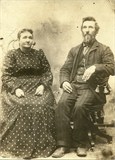
Sarah LaVina Sweet and Daniel R Morse
My paternal 2nd great-grandmother was born in upstate New York in 1840. She married Daniel Rowland Morse, also from New York, in Illinois in November, 1858. She and her parents had moved to Polo, Illinois, which was a stop on the underground railroad. It seems that Daniel joined them on the journey. The couple’s first son was born in Illinois. The young family returned to New York to live from 1860 until 1875. My great grandfather Jason was born during that time. By 1879 they had moved to Kansas to homestead near the Oklahoma Territory border outside of Coffeyville. She remained in her home until after her husband died, then she moved next door to her daughter’s home. She and Daniel are buried in a private cemetery ( her daughter’s family land) near her Kansas home. I visited the courthouse and read all the probate papers that applied to her estate. I have some copies of letters and court findings that indicate what many had implied, that my great-grandfather Jason was not very well liked or trusted. She brought her son down from New York to settle her affairs after she died. My ancestor was conspicuously absent from the business proceedings of her estate. It turned out that court judgements against him amounted to more than his share of the inheritance. Moving to the wild wild west as a teen was perhaps not the best environment for Jason’s upbringing. My grandfather Ernest ran away from home as a very young man because he and his brother did not like their stepmother or her daughters. In 1900 Ernest was living on the Cherokee Nation with his new stepmother. In 1910 Ernest is found living with Sarah and Daniel at their house, working as a farm worker. Later Ernest became a milkman with a horse drawn delivery cart. I am sure Sarah had a big part in raising her grandsons. It was an amazing time in history. It was not so easy to survive wild west adventures in those days. I am very lucky that my pioneer ancestors made it. I did not see the grave when I was in Kansas, but I know where it is for the next visit. Someone has taken very good care of them.
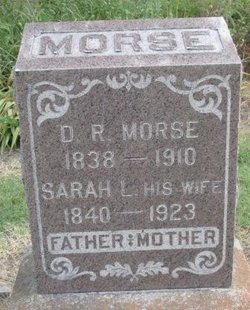
Sarah LaVina Sweet and Daniel R Morse
Sarah LaVina Sweet (1840 – 1923)
is my 2nd great grandmother
Jason A Morse (1862 – 1932)
son of Sarah LaVina Sweet
Ernest Abner Morse (1890 – 1965)
son of Jason A Morse
Richard Arden Morse (1920 – 2004)
son of Ernest Abner Morse
Pamela Morse
I am the daughter of Richard Arden Morse
 mermaidcamp