mermaidcamp
Keeping current in wellness, in and out of the water
You can scroll the shelf using ← and → keys
You can scroll the shelf using ← and → keys
Cyclovia Tucson is looking for a few good volunteers. This twice a year event is held to encourage the use of our public streets for alternative uses. I used to travel to Lugano, Switzerland in the summer to visit the lakeside city. Once a week for an evening the center of town was closed to motor traffic and skates, skateboards, bikes, and other self propelled transportation filled the streets. This was a great opportunity to get out and share the warm nights with locals as they rolled. Now Tucson has joined an American movement to follow a similar plan. Last year I was out of town for Cyclovia, but my friends who attended told me it was excellent. On April 6, 2014 a route that will include downtown will be opened for Cyclovia. Super volunteers can assist during the event and others are invited to participate by rolling through all or part of the route. Entertainment and local color are on display. It will be fun to join the moveable feast. I hope the concept catches on and becomes a more frequent part of our culture in Tucson.

Leopold III
I was trained by Austrian Tourism as an expert in Austria. The training included classroom study for two full days and extensive travel around the country. In the classroom we learned about the Habsburgs who married all the most eligible monarchs in Europe to expand their holdings. I did not suspect at the time that these were my people. However, I specifically noticed that Austrian over-the-top castles and music halls thrilled me, whereas French over-the-top design always made me think of them as wasteful. I did have a certain strong feeling for the architecture, especially in Vienna and Salzburg.
Monarchs of the House of Habsburg
A word about the coats of arms: the Habsburg Empire was never composed of a single unified and unitary state as Bourbon France, Hohenzollern Germany, or Great Britain was. It was made up of an accretion of territories that owed their historic loyalty to the head of the house of Habsburg as hereditary lord. The Habsburgs had mostly married the heiresses of these territories, most famously of Spain and the Netherlands. They used their arms then as a statement of their right to rule all these territories. As there were many territories, so their arms were complex and reflected the waxing and waning position of the Habsburgs within European power politics. It was not until the 19th century (see below Arms of Dominion of the Austro-Hungarian Empire) that the arms began to take on their own life as symbols of a state which may have an existence outside of the Habsburg dynasty.

Leo
Leopold III “Duke of Austria” Habsburg (1351 – 1386)
is my 17th great grandfather
Ernst I “Ironside” Archduke of Austria Habsburg (1377 – 1424)
son of Leopold III “Duke of Austria” Habsburg
Katharina Archduchess Austria Von Habsburg (1420 – 1493)
daughter of Ernst I “Ironside” Archduke of Austria Habsburg
Christof I VanBaden (1453 – 1527)
son of Katharina Archduchess Austria Von Habsburg
Beatrix Zahringen (1492 – 1535)
daughter of Christof I VanBaden
Sabine Grafin VonSimmern (1528 – 1578)
daughter of Beatrix Zahringen
Marie L Egmond (1564 – 1584)
daughter of Sabine Grafin VonSimmern
Richard Sears (1590 – 1676)
son of Marie L Egmond
Silas Sears (1638 – 1697)
son of Richard Sears
Silas Sears (1661 – 1732)
son of Silas Sears
Sarah Sears (1697 – 1785)
daughter of Silas Sears
Sarah Hamblin (1721 – 1814)
daughter of Sarah Sears
Mercy Hazen (1747 – 1819)
daughter of Sarah Hamblin
Martha Mead (1784 – 1860)
daughter of Mercy Hazen
Abner Morse (1808 – 1838)
son of Martha Mead
Daniel Rowland Morse (1838 – 1910)
son of Abner Morse
Jason A Morse (1862 – 1932)
son of Daniel Rowland Morse
Ernest Abner Morse (1890 – 1965)
son of Jason A Morse
Richard Arden Morse (1920 – 2004)
son of Ernest Abner Morse
Pamela Morse
I am the daughter of Richard Arden Morse

Leopold III
Duke Leopold III of Austria (November 1, 1351 – July 9, 1386) from the Habsburg family, was Duke of Austria from 1365 to 1379, and Duke of Styria and Carinthia (Inner Austria) in 1365–1386.
Life
Born in Vienna, Leopold was a younger son of Duke Albert the Wise, and younger brother of the Dukes Rudolf the Founder and Albert the Pigtail. His mother, Joanna of Pfirt, was 51 when she gave birth to him and died shortly after. He was firstly the administrator of Tyrol, and was jointly charged with the rule of the Habsburg lands with Albert after Rudolf’s death. However, by the Treaty of Neuberg of September 9, 1379, he became the exclusive ruler of Styria (including Wiener Neustadt), Carinthia, Carniola, the Windic March, Gorizia, the Habsburgs’ possessions in Friuli, Tyrol and Further Austria. In 1368 he acquired Freiburg im Breisgau, in 1375 Feldkirch and in 1382 Trieste.
However, his attempts to expand his position in Switzerland and Swabia failed, when he died in the Battle of Sempach in 1386.
Family and children
He was married, on 23 February 1365, to Viridis Visconti (1352–1414), second daughter of Barnabò Visconti, Lord of Milan, and Beatrice Regina della Scala, and had the following children:
William the Courteous
Leopold the Fat
Ernest the Iron
Frederick of the Empty Pockets
Elisabeth (1378–1392)
Catherine (1385–?), Abbess of St. Klara in Vienna
He was succeeded by his eldest son William. Other sons included Leopold, future Duke of Further Austria, Ernest the Iron, future Duke of Inner Austria, and Frederick, future Duke of Further Austria.
We attended the Southern Arizona Craft Brew Festival yesterday at Maker House. We received tickets and glasses at the door to taste the many offerings at the brewers’ booths. The music was excellent, the weather perfect for February, and the crowd very cheery. That is the thing about beer and its’ fans….they tend to be jolly and care free. Members of our group all enjoy dark beer so we gravitated to stouts and darker brews. One of my faves was the salted caramel stout. After about 3 hours of beer tasting we all had tickets left when we were ready to leave. We had sampled so many robust and complex flavors that we were both full and sated. I enjoyed a plate of Yakisoba from the Bam Bam food truck to go with my brews. A good time was had by all, and the beer scene is growing with gusto.

















I lived in Venezuela in the early 1960s. My father was manager of operations for Mene Grande Oil Company, aka Gulf Oil. I lived in San Tomé in a remote petroleum camp in the llanos. I lived as a petroleum princess and listened to Radio Havana because it was the only station that came in clearly. We lived an opulent life surrounded by fences and guards. Trinidadians usually worked as servants in our homes because they were bilingual. We had one very high lifestyle in every respect.
John Kennedy was shot before I moved to South America, which was unsettling. Race riots were taking place in the states, but we were isolated from that reality hanging out at our private social club in the tropics. We lived in extreme segregation, but thought nothing of it. The seeds of revolution are planted many years before they mature. The wealth discrepancy in South America was shocking, but since it was all to our advantage we were told it was inevitable. These experiences all became part of my knowledge of the world and later part of my politics. I distrust all imperialists and their motives.
With a simplistic agenda to end unbearable insecurity the students began to march last week in all the cities in Venezuela. The outcome of this battle will be significant and was long in the making.

MGO employee handbook
The coolest monk on earth has opened an instagram account. His Holiness the Dalai Lama of Tibet is now updating his travels with photos. This is so much more exciting that Pope Francis’ twitter streams, although I do applaud @Pontifex for multi-lingual tweeting to anyone who wants to stay in touch with him. If you have been in the presence of His Holiness (I have had the very good fortune of doing so in 3 different teachings) you never forget the way he laughs and smiles. He is infectious and inspires this adoration instantly by giggling. I have seen him teach in Tibetan, and even in the middle of serious rituals he jokes and giggles with his students. By the time we had our translations in our earbuds the Tibetans were laughing at his jokes. He connects on all levels with all people. Those who understand and practice the fine points of Buddhism learn deeply and some probably glimpse enlightenment in his presence. Those of us who come in relative ignorance to his teachings may come away with less refined ideas, but we are also subject to instant enlightenment in his presence. The ancient texts he uses for study require lifetimes of study and meditation to do them justice. When he flashes a smile from that cute baby monk face he touches everyone in exactly the same way. Now we can all follow his smile around the world as he keeps us updated.
He enjoys a hobby in horology, and since his youth has taken watches apart to rebuild them. I believe he is a geeky monk who appreciates technology and wants to understand and use it to the max. What ever his reason may be, I am following him, and suggest that the gentle readers might want to check out his account. He is changing the world with his smile.
I am enthusiastic about Nextdoor.com. It has potential to become a tool of great value to fight crime and improve life. I invite everyone I know to start one for your neighborhood. I opened ours just a few days ago and we have gathered more than the minimum 10 members we need to have our site supported for free for our community. This is private, non commercial networking to improve the environment and create safer places to live. It is not connected to any government agency or political group. This start up knows that cities need this, and is developing the system with venture capital. It is brilliantly simple.
We have sunk to a new nadir in Tucson. Our neighborhood has a federally funded neighborhood watch consisting of only 5 households, for the sole purpose of willfully denying the presence of the charity scam, “Feeding the Homeless in Tucson’s Parks“. It is a sad state of affairs when your city will break federal revenue law, getting a grant to help a small group of white collar criminals break federal revenue law in front of everyone in the neighborhood. This makes it look like the best way to stay in any criminal business is to found a fake neighborhood watch to protect it, and help your local cops get a federal grant to help you deny that it is criminal to collect donations without reporting them to the IRS.
It is completely ironic to call this neighborhood watch when the majority has to watch the minority…and the authorities…openly break the law. This is why Nextdoor is an important way to clean up neighborhoods. When people know what is happening around them they can make improvements together for the benefit of all. When people live isolated lives, crime has more opportunity to exist. If there is a real neighborhood watch that succeeds in real life, I applaud you. In our case, we need to start by simply getting some neighbors to know their neighbors. That is progress in itself where I live.








I am happy I do not need to go to Babylon to savor the flavors of Iraq. The Babylon Market has all the groceries and deli items I could possibly desire. I enjoy learning to prepare new ethnic foods, and the ingredients I found make it easy for my to try my hand. I purchased $50 worth of groceries to get $5 credit at the deli. I had a great time searching around the store while my lunch was prepared. The store has a bakery and a butcher shop as well as a deli in the back. The store is stacked to the rafters with all things Mediterranean. I bought those red picked turnips, some canned stuffed grape leaves, some fresh Turkish bread, cheese stuffed pastry, honey, nuts, and spices. The atmosphere is friendly and buzzing as customers patronize the deli and shop like I did. The store is very popular for a good reason. The proprietors are helpful and happy, and the offer a wonderland of grocery and deli delights. I will surely return to this excellent and exotic establishment. My partner agreed that our lunch was outstanding.

Helvetia in Bern
Helvetia is the lady who holds the cantons of Switzerland in the palm of her hand. She is an evolution of Abundantia, and represents the confederacy. She presides over an extreme form of democracy in the heart of Europe. Her resources are many and very well managed. Her people are healthy wealthy and wise. Her needs are few. She gets by on a minimalistic budget that covers the Swiss Army, and leaves big taxation to the cantons. This allows her to live in relaxed elegance in comparison to her neighbors. For centuries the Swiss have depended on foreign labor by executing contracts that required the guest worker (many from Italy before the EU) to return to the home country several times a year. Hotels and resorts close the doors and the workers go home during soft tourism seasons. In season the hotels provided lodging and meals for the imported workers. Although the Helvetian Confederation did not join the EU it had to make a series of trade agreements in order to survive and thrive in the very middle of the EU countries. I used to spend a lot of time in Switzerland before the EU and I honestly did not think Europe would even pull it off in the beginning. I was not alone in this belief.
The Swiss are very liberal in social terms and conservative in fiscal terms. They are brilliantly efficient and endlessly frugal and creative. They have generously accommodated Tibetans, Africans, Tamil Tigers and other refugees, providing education and finding employment for many. Now they have an influx of Germans and Eastern Euros that have taken over much of the service segment. This is a cultural nightmare for Helvetia and her healthy economy. It is not so surprising to see that the rural populations are the one’s most opposed to the mass immigration. The Italian canton, Ticino, which is inundated with Italians who wish to stay voted with those in the countryside. They have preserved an individual culture in a confederacy with four official languages and do not wish to see history and tradition lost.
This is a small version of a big issue, which is why some are saying this could be the beginning of the end of the EU. I respect the Swiss who want to keep the identity and independence that is an integral part of their society. I used to tell my Swiss friends they need not vex themselves because they own the source of both the Rhine and the Rhone, the last clean water in Europe. They can simply do what they do best, and set up meters to measure and sell that water. Although that sounds outlandish now, there will be certain political and economic repercussions following this restriction of immigration. My bet is on Helvetia, who is wise and has the best interests of her people in mind. She will have to defend her confederacy now.
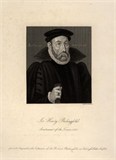
Henry Bedingfield
My 13th great-grandfather was instrumental in placing Mary Tudor on the throne of England.
Son of Edmund Bedingfield and his wife Grace, dau. of Henry Marney, first B. Marney. He was the grandson of Sir Edmund Bedingfield who had served in the Wars of the Roses, and to whom were granted by Edward IV for his faithful service letters patent authorizing him “to build towers, walls, and such other fortifications as he pleased in his manors of Oxburgh, together with a market there weekly and a court of pye-powder”. Henry’s father, other Edmund, had been Catalina of Aragon’s custodian during her last sad years at Kimbolton Castle.
Sir Henry Bedingfield and his fellow-Member Sir William Drury were included in Cecil’s list of gentlemen who were expected to transact ‘affairs for Queen Jane’, but in the event both rallied to Mary. Sir Henry was mainly instrumental, together with Sir Henry Jerningham, in placing Mary Tudor on the throne. In ‘The Chronicle of Queen Jane and of two years of Queen Mary’, the anonimous author said:
‘… The 12. of Jul word was brought to the Councell, being then at the Tower with the lady Jane, that the Lady Mary was at Keninghall castle in Norfolk, and with her the earle of Bath, sir Thomas Wharton sonne to the lord Wharton, sir John Mordaunt sonne to the lord Mordaunt, sir William Drury, sir John Shelton, sir Henry Bedingfield, master Henry Jerningham, master John Sulierde, master Richard Freston, master sergeant Morgan, master Clement Higham of Lincolnes inne, and divers others; and also that the earle of Sussex and master Henry Ratcliffe his sonne were comming towards her…’
He proclaimed her at Norwich, and for his loyalty received an annual pension of £100 out of the forfeited estates of Sir Thomas Wyatt. Ultimately he became Lieutenant of the Tower of London and Captain of the Yeomen of the Guard.
As jailer of Princess Elizabeth, who was suspected of complicity in Wyatt’s rebellion, he has been persistently misrepresented by Foxe and others. On 5 May 1554, Sir John Gage was relieved of his office as Constable of the tower and Sir Henry Bedingfield placed in his room. Bedingfield marched in to take over command of the Tower bringing with him a hundred men in blue liveries, and Elizabeth’s reacción to this ‘sudden mutation’, at least as described by John Foxe, clearly illustrates her state of mind. The arrival of Sir Henry, being ‘a man unknown to her Grace and therefore the more feared’, seems to have induced a fit of panic. She demanded to be told ‘whether the Lady Jane’s scaffold were taken away or no?’ Reassured on this point, but still not entirely satisfied, she went on to ask who Sir Henry Bedingfield was and whether, ‘if her murdering were secretly committed to his charge, he would see the execution thereof?’
On 19 May, at one o’clock in the afternoon he joined Sir John Williams and Sir Leonard Chamberlain to escort Elizabeth from the Tower to Woodstock. Foxe, in his “The myracolous preservation of Lady Elizabeth, nowe Queen” said:
“… In conclusión, on Trinitie Sonday being the 19. day of Maye, she was remooved from the Tower, the Lorde Treasurer being then there for the lading of her Cartes and discharging the place of the same. Where Syr Henry Benifielde (being appoynted her Gailer) did receive her wyth a companie of rakehelles to Garde her, besides the Lorde of Darbies bande, wayting in the Countrey about for the mooneshine on the water. Unto whome at length carne my Lorde of Tame, ioyned in Commission with the sayd Syr Henry, for the guiding of her to prisone: and they together conveied her grace to Woodstock, as hereafter followeth…”
Foxe’ s narrative contains many circumstantial anecdotes of her imprisonment, intended to emphasise her constant danger, and the boorish behaviour of Sir Henry. In fact, he seems to have been nomore than conscientious, and Elizabeth herself understood that. The whole history of his custodianship of Elizabeth is contained in a series of letters addressed to the Queen and the Privy Council, and in their replies. This correspondence, which has been published by the Norfolk and Norwich Archæological Society, completely exonerates Sir Henry from either cruelty or want of courtesy in his treatment of the royal captive.
Thomas Parry, the princess cofferer had to provide for her household but on 26 May, three days after her arrival at Woodstock, the Council told Bedingfield that there was no reason for Parry to stay there. Elizabeth’s guardian communicated this decision to Parry, who baffled him by staying in the town. Parry now proceeded to make Bedingfield’s life a misery. He first objected to the provisioning of his retinue out of Elizabeth’s resources, until Bedingfield was commanded to supply them by a special warrant. This was simply a harassing tactic, for books were being conveyed to Elizabeth, some of which Bedingfield suspected of being seditious, and when Parry sent him two harmless ones he was forced to return them for want of explicit instructions. Bedingfield complained that he was helpless, as ‘daily and hourly the said Parry may have and give intelligence’, and once again the cofferer’s position was referred to the Council. Early in Jul Parry was at the Bull inn, ‘a marvellous colourable place to practise in’, receiving every day as many as 40 men in his own livery, besides Elizabeth’s own servants. At length the Council forbade such large meetings and, from Bedingfield’s subsequent silence on the point, it seems that the order was obeyed.
Sir Henry Bedingfield also informed the Council of a meeting at Woodstock, Oxfordshire, between Francis Verney and a servant of the late Duke of Suffolk and cited Sir Leonard Chamberlain’s judgement that “if there be any practice of ill within all England, this Verney is privy to it”. Bedingfield apologised to the Council for the fact that he was being ‘enforced, by the importunate desires of this great lady, to trouble your lordships with more letters than be contentful to mine own opinion’. In Apr 1555 Henry Bedingfield, escort Elizabeth to Hampton Court, where she met the Queen. A weeks later ended a period of close restraint for the Princess, which had lasted just over fifteen months. It would probably be difficult to say whether prisoner or jailer was the more relieved.
On Elizabeth’s accession he retired to Oxborough and was called upon in a letter, in which the Queen addressed him as “trusty and well-behaved”, to furnish a horse and man armed, as his contribution to the defence of the country against an expected invasion of the French.
When, however, the penal laws against Catholics were enforced with extreme severity, Sir Henry Bedingfield was not spared. He was required to pay heavy monthly fines for non-attendance at the parish church, while his house was searched for priests and church-furniture, and his servants dismissed for refusing to comform to the new state religion. Together with his fellow-Catholics, he was a prisoner within five miles of his own house and might pass that boundary only by a written authorization of the Privy Council.
In his will of 24 Jul 1561 Sir Richard Southwell bequeathed over 10,000 sheep to members of his family and left his personal armour to his ‘cousin and friend’ Sir Henry Bedingfield.
He died 22 Aug 1583, and was buried in the Bedingfeld chantry at Oxborurgh.
Family and Education
b. by 1509, 1st s. of Sir Edmund Bedingfield of Oxborough by Grace, da. of Henry Marney, 1st Baron Marny. educ. L. Inn, adm. 1528. m. by 1535, Catherine, da. of Sir Roger Townshend of Raynham, Norf., 5s. 5da. Kntd. by July 1551; suc. fa. June 1553.1
J.p. Norf. 1538-53, q. 1554-58/59, q. Suff. 1554-58/59; commr. relief, Norf. 1550; other commissions Norf., Suff. 1534-60 PC Aug. 1553-Nov. 1558; lt. Tower Oct. 1555-c.Sept. 1556; v.-chamberlain of the Household and capt. of the guard Dec. 1557-Nov. 1558.2
Henry Bedingfield came from an old Suffolk family with extensive estates in East Anglia. After his marriage to the daughter of one of the most favoured crown officials in the region he was named to the Norfolk bench; however, while his father lived he was not outstanding in either national or county affairs, although in 1544 he led a troop of his tenants to the army at Boulogne. In 1549 he helped the Marquess of Northampton to put down Ket’s rebellion, but was himself captured and only released after its suppression. Bedingfield seems to have supported or at least acquiesced in the Duke of Northumberland’s rise to power, for he was recommended by the Council as knight of the shire for Suffolk to the second Parliament of Edward VI’s reign. Although noted by Cecil on a list of those thought to be sympathetic to Lady Jane Grey he was one of the first to rally to Mary. His decisiveness during the succession crisis earned for him the trust of the Queen and a place on her Council. As one close to her and a major landowner in his own right following his father’s death he was elected one of the knights of the shire for Norfolk to the first Parliament of the new reign and re-elected to its successor early in 1554. When after Wyatt’s rebellion the Queen sought a stricter guardian for her sister, she found in Bedingfield the qualities necessary—honesty, loyalty, obedience and perhaps a certain lack of initiative. Possibly she realized the touch of irony in her setting as guard over Elizabeth the son of the man who had been her own mother’s custodian. Bedingfield remained at Woodstock as guardian of the princess from May 1554 to April 1555. His correspondence with the Council and Queen concerning his duties hardly bears out Foxe’s accusation of cruel treatment of his charge. It shows, rather, a severe and rigid man of limited imagination and lacking in humour, but by no means cruel; it also indicates that he had much to endure from Elizabeth’s temper and her constant importunity.3
In June 1556 Bedingfield surrendered an annuity of £100 (granted to him for his services in July 1553), together with two Yorkshire manors, receiving in return the manor of Uphall and the reversion of numerous other lands in Norfolk. His promotion at court in December 1557 marked a further stage in the growth of his power and influence, and preceded his re-election for a third and final time as a knight of the shire for Norfolk. There seemed no obvious limit to his career when the death of Mary and the accession of his former charge brought his career to an abrupt close. He asked Elizabeth’s forgiveness for his treatment of her at Woodstock; the Queen showed no malice but hinted that she would prefer not to see him at court. In 1569 he refused to subscribe to the Act of Uniformity, and had to enter into a bond for his good behaviour. Nine years later he was accused of refusing to attend services and giving refuge to papists, and bound over in £500 to remain at Norwich: not long afterwards he was summoned to London but excused on account of ill-health. The last years of his life were troubled by similar actions against him, but he was fortunate in having at court a son-in-law, Henry Seckford, who in December 1581 obtained permission to take the old man into his own home ‘until he may pass over the remembrance of the lady his wife, lately deceased’. Bedingfield made his will on 16 Aug. 1583. He had previously settled some of his lands on his younger sons and he divided his goods between them and his daughters, apart from some heirlooms which were to descend with Oxborough manor. Bedingfield died on 22 Aug. and was buried at Oxborough.4
Ref Volumes: 1509-1558Author: Roger Virgoe
Henry Bedingfield (1509 – 1583)
is my 13th great grandfather
Edmund Bedingfield (1534 – 1585)
son of Henry Bedingfield
Nazareth Bedingfeld (1561 – 1622)
daughter of Edmund Bedingfield
Elishua Miller Yelverton (1592 – 1688)
daughter of Nazareth Bedingfeld
Yelverton Crowell (1621 – 1683)
son of Elishua Miller Yelverton
Elishua Crowell (1643 – 1708)
daughter of Yelverton Crowell
Yelverton Gifford (1676 – 1772)
son of Elishua Crowell
Ann Gifford (1715 – 1795)
daughter of Yelverton Gifford
Frances Congdon (1738 – 1755)
daughter of Ann Gifford
Thomas Sweet (1759 – 1844)
son of Frances Congdon
Valentine Sweet (1791 – 1858)
son of Thomas Sweet
Sarah LaVina Sweet (1840 – 1923)
daughter of Valentine Sweet
Jason A Morse (1862 – 1932)
son of Sarah LaVina Sweet
Ernest Abner Morse (1890 – 1965)
son of Jason A Morse
Richard Arden Morse (1920 – 2004)
son of Ernest Abner Morse
Pamela Morse
I am the daughter of Richard Arden Morse
I am thrilled to find a new and fabulous source of high quality sustainable food. Much to my surprise my favorite olive oil supplier has expanded and is now offering delicious cheese. Since I enjoy tasting more than stuffing myself this place was completely designed for me. It is about discovery and quality. My partner Bob will certainly love to taste the fancy meats they carry at the new restaurant, while I can indulge myself with exotic cheeses. The store is located close to home, and the Mercado San Augustin is becoming the hottest real estate in the city. I believe the deli/restaurant will be worth a visit, and will thrive in that location next to our finally becoming more hip downtown. Blu is my new favorite place. I have been to fancy cheese stores in Paris, but I like Nancy better than any of the French cheesemongers I have met. She is enthusiastic as well as knowledgeable.
 mermaidcamp