mermaidcamp
Keeping current in wellness, in and out of the water
You can scroll the shelf using ← and → keys
You can scroll the shelf using ← and → keys
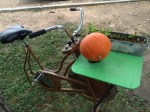

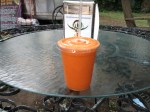
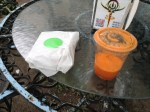


One of the ways I enjoy travel is by trying all kinds of gastronomy. In Austin the food truck craze is very advanced. There are more trucks than I could have imagined, most with permanent locations. I found a barbecue place close to home yesterday and was tempted by the cheese jalapeño grits they serve as a side. When I stopped to try the grits, the Juice Well was open next door. Now I have a problem. I have fallen so deeply in love with the food at the Juice Well that it will be hard to move on and try anything else. This vegetarian juice and smoothie bar goes to great lengths to prepare natural, homemade sandwiches and entrées that compliment the liquid delights. I was thrilled with my Merlin’s Magic juice blend that was spiked with garlic and lemon juice. The sandwich I ordered, the Kraftwork, may honestly be the best sandwich I have ever tasted. I am hooked. They make their own sauerkraut with red cabbage which is to die for. Pickled green onions and other veggies are all made in house. The result on the sandwich is fantastic, beating the hell out of the dill pickle relish we normally find between bread. I do want to try other trucks but I need to go back to the Juice Well to taste more of the dazzling creative specialties they are making right around the corner. To complicate matters I found a Colombian restaurant near here that had a super long waiting list for lunch. The Colombians serve arepas, and even if they are not exactly Venezuelan style, I love me some arepas. I have to find a time when Casa Colombia is not overflowing with customers. I was really thinking TexMex, but there is more exciting food to eat around here that we don’t have in Tucson. I have my work cut out for me as gourmet taster.

luggage
Time may be finite, but I notice that it can expand and contract based on circumstances. When I am home I always have some day to day chores waiting for me. Being busy is not my style, but I do cross items off the to do list in a regular fashion. Planning is big for me, but it often leads to changing plans. I drive very little by choice, so on line shopping is a big friend of mine when I am not supporting local businesses. My routine includes time with friends, my dog, and my neighbors as well as tending the garden and running the house. I find excitement in studying my ancestors, history, culture and the arts. I rarely need to go anywhere to stimulate my imagination and creativity. I had a long career as a travel agent, so I am very able to make choices and plans that suit my fancy in terms of a destination. I like to spend my holiday time involved in activities I either can’t do at home, or just don’t do at home. Some of my favorite vacation features are:
My budget for both time and money is set free during holiday times. I look for new ways to spend both that I have never done. I do a lot of research before i visit a place. I usually have a long list of possible places I want to go, and then let the weather be the deciding factor. I need some rainy day plans as well as some perfect day plans. My main goal in traveling is to flow into a new schedule, a new culture, and a new rhythm based on what I discover. I usually do some reconnaissance on foot to see what the neighborhood has to offer before I set out in a car. I study maps and read reviews to help me decide what to investigate. It is a perfect combination of very well informed and not obligated to anything. I am looking forward to doing this for the next to weeks in Austin, Texas, live music capitol of the US. I hope my gentle readers will enjoy the trip as you come along for the ride.
I am lucky to have found, right in my neighborhood, a Chi Nei Tsang practitioner of great talent and ability. Her name is Desiree Maultsby and her practice is at Rooted Massage Therapy in Tucson. I wanted to address inflammation in my organs that was discovered at my thermography session. Obviously my lifestyle and diet are under my own control and can be improved. To help me better understand and improve the chi flow in my internal organs I wanted to use Chi Nei Tsang because I know it is effective.
Taoist practices are simple, yet complicated. There is order, but there is a great deal of mystery as well. Chi, universal energy, moves through the body and around it. The way we direct chi, and allow it to flow will determine the state of our health and our mood. The most basic way to think about chi in the abdomen is to bring to mind the proverbial knot in the stomach. Stress, improper habits and diet, and other factors can constrict and block the flow of energy and circulation in the internal organs. Deep breathing is the best way to relieve these constrictions and restore good function to all the organs. With the help of a practitioner a chi nei tsang session can bring dramatic and instant results in healing congestion in the abdomen. There are simple practices of self massage and breathing techniques that can be done between sessions to greatly enhance the results. This is, for practical purposes, a meditation technique. Your awareness will grow from this practice, of both the power of your breath, and the importance of freeing up energy in the organs.
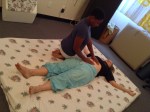
Physical issues that bring pain to the abdomen may very well be related to trauma held in the gut. Breathing techniques and sound vibrations have healing effects on the specific organs. Your practitioner will guide you by giving you meditative instruction as well as reminders about breath. By working very closely together in this way deep psychic wounds you don’t even know you have can be healed. The treatment is not at all like a Swedish massage, which I really like for the pleasurable feeling at the time. This is a full on transformational pursuit. If you want to chat or stay on the surface, then chi nei tsang is not for you. You remain clothed and the treatment takes place on a mat on the floor, to make the best use of gravity. I am very impressed with the progress my body has made in just three sessions with Desiree. I recommend her work to anyone interested in making profound changes. She provides plenty of supplemental information for those who want to do their homework.




Artemis is an independent spirit, choosing solitary activities. She is a hunter who feels at home in the woods and with nature. Her social life is limited, and she remains single. She loves a group women who are her companions, all sworn to chastity. These are the original wild women, happy in the forrest, hunting and living in accord with natural rhythm. The story of Callisto illustrates how seriously Artemis took the privacy and chastity of her followers. Artemis’ own father Zeus seduced Callisto and made her pregnant. When Artemis discovered the pregnancy she changed Callisto into a bear.
Her protective nature makes her the guardian of childbirth and children. She is Apollo’s twin sister. It is said that she was born first, then assisted in the birth of her brother the sun god. Her strength and confidence come from her powers of discernment. Hunters learn the ways of the prey in order to be successful in a hunt. Artemis is physical prowess and natural instinct combined in a strong feminine being. Her positive force is derived from loving herself without reservation. She is not influenced by the opinions of others, and rarely condescends to take part in arguments. She has abilities to discern the motives of those around her. She is happy, free, and physically in tune with nature. Her fitness and poise come from a life of natural exertion. She has enough self confidence to protect, inspire and enlighten others.
To get in touch with Artemis use the herb Artemisia vulgaris. It can be purchased as essential oil, although a good quality oil is hard to find of this herb. Use it very sparingly because the oil is very potent. It needs to be diluted with a carrier oil like jojoba. On full or new moons the Artemis energy is high because she is a moon goddess. Inhaling the scent or using the diluted oil on the temples of the head increases the connection to the magical huntress. Choose a meditation or journaling exercise that invites animals into your imagination. By setting a scene, perhaps a lake, or a shady spot, in your mind’s eye, wait to see the wildlife that comes into the picture. Notice if the animals are healthy or seem stressed. Just observe what they do, how they act, and what you think they desire. By going deeper into these images you will make a connection with the Artemis in you. Follow her instincts. Her refined intuition makes a wonderful guide through the woods of life.
“Even pudding needs a theme.”- Winston Churchill. He could not have ben more insightful. Americans often use freedom as a theme for national celebrations. We repeat themes in our lives without awareness, but how would it make a difference if we embraced themes? Leonardo da Vinci pioneered mind mapping by drawing similarities between seemingly unrelated things. His essential belief in Connessione broadened his thinking and increased his creativity. He took notes constantly, drew pictures and diagrams that we are lucky enough to be able to see today. His notebooks are full of connections, discovery and contemplations.
“every part is disposed to unite with the whole, that it may thereby escape from its own incompleteness”-Leonardo da Vinci. If we think in terms of unification, or connectedness it is obvious that no part of life exists by itself, on its own, with no assistance. Our social connections are different from our commercial connections, and our survival connections are a different group. We rely on systems, nature, people, and cultural beliefs to keep our lives running. By taking a theme for a day we can start to see how connections are at least as important as single relationships. Every relationship touches other relationships, and so it goes. Within the personality of each person there may be dynamic tension or power struggles daily. There are themes within those dramas too. Pick one and observe it for a day, or a week.
Choosing to observe sabotage might reveal deep meaning. We certainly sabotage others and are sabotaged by others. It is also true that we sabotage ourselves and pretend others have done it. Drawing a timeline of the history of self sabotage can be interesting, but why not look at this phenomena in real-time? Check out daily habits that dilute health, happiness or finances. The theme of saboteur is well-known in fiction because everyone has this common issue in real life. If you take time to observe your inner saboteur at work notice how it is connected to those who seem to sabotage you from the outside. Are they in secret alliance? How do they know your weaknesses so well? Are you in cahoots? What are the themes your inner and outer saboteurs use to stay connected to you?
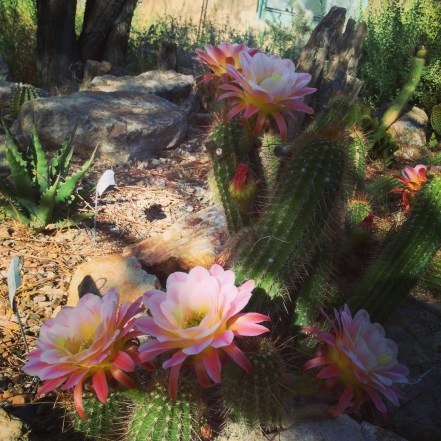
cactus blooming
Our memories are not accurate. Our self images are not well aligned with reality, and our sense of time is warped. This is true for almost everyone. I have embarked on some time line drawing exercises that have proven to me how far off base I am with a lot of my beliefs about my life and myself. The course in archetypes asks that I draw a time line for each of my dominant archetypes, including first meeting and how their powers entered and left the scene. I am surprised about the details I recall when I focus on only one aspect. This is also true if I draw a time line that includes all my physical injuries, surgeries, and illnesses. I have lead a healthy life, but I do see a pattern when I study the tendencies I have had. My doctors ask me to outline my injuries and illnesses, but I had never drawn them out on a paper with dates before. This chart alone tells a big story about your health and your life. There are other valuable time lines to draw for self knowledge:
When you have drawn these lines (all in the same scale) line up the sheets of paper under one another to see if they have any sequential patterns. Putting them all in a row shows detail that can sort out patterns in our lives. We tend to think of time in various delusional ways. We believe we have always been like this (whatever this may be), for instance. We often believe we were innocent when we were guilty, and sometimes believe just the opposite. The time line describes turning points and events that were pivotal in our development. If we then overlay the archetypes in our personalities, and which ones were dominant at what times the portrait becomes even clearer and more detailed. I started with the assignment of the archetype timelines, which is the most intricate and difficult of them all. By doing the easy ones above first we become accustomed to the focus it takes to really remember accurately. Then we are warmed up to question who was in charge and when. Time lines contain a great deal of power while still holding mystery in the line where it says nothing. Obviously there were constant events, but only some can be brought to mind. More practice brings better proficiency in stringing it all into place.
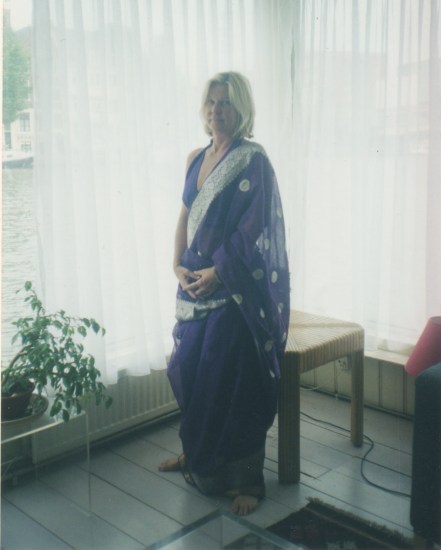
Being Blonde
Our bodies serve us as the vehicle with which and for which we live our lives. If we are strong, flexible, ambidextrous, and well coordinated we are likely to feel good and be healthy. Improving diet and exercise habits can bring about changes in attitude and vice versa. The key to being the best body you can be for your whole life is unconditional gratitude for the body you have now. You may train to become more graceful, more balanced, or more relaxed, but you must work with what you have. Start by loving your skin and everything inside of it. An understanding of basic anatomy is helpful in cultivating well-being. Learning about customs of folk medicine, healing techniques, or diets of foreign cultures can expand the options for self care. Knowledge and understanding are not the key ingredients in radiant health. Acceptance and love for all the ways your body serves you are the foundation on which strong healthy lives are created. What are the different aspects of our physical realm?
The body contains all these different ways of sensing life. Poise, grace, and fitness result from practice. Practice requires focus of mind and body to achieve results. To refine our movements as well as our thoughts we need training. Staying fit and flexible may be the best way to avoid injury. Feeling healthy does uplift the emotions and add to self confidence. Self image is a strong determining factor in the way health is pursued. To clean up and clear up some possible issues from the past answer for yourself these questions:
If you reflect well on these questions and your honest answers to them you may reach some enlightenment. Your thinking, feeling, remembering, and sensing selves can invest in better habits when they are grounded in a healthy self image. First do no harm to your own idea of your body. From there it is possible to heal misguided thoughts about wellness and self care. We deserve the best we can give our bodies for as long as we are in them. Clearing away false judgements from the past makes way for positive changes.
Authority issues plague many of us. I am highly suspicious of all authority. There are a few instances that make the exception to the rule, but generally I think that power is a reason to investigate the motives of someone. My own upbringing has a lot to do with the issues I have today, since I grew up with quite a bit of sexism and some rigid nonsensical rules. There was violent insistence on the rules and on the concept that we were a happy family. I don’t think my parents were very happy, and I know I wasn’t pleased with my living conditions during childhood. This social mask imposed to hide the true situation included a strong dress code and many other elements designed to display perfection. I always felt repressed and restrained in various ways. When I was out of my parents’ world I never sought out any status symbols or social signs of belonging. I preferred to be a pleasure-seeking liberated person without the need for social approval. I respected no authority figures of any kind. As I look at it today I see an extreme reaction to rules and regulations, as well as to many institutions.
Trauma lives on in the feelings, thoughts, senses, and memories of everyone. It would be impossible to go through life without any shocking disruptive events. The way we process them depends on our circumstances at the time. If trauma is induced by parent or someone we must depend on for survival we may disassociate from reality in order to survive. Later the trauma continues in the body and the emotions if the appropriate anger is not found and processed for the serious betrayals of the past. Forgiveness is a part of the healing process, but it is not healthy to forgive without recognizing the wrongs and the disrespect we endured in childhood and early adulthood. Our personalities are mostly formed by the time we are 30, although we can have transformative events after that time also. If you draw a timeline of your life and include all the major emotional and physical traumas you have experienced you notice how your current reactive self was formed. We continue to react to the unresolved past, often by rebelling. To heal the trauma and stop the need to react we need to return to the times of greatest stress and damage, acknowledge the ways we were hurt, and come to the rescue of the helpless victim in the story, ourselves. Notice this situation may have been reconstructed a hundred different ways in life. To clean the slate and transform that trauma into understanding we need to look at the truth and take it into our consciousness. To stop repeating patterns that we continue out of reaction to the past we must examine the source and resolve to treat ourselves with confidence and love. We must rebel against unfair and unjust treatment both now and in the past in order to free ourselves from the damage it does.

My favorite herb in the garden is lemon verbena. I like to make tea with it all the time, but there are many other uses for this luscious herb. As a bath herb it brightens and refreshes the body and mind. The fragrance is used extensively in perfumery for the lemony zest it adds. In cooking it creates a lemon taste with no bitterness or aftertaste. It can be added to baked goods, salad dressings, drinks, sauces, and fruit salads to brighten a dish. Simple syrup of lemon verbena is useful for many drink and popsicle recipes with or without alcohol. Mixed with citrus fruit it becomes a big flavor enhancer. Rice pilaf, carrot cake, gazpacho, and other dishes can benefit from a pinch of this delicious herb. Store it in a glass jar in the dark to preserve freshness.
I love herbal bathing as retreat and meditative practice. The first one I tried about 20 years ago was rosemary bath. I brewed a strong tea of rosemary and added it to my bath. This method works well, as does the brewing of the tea in the tub by running hot water over a sachet, allowing it to steep, then filling the tub. When you choose the herbs and when you enter the water you can make the entire process a mindfulness experience. Drinking tea made with the same herbs will enhance the aromatic sensory intake. I am planning to take some baths this week with matching beverages and bath herbs. If you have a favorite herb you can try this at home. If the bath is taking place at the cocktail hour I think it is suitable to include the herb in a tasty concoction from the bar that aligns with the indented purposes.
These are ideas for you to design your very own aroma world to enliven your senses and change your mood. There is an art to choosing herbs for the desired mood, but there are very few side effects that inhibit experimentation. If you like an herb you can research it fully or simply determine that it is not toxic, then try it in a bath. The effectiveness may surprise you. When all the pores of your skin are soaking in the active ingredients the results are swift. Bringing to the mind’s eye the results you want to see is the strongest link that brings this practice into the meditational realm. By creating sensory stimulation and awareness at once we step out of our normal situation and into synesthsia of our own design. We use the aroma as an anchor for our meditation. At the least you can enjoy smelling and feeling bit better from the herbal bath. At the most it can be a rebirth and transformation.

Hammond Coat of Arms
My 10th great-grandfather was born and went bankrupt in England. His family sailed to America at different times, William himself probably arriving in 1631 on the ship Lyon. He lived in Watertown, MA. raising animals. We have a record of his will.
William Hammond (1575 – 1662)
is my 10th great grandfather
Elizabeth Hammond (1620 – 1703)
daughter of William Hammond
Elishua Crowell (1643 – 1708)
daughter of Elizabeth Hammond
Yelverton Gifford (1676 – 1772)
son of Elishua Crowell
Ann Gifford (1715 – 1795)
daughter of Yelverton Gifford
Frances Congdon (1738 – 1755)
daughter of Ann Gifford
Thomas Sweet (1759 – 1844)
son of Frances Congdon
Valentine Sweet (1791 – 1858)
son of Thomas Sweet
Sarah LaVina Sweet (1840 – 1923)
daughter of Valentine Sweet
Jason A Morse (1862 – 1932)
son of Sarah LaVina Sweet
Ernest Abner Morse (1890 – 1965)
son of Jason A Morse
Richard Arden Morse (1920 – 2004)
son of Ernest Abner Morse
Pamela Morse
I am the daughter of Richard Arden Morse
William HammondBirth: 1575, Lavenham, Suffolk, England.
Baptized: 30 Oct 1575, Lavenham, Suffolk, England.
Death: 8 Oct 1662, Watertown, Massachusetts. “Aged about ninety-four [sic].
Father: Thomas Hammond, born and died in England.
Mother: Rose Trippe, born and died in Lavenham, Suffolk, England.
1629: On 26 Feb 1629/30, William Hammond was declared bankrupt in England.
1629: On “the 20th of November after that date, he departe[d] the land and fleeth into New England. Information from a 1656 law suit against William Hammond, citing this occurance. This would place him on the “Lyon” which sailed from Bristol on 1 Dec 1630/1631, and arriving in New England the following February.
Emigration: 1631. See above.
The Hammond family came to New England in at least three stages. In late 1630 or early 1631, John Winthrop Jr. noted receipt of £7 5s. from “Goody Hammond to send her husband.” This supports the conclusion that William Hammond was a passenger on the “Lyon” when it sailed from Bristol in late 1631.
On 26 Sept 1633, Governor John Winthrop, wrote to Sir Simonds D’Ewes, informing him that “Yours by young Hamond I received,” indicating that William Hammond Jr. probably sailed for New England in one of the ships that arrived in the fall of 1633. His sister Anne and brother Thomas may also have come at this time, because they are not included, a year later, in the passenger list of the “Francis”, which sailed from Ipswich, in the spring of 1634, with Elizabeth Hammond, (aged 47); Elizabeth Hammond, (aged 15); Sarah Hammond, (aged 10); and John Hammond, (aged 7) on board.
First Residence: William’s first residence was Watertown, Massachusetts.
Occupation: Husbandman.
Religion: Admitted to Watertown Church prior to 25 May 1636, (implied by freemanship.)
1636: Admitted as a Freeman, 25 May 1636.
1636: In his record of admissions to Scituate Church, Rev. John Lathrop, entered on 14 Apr 1636, “Elizabeth Hammon, my sister, having a dismission from the church at Watertown.”
1636: On 25 Jul 1636, William Hammond was granted forty acres in the Great Dividend.
1637: Granted eight acres in the Remote Meadows, 26 Jun 1637.
1641: Granted a farm of one hundred fifty-five acres, 10 May 1642.
1645: In the “year 1645 Rose his mother dyeth … but now in the year 1647 his son Thomas come from New England to be admitted to the land.”
1647: On 22 Nov 1647, “W[illia]m Hamond granted a letter of attorney unto Thomas Hamond, his son, to ask demand of the lord of the manor the possession of certain lands in Lavenham, in Suffolk which were the possession of Rose Steward, his mother.”
1647: William was a Watertown Selectman, 8 Nov 1647.
1656: Along with Isaac Stearns, William was an arbiter in a dispute between John Wincoll and Benjamin Crisp.
1656: “Old Goodman Hammond” was appointed to a committee to assign seats in the meeting house, 17 Nov 1656.
1660: On 6 Non 1660, Watertown Selectmen sent the constables to “Old Hamond to let him know, that contrary to order of town, he had entertained into his family such a person as is likely to prove chargeable, do therefore desire him to rid the town of such an encumbrance or otherwise to bear the burden thereof himself.”
In William’s will, dated 1 Jul 1662 and proved 16 Dec 1662:
“William Hammond of Watertowne … now about ninety years of age” bequeathed to “my loving dear wife Elizabeth Hammond my whole estate” for life;
and after her death, to “my son John Hammond all my houses, lands;”
to “Thomas Hammond son of my son Thomas Hammond, deceased,” £40 when twenty-one, but if he dies before that then “the £40 to be equally divided between the children of my daughter House, daughter Barnes, [i.e., Barron’s], children”; to “daughter Barnes” £30;
to “the four children of my daughter Elizabeth House deceased” £5 apiece; to “Adam Smith son of my daughter Sarah … one mare colt”
and to “my daughter Sarah Smith” £5.
The inventory of the estate of William Hammond totalled £467 16s. 9d., including £318 in real estate:
one dwelling house, an orchard £24;
23 acres of pasture land, £69;
11 acres of broken-up land, £48;
15 acres of meadow, £90;
8 acres of meadow remote, £15;
18 acres of land in lieu of township, £6;
1 Great Dividend, 40 acres, £40;
1 farm, 160 acres, £20; and
a part of a barn, £6.
His inventory also included “one great Bible and 3 other books” valued at 13s.
Married: Elizabeth Paine, baptized in Lavenham 22 Sep 1586. She was the daughter of William and Agnes Neves Paine. Elizabeth arrived in New England in 1634 on the “Francis” with her three youngest children. Elizabeth died 27 Sep 1670, in Watertown, Massachusetts, “aged about ninety years [sic].”
Marriage: 9 Jun 1605, in Lavenham, Suffolk, England.
Children of William Hammond and Elizabeth Paine Hammond:
 mermaidcamp