mermaidcamp
Keeping current in wellness, in and out of the water
You can scroll the shelf using ← and → keys
You can scroll the shelf using ← and → keys

Ebenezer Mead II
Ebenezer Mead II was the son of Ebenezer I, who ran a tavern and served as justice of the peace in Fairfield County during his lifetime. He did military service and stepped into his father’s shoes as justice of the peace. His political career also included holding the office of deputy to the assembly. He is buried in the Union Cemetery in Greenwich, Connecticut next to many of his family members, and some of my ancestors. He lived a very long life. He married a young wife to spend his last 16 years with him. I bet she was surprised he made it to the age of 83. He died the year before the Declaration of Independence. I really wonder what his politics were, since all his service had been to the crown of England in a technical sense. His son Amos was a soldier in the Revolutionary War.
Ebenezer Mead (1692 – 1775)
is my 8th great grandfather
Amos Mead (1730 – 1807)
son of Ebenezer Mead
Abner Mead (1749 – 1810)
son of Amos Mead
Martha Mead (1784 – 1860)
daughter of Abner Mead
Abner Morse (1808 – 1838)
son of Martha Mead
Daniel Rowland Morse (1838 – 1910)
son of Abner Morse
Jason A Morse (1862 – 1932)
son of Daniel Rowland Morse
Ernest Abner Morse (1890 – 1965)
son of Jason A Morse
Richard Arden Morse (1920 – 2004)
son of Ernest Abner Morse
Pamela Morse
I am the daughter of Richard Arden Morse
Ebenezer Mead II was born in Greenwich on October 25, 1692, the eldest son of Ebenezer Mead and Sarah Knapp. He was married on December 12, 1717, to Hannah Brown, the daughter of Peter Brown of Rye NY, and they had Ebenezer, Silas, Abraham, Jonas, Solomon, Deliverance, Amos, Edmund, Hannah, Jabez, Jared and Abraham.
On May 9, 1728, Ebenezer was commissioned a Lieutenant of the East Company, or Train-band, at Horseneck. On May 11, 1738, he was commissioned a Captain of the same company.
He was a Justice of the Peace for Fairfield County from 1733 to 1758, and was a deputy to the assembly in 1733, 1734, 1737 and 1738.
Late in life, in 1759, when he was approaching 70, he was married for a second time, this time to Naomi Weed, the daughter of Abraham Weed. She was about twenty years old at the time. Ebenezer Mead’s will was dated June 3, 1772, and probated June 15, 1775. In it he mentions his wife Naomi and children Deliverance, Jared, Silas, Jonas, Solomon, Amos, Abraham, Jr.; his grandson Enoch Mead, granddaughter Hannah, and grandson Ebenezer, the children of his son Ebenezer, who had predeceased him. His executor was his son Jared. The witnesses were Daniel Smith, Joshua Smith, and Jesse Parsons.
What is spooky to you? I find that old cities are full of ghostly remnants. I am not sure if the spirits of people, or just the weight of history is what makes a place feel haunted. There are those places that capitalize on their haunted nature. Jerome, Arizona is such a place. With a haunted hotel and tours of the old ghost town for visitors, spooks are a real value to the business people. The history of the mining town is fascinating and easily lends itself to ghost stories. Today artists and services catering to tourists keep the economy thriving.


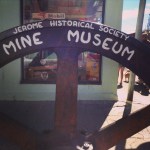





My own feeling there was not so haunted by the dead but by the living. I like the architecture and only stayed a short time, walking around and eating at a Mexican restaurant where I disliked the food and service. Something felt great about leaving the town and driving off the hill. Later I reflected on that whole experience. I do plenty of planning when I travel, and then allow instinct to guide me when I arrive as much as possible. I went up to Jerome on a whim, just to see it. I bought a beautiful glass from an artist, walked around town and bought a 15 minute psychic reading in the basement of the Jerome Historical Society building. I have not often done readings. This was the 5th time in my life. I was allowing my gut feeling to operate since I had no agenda and was not expecting a reader to be sitting in the history museum with a little tent for privacy. I thought, “Why not? This is as good a way as any to get in touch with the spooks of the area.” Her price was reasonable and she did not try to put me on in any way. A good psychic insight sinks in over time, and that is how her reading is working for me. Leaving and pondering the message I wavered about making a decision to eat in a restaurant. I was not sure I wanted to stay. I entered a Mexican place that really suited my taste in decor. I was instantly put off by very unfriendly service and a feeling this was not the place for me to eat. The server ignored me for a full 5 minutes while talking and joking with locals at the bar. I sat through that clear message and ordered food anyhow. I liked nothing about the food and felt the service deserved an F. That was one reason I felt good leaving the town. I ended Jerome on a bad note, and had only myself to blame. I blatantly ignored my own intuition.
Spooks always have the exact same message for me, in a few different forms. I have the ability to size up situations accurately and much more quickly than most people. I don’t say this to boast, but it is a gift I have. I instantly know if someone is lying, even before they say the words. I believe we all come with assorted psychic gifts or talents that we may ignore or develop as we go through life. Our own trust is all we need to check the accuracy of our gut feelings. Upgrade yourself to a belief in your own instincts. If ghosts are around, that is where you can find them. If you are looking for a great view and some possible paranormal activity I highly recommend you go to Jerome, AZ.


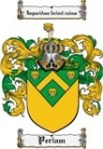
My 13th great-grandfather was an English judge who, in 1593, rose to the top position of Lord Chief Baron of the Exchequer and was knighted by Queen Elizabeth I. He was one of the judges who tried Mary Queen of Scots in 1586, and was involved in several other big treason trials of the age and was given the office of Chief Baron of the Exchequer in 1593. He was a Governor of Crediton Church and twice church warden. educated in Exeter and then at Exeter College, Oxford where on 25 April 1551 he was elected fellow. He resigned his fellowship some months later and went to London where he eventually studied law at the Middle Temple, being called to the bar in 1565. A slight wobble in his career occurred in 1568 when, after being summoned to Ireland by Sir Peter Carew to help him prosecute an ultimately successful claim to an Irish barony, he received an unexpected appointment as judge under the prospective President of Munster, Sir John Pollard. By writing to Sir William Cecil and earnestly petitioning the Privy Council, mentioning his wife and children and delicate state of health, he seems to have been able to avoid the transfer to Ireland altogether. Thereafter his rise through the legal ranks was steady—in 1575 he became serjeant-at-law for the Michaelmas term, and on 13 February 1581, a Judge of the Common Pleas. The ultimate honor came in January 1593, when he was promoted to Lord Chief Baron of the Exchequer, and knighted.
William Periam (1534 – 1604)
is my 13th great grandfather
John Periam (1510 – 1573)
son of William Periam
Mary Periam (1531 – 1552)
daughter of John Periam
Robert Sweet (1552 – 1578)
son of Mary Periam
John Issac Sweet (1579 – 1637)
son of Robert Sweet
James Sweet (1622 – 1695)
son of John Issac Sweet
Benoni Sweet (1663 – 1751)
son of James Sweet
Dr. James Sweet (1686 – 1751)
son of Benoni Sweet
Thomas Sweet (1732 – 1813)
son of Dr. James Sweet
Thomas Sweet (1759 – 1844)
son of Thomas Sweet
Valentine Sweet (1791 – 1858)
son of Thomas Sweet
Sarah LaVina Sweet (1840 – 1923)
daughter of Valentine Sweet
Jason A Morse (1862 – 1932)
son of Sarah LaVina Sweet
Ernest Abner Morse (1890 – 1965)
son of Jason A Morse
Richard Arden Morse (1920 – 2004)
son of Ernest Abner Morse
Pamela Morse
I am the daughter of Richard Arden Morse
Crediton Parish Church
Sir William Peryam
1534 – 1604Introduction
On the north side of the chancel of the church (on the left-hand side, looking towards the altar), is the big tomb of Sir William Peryam, an important individual both in local and national terms in the last years of the reign of Elizabeth I. Peryam was one of the judges who tried Mary Queen of Scots in 1586, was involved in several other big treason trials of the age and was given the office of Chief Baron of the Exchequer in 1593. He was a Governor of Crediton Church and twice church warden; he bought the estate of Little Fulford, east of Crediton in the 1580′s and built a manor house there, the estate being renamed Shobroke Park in the early eighteen-hundreds.
The Tomb
The tomb shows the judge reclining, his head arms propped up with his right hand, beneath him the seven ladies of his life – his three wives and four daughters (he had no sons); above him are the Peryam arms.
Family
William Peryam was born in Exeter in 1534, second son of John and Elizabeth Peryam. His family was a well-connected one, he was a cousin of Sir Thomas Bodley, founder of the famous Bodlean Library in Oxford. His father was a man of means and was twice mayor of Exeter (he died during his second term of office in 1572).William’s brother, John, was also twice mayor of the city and was in office when the Spanish Armada appeared off Devon in 1588.
Education & Career
William Peryam was educated at Exeter College, Oxford, where he was elected fellow in 1551 at the age of 17.
A Lawyer Still Quoted Today
In 1553 he was admitted to the Middle Temple and was one of Plymouth’s MP’s from 1562 until 1567, being called to the bar whilst at Westminster – the duties the average backbencher weren’t particularly arduous in Tudor times! His arms, which can be seen at the top of the tomb, are still to be found in the hall of the Middle Temple. There are records of his involvement in some mid-Devon cases around the time of he became a QC; in one (1566) he became a trustee of the locally important Dowrish estate in Sandford. In 1568 he was appointed as a justice in Ireland, serving Sir John Pollard, President of Munster. Quite a lot of correspondence from his time in Ireland survives in State Papers. An amusing letter tells of his reluctance to return to Ireland without Sir John, who was suffering from gout. Also on record from this time is the successful attempt he made (with the help of John Hooker, the Exeter antiquary) in 1569, to reclaim the Barony of Odrone on behalf of Sir Peter Carew – from whose family he was to buy his land in Crediton ten years later. He was made a serjeant-at-law in Michaelmas term of 1579 and in February 1581 was appointed a Judge of the Court of Common Pleas. In 1586 he was one of the judges at the trial of Mary Queen of Scots . When Sir Christopher Hatton retired from office in 1591, Peryam was named as one of the Judges of the Chancery Court and during the last two decades of the sixteenth century and the first years of the seventeenth was involved in a number of “show” trials of State offenders including, among others, those of the Earl of Arundel (originally imprisoned in 1585 for helping Mary, then accused of having a mass said in support of the Armada in the Chapel of the Tower of London in 1588 and tried for, and found guilty of, treason – although the death sentence was never carried out, in 1589), Sir John Perrot (tried and found guilty for what could be described as “mild” treason in 1592, but not executed) and that of the Earl of Essex (found guilty of treason for organising an attempted coup; he was tried and executed in 1601). The precedents Peryam set and legal decisions made in these and other cases are still quoted in the legal textbooks. In 1593 Peryam was appointed Chief Baron of the Exchequer, where he presided for twelve years. He received the knighthood which was usual with that office.
Peryam’s Death
He died at Fulford Park on 9th October, 1604. The date of his death is shown on his tomb inscription as 1605. It seems likely that the tomb was erected as many as fifteen years after his death (ie during the lifetime of his widow), by which time her memory may have been fading a little because, although the Parish Registers for 1603 – 7 are missing from the Devon Record Office, papers in the National Archive clearly show that the grant of his office of Chief Baron of the Exchequer was made void on October 9th, 1604, so the earlier date of death should be taken as the valid one.
Wives
Peryam married three times. His first wife was Margery, daughter of John Holcot of Berkshire; there were no children of this marriage.
His second wife was Anne, daughter of John Parker of North Molton by whom he had four daughters, Mary, Elizabeth, Jane and Anne who all married “well”.
His last wife was Elizabeth, a daughter of Sir Nicholas Bacon (a fellow government law officer) – who outlived William by twenty years. She was related by marriage to William Cecil, Lord Burghley – in fact, Peryam was related either directly, or by marriage, to many court figures of Elizabeth’s reign.
Shobroke & Holy Cross
Peryam had bought Little Fulford, or Fulford Park (which became Shobroke Park) from Sir Richard Carew in the early 1580′s and had constructed “a fayre dwelling house” there – a predecessor of the Georgian house which was burnt down in the 1940′s. He left the house and the estate to his daughters who sold it to his brother, Sir John Peryam. He in turn sold it to the Tuckfields, whose descendants, the Shelleys, still own the estate. Peryam was a churchwarden of Holy Cross in 1589 and 1600 and was also a Governor. In 1578 he leased a manor in Sidmouth from Sir Walter Raleigh and his two sons, Carew and Walter The document still survives in the Devon Record Office. It is carefully preserved because the signatures of the Raleighs are on it! That house is now the Woodlands Hotel in Sidmouth, which, although it was substantially altered in the early nineteenth century, preserves much of the Elizabethan fabric. His widow, Elizabeth, endowed a fellowship and two scholarships in his name in Balliol College, Oxford in 1620. William Peryam’s only sibling, his brother, John, also had a very distinguished career. He was mayor of Exeter in 1587/8 and in 1598/9. Also knighted, he was a liberal benefactor to the city and to Exeter College, Oxford – and his widow endowed fellowships and scholarships to that college A panel portrait of an enrobed Sir William hangs in the National Portrait Gallery.
He can be found buried with his family. The inscription on his elaborate tomb says:
Heere lyeth the body of Sr. William Peryam, knight, who in AD 1579 was made one of the justices of the Court of Comon Pleas & from thence in AD 1592 was called to bee Lord Cheefe Baron of the Exchequer. He married first Margery daughter & heir of Jo(hn) Holcott of Berk(shire) Esqr. widow of Richadr(sic) Hutchenson of Yorksheire Esqr.; secondly Anne daughter of John Parker of Devon Esqr.; lastly Elizabeth daughter of Sr. Nic(holas) Bacon knig. Lord Keeper of the Great Seale. Hee hadd only yssue by his second wife, 4 daughters & heires, viz, Mary theldest (sic) married to Sr. Will(iam) Pole of Devon knig.; Elizabeth the 2 married to Sr. Ro(bert) Bassett of Devon knig.; Jane the 3 first married to Thomas Poyntz Esqr. son & heir of Sr. Gabriell Poyntz of Ess(ex) knig.; afterward to Tho(mas) Docwra of Hertf(ordshire) Esqr.; Anne the youngest married to Will(iam) Williams Esq. son & heir of Sr. Jo(hn) Williams of Dorsett knig. All wch. his daughters & heirs have yssu now lyvinge by their severall husbands. He dyed 9 octo(ber) Ao.Do. 1605 (sic) in the 70the yeere of his age much & worthely reverenced for his religeous zeale, integrity & profound knowledge in the lawes of the realme. Dormit non est mortuus (he sleeps, he is not dead).
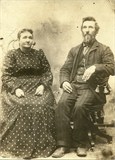
Sarah LaVina Sweet and Daniel R Morse
My paternal 2nd great-grandmother was born in upstate New York in 1840. She married Daniel Rowland Morse, also from New York, in Illinois in November, 1858. She and her parents had moved to Polo, Illinois, which was a stop on the underground railroad. It seems that Daniel joined them on the journey. The couple’s first son was born in Illinois. The young family returned to New York to live from 1860 until 1875. My great grandfather Jason was born during that time. By 1879 they had moved to Kansas to homestead near the Oklahoma Territory border outside of Coffeyville. She remained in her home until after her husband died, then she moved next door to her daughter’s home. She and Daniel are buried in a private cemetery ( her daughter’s family land) near her Kansas home. I visited the courthouse and read all the probate papers that applied to her estate. I have some copies of letters and court findings that indicate what many had implied, that my great-grandfather Jason was not very well liked or trusted. She brought her son down from New York to settle her affairs after she died. My ancestor was conspicuously absent from the business proceedings of her estate. It turned out that court judgements against him amounted to more than his share of the inheritance. Moving to the wild wild west as a teen was perhaps not the best environment for Jason’s upbringing. My grandfather Ernest ran away from home as a very young man because he and his brother did not like their stepmother or her daughters. In 1900 Ernest was living on the Cherokee Nation with his new stepmother. In 1910 Ernest is found living with Sarah and Daniel at their house, working as a farm worker. Later Ernest became a milkman with a horse drawn delivery cart. I am sure Sarah had a big part in raising her grandsons. It was an amazing time in history. It was not so easy to survive wild west adventures in those days. I am very lucky that my pioneer ancestors made it. I did not see the grave when I was in Kansas, but I know where it is for the next visit. Someone has taken very good care of them.
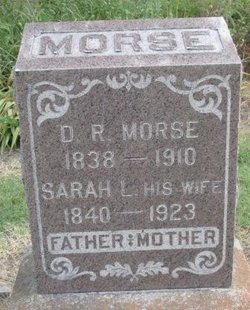
Sarah LaVina Sweet and Daniel R Morse
Sarah LaVina Sweet (1840 – 1923)
is my 2nd great grandmother
Jason A Morse (1862 – 1932)
son of Sarah LaVina Sweet
Ernest Abner Morse (1890 – 1965)
son of Jason A Morse
Richard Arden Morse (1920 – 2004)
son of Ernest Abner Morse
Pamela Morse
I am the daughter of Richard Arden Morse
Professional pumpkin carving has reached a high level of skill and art. I admire food art of all kinds, and am used to seeing intricate melons and fruits carved by Asians into extremely detailed shapes. Now we can boast of our own home grown American food carver who creates extreme masterpiece pumpkin carvings. While others are hoisting and throwing them Ray is turning the autumn symbols into amazing sculptures. Like a sand mandala, a pumpkin sculpture is born to die. The ephemeral nature of the craft makes it all the more special. Ray shares his technique with kids in school in hopes of nurturing the next pumpkin Da Vinci. If you have considered carving a jack o lantern this year, why not attempt a bust of your mail carrier, or of your child’s teacher? Good luck! Happy Halloween, Gentle Readers.

Cheers!
I am a hedonist. This archetype is a prominent part of my persona. I don’t mind being considered to be a Sybarite. I think I might inspire some people to experiment with allowing a little bit more pleasure into life when they see it does not seem to do me any harm. Art, taste, harmony of elements are all of great importance to me. Often it is much better for me to go to a museum alone because I normally want to stay at least twice as long as most others. I also adore very long, lingering dining experiences that are memorable because of the good company and good cheer. My good friend and fellow hedonist Eric Ellenberg and I once went to the restaurant at the top of the World Trade Center for lunch (long before 9-11). The food and the view were grand. We stayed for hours and I remember it vividly. I have always been happy we went because now we could not if we tried. Most full on pleasurable experiences can’t be repeated. The synchronicity of the moment and all its glory comprise the ecstasy we feel, but that does not mean we should not plan and create pleasurable times. Authenticity is the main ingredient of truly memorable fun times. Holiday excess and obligation often conflict with inner peace and joy. Here are some ways to be festive without breaking the bank or cramming the schedule full of stressful events:
This season many Americans go into deeper debt. From now until next year we will be bombarded with advertising designed to drive the economy. This year you can avoid buyer’s remorse and debt by lighting your own way through the cold winter’s night. Be particular instead of excessive. Use discernment to create gifts and experiences that show how much you appreciate individual taste. I wish all the Gentle Readers good health and financial freedom this winter. Stay solvent, my friends. It is much more festive in the long run.
October brings ancient celebrations and rituals to life. Samhain, Halloween, Guy Fawkes Day,as well as Divali, fall at the end of October and beginning of November. They have in common ritual use of fire as part of the celebrations. As we enter the darkest part of the year in the northern hemisphere we honor the dead and invite them to partake in their former earthly pleasures. Day of the Dead is only one of the cultural holidays designed around remembering. The season is the right time to let go, to clean, clear, and remember. This is possible without any formal outward practice. You don’t have to dress up or build an altar to honor this change of season.
We all go through dark times in life. Lighting up the sky with fires and fireworks reminds us of energy shared, passed on, and finally no longer needed. You don’t need to be religious to understand the sacred nature of the inheritance of our human life. To be able to walk on the earth is not a small gift. Without the generations that survived before us we would not exist. We may notice a feeling of guidance from the ancestors, or simply a reverence for those who created our existence out of their own. I sometimes feel a deep sense of regret when I consider the lives of my ancestors. Who knows if that comes from me or from them. What can be known is that our connection to our ancestors is permanent. What we can learn from knowing about them and from imagining the way they lived gives us some insight into our own strengths and weaknesses. The ancestors know about those strengths and follies because they had them before we did, under different circumstances. I believe they would like for us to learn from their experiences.
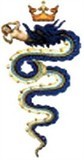
Visconti Coat of Arms
Coat of Arms of the Visconti of Milan depicting the biscione, a serpent who appears to be swallowing a human.
The effectual founder of the Visconti of Milan, Ottone, wrested control of the city from the rival Della Torre family in 1277.
The family, once risen to power, loved to claim legendary versions about its origins. Fancy genealogies were en vogue at the time, while established facts reflect quite sober and almost humble beginnings in the lesser nobility. The branch of the Visconti family that came to rule Milan was originally entrusted with the lordship of Massino (nowadays Massino Visconti), a hamlet in lovely position over Lago Maggiore, where they were in charge since the twelfth century as archiepiscopal vassals.
It is thought that the Milanese Visconti had their origins in a family of capitanei (cfr. the modern surname Cattaneo) whom archbishop Landulf of Milan (978-998) had granted certain feudal holdings known as caput plebis (at the head, likely in geographical and not hierarchical sense, of the pieve, an ecclesiastical lesser subdivision). A document from the year 1157 says the Visconti were holders of the captaincy of Marliano (today Mariano Comense); late chronicler Galvano Fiamma confirms this version. Decades before that, surely before 1070, they had gained the public office of viscount, to be later inherited down the male line (Biscaro, ASL, “I maggiori dei Visconti di Milano”). Soon the family dispersed into several branches, some of which were entrusted fiefs far off from the Lombard metropolis; the one which gave the Medieval lords of Milan is said to be descended from Umberto (d. in the first half of the 12th century).
The Visconti ruled Milan until the early Renaissance, first as Lords, then, from 1395, with the mighty Gian Galeazzo who almost managed to unify Northern Italy and Tuscany, as Dukes. Visconti rule in Milan ended with the death of Filippo Maria Visconti in 1447. He was succeeded, after a short-lived republic, by his son-in-law Francesco I Sforza, who established the reign of the House of Sforza.
Visconti rulers of Milan
Ottone Visconti, Archbishop of Milan (1277 – 1294)
Matteo I Visconti (1294 – 1302; 1311 – 1322)
Galeazzo I Visconti (1322 – 1327)
Azzone Visconti (1329 – 1339)
Luchino I Visconti (1339 – 1349)
Bernabò Visconti (1349 – 1385)
Galeazzo II Visconti (1349 – 1378)
Matteo II Visconti (1349 – 1355)
Gian Galeazzo Visconti (1378 – 1402) {1st Duke of Milan & nephew of Bernabò Visconti}
Giovanni Maria Visconti (1402 – 1412)
Giacomo Visconti (1412 – 1447)

Obizzo Visconti
Obizzo Visconti (1198 – 1266)
is my 22nd great grandfather
Theobald Visconti (1220 – 1276)
son of Obizzo Visconti
Matteo I Visconti (1250 – 1322)
son of Theobald Visconti
Stefan Visconti (1289 – 1327)
son of Matteo I Visconti
Bernabo Lord Milan di Visconti (1319 – 1385)
son of Stefan Visconti
Veridis Duchess Austria Visconti (1352 – 1414)
daughter of Bernabo Lord Milan di Visconti
Ernst I “Ironside” Archduke of Austria Habsburg (1377 – 1424)
son of Veridis Duchess Austria Visconti
Katharina Archduchess Austria Von Habsburg (1420 – 1493)
daughter of Ernst I “Ironside” Archduke of Austria Habsburg
Christof I VanBaden (1453 – 1527)
son of Katharina Archduchess Austria Von Habsburg
Beatrix Zahringen (1492 – 1535)
daughter of Christof I VanBaden
Sabine Grafin VonSimmern (1528 – 1578)
daughter of Beatrix Zahringen
Marie L Egmond (1564 – 1584)
daughter of Sabine Grafin VonSimmern
Richard Sears (1590 – 1676)
son of Marie L Egmond
Silas Sears (1638 – 1697)
son of Richard Sears
Silas Sears (1661 – 1732)
son of Silas Sears
Sarah Sears (1697 – 1785)
daughter of Silas Sears
Sarah Hamblin (1721 – 1814)
daughter of Sarah Sears
Mercy Hazen (1747 – 1819)
daughter of Sarah Hamblin
Martha Mead (1784 – 1860)
daughter of Mercy Hazen
Abner Morse (1808 – 1838)
son of Martha Mead
Daniel Rowland Morse (1838 – 1910)
son of Abner Morse
Jason A Morse (1862 – 1932)
son of Daniel Rowland Morse
Ernest Abner Morse (1890 – 1965)
son of Jason A Morse
Richard Arden Morse (1920 – 2004)
son of Ernest Abner Morse
Pamela Morse
I am the daughter of Richard Arden Morse
OBIZZO Visconti (-after 1258). m FIORINA Mandelli, daughter of RUFFINO Mandelli & his wife Aldesia Pietrasanta. Obizzo & his wife had two children:
a) TIBALDO Visconti (-beheaded Gallarate 1276). The Annales Mediolanenses record that “Archiepiscopum Ottonem…Tibaldi nepotis sui” was beheaded “in Galerate” in 1276 . m ANASTASIA Pirovano, niece of Cardinal Uberto Pirovano Archbishop of Milan, daughter of — (-1276, bur [Milan San Eustorgio]). The primary source which confirms her parentage and marriage has not yet been identified. Tibaldo & his wife had [four] children:
i) MATTEO [I] Visconti (Invorio 15 Jul 1250-Crescenzago 28 Jun 1322). Giovanni di Musso´s Chronicon Placentinum records that “Dominus Mafæus Vicecomes nepos Domini Ottonis Vicecomitis Archiepiscopi Mediolani” was installed as “Populi Mediolani Capitaneus” in 1287 and shortly after as “Dominus Generalis civitatis Mediolani” . Lord of Milan.
– see below.
ii) UBERTO Visconti (-22 Apr 1315, bur Milan Dominican Church). The Annales Mediolanenses record the death in 1315 of “Nobilis Miles Ubertus Vicecomes frater magni Matthæi Vicecomitis” and his burial “in conventu Fratrum Prædicatorum”.
iii) [STEFANO Visconti (-1327, bur Milan San Eustorgio). The Annales Mediolanenses record the death in 1327 of “nobilis Miles Stephanus Vicecomes” and his burial “apud Sanctum Eustorgium cum matre sua” . The source does not specify Stefano´s parentage but it is possible that he was another otherwise unrecorded brother of Matteo [I] Visconti Lord of Milan.]
iv) [OTTORINO Visconti ([12/14] Oct 1336, bur Milan San Eustorgio). The Annales Mediolanenses record the death in 1336 of “nobilis Miles Ottorinus Vicecomes” and his burial “in ecclesia Sancti Eustorgii” 15 Oct. His place of burial suggests that Ottorino may have been the brother of Stefano Visconti.]
b) PIETRO Visconti (-after 1301). The Annales Mediolanenses record that “Petrus Vicecomes Dominus Seprii et frater patris Matthæi” rebelled against “Matthæum Vicecomitem Dominum civitatis Mediolani” in 1301 but was captured and held “in castro de Serezano” . m —. The name of Pietro´s wife is not known. Pietro & his wife had one child:
i) daughter . Her parentage and marriage are confirmed by the Annales Mediolanenses which record that “Petrus Vicecomes Dominus Seprii et frater patris Matthæi” incited “Ruscam Dominum civitatis Cumanæ generum suum” to rebel against Matteo [I] Visconti Lord of Milan in 1301, the succeeding passage recording “Conradus Rusca Dominus civitatis Cumanæ” among the rebels . m CORRADO “Rusca” Signore di Cuma, son of — (-after 1301).

Clarkdale, AZ
I bought the audio book Falling Upward at the suggestion of a fellow student at a conference I attended last June. I encountered the contemplatives for the first time, and had a lot to learn from them. James Finley guided us for a meaningful and educational weekend. I owned an audio book by Dr Finley and Carolyn Myss covering the subject I have already heard at the conference, transcending trauma. This complex idea deserved a review, so on my recent car trip I listed to the trauma book to deepen my understanding. On my trip back home I decided to hear Richard Rohr read his own book, Falling Upward. I started from Clarkdale before dawn and arrived in Tucson about 10 in the morning. Most of the drive was really scenic, but even Phoenix traffic was bearable because I was enjoying the book so thoroughly. I have one disc still to hear, but I am fully ready to recommend this book to anyone, especially to those over 40. This is another way to look at retirement planning, from a spiritual perspective.
Falling Upward explains spirituality as it pertains to the two halves of life. In other words, humans are involved in the giant birth/death/recycle action of the universal field. There is a time for building up, and a very appropriate time for breaking down. All of nature does this constantly. Although Mr Rohr is a Franciscan and a Catholic priest, his point of view is not all presented from a theological stance. He knows history very well and uses his experience in the study of initiation rites of native people around the world to draw large conclusions. His conviction is that humans are capable of taking a grand excursion of the soul. He reminds us that all saints and holy figures leave home on a big crazy journey, only to return to home. The journey represents necessary suffering that teaches the mystery beyond the suffering. In the second half of life this death of the perceived self, or being in the world but not of it, can lead to enlightenment. In our culture many of us cling to the structures we built in our youth as if there is nothing greater or beyond our own creative control. Falling Upward involves letting go to the point that previous reality fades from view as we float to our intended home in eternal bliss. Sound kooky??? Well, it is. All the saints and prophets were considered to be out of their minds. Many were killed. Before the truth sets you free it generally makes you appear to be crazy.
I like to hear authors read their own books to me. I feel like it becomes more personal. This one is very special because I had never heard of Richard Rohr before his fan told me about him last June. Now I am a huge fan too. I invite you to listen, gentle reader. I could make a big difference in the end.

Falling Upward

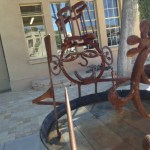

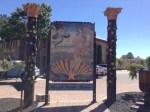




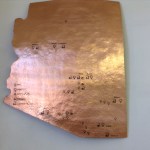


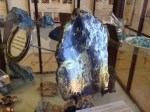
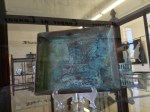


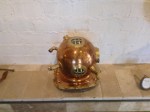
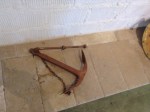

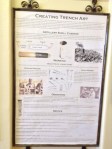


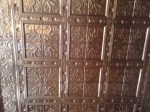

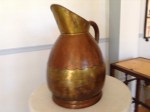


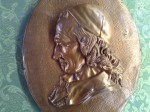


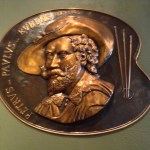


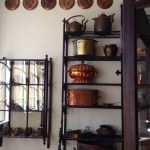
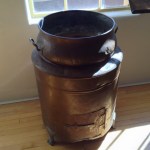

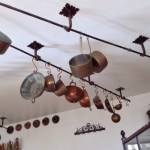


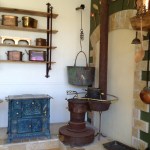

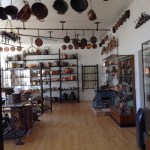




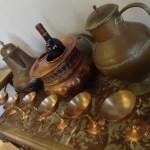

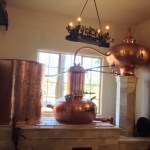
One highlight of my recent trip to the historic and supposedly spooky Historic 89A from Cottonwood to Jerome was the new museum housed in the old Clarkdale high school. This old building with giant windows lets in an abundance of natural light. This is really the perfect place to display copper. Jerome, the mining town up the hill, is a famous ghost destination and artist colony. There was a very large copper mine that brought wealth to the town. The family that has started the museum owns a copper shop in Jerome. They rent the ground floor of the high school building, and rent the upstairs to residential tenants who serve as security at night. I think it is a great gig to live upstairs because the view, the location, and the fact that the copper art is always downstairs make it uniquely attractive.
The very extensive military and kitchen collections are on permanent loan from private collectors. There is a temporary collection of antique tin cookie forms, mostly Santas, but bunnys and other holiday shapes as well. I learned a lot from the extensive charts and informative posters. The museum covers the history, the myth and meaning, the mining, and the art that resulted. I love the look of copper, but appreciate the other qualities it has, such as antibacterial. Everything is covered well and the staff (owner) checks in frequently to see if the patrons have questions about the exhibits. I saw him take great care and a lot of time when kids were visiting with parents. There is no formal tour, but the space is small and the guest is invited to ask for more guidance. I normally spend an extra long time in museums, and this was no exception. I was fascinated and needed to look at all the detail. I noticed other patrons were also sitting down and spending time looking deeply at the displays. One of my favorite rooms contains spent artillery shells from WWI that were turned into “trench art” by soldiers. I believe anyone would enjoy seeing this museum. It has artistic and historic value displayed in a place that makes it shine. If you are in the Clarkdale area to ride the train, don’t miss this awesome museum just around the corner from the train station.
 mermaidcamp