mermaidcamp
Keeping current in wellness, in and out of the water
You can scroll the shelf using ← and → keys
You can scroll the shelf using ← and → keys

green passages
People tell stories about the time before the stone wall was built. The streams and rivers flowed freely and served everyone as they went by. Water to run small mills and to irrigate crops was plentiful and easy to find. Family farmers subsided and even thrived in years when the weather was favorable. The community members provided for each other, and the simple agricultural life was comfortable. They had plenty of food, shelter, and water.
Progress came to the area in the form of a land buy out by a large estate owner who wanted to experiment in modern farming techniques. His ignorance of nature combined badly with his lame and greedy attitude toward those with deep knowledge of working the land. He changed the landscape, moved the waterways to suit his purposes, and set out to build an empire. He had a monopoly on all the waterways in the valley, having sewn up all the land on which the tributaries flowed. His signature move was a large stone wall he built. It stood in the middle of stream, with tunnels to handle the water as it flowed beneath the structure. He was secure and pleased with his conquest of this natural resource when all hell literally broke loose. With a crack of thunder and a flash of lightening the sky broke open with a stormy and deadly response to his lack of respect for Mother Nature.
The flash flood poured over all the banks and rushed through the canals and tunnels like an angry dragon. Destruction and erosion brought famine to the land, once ripe and productive. Once the greedy land owner gave up the ghost the land itself returned to a riparian state. The farmers did not return, so the land has been fallow for centuries. It no longer feeds or shelters people. The natural world has taken the place of the former residents. The streams flow sweetly and green moss covers the ancient stone as if nothing had ever happened. All is forgotten.
#writephoto
This slice of fiction is a take on the prompt of this week by Sue Vincent. Visit Sue’s Daily Echo to read, comment, or submit your own story or poem.
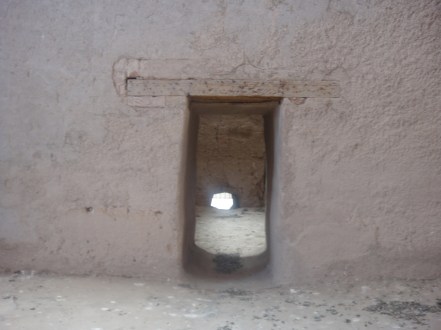
Casa Grande Ruins
There is no rewind button for the story of your life
The plot thickens when you fall asleep, depleting shelf life
There is no knowledge of the the time that remains to spend
It could go on forever, or it could suddenly crash, burn, and end
Nature takes time to produce majesty, power, and wonder
In a flash floodwater, centuries of culture are torn asunder
Watch your past for hints of what will reveal itself in the present
Karma is waiting with situations you will not be able to circumvent

Join poets around the world reading, writing, and reciting poetry in the month of April. Follow the hashtags on social media, and find new poetry here, at the #NaPoWriMo site. Try your hand at writing a poem using one of the many prompts available all month. Enjoy!!
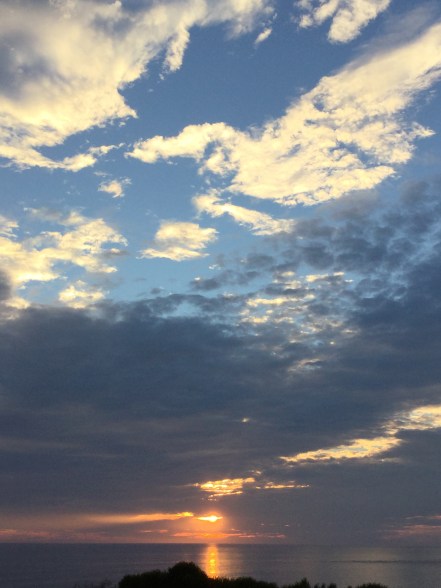
gathering storm
The deck heaved and moaned under the pressure of the storm
No crew, no passengers, were brave enough to go outside
They felt a certain doom as the flooded staterooms forewarned
Death by drowning on the high seas, washing ashore with the tide
No lifeboat nor anchor remained to offer a chance of survival
Lost in the darkness, tossed by high winds, this ship awaits the arrival
Of the grimmest reaper of all, Neptune’s servants fish for treasure
Treacherous currents and winds aloft will assist with the desperate measure
Beware of dreams that drag you from your own familiar shore
Your stable secure feeling may be impossible to restore
Join writers all over the world creating poetry in the month of April. National Poetry Writing Month is for everyone. Find some new material, or submit a piece of your own under the hashtags above, or at the #NaPoWriMo site.

Cactus in bloom
What happened to our capacity to judge complete dreck from veracity?
How low will we need to go before we recognize the well disguised foe?
Supporting wolves in sheep’s’ clothing will replace our peace with loathing
Pull the wool from over your eyes, look directly at the reasons they lie.

Please join poets from around the world to ride the poetry train in April. Read, write, recite, or compete in one of the many contests. Check out the action here.
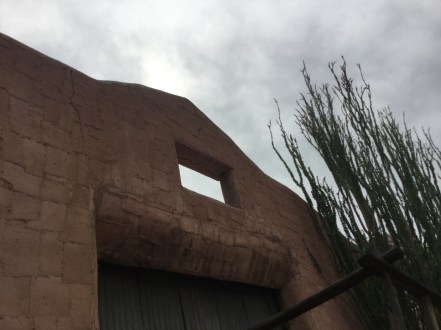
facade
What is the worst band of torture ever known to human kind?
I believe it is tedium, designed to numb the mind.
The orders and the triplicate files of meaningless transactions
Fill the time and suck the life out of the worker bees who serve
The whimsey of the ruling class with the resources and the nerve
To spend without repentance, to waste, to make improvidence
A privilege they perceive is granted to them for outstanding cognizance


The phrase self care is popular these days. I personally am very happy to see this concept become a trend. For far too long high maintenance has been praised as a status to which we should all aspire. Personal trainers, stylists, shoppers,, chefs, and spin doctors of every sort are employed taking care of the needy and the wealthy who have no life skills to care for themselves. I enjoy personal care and attention as much as the next person, but I believe that by turning over too much personal care to professionals one becomes a product more than a zesty, lively expression of our own personality. It is vital to get down to basics when we define self care. It must be different for each individual because we each prefer unique ways of being soothed, pampered, or restored. By taking responsibility for one’s own pampering one discovers new and valuable ways to keep our bodies and minds healthy. There is no single formula, but there are elements that work well in combination to create a self care ritual or practice.
Personal time to recharge and invigorate can be used in all kinds of ways. Here are some ideas to try:
I had to mention the bath because this is the classic way people think of self care. I agree that a long soak in a tub with some essential oils can be just what is needed to restore vitality. Not everyone is a bath person. I encourage you to look around for ways to take care of yourself as only you can. I enjoy trying photography in nature. Sometimes I even produce something worth sharing. Enjoy, gentle reader. You are in charge of you.
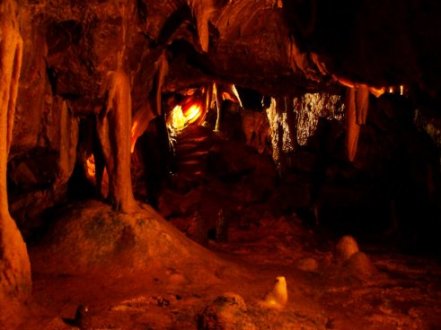
Hades
His death was sudden and unexpected, leaving matters in disarray at home, at his business, and with his students. The mystery school had been meeting in underground caves teaching secrets and rites of magical passage. Delphina became Fidel’s assistant, a priestess who inherited prophesy and ritual magic from her people, who came from an island with a volcano. When the volcano erupted few survivors managed to make it to safety. Delphina and her grandmother were saved by a passing ship. She was only 3 years old when she arrived in her new land, so she found it easy to adapt to the culture and language. Her grandmother suffered from nostalgia and yearned for a home Delphina did not remember.
Fidel lived next door and was her friend all through childhood. Her grandmother was cautiously approving of him, observing his exceptional nature. After her grandmother died Delphina moved in with Fidel’s family, and eventually married him. Their work together at the school replaced children and family in their lives. They dedicated themselves to higher truth and strict observance of their beliefs. She had grown up within the culture, and never questioned the motives or the fundamental beliefs of the elders. They always told her she was lucky to be alive, and she agreed. She did not question the essential mystery she had been taught. She believed that wealth was the most important and significant reward granted to the faithful. Her teachings reflected her willingness to do anything to acquire money. Fidel, whose very name meant faithful, was a son of Lucifer, trained in the art of stealing souls. He was raised in splendor and glorious excess to impress the rest of the populace. It never occurred to him that the rest of the inhabitants were there because they had been cursed. He never suspected their deep resentment of his position. He never even suspected who he was himself. His whole life was the ultimate betrayal.
While he was carrying out a ritual hypnotism in the inner sanctum of the cave, a group of hooded assassins stabbed him a thousand times with pitchforks. The shocking news reached Delphina as she descended into the chamber to deliver ritual wine. The large heavy gate at the top of the stairway slammed behind her, leaving her trapped with her husband’s murderers. This was the first inkling she had about her true location and her fate. She read the sign now facing her on the gate. “Hotter than the hinges of Hades”, was all it said.
#writephoto
This is a response to Sue Vincent’s photo prompt. Please visit to contribute your own story, read, or comment. There is a lively and interesting mix of writers who regularly contribute here. Enjoy!
Tune in to the eclipse. Go inward for the answers.
 The New Moon is always an intuitive phase. Set the best most hope full intentions because under this New Moon Solar eclipse [today, 959am, Northern Hemisphere ], the tone will be set for the new few months ahead. This is a time to look ahead with promise. This Solar eclipse energy will be intense yet hopeful. The Sun brightens and illuminates. The Moon will be absorbing all the “info” that the luminary has for us. Use this time to get your “download”. Perhaps take a moment to write out your intentions. Your hopes. Your dreams. What are the FEELINGS that you have about this new chapter? What new essence do you need in order to manifest these things? The Manifestation portal is opening with this Solar New Moon eclipse.
Pisces energy is naturally about intuition and reflection anyway. Always in search of deeper meaning. Get into that flow. Think of…
View original post 94 more words
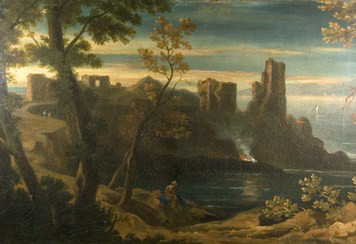
birthplace, Turnberry Castle


This is one of the ways I descend from the famous badass, Robert the Bruce:
Robert Bruce (1274 – 1329)
21st great-grandfather
Marjorie Bruce (1297 – 1316)
daughter of Robert Bruce
Robert II, King of Scotland, Stewart (1316 – 1390)
son of Marjorie Bruce
Robert Scotland Stewart (1337 – 1406)
son of Robert II, King of Scotland, Stewart
James I Scotland Stewart (1394 – 1434)
son of Robert Scotland Stewart
Joan Stewart (1428 – 1486)
daughter of James I Scotland Stewart
John Gordon (1450 – 1517)
son of Joan Stewart
Robert Lord Gordon (1475 – 1525)
son of John Gordon
Catherine Gordon (1497 – 1537)
daughter of Robert Lord Gordon
Lady Elizabeth Ashton (1524 – 1588)
daughter of Catherine Gordon
Capt Roger Dudley (1535 – 1585)
son of Lady Elizabeth Ashton
Gov Thomas Dudley (1576 – 1653)
son of Capt Roger Dudley
Anne Dudley (1612 – 1672)
daughter of Gov Thomas Dudley
John Bradstreet (1652 – 1718)
son of Anne Dudley
Mercy Bradstreet (1689 – 1725)
daughter of John Bradstreet
Caleb Hazen (1720 – 1777)
son of Mercy Bradstreet
Mercy Hazen (1747 – 1819)
daughter of Caleb Hazen
Martha Mead (1784 – 1860)
daughter of Mercy Hazen
Abner Morse (1808 – 1838)
son of Martha Mead
Daniel Rowland Morse (1838 – 1910)
son of Abner Morse
Jason A Morse (1862 – 1932)
son of Daniel Rowland Morse
Ernest Abner Morse (1890 – 1965)
son of Jason A Morse
Richard Arden Morse (1920 – 2004)
son of Ernest Abner Morse
Pamela Morse
I am the daughter of Richard Arden Morse
Robert The Bruce was born on 11 July 1274, probably in Turnberry Castle. He was descended from Scots, Gaelic and English nobility. His mother, Countess Marjorie of Carrick, was heir to a Gaelic earldom.
Robert’s grandfather, Robert Bruce ‘The Competitor’, was one of the claimants to the Scots throne. Bruce’s father, Robert de Brus of Annandale, fought in Wales for Edward I, was made governor of Carlisle Castle and fought on Edward’s side at the Battle of Dunbar in 1296. The Bruces refused to support John Balliol’s kingship and stayed close to Edward I. Balliol gave Bruce lands to the Comyns.
In 1298 Robert the Bruce became a guardian of Scotland alongside his great rival John ‘Red’ Comyn of Badenoch, and William Lamberton, Bishop of St Andrews. When Bruce and Comyn quarrelled Bruce resigned as guardian. In 1302 Bruce submitted to Edward I and returned ‘to the King’s peace’. Bruce married Elizabeth de Burgh.
Robert the Bruce’s father died in 1304. Bruce now had a viable claim to the throne. On 10 February 1306 Bruce met John Comyn of Badenoch at Greyfriars Kirk in Dumfries. A fight broke out, daggers were drawn and Bruce killed Red Comyn by the altar. The Pope excommunicated Bruce but Robert Wishart, Bishop of Glasgow, absolved him and made plans for Bruce to quickly take the throne. On 27 March 1306, Isobel of Fife, Countess of Buchan, crowned Bruce at Scone. His inauguration was small and hastily arranged but Robert Bruce was now King of Scots.
To Edward I the usurper King Robert was a rebel to be crushed. Edward’s reprisals were swift and brutal. Bruce was defeated at Methven. His wife, daughter and sisters were captured and imprisoned in England. Countess Isobel was locked in an iron cage at Berwick while Bruce’s brothers were hanged, drawn and beheaded. Bruce fled Edward’s wrath and spent a long winter hiding on the islands off the west coast and Ireland.
Bruce began a guerrilla war and struck at his enemies. His forces defeated Edward’s men at Glen Trool and Loudon Hill, then Edward I finally died in July 1307 – Bruce now faced Longshanks’ son, Edward II.
Bruce attacked his Scots enemies – destroying Comyn strongholds along the Great Glen and harrowing Buchan and the north east. His men cut a bloody swathe through Galloway and the south west.
One by one Scotland’s castles fell to Bruce and his supporters. Bruce had the castles ‘slighted’ – walls were torn down and defences were raised to the ground – the fortresses were made useless to an invading English army. As more castles fell more nobles pledged support to Bruce.
In 1314 Bruce watched Edward II’s army march toward Stirling Castle. Edward II had been given a year to relieve the besieged English force at Stirling or surrender the castle. Their forces met at the Battle of Bannockburn on 23 and 24 June 1314. Thousands died as the Scots defeated Edward’s army. The river was choked with the dead as Edward II fled the field and returned to England.
Bannockburn was not the end of Bruce’s struggle but it was a turning point. Captured English nobles were traded for his family and King Robert I gained international recognition. The Scots took the final English stronghold at Berwick in 1318 but Edward II still claimed overlordship of Scotland. Two years later the Scots sent a letter to the Pope – the Declaration of Arbroath – as part of an ongoing battle of words.
In 1327 Edward II was deposed by his Queen, Isabella. He was murdered in captivity. The English made peace with the Scots and renounced their claim of overlordship. The Black Rood, taken by Edward I, was returned to the Scots. It seemed that Bruce had finally won.
Robert the Bruce retired to Cardross near Dumbarton on the Firth of Clyde. He lived peacefully in a comfortable mansion house until his death on 7 June 1329. He asked that James Douglas take his heart on crusade. Bruce’s body was buried at Dunfermline Abbey, by his wife Elizabeth’s side, beneath an alabaster tomb. Bruce’s heart was finally buried at Melrose Abbey.
In the 1370s the Scots poet John Barbour wrote of Bruce, the hero-king, in ‘The Brus’.
Robert I, known as Robert the Bruce, was the king of the Scots who secured Scotland’s independence from England.
Here is another lineage:
Robert I “The Bruce” Bruce, King of Scotland (1274 – 1329)
21st great-grandfather
Margaret Bruce (1307 – 1346)
daughter of Robert I “The Bruce” Bruce, King of Scotland
John Glen (1349 – 1419)
son of Margaret Bruce
Isabel Glen (1380 – 1421)
daughter of John Glen
Isabel Ogilvie (1406 – 1484)
daughter of Isabel Glen
Elizabeth Kennedy (1434 – 1475)
daughter of Isabel Ogilvie
Isabella Vaus (1451 – 1510)
daughter of Elizabeth Kennedy
Marion Accarson (1478 – 1538)
daughter of Isabella Vaus
Catherine Gordon (1497 – 1537)
daughter of Marion Accarson
Lady Elizabeth Ashton (1524 – 1588)
daughter of Catherine Gordon
Capt Roger Dudley (1535 – 1585)
son of Lady Elizabeth Ashton
Gov Thomas Dudley (1576 – 1653)
son of Capt Roger Dudley
Anne Dudley (1612 – 1672)
daughter of Gov Thomas Dudley
John Bradstreet (1652 – 1718)
son of Anne Dudley
Mercy Bradstreet (1689 – 1725)
daughter of John Bradstreet
Caleb Hazen (1720 – 1777)
son of Mercy Bradstreet
Mercy Hazen (1747 – 1819)
daughter of Caleb Hazen
Martha Mead (1784 – 1860)
daughter of Mercy Hazen
Abner Morse (1808 – 1838)
son of Martha Mead
Daniel Rowland Morse (1838 – 1910)
son of Abner Morse
Jason A Morse (1862 – 1932)
son of Daniel Rowland Morse
Ernest Abner Morse (1890 – 1965)
son of Jason A Morse
Richard Arden Morse (1920 – 2004)
son of Ernest Abner Morse
Pamela Morse
I am the daughter of Richard Arden Morse
Both connect with Anne Dudley, my famous poet ancestor. One went through the Gordons for many generations, and the other went though the Kennedy family.
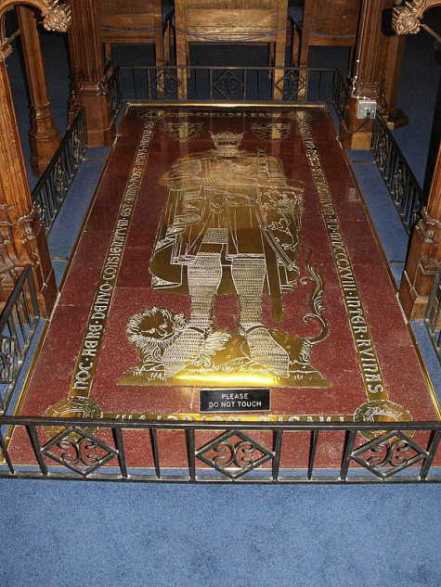
Robert’s grave
Robert was born on 11 July 1274 into an aristocratic Scottish family. Through his father he was distantly related to the Scottish royal family. His mother had Gaelic antecedents. Bruce’s grandfather was one of the claimants to the Scottish throne during a succession dispute in 1290 – 1292. The English king, Edward I, was asked to arbitrate and chose John Balliol to be king. Both Bruce and his father refused to back Balliol and supported Edward I’s invasion of Scotland in 1296 to force Balliol to abdicate. Edward then ruled Scotland as a province of England.
Bruce then supported William Wallace’s uprising against the English. After Wallace was defeated, Bruce’s lands were not confiscated and in 1298, Bruce became a guardian of Scotland, with John Comyn, Balliol’s nephew and Bruce’s greatest rival for the Scottish throne In 1306, Bruce quarrelled with Comyn and stabbed him in a church in Dumfries. He was outlawed by Edward and excommunicated by the pope. Bruce now proclaimed his right to the throne and on 27 March was crowned king at Scone. The following year, Bruce was deposed by Edward’s army and forced to flee. His wife and daughters were imprisoned and three of his brothers executed. Robert spent the winter on the island off the coast of Antrim (Northern Ireland).
Returning to Scotland, Robert waged a highly successful guerrilla war against the English. At the Battle of Bannockburn in June 1314, he defeated a much larger English army under Edward II, confirming the re-establishment of an independent Scottish monarchy. Two years later, his brother Edward Bruce was inaugurated as high king of Ireland but was killed in battle in 1318. Even after Bannockburn and the Scottish capture of Berwick in 1318, Edward II refused to give up his claim to the overlordship of Scotland. In 1320, the Scottish earls, barons and the ‘community of the realm’ sent a letter to Pope John XXII declaring that Robert was their rightful monarch. This was the ‘Declaration of Arbroath’ and it asserted the antiquity of the Scottish people and their monarchy.
Four years later, Robert received papal recognition as king of an independent Scotland. The Franco-Scottish alliance was renewed in the Treaty of Corbeil, by which the Scots were obliged to make war on England should hostilities break out between England and France. In 1327, the English deposed Edward II in favour of his son and peace was made with Scotland. This included a total renunciation of all English claims to superiority over Scotland. Robert died on 7 June 1329. He was buried at Dunfermline. He requested that his heart be taken to the Holy Land, but it only got as far as Spain. It was returned to Scotland and buried in Melrose Abbey.

President Donald Trump embraces several political stances important to his conservative evangelical base. This includes support for “religious liberty” legislation and exempting evangelicals from laws upholding lesbian, gay, transgender and bisexual rights. However, Trump does not demonstrate any of the beliefs that have historically characterized evangelicalism. Unlike the majority of American evangelicals, he does not…
via This 19th Century Movement Could Explain Donald Trump’s Faith — TIME

 mermaidcamp