mermaidcamp
Keeping current in wellness, in and out of the water
You can scroll the shelf using ← and → keys
You can scroll the shelf using ← and → keys
We are influenced daily, and there are people claiming to representing us daily, but we are unaware of most of it. As we forge our futures we find obstacles to happiness of both physical and spiritual natures. Our quest is never a solo, even if we think we act alone. We are slaves to certain beliefs and we ensalve others to our beliefs as much as we can. If we do not transform the way we look at our habits and our regrettable past behavior we are likely to be stuck in repeating, regretting, and then repeating the same patterns.
Metanoia is the concept of repentance that has been badly used and understood. Confession can be way to act temporarily sorry to absolve oneself of responsibility for past transgressions. As a practice it may teach that we are out of control, will repeat, and then feel very guilty about our behavior ad infinitum. This constant cycle of guilt and repeated undesirable action has little hope of creating liberation or happiness. The guilt is an almost certain sign that the action will be repeated. It is the currency of pain. Repentance of the depressing kind is a revolving door or shame leading to more guilt.
My favorite author, Thomas Moore, has written a new book, A Religion of One’s Own, which will be zapped into my Kindle in a few days. To warm up for this book he translated the Gospels from the original Greek language. To warm up for reading the new book I am reading Writing in the Sand, a book Thomas Moore wrote about the meaning of the Gospels. Chapter 2 of Writing in the Sand is about Metanoia, but not of the shameful kind. This word refers to a change of mind so profound as to cause a shift in vision. Thomas breaks down the literal meaning to bring a completely different sense to the word and what it represents. His knowledge of the original language brings back the meaning of the Gospels. I agree that we all need a spiritual and a soulful context for living. Thomas Moore is an ethical voice with a powerful message. I hope you will have a chance to read his work. It constantly inspires me.


Henry the Fat was my 20th great-grandfather on my mother’s side. He is also found on my father’s side of the tree. He was in the obesity vanguard..actually suffocated on his own fat long before it was fashionable. It was notable that he was the Count of Champagne and Brie. He sounds like a human foie gras experiment.
Henry I the Fat (French: Henri le Gros, Spanish: Enrique el Gordo) (c. 1244 – 22 July 1274) was the Count of Champagne and Brie (as Henry III) and King of Navarre from 1270. After a brief reign, characterised, it is said, by dignity and talent, he died in July 1274, suffocated, according to the generally received accounts, by his own fat.
Henry was the youngest son of Theobald I of Navarre and Margaret of Bourbon. During the reign of his older brother Theobald II he held the regency during many of Theobald’s numerous absences and was declared heir by his childless brother, whom he succeeded in December 1270. His proclamation at Pamplona, however, did not take place till March of the following year (1271), and his coronation was delayed until May 1273. His first act was the swear to uphold the Fueros of Navarre and then go to perform homage to Philip III of France for Champagne.
In 1269 Henry had married Blanche of Artois, daughter of Robert I of Artois and niece of Louis IX of France. He was thus in the “Angevin” circle in international politics. He came to the throne at the height of an economic boom in Navarre that was not happening elsewhere in Spain at as great a rate. But by the Treaty of Paris (1259), the English had been ceded rights in Gascony that effectively cut off Navarrese access to the ocean (since France, Navarre’s ally, was at odds with England).
Henry allowed the Pamplonese burg of Navarrería to disentangle itself from the union of San Cernin and San Nicolás, effected in 1266. He also granted privileges to the towns of Estella, Arcos, and Viana, fostering urban growth. His relations with the nobility were, on the whole, friendly, though he was prepared to maintain the peace of his realm at nearly any cost.
Henry initially sought to recover territory lost to Castile by assisting the revolt ofPhilip, brother of Alfonso X of Castile, in 1270, but eventually declined, preferring to establish an alliance with Castile through the marriage of his son Theobald to a daughter of Alfonso X. This failed with the death of the young Theobald in after he fell from a battlement at the castle of Estella in 1273.
Henry did not long outlive his son. He died with no male heir; the male line of the house of Champagne became extinct. He was thus succeeded by his only legitimate child, a one-year-old daughter named Joan, under the regency of her mother Blanche. Joan’s 1284 marriage to Philip the Fair, the future King of France, in the same year united the crown of Navarre to that of France and saw Champagne devolve to the French royal domain.
In the Divine Comedy, Dante Alighieri, a younger contemporary, sees Henry’s spirit outside the gates of Purgatory, where he is grouped with a number of other European monarchs of the 13th century. Henry is not named directly, but is referred to as “the kindly-faced” and “the father-in-law of the Pest of France”.
References
Henry I Enrique I LeGros Navarre (1244 – 1274)
is your 20th great grandfather
JOANNA NAVARRE (1273 – 1305)
daughter of Henry I Enrique I LeGros Navarre
Isabella France DeFrance House Capet (1292 – 1358)
daughter of JOANNA NAVARRE
Edward III – King of England – Plantagenet (1312 – 1377)
son of Isabella France DeFrance House Capet
John of Gaunt – Duke of Lancaster – Plantagenet (1340 – 1399)
son of Edward III – King of England – Plantagenet
Joan DeBeaufort (1375 – 1440)
daughter of John of Gaunt – Duke of Lancaster – Plantagenet
Duchess of York Lady Cecily DeNeville (1415 – 1495)
daughter of Joan DeBeaufort
Henry Holland (1485 – 1561)
son of Duchess of York Lady Cecily DeNeville
Henry Holland (1527 – 1561)
son of Henry Holland
John Holland (1556 – 1628)
son of Henry Holland
Francis Gabriell Holland (1596 – 1660)
son of John Holland
John Holland (1628 – 1710)
son of Francis Gabriell Holland
Mary Elizabeth Holland (1620 – 1681)
daughter of John Holland
Richard Dearden (1645 – 1747)
son of Mary Elizabeth Holland
George Dearden (1705 – 1749)
son of Richard Dearden
George Darden (1734 – 1807)
son of George Dearden
David Darden (1770 – 1820)
son of George Darden
Minerva Truly Darden (1806 – 1837)
daughter of David Darden
Sarah E Hughes (1829 – 1911)
daughter of Minerva Truly Darden
Lucinda Jane Armer (1847 – 1939)
daughter of Sarah E Hughes
George Harvey Taylor (1884 – 1941)
son of Lucinda Jane Armer
Ruby Lee Taylor (1922 – 2008)
daughter of George Harvey Taylor
Pamela Morse
I am the daughter of Ruby Lee Taylor
How is your relationship with time? A busy, rattled life may or may not bring satisfaction. One thing it can’t bring is free time. This is a gift you must find for yourself. How can we define free time? Is it doing something that is free of cost? Is it free form, without a preconceived schedule or goal? Is it free from all previous habits and delusional thinking? Clearing the schedule involves being clear about priorities. Find time in your life by observing carefully what happens to your time.
It is time to plant the seeds to be harvested later. Contemplative use of time and seasons brings meaning and depth to daily life. Without perspective we often fall deeply into habitual use of time that is both wasteful and depressing. The spark of new joy can be consciously brought into being by doing things differently on a regular basis. This can be as simple as taking a new path to work, trying a new food, an art gallery, or activity. It is not important to spend money to change the habitual use of time; It is important to notice how much time is invested in unhappy activities. We can distinguish between duties that are unpleasant and bad habits by confronting the inner trickster who will always identify with your shadow instincts. The trickster inhabits the emotional territory enforcing crazy concepts that keep you stuck in emotional sludge. Look for a tendency to make excuses and flake out on your own best intentions. Meditation is the remedy for trickster tendencies, because it clears the mind allowing spacious, free time.
We have a finite amount of time, and once it has been spent in one way, it can never be retrieved or recycled. As the new year approaches, why not take a new look at time and happiness? They are closely related.
Memories, traditions, and the ghost of Christmas Past visit everyone this time of year. Sometimes it is sad to compare the reality of rushing, spending, gifting, and manic activity with an ideal celebration to honor this time. Nostalgia for earlier times is not helpful in bringing about a better spirit of sharing now. How can we contribute to a brighter, more uplifting celebration?
This message was brought to you by citizens for a Clearer Holiday Purpose.
The artist reaches just beyond the normal senses to bring creation into being. There is strong motivation and emotion driving the artist to produce. The medium is not as important as full artistic expression. Some of us are not making any money from art, but still live our lives involved with creating. Cooking, gardening, and all normal day to day tasks can be done in artful ways. Art truly is in the eye of the beholder; A strong desire to design and deliver creativity to the world is all that is needed to be an artist.
Making a living at art is risky, and yet rewarding. The starving artist and the crazed genius artist are examples of the shadow aspect of this archetype. I used to make my living as a potter. I worked at a school mixing glazes and firing the kiln. I was paid in clay, glazes and firing; I had to turn that into money by selling my work. I was very good at being a starving artist and never starved at all. I remember that time as an extremely abundant phase, full of friends, travel, and unlimited creative freedom. Clay is a fast medium initially. Throwing a pot on a wheel is pure zen. It must be centered and formed quickly so the clay body does not get too wet and collapse. The pot must be dried slowly to avoid cracking. The glaze firing is an alchemical process that has slightly different results each time it is done. From the first time you touch the clay you know that some of your pots will not make it. If you are lucky the problem occurs when the clay has not been fired, so you can just turn it into wet clay and try it again. I used to take finished pots I thought were too ugly to sell out to the desert and shoot them with a 22 pistol to destroy the evidence. I used to joke that anthropologists in the future will wonder what kind of civilization felt the need to shoot pottery. I am glad I still have a few pieces I made that have survived, and equally glad I shot the ugly ones.

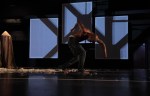
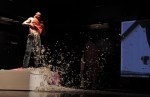
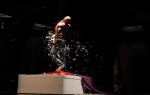
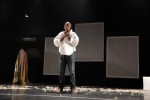



I met Elisio Pitta 20 years ago when he visited Rancho la Puerta to teach and do a capoeira demonstration. I had never seen capoeira before and was fascinated by the grace and power of the movements. He taught us some Brazilian folkloric dance also. We were all beginners, but he managed to get us all moving and enthusiastic in the few days he was our teacher. I have had the opportunity to learn from excellent teachers, but his talent to both teach and move was beyond compare. I never really attempted to learn the form, but I never forgot it either.
His career in dance has taken him around the world from his hometown, Bahia. He lives on a hill with a fantastic view of the Atlantic and has very deep cultural roots in the city. He has been performing a new dance of his own creation there this week, and soon will take the show on the road. Next month he will perform Othello in Shakespeare’s own country, in Liverpool England. Using Brazilian music and original choreography by Elisio he interprets the classic story of jealousy and regret. He dances the part of Othello and projects the other characters onto the stage in preproduced segments to tell the story of Desdemona’s ill fated murder and his subsequent remorse. He is using contemporary props and costuming in the production to go with his digital cast members. I asked him why he decided to be Othello and he told me that it is the Year of Shakespeare and he always wanted to do it. Classy.
I admire his extreme creativity and dedication to the art of dance. His natural talent is obvious, but he has used his talents and his strong cultural lineage to transcend boundaries. I think Shakespeare is proud of him. I am pleased to know such a talented and artistically ambitious man.
Flaunta was the second cousin of the goddess Aphrodite. She became the goddess of confidence. Her journey to her vocation to inspire and represent confidence was a story of self discovery. Aphrodite needed no outside assurance to know she was a great beauty. She exuded it. The young Flaunta was not convinced of her own powers, but passed through a jealousy of earth women who enjoyed and were confident in their own good looks. She studied the powerful and confident women, learning their secrets. Eventually her cousin would bestow the title and the powers of confidence goddess on Flaunta. She is active today in the complicated self image issues women face about appearance and competence. Being authentic and unique leads to the highest kind of confidence, as Tank Girl can attest. Confident women know:
Get to know Flaunta, and take her with you next time you need to look something or somebody right in the eye. Nothing says “I got this” like control of your gaze. Bluffing or not, the first impression you give will remain strong when you show self assurance.
The ancient world was more highly aware of the seasons than we are today because they had to make fire to stay warm or see at night. Religion, tradition, and regional provincialism are woven together at the winter solstice time. We have a food and drink festival that imitates Saturnalia and a birthday the resembles the birth of Mithra. I believe I have inherited some feelings for Christmas from the way my ancestors behaved. I have had the good fortune to be in other countries to celebrate the season, which opened my eyes to the wide variety and regional roots of the holiday practices. I choose the part I like and feel no pressure to perform now that my ancestors are all dead. I see the end of the year as a fun break before tax organization season, and a good excuse to party with friends. We give few gifts, but like to share extra food and drink with friends. I like to embrace it as an upside down time, a season for preparation and clearing. Spring will be right around the corner, when the harvest cycle can begin once more. For now, God Rest Ye Merry Gentlemen; it is time to party.
During this December of deletion it has become abundantly clear to me that waste of all kinds can be nipped in the bud by simply defining it. I, for instance, have not been willing to admit that owning 5 times more clothing than can be worn in a year is wasteful. Hoarding and waste are the exactly same thing, but hoarding is waste without boundaries . This shocking realization has deep meaning in my closet, in my office, in my kitchen, my garden, my barn, and even in my social life. The most notable waste that can be eliminated is time spent seeking more acquisitions. If you don’t need anything, is it not a waste of your time to go around trying to mindlessly acquire something, just to be consuming? Even more devastating to my health and happiness is allotting my space to extra junk. I pay taxes, insurance, and utility bills to basically own the space in which I keep all my gear. Although I am not approaching the level of the hoarding crazy people on reality television, I see no reason to continue owning extra stuff I never use. I now define that as a waste of my time, energy, and space. As the hoarder in the video explains, the junk is like a barrier or a wall created to hide himself from the world. All possessions can be treated as self-limiting boundaries, from your Mercedes to your expensive signature haircut. Marketing is the process of changing the desires of the people to match what is available in the marketplace. In itself, it is not evil. Something has changed our attitudes about consuming to the detriment of our society and economy. We are building a landfill to heaven.
When I was a child we never thought of wasting energy, or carbon footprints, or even about world peace. I grew up in an industrial era during which producing goods and shipping them around the world was exciting and considered to be the highest and best use of time and resources. Owning things was very important to my parents. Pride of ownership was a distinct value they impressed upon me. They were both very seriously into wardrobe, theirs and mine. They had super high standards for tidiness and order that would not allow them to acquire more stuff than they could store. The material world was in balance because they did not mistake quantity for quality. I rejected their materialistic version of reality, but ended up with plenty of material goods anyhow. It is time to examine, eliminate, and most importantly be vigilant about portions. Time, interest, talent, and resources need to be spent in the right proportion. As we head into the darkest time of the year it is my goal to emerge with a highly organized and clear space. There is much to do.
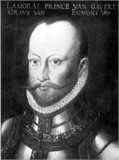
The Count

his statue in Brussels
My 12th great grandfather was a count who was very political and fancy. He was beheaded in Brussels in front of the town hall. He is the ancestor of the Pilgrim Richard Sears, who was fancy and political in Plymouth Colony. He has been immortalized by Goethe and Beethoven. He came before William of Orange, and was a big part of the history of Dutch independence.
from Wikipedia: http://en.wikipedia.org/wiki/Lamoral,_Count_of_Egmont
Lamoral, Count of Egmont, Prince of Gavere (November 18, 1522 – June 5, 1568) was a general and statesman in Flanders just before the start of the Eighty Years’ War, whose execution helped spark the national uprising that eventually led to the independence of the Netherlands.
The Count of Egmont headed one of the wealthiest and most powerful families in the Low Countries. Paternally, a branch of the Egmonts ruled the sovereign duchy of Guelders until 1538. Lamoral was born in La Hamaide near Ellezelles. His father was John IV of Egmont, knight in the Order of the Golden Fleece. His mother belonged to a cadet branch of the House of Luxembourg, and through her he inherited the title prince de Gavere.[2] During his youth, he received a military education in Spain. In 1542, he inherited the estates of his elder brother Charles inHolland. His family’s stature increased further in 1544 when he wed, in the presence of the Holy Roman Emperor Charles V and of the Archduke Ferdinand Iat Spires, the Countess Palatine Sabine of Simmern, whose brother became theElector Palatine Frederick III.[1]
In the service of the Spanish army, he defeated the French in the battles of Saint-Quentin (1557) and Gravelines (1558). Egmont was appointed stadtholder of Flanders and Artois in 1559, aged only 37.
As a leading Flemish nobleman, Egmont was a member of King Philip II of Spain‘s official Council of State for Flanders and Artois. Together with William, Prince of Orange and the Count of Horn, he protested against the introduction of theinquisition in Flanders by the cardinal Antoine Perrenot Granvelle, bishop of Arras. Egmont even threatened to resign, but after Granvelle left, there was a reconciliation with the king. In 1565, Egmont went to Madrid to beseech Philip II, the king of Spain, for a change of policy in the Netherlands, but met with little more than courtesy.[1]
Soon thereafter, the Iconoclasm started, and resistance against the Spanish rule in the Netherlands increased. As a devout Catholic, Egmont deplored the iconoclasm, and remained faithful to the Spanish king.
After Philip II sent the Duke of Alba to the Netherlands, William of Orange decided to flee Brussels. Having always declined to do anything that smacked of lèse majesté, Egmont refused to heed Orange’s warning, thus he and Horn decided to stay in the city. Upon arrival, Alba almost immediately had the counts of Egmont and Horn arrested on charges of treason, and imprisoned them in a castle inGhent, prompting Egmont’s wife and eleven children to seek refuge in a convent. Pleas for amnesty came to the Spanish king from throughout Europe, including from many reigning sovereigns, the Order of the Golden Fleece, and the king’s kinsman the Emperor Maximilian II, all to no avail.
On 4 June Egmont and Horn were condemned to death, and lodged that night in the maison du roi. On June 5, 1568, both men, aged only 46 and 44 respectively, were beheaded in the Grote Markt in Brussels, Egmont’s uncomplaining dignity on the occasion being widely noted. Their deaths led to public protests throughout the Netherlands, and contributed to the resistance against the Spaniards. The Count of Egmont lies buried in Zottegem.[3]
Nowadays, a statue erected on the Petit Sablon / Kleine Zavel Square in Brussels commemorates the Counts of Egmont and Horn, in historical overview usually mentioned together as “Egmond en Hoorne” and hailed as the first leaders of the Dutch revolt, as the predecessors of William of Orange, who grew to importance and obtained the leadership after their execution, and who was assassinated in 1584 in Delft, having succeeded in liberating parts of The Netherlands in the early years of the Eighty Years’ War (1568–1648).
Egmont’s offices and vast estates were forfeited upon his execution. By inheritance he had been count of Egmont (or Egmond), prince de Gavre and van Steenhuysen, baron de Fiennes, Gaesbeke and La Hamaide, seigneur de Purmerent, Hoogwoude, Aertswoude, Beyerland, Sottenghien, Dondes, Auxy and Baer. Some of these lands were eventually returned to his heirs. By appointment, he was Captain General of the Lowlands under Charles V, knight of the Golden Fleece since 1546, and Imperial Chamberlain. Despite the taint of treason and the family’s impoverishment, his niece Louise of Lorraine-Mercouer, was chosen to became the Queen consort of Henry III of France in 1575.
Literary treatments
The Count of Egmont is the main character in a play by Goethe, Egmont. In 1810Ludwig van Beethoven composed an overture and incidental music for a revival of the play.
Phillip Lamoral VanEgmond (1530 – 1568)
is my 12th great grandfather
Marie L Egmond (1564 – 1584)
daughter of Phillip Lamoral VanEgmond
Richard Sears (1590 – 1676)
son of Marie L Egmond
Silas Sears (1638 – 1697)
son of Richard Sears
Silas Sears (1661 – 1732)
son of Silas Sears
Sarah Sears (1697 – 1785)
daughter of Silas Sears
Sarah Hamblin (1721 – 1814)
daughter of Sarah Sears
Mercy Hazen (1747 – 1819)
daughter of Sarah Hamblin
Martha Mead (1784 – 1860)
daughter of Mercy Hazen
Abner Morse (1808 – 1838)
son of Martha Mead
Daniel Rowland Morse (1838 – 1910)
son of Abner Morse
Jason A Morse (1862 – 1932)
son of Daniel Rowland Morse
Ernest Abner Morse (1890 – 1965)
son of Jason A Morse
Richard Arden Morse (1920 – 2004)
son of Ernest Abner Morse
Pamela Morse
I am the daughter of Richard Arden Morse

