mermaidcamp
Keeping current in wellness, in and out of the water
You can scroll the shelf using ← and → keys
You can scroll the shelf using ← and → keys

palo verde
The options we have for communication now boggle the mind. Some minds seem to be desperately boggled by what it takes to tell a story or get a message out to the world today. It is easier than ever because of all the free platforms we can use. It is harder than ever to reach individuals because the competition has grown to include just about everyone on earth. Our message must be not only short and sweet, but must also strike a universal chord. Leonardo da Vinci, especially toward the end of his life, often wrote about thinking in reverse: “Consider first the end.” and “Think well to the end.” were examples of his frequent statements on this subject. Leonardo left us with designs for flying machines and engineering that had not yet been proven when he died. His legacy is his art, certainly. He also left us a very strong and lasting gift of his philosophy. His practice of connessione refined his sense of mysticism and wholeness. He sought and found deep connection with all creation that inspired his work.
If you feel connected in a big way, or to a power larger than your own, confidence and ease are natural. On the other hand, if you feel disconnected from something greater it is possible to entirely loose touch with a realistic self image. We do not hold onto the same ideas or ideals for our entire life. The concept of connection may replace true connection, or maybe we always felt like we were separate and drifting. Now we can substitute chat/tweet/youtube views for personal relationships. The illusion that these clicks and likes make us part of a clubby group might just be the ruin of true connecting. Take a look at your physical worldly connections (so to speak) and how they relate or substitute for spiritual contact. I don’t think you need to join a religion or go to a certain building to make contemplation and meditation a part of your own practice. I feel connected to spirit whenever I:
This list is only a partial, and ever changing accounting of my own ways to notice connessione, or systems. Once you start to think about it you find that everything does depend on everything else, and we are all connected. If you feel distracted and want to center your thoughts, remember all the ways the universe has collaborated to create you and keep you alive. The systems that create us also sustain us.
aloe
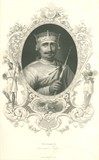
William Longsword (Plantagenet) (Earl of Salisbury) Longespee
My 25th great-grandfather is buried at Salisbury Cathedral in England. He was allegedly poisoned. His body was exhumed 431 years after his death. The corpse of a rat was found within his skull, which can be seen at a museum in Salisbury. I think I am good just with the grave, no need to see the rat with traces of arsenic.
William Longsword (Plantagenet) (Earl of Salisbury) Longespee (1173 – 1226)
is my 25th great grandfather
Stephen Longespee (1216 – 1260)
son of William Longsword (Plantagenet) (Earl of Salisbury) Longespee
Ela Longespee (1246 – 1276)
daughter of Stephen Longespee
Alan laZOUCHE (1267 – 1314)
son of Ela Longespee
Maude LaZouche (1290 – 1349)
daughter of Alan laZOUCHE
Sir Thomas de Holand Wake Kent (1314 – 1360)
son of Maude LaZouche
Sir Thomas Holand Knight deHolland (1350 – 1397)
son of Sir Thomas de Holand Wake Kent
Margaret DeHoland (1385 – 1439)
daughter of Sir Thomas Holand Knight deHolland
Joan Beaufort (1407 – 1445)
daughter of Margaret DeHoland
Joan Stewart (1428 – 1486)
daughter of Joan Beaufort
John Gordon (1450 – 1517)
son of Joan Stewart
Robert Lord Gordon (1475 – 1525)
son of John Gordon
Catherine Gordon (1497 – 1537)
daughter of Robert Lord Gordon
Lady Elizabeth Ashton (1524 – 1588)
daughter of Catherine Gordon
Capt Roger Dudley (1535 – 1585)
son of Lady Elizabeth Ashton
Gov Thomas Dudley (1576 – 1653)
son of Capt Roger Dudley
Anne Dudley (1612 – 1672)
daughter of Gov Thomas Dudley
John Bradstreet (1652 – 1718)
son of Anne Dudley
Mercy Bradstreet (1689 – 1725)
daughter of John Bradstreet
Caleb Hazen (1720 – 1777)
son of Mercy Bradstreet
Mercy Hazen (1747 – 1819)
daughter of Caleb Hazen
Martha Mead (1784 – 1860)
daughter of Mercy Hazen
Abner Morse (1808 – 1838)
son of Martha Mead
Daniel Rowland Morse (1838 – 1910)
son of Abner Morse
Jason A Morse (1862 – 1932)
son of Daniel Rowland Morse
Ernest Abner Morse (1890 – 1965)
son of Jason A Morse
Richard Arden Morse (1920 – 2004)
son of Ernest Abner Morse
Pamela Morse
I am the daughter of Richard Arden Morse
William Longespée, jure uxoris 3rd Earl of Salisbury (c. 1176 – 7 March 1226) was an English noble, primarily remembered for his command of the English forces at the Battle of Damme and for remaining loyal to King John .
Early life
He was an illegitimate son of Henry II of England. His mother was unknown for many years, until the discovery of a charter of William mentioning “Comitissa Ida, mater mea” (engl. “Countess Ida, my mother”).
This Ida de Tosny, a member of the prominent Tosny or Toesny family, later (1181) married Roger Bigod, 2nd Earl of Norfolk.
King Henry acknowledged William as his son and gave him the Honour of Appleby, Lincolnshire in 1188. Eight years later, his half-brother, King Richard I, married him to a great heiress, Ela of Salisbury, 3rd Countess of Salisbury in her own right, and daughter of William of Salisbury, 2nd Earl of Salisbury.
During the reign of King John, Salisbury was at court on several important ceremonial occasions, and held various offices: sheriff of Wiltshire , lieutenant of Gascony , constable of Dover and warden of the Cinque Ports, and later warden of the Welsh Marches. He was then, circa 1213, appointed High Sheriff of Cambridgeshire and Huntingdonshire.
Military career
He was a commander in the king’s Welsh and Irish expeditions of 1210-1212. The king also granted him the honour of Eye .
In 1213, Salisbury led a large fleet to Flanders , where he seized or destroyed a good part of a French invasion fleet anchored at or near Damme . This ended the invasion threat but not the conflicts between England and France . In 1214, Salisbury was sent to help Otto IV of Germany, an English ally, who was invading France. Salisbury commanded the right wing of the army at their disastrous defeat in that year at the Battle of Bouvines, where he was captured.
By the time he returned to England, revolt was brewing amongst the barons. Salisbury was one of the few who remained loyal to John. He was appointed High Sheriff of Devon in 1217 and High Sheriff of Staffordshire and Shropshire in 1224. In the civil war that took place the year after the signing of the Magna Carta, Salisbury was one of the leaders of the king’s army in the south. He was made High Sheriff of Wiltshire again, this time for life. After raising the siege of Lincoln with William Marshall he was also appointed High Sheriff of Lincolnshire (in addition to his current post as High Sheriff of Somerset) and governor of Lincoln castle. However, after the French prince Louis (later Louis VIII) landed as an ally of the rebels, Salisbury went over to his side. Presumably, he thought John’s cause was lost.
After John’s death and the departure of Louis, Salisbury, along with many other barons, joined the cause of John’s young son, now Henry III of England. He held an influential place in the government during the king’s minority and fought in Gascony to help secure the remaining part of the English continental possessions. Salisbury’s ship was nearly lost in a storm while returning to England in 1225, and he spent some months in refuge at a monastery on the French island of Ré.
Death
He died not long after his return to England at Salisbury Castle. Roger of Wendover alleged that he was poisoned by Hubert de Burgh. He was buried at Salisbury Cathedral in Salisbury, Wiltshire, England.
William Longespee’s tomb was opened in 1791. Bizarrely, the well-preserved corpse of a rat which carried traces of arsenic, was found inside his skull. The rat is now on display in a case at the Salisbury and South Wiltshire Museum.
Family
By his wife Ela, Countess of Salisbury, he had four sons and four daughters :
• Willi am II Longespée (1212?-1250), who was sometimes called Earl of Salisbury but never legally bore the title because he died before his mother, Countess Ela, who held the earldom until her death in 1261;
• Richard, a canon of Salisbury ;
• Stephen (d. 1260), who was seneschal of Gascony and married Emeline de Ridelsford. Their two daughters were Eleanor Longspee, who married Sir Roger La Zouche and Emeline Longspee, who married Sir Maurice FitzMaurice, Justicar of Ireland.
• Nicholas (d. 1297), bishop of Salisbury
• Isabella, who married William de Vesey
• Ella, married William d’Odingsels
• Ela Longespée, who first married Thomas de Beaumont, 6th Earl of Warwick, and then married Philip Basset
• Ida, who first married Ralph de Somery, and then William de Beauchamp


My 19th great grandmother is buried in the cathedral in Sevilla, just like Christopher Columbus. I always wanted to go to Sevilla to dance with gypsies. Now I have another reason to go:
María Díaz de Padilla (María de Padilla) (1334 – August 1361) was the mistress of King Peter of Castile whom she married in secret in 1353.
She was a Castilian noblewoman. Her father was Juan García de Padilla, 1st Lord of Villagera, her mother was his wife María Fernández de Henestrosa, a relative of Juan Fernández de Henestrosa, who mediated an apparent pardon to Fadrique Alfonso of Castile, a half-brother and rival of María de Padilla’s lover, King Peter.
In the summer of 1353, under coercion from family and court nobles, Peter denied the fact of his marriage to María to marry Blanche of Bourbon, but his relationship with María continued. María and Peter had at least four children: a daughter named Beatrice (born 1354), a daughter named Constance (1354–1394), another daughter named Isabella (1355–1394), and a son named Alfonso, crown-prince of Castile (1359 – October 19, 1362).
Two of their daughters were married to sons of Edward III, King of England. Isabella, married Edmund of Langley, 1st Duke of York, while the eldest, Constance, married John of Gaunt, 1st Duke of Lancaster, leading him to claim the crown of Castile on behalf of his wife. The daughter of Constance, Catherine of Lancaster, was married by Henry III of Castile in order to reunify any claim to succession that may have passed via Constance.
Depictions in fiction
Gaetano Donizetti composed Maria Padilla (1841), an opera about her relationship with King Peter.
Rudolf Gottschall wrote Maria de Padilla (18??), a drama about her life.
Maria Juana Depadilla (1335 – 1361)
is my 19th great grandmother
Isabella Perez Plantagenet (1355 – 1392)
daughter of Maria Juana Depadilla
Constance Plantagenet Despencer (1374 – 1416)
daughter of Isabella Perez Plantagenet
Eleanor DeHoland (1405 – 1452)
daughter of Constance Plantagenet Despencer
Ann Touchet (1441 – 1503)
daughter of Eleanor DeHoland
Anna Dutton (1449 – 1520)
daughter of Ann Touchet
Lawrence Castellan of Liverpool Mollenaux (1490 – 1550)
son of Anna Dutton
John Mollenax (1542 – 1583)
son of Lawrence Castellan of Liverpool Mollenaux
Mary Mollenax (1559 – 1575)
daughter of John Mollenax
Francis Gabriell Holland (1596 – 1660)
son of Mary Mollenax
John Holland (1628 – 1710)
son of Francis Gabriell Holland
Mary Elizabeth Holland (1620 – 1681)
daughter of John Holland
Richard Dearden (1645 – 1747)
son of Mary Elizabeth Holland
George Dearden (1705 – 1749)
son of Richard Dearden
George Darden (1734 – 1807)
son of George Dearden
David Darden (1770 – 1820)
son of George Darden
Minerva Truly Darden (1806 – 1837)
daughter of David Darden
Sarah E Hughes (1829 – 1911)
daughter of Minerva Truly Darden
Lucinda Jane Armer (1847 – 1939)
daughter of Sarah E Hughes
George Harvey Taylor (1884 – 1941)
son of Lucinda Jane Armer
Ruby Lee Taylor (1922 – 2008)
daughter of George Harvey Taylor
Pamela Morse
I am the daughter of Ruby Lee Taylor
King Peter met María in the summer of 1352 during an expedition to Asturias to battle his rebellious half-brother Henry. It was probably her maternal uncle, Juan Fernández de Henestrosa, who introduced them, as mentioned in the chronicle of King Peter’s reign written by Pero López de Ayala. . At that time, María was being raised at the house of Isabel de Meneses, wife of Juan Alfonso de Alburquerque, a powerful nobleman. They became lovers and their relationship lasted until her death despite the King’s other marriages and affairs.
In the summer of 1353, under coercion from family and the main court favorite, Juan Alfonso de Alburquerque, Peter wed Blanche of Bourbon, the grand-daughter of the king of France. Peter abandoned Blanche within three days when he learned that she had an affair with his bastard brother Fadrique Alfonso en route to Spain, and that the dowry was not coming.





I ate lunch today at my new favorite restaurant, Cafe Botanica. This charming restaurant is nestled into the exotic greenery at Tucson Botanical Gardens. I visit frequently and for no particular reason had never eaten there. When I met a neighbor who works there as a server I decided to make a point to try the food. To my great surprise the offerings are the most seasonal, the most creative, and for my personal taste, the most delightful plates in the city of Tucson. The concept is to make use of every kind of local, organic, sustainable source of ingredients. I think they go beyond any other restaurant to achieve this goal, but without the brilliance of Chef Cristopher and his wild creativity the concept would not be as smashing. He combines ingredients I would not have thought of, including some I have never eaten, such as radish tops. The result was exactly the kind of full flavor, gorgeous to see, plate of variety I want to eat all the time. The great news is that I have a garden, and they will trade me prepared food for some of my extra produce. This could become a serious habit…the kind with only positive effects!!!
New Summer hours will start on June 3, including a weekend brunch. Dog membership also begins on June 3, and has expanded to inviting member dogs on both Tuesday and Thursday this year. The innovative menu, and the fact that the gardens create a cooler micro climate for morning walks will be an exciting new addition to our neighborhood. There will also be Thursday dinners this summer with BYOB wine. This is a major upgrade for Tucson. I highly recommend Cafe Botanica to anyone. There is an air conditioned inside dining room for times when it is too hot. The gourmet, homemade dishes are very reasonably priced, and there is no chef more caring, and into it, than Christopher. Mandy, my friend and server, puts her heart into making guests feel right at home.
Our neighborhood has started to use Nextdoor.com to reach people in our vicinity. I am very impressed with the results after trying it for just a couple of months. We have 61 members, or 5% of the homes in our neighborhood participating. The San Diego Police Department has joined Nextdoor and is using it to inform citizens and get tips. In Tucson we are not yet so lucky as to have communication from or to the cops, but I believe in time all police departments will see the value in sharing information with the community. In San Diego it was very helpful for informing the public about the recent wildfire problems. The crime and safety features are excellent, but beyond that people are connecting about common interests such as pets (lost and found), gardening, and yard sales. There have been some really good offers of free construction materials and plants.
I believe this start up has the potential to improve quality of life in ways we have not yet discovered. I immediately started a garden club, but am not sure what it will do. I am sure it will not hold flower shows like my mother’s garden club did. We have met each other and exchanged some plants to break the ice. Water is precious and expensive around here, so gardeners sharing knowledge and plants could turn out to be very helpful. I don’t care what kind of garden club we become. I simply love to know others around me who have some common interests. I have met some of my long distance contacts on social media, but it required travel and some expense. Meeting my own neighbors is a bit of a cheap thrill in comparison. It is very fun for me.
As with all things digital the balance between privacy and safety must be considered. In order to join one must verify that one lives in the neighborhood. This becomes tricky because some people don’t want to publish their addresses. I have just now experienced someone joining with a fake ID that is not known at the address he used. I can’t imagine what a hacker/prowler would want with our lost cat information, but then again I am not a hacker/prowler. This issue may be a little sticky, but the benefits outweigh the demerits in my opinion. Also, the CEO of the company is in a spat about a driving incident in San Mateo which could prove to be a drag for the company’s future. This case will be handled in California courts, and it does not make me love our Nextdoor site any less. It is my very strong opinion that Nextdoor.com is not only the wave of the future for law enforcement but for an elevated standard of life, liberty and the pursuit of happiness. Oakland, CA, Pittsburgh,PA, and other cities have partnered with the site. If you are interested in starting a site for your neighborhood you only need 10 people to join to qualify for your free website. Nextdoor will send out free postcards to let your neighbors know about it. After you invite more people and the membership reaches about 50 it grows organically. I enthusiastically urge you to give it a try. If you start a new site and use my code: nextdoor.com/amazon/?r=awrupt we will both receive a $25 Amazon gift card. What is not to like about that?


My 18th great-grandmother married Edmund of Langley but she was not faithful to him. She was famous as a tart.
Isabella of Castile (c. 1355 – 23 December 1392) was the youngest of the three daughters of King Peter of Castile by his favourite mistress, María de Padilla (d.1361).
On 21 September 1371 Edward III’s fourth son, John of Gaunt, 1st Duke of Lancaster, married Isabella’s elder sister, Constanza (d.1394), who after the death of her father in 1369 claimed the throne of Castile. Isabella accompanied her sister to England, and on 11 July 1372, at about the age of 17, married John of Gaunt’s youngest brother, Edmund of Langley, 1st Duke of York, fifth son of King Edward III and Philippa of Hainault, at Wallingford, Oxfordshire, as part of a dynastic alliance in furtherance of Gaunt’s claim to the crown of Castile. According to Pugh, Isabella and Edmund of Langley were ‘an ill-matched pair’.
As a result of her indiscretions, including an affair with King Richard II’s stepbrother, John Holland, 1st Duke of Exeter (d.1400), whom Pugh terms ‘violent and lawless’, Isabella left behind a tarnished reputation, her loose morals being noted by the chronicler Thomas Walsingham. According to Pugh, the possibility that Holland was the father of Isabella’s favourite son, Richard of Conisburgh, 3rd Earl of Cambridge, ‘cannot be ignored’.
In her will Isabel named King Richard II as her heir, requesting him to grant her younger son, Richard, an annuity of 500 marks. The King complied. However further largess which might have been expected when Richard came of age was not to be, as King Richard II was deposed in 1399, and according to Harriss, Isabella’s younger son, Richard, ‘received no favours from the new King, Henry IV’.
Isabella died 23 December 1392, aged about 37, and was buried 14 January 1393 at the church of the Dominicans at Kings Langley. After Isabella’s death, Edmund of Langley married Joan Holland, sister and co-heir of Edmund Holland, 4th Earl of Kent (9 January 1382 – 15 September 1408), with whom his daughter, Constance, had lived as his mistress.
Isabella was named a Lady Companion of the Order of the Garter in 1378.
Isabella Perez Plantagenet (1355 – 1392)
is my 18th great grandmother
Constance Plantagenet Despencer (1374 – 1416)
daughter of Isabella Perez Plantagenet
Eleanor DeHoland (1405 – 1452)
daughter of Constance Plantagenet Despencer
Ann Touchet (1441 – 1503)
daughter of Eleanor DeHoland
Anna Dutton (1449 – 1520)
daughter of Ann Touchet
Lawrence Castellan of Liverpool Mollenaux (1490 – 1550)
son of Anna Dutton
John Mollenax (1542 – 1583)
son of Lawrence Castellan of Liverpool Mollenaux
Mary Mollenax (1559 – 1575)
daughter of John Mollenax
Francis Gabriell Holland (1596 – 1660)
son of Mary Mollenax
John Holland (1628 – 1710)
son of Francis Gabriell Holland
Mary Elizabeth Holland (1620 – 1681)
daughter of John Holland
Richard Dearden (1645 – 1747)
son of Mary Elizabeth Holland
George Dearden (1705 – 1749)
son of Richard Dearden
George Darden (1734 – 1807)
son of George Dearden
David Darden (1770 – 1820)
son of George Darden
Minerva Truly Darden (1806 – 1837)
daughter of David Darden
Sarah E Hughes (1829 – 1911)
daughter of Minerva Truly Darden
Lucinda Jane Armer (1847 – 1939)
daughter of Sarah E Hughes
George Harvey Taylor (1884 – 1941)
son of Lucinda Jane Armer
Ruby Lee Taylor (1922 – 2008)
daughter of George Harvey Taylor
Pamela Morse
I am the daughter of Ruby Lee Taylor
Infanta Isabella of Castile, Duchess of York was the daughter of King Peter of Castile and María de Padilla. She was a younger sister of Constance, Duchess of Lancaster.
On March 1, 1372, Isabella married Edmund of Langley, 1st Duke of York, he was the fourth son of Edward III of England and Philippa of Hainault, at Wallingford, England. As a result of her marriage, she became the first of a total of eleven women who became Duchess of York. They had three children:
Edward of Norwich, 2nd Duke of York (1373 – 25 October 1415).
Constance of York (1374 – 29 November 1416). Married Thomas le Despenser and was mother of Isabel le Despenser, Countess of Worcester and Warwick.
Richard of Conisburgh, 3rd Earl of Cambridge (1375 – 5 August 1415).
She was named a Lady Companion of the Order of the Garter in 1378. Isabella died 23 December 1392 and on 14 January 1393 was buried in Kings Langley Manor House in Hertfordshire, England.
Isabel lies entombed with her husband in King’s Langley. By the terms of her will, dated December 6, 1392, she asked that a hundred trentals and a hundred sauters were to be said for her soul, and four priests, or one at least, were to sing for her by the space of four years. Upon the day of her burial her best horse was to be delivered for her mortuary. She bequeathed to the King her heart of pearls; to the Duke of Lancaster, a tablet of jasper, given her by the King of Armenia; to her son Edward, her crown, to remain to his heirs; to Constance le Despencer, her daughter, a fret of pearls; to the Duchess of Gloucester, her tablet of gold with images, and also her sauter with the arms of Northampton; and to the King the residue of her goods, in trust that he should allow his godson Richard, her younger son, an annuity of 500 marks for life, a trust which the King, out of the great respect he bore to her, accepted.
Originally interred in the Church of the Friary at Langley, the remains of the Duke and his wife were brought to All Saint’s, King’s Langley, about the year 1574.
The couple were destined for a second exhumation. On November 22, 1877, Professor George Rolleston, M.D. The professor was expecting to find two remains instead he found three. The remains are those of Isabella of Castile, her husband Edmund of Langley and the third are those of their daughter in law Anne Mortimer.
You did not have to be psychic to know that Ho Chi Mihn would win. The United States had invaded a country in southeast Asia with no previous relationship with the people of that area. They had instituted a draft to conscript the youth of America to fight in a war of political insanity. Many died, many more became embittered and seriously addicted to opiates while fighting in a way made up by old white men to conquer Asia. Lyndon Johnson stood in the spotlight of this ill-conceived battle to create American supremacy throughout the world. He was a complete tool of what America stood for in the world…which all the youth of America quickly named bullshit. I was 17 years old, knew friends who joined the Marines, and found the entire idea despicable. I could not support this kind of slaughter of youth for the ego of old men in power. I did not want to sacrifice my high school friends to a stupid, ill-timed, ill-executed war for no reason.
I attended the University of Texas, not far from Johnson City, in 1968. Some high school friends had willingly joined the military, but more had done what they could to avoid being sent to Asia to kill people. I had no sympathy for those who thought our job was to police the world and make everyone pretend they are aligned with capitalism. I had already seen that capitalism and communism at that time were virtually the same thing…state capitalism. I wore a patch on the ass of my jeans that said war is not healthy for children and other living things, and I meant what I said. My young ass was not alone in expressing this sentiment. I have been to the war memorial in Washington,DC…I have been on Rolling Thunder weekend, during which ‘Nam Vets and others ride their bikes around our nation’s capitol to make a statement about defending this stuff. We do not have to believe in the motives or the politics of those who sent our young people into war to risk for no reason in order to honor the sacrifice made. Some are just loyal, even if the leadership is unethical and delusional. They die in large numbers throughout history to defend the popular ideas of a small privileged class. It is time for the United States of America to give up the role of moral police and defender of status quo in the entire word. It is time to honor those who serve by not sending them into useless and egotistical battles that defend nothing in the end. It is time to defend our ethics, out morals and our compassion, and in so doing defend the lives of those we put in danger. I marched on Washington and ae a little teargas but when the soldiers came back from Viet Nam, it was obvious they had suffered so much more. The big drug fling, including opiates, LSD, hashish, and more made the ‘Nam Vets the instant commandos of the drug scene upon return. They knew much more than civilians could know about drugs. These people had gone on killing sprees on LSD. This stuff does not just stop after the battle. PTSD and all the guilty feelings of being at war in somebody else’s country started in Viet Nam. The decline of the world’s respect for the United States also initiated with the Viet Nam War. In Viet Nam that war is known as the American War.
Risk is part of life. The gambler is excited by risk and winning against odds. This bold, sometimes foolish attitude toward taking risks lands the gambler in trouble. Betting on companies or new technology can result in very good returns for the confident intuitive investor. It can also backfire as quickly as a casino game. Each of us has a unique profile for risky behavior/spending/investing/loyalties. We may be suspicious of the stock market and decide to collect coins, precious metals, or guns. We might like to see our assets in the bank earning a little interest. We may believe that real estate makes us secure, although recent events have shown how volatile real property investments can be. The truth is that nobody knows what the future will bring. A well-adjusted approach to gambling is needed to moderate stress. We can neither gamble away our life savings without consequence, nor can we find a way to be 100% immune to losses.
When circumstances are completely out of your control, as in our recent banking crisis, freaking out will only add to the strain. Cutting losses is a concept we need to use in life, but we normally learn it by enduring some difficult losses while clinging to some delusion. The shadow gambler has developed a risk taking addiction, not necessarily in a casino or game setting. A strong compulsion to take risks will eventually create a personality nobody can trust. The danger exists in the loss of control over various types of greed. Politicians risk their reputations on a regular basis. Money, status, and freedom are at stake. Do you have a relationship with a gambler? How is your own relationship with risk?
We may not have had formal training in meditation as children, but we probably had profound spiritual experiences as a natural part of childhood. Contemplation is a normal activity. When life is undisturbed we contemplate our surroundings, our connection to the universe, and more. If you scan your past for times during which you felt connected, in a state of grace, or full of bliss you will find them. By bringing back the feeling of spontaneous enlightening experiences we might be able to recreate that magic today. Our conscious minds often cling to our problems, our challenges, and our individual specialty suffering, keeping these wounds close to the surface. Through practice we can train the mind to hold on to the positive, unexplained flashes of light and insight, treating them as our natural state. Bringing contemplation and spacious states of mind into our practice is liberating. The long term benefits can be compared to physical strength or agility in the body. We don’t know what demands the future will put on that preparation. We can only learn when an event challenges that strength. We know we will encounter stressful situations and loss in our lives. A meditative state of mind is the very best investment/tool to cope with adversity that can be acquired.
There are many forms of meditation. A qualified teacher is not always available, but can show the student how to create the transition into mindfulness. If you believe that you have never meditated, let your memory go over the special times of youth that stand out in your memory today. You will probably be able to identify a few enchanted, enlightened times that brought you a glimpse into eternity. That lightness is a state that is available to you always. What is required is a steady practice. Walking, chanting, sitting….the style does not matter as long as it suits the user. The pure state of bliss meditation brings the practitioner is the armor that protects the mind from stress and worry. It is the true fountain of youth.
Wisdom springs from meditation;
without meditation wisdom wanes.
Having known these two paths of progress and decline,
let one so conduct oneself that one’s wisdom may increase.
Dhammapada 20.282
The Buddha
La Zouche COA
Rockingham Castle
My 24th great-grandfather was loyal to Henry III, and later Edward I of England. As usual, the royal association brought both positive and negative aspects:
Alan la Zouche (born about 1203) was summoned to accompany King Henry III to France in the 26th year of Henry’s reign. (Henry III was king from 1216 to 1272.) Within the next ten years, the whole county of Chester and all of North Wales were placed under Alan’s government. In the 45th year of Henry’s reign, Alan In the 45th year of the same reign he obtained a charter for a weekly market at Ashby-La-Zouche, in Leicestershire, and for two fairs in the year at Swavesey. At about the same time, Alan was made warden of the forests south of Trent and sheriff of Northamptonshire. In the 46th year of Henry’s reign, Alan was made Justice Iternerant for the counties of Southamptom, Buckingham, and Northampton. In the next three years, he was made Constable of the Tower of London, and Governor of the castle at Northampton. In 1268, he was violently attacked in Westminster Hall by John, Earl of Warren and Surrey, who had a dispute with Alan about some land. Alan’s son Roger was with him at the time, and Alan was severely wounded.
Alan’s son, Sir Roger la Zouche, was the Lord of Ashby. He married Ela Longespee, who was the daughter of Emmeline de Ridelisford and Sir Stephen Longespee.
Stephen Logespee was Justiciar of Ireland (something like a Prime Minister) and Seneschal of Gascony (a Seneschal was the Lord’s representative in the administration of an estate who would preside at courts, audit account,s conduct investigations, etc.).
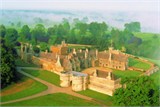
Roger’s son Alan la Zouche (born about 1267) was the First Baron la Zouche of Ashby. Alan was governor of Rockingham Castle and steward of Rockingham Forest, England. Alan La Zouche died without any sons shortly before at the age of 46, and his barony fell into abeyance among his daughters.
Alan was in Gascony with King Edward I of England in October 1288, when he was one of the hostages given by the king to Alfonso of Aragon for the fulfillment of certain agreements. He was in Scotland in the King’s service in June of 1291. In April 1294 he had a writ of protection from the King when he travelled overseas with the King’s daughter, Eleanor of Bar. He served in Gascony in 1295 and 1296, and was present at the action around Bordeaux on March 28, 1296, when his standard bearer was captured by the French. In 1297 he was summoned for service in Flanders, and attended Councils in Rochester and London in that year.
Alan was summoned for service against the Scots in 1297-1313. He fought in the Vanguard at the Battle of Falkirk on July 22, 1298. King Edward’s army at that battle consisted of 12,000 infantry, including 10,000 Welsh, and 2,000 cavalry. William Wallace, the Scottish leader accepted battle in a withdrawn defensive position. Wallace had few cavalry and few archers; but his solid “schiltrons” (circles) of spearmen were almost invincible. The armoured cavalry of the English vanguard were hurled back with severe losses. Edward brought up his Welsh archers in the intervals between the horsemen of the second line, concentrating their arrows on specific points in the Scottish schiltrons. It was into these gaps that the English knights forced their way, and once the Scottish order was broken the spearmen were quickly massacred. Alan was at the siege of Caerlaverock in July 1300. His part was described in Nicholas’ Siege of Carlaverock:
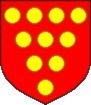
Aleyn de la Souche tresor Signiioit ke fust brians
Sa rouge baniere a besans
Car bienscai ki a dependu Tresor plus ke en burce pendu
He was summoned to Edward II’s coronation on January 18, 1307/08. In December of that year he had a protection to go on a pilgrimage to Santiago de Compostela. He was the Constable of Rockingham Castle and the Keeper of the forests between the bridges of Oxford and Stamford.
Alan LaZouche (1203 – 1270)
is my 24th great grandfather
Roger LaZouche (1242 – 1285)
son of Alan LaZouche
Alan laZOUCHE (1267 – 1314)
son of Roger LaZouche
Maude LaZouche (1290 – 1349)
daughter of Alan laZOUCHE
Sir Thomas de Holand Wake Kent (1314 – 1360)
son of Maude LaZouche
Sir Thomas Holand Knight deHolland (1350 – 1397)
son of Sir Thomas de Holand Wake Kent
Margaret DeHoland (1385 – 1439)
daughter of Sir Thomas Holand Knight deHolland
Joan Beaufort (1407 – 1445)
daughter of Margaret DeHoland
Joan Stewart (1428 – 1486)
daughter of Joan Beaufort
John Gordon (1450 – 1517)
son of Joan Stewart
Robert Lord Gordon (1475 – 1525)
son of John Gordon
Catherine Gordon (1497 – 1537)
daughter of Robert Lord Gordon
Lady Elizabeth Ashton (1524 – 1588)
daughter of Catherine Gordon
Capt Roger Dudley (1535 – 1585)
son of Lady Elizabeth Ashton
Gov Thomas Dudley (1576 – 1653)
son of Capt Roger Dudley
Anne Dudley (1612 – 1672)
daughter of Gov Thomas Dudley
John Bradstreet (1652 – 1718)
son of Anne Dudley
Mercy Bradstreet (1689 – 1725)
daughter of John Bradstreet
Caleb Hazen (1720 – 1777)
son of Mercy Bradstreet
Mercy Hazen (1747 – 1819)
daughter of Caleb Hazen
Martha Mead (1784 – 1860)
daughter of Mercy Hazen
Abner Morse (1808 – 1838)
son of Martha Mead
Daniel Rowland Morse (1838 – 1910)
son of Abner Morse
Jason A Morse (1862 – 1932)
son of Daniel Rowland Morse
Ernest Abner Morse (1890 – 1965)
son of Jason A Morse
Richard Arden Morse (1920 – 2004)
son of Ernest Abner Morse
Pamela Morse
I am the daughter of Richard Arden Morse
Alan II (grandson of the first Baron Zouche) was justice of Chester and justice of Ireland under Henry III of England. He was loyal to the king during the struggle with the baroons, fought at the Battle of Lewes and helped to arrange the peace of Kenilworth. As a result of a quarrel over some lands with John de Warenne, 7th Earl of Surrey, he was seriously injured in Westminster Hall by the Earl and his retainers, and died on August 10, 1270.
The de la Zouche family descended from Alan la Zouche, 1st Baron la Zouche of Ashby, sometimes called Alan de Porhoët and Alan la Coche (c. 1136–1190), aBreton who settled in England durin g the reign of Henry II. He was the son of Vicomte Geoffrey I de Porhoët and Hawisa of Brittany. He married Adeline (Alice) de Belmeis, daughter of Phillip de Belmeis and Maud la Meschine and died at North Melton in Devon. He obtained Ashby in Leicestershire (called after himAshby-de-la-Zouch) by his marriage. His son was Roger la Zouche (~1175- bef 14 May 1238). Roger La Zouche became the father of Alan la Zouche (1205-1270) and Eudo La Zouche. [1]
Alan was justice of Chester and justice of Ireland under Henry III of England. He was loyal to the king during the struggle with the barons, fought at the Battle of Lewes and helped to arrange the peace of Kenilworth. As the result of a quarrel over some lands with John de Warenne, 7th Earl of Surrey, he was seriously injured in Westminster Hall by the earl and his retainers, and died on August 10,1270 .
E udo La Zouche married Millicent de Cantilou. [2]
Alan’s grandson, Alan la Zouche, was summoned to Parliament on February 6,1299 as Baron la Zouche of Ashby. He was governor of Rockingham Castle and steward of Rockingham Forest. However, this barony fell into abeyance on his death in 1314.
Another grandson of Alan de la Zouche was William la Zouche, Lord ofHaryngworth, who was summoned to Parliament as Baron Zouche, of Haryngworth, on August 16, 1308 . His great-great-great-grandson, the fifth Baron, married Alice Seymour, 6th Baroness St Maur, and assumed this peerage in her right. Their son succeeded to both titles. On the death in 1625 of the eleventh and twelfth Baron, the peerages fell into abeyance between the latter’s daughters Hon. Elizabeth and Hon. Mary. However, in 1815 the Barony of Zouche was called out of abeyance in favour of Sir Cecil Bishopp, 8th Baronet, of Parham (see Bishopp Baronets of Parham), who became the twelfth Baron Zouche. Through his mother he was a descendant of the aforementioned Hon. Elizabeth. The Barony of St Maur, however, remains in abeyance to this day. On his death in 1828 he was succeeded in the Baronetcy by a cousin, while the Barony of Zouche once again fell into abeyance, this time between his two daughters Hon. Harriet Anne Curzon and Lady Katherine Isabella Brooke-Pechell. The abeyance was terminated the following year in favour of Hon. Harriet Anne, who became the thirteenth Baroness. Known as Baroness de la Zouch, she was the wife of Hon. Robert Curzon, younger son of Assheton Curzon, 1st Viscount Curzon. Her son was the fourteenth Baron. On his death the title passed to his son, the fifteenth Baron, and then to the latter’s sister, the sixteenth Baroness. She never married and was succeeded by her cousin, the seventeenth Baroness, the granddaughter of a younger son of the thirteenth Baroness. She was succeeded by her grandson, the eighteenth and present Baron, who had already succeeded his father as 12th Baronet in 1944.
Another grandchild of the original Alan de la Zouche, Joyce la Zouche, married Robert Mortimer of Richard’s Castle; one of their younger sons, William la Zouche, took the name of la Zouche and bought Ashby-de-la-Zouch from Alan in 1304, the latter to hold it until his death (1314). On December 26, 1323 , he was created, by writ, Baron Zouche of Mortimer. This peerage became abeyant in 1406.
 mermaidcamp