mermaidcamp
Keeping current in wellness, in and out of the water
You can scroll the shelf using ← and → keys
You can scroll the shelf using ← and → keys

A Religion of One’s Own
I just read A Religion of One’s Own by Thomas Moore, an author I admire. I met him in person last May when he had recently completed the book and was in the editing process. The workshop I took with him then was about soul, spirit, and the distinction between the two. This new book goes into detail on this subject. Like his other books I have enjoyed the subject matter is easily accessible although the reader becomes highly aware of Tom’s deep background and knowledge of world religions, art, music, history, and natural magic. He spent many years as a monk learning languages and music composition as he studied to be ordained as a priest. His knowledge of Greek and Latin always add depth to his concepts because he carefully traces true meanings in words. The words I learn from him stay in a special memory bank of super charged, precious possessions. They are magic words for me, with mystical value.
I read the book almost non stop on my Kindle paperwhite, a new gadget I now think is excellent. One feature of Kindle reading is the ability to look up words within the device as you read. The words you look up are added to your ongoing vocabulary list. Since I learn new words every time I read his work, this was fabulously useful. Here is my new vocabulary from this book:
Normally I would take the meaning from context and go on, but now I am a real vocabulary builder. What Thomas Moore is asking us all to do is to develop a much broader vocabulary and understanding of religion. The mystical and mysterious is essential to our fulfillment and happiness. Without soul, spirit, and practices that maintain the health and vigor of both in our lives we can become dead to the pleasure of being alive. Churches and formal religion have lost the leadership role they once maintained without question. Now it is important not to discard the sacred and the meaningful, but to make a unique personal system that is true to our own natures. Dogma and deterioration from institutions can be replaced by practices that feed our souls and our spirits, and nurture harmony in our communities.
I know all of Tom’s many fans will be happy to read this latest edition of his teaching. If you have not had the pleasure of meeting him in person or in writing you are missing a very special treat. He is a Renaissance Man in that he is honestly creating a renaissance vortex and map for his readers to follow. He is asking no less than a rebirth and re-empowerment of our sacred traditions so as not to loose the beauty and significance of them. He gives concrete suggestions and guidance to achieve this goal by treating all the religious traditions as one’s own. Personal wisdom and satisfaction are essential to living a blissful, peaceful life. Thomas Moore has once again created a meaningful and significant lesson we can all easily grasp. The book is short, compelling, and will leave you in a new frame of mind. It is worth reading, and even more worth practicing.
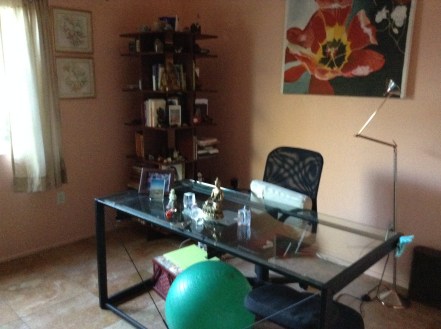
My Clean Office
Clean desk, clear mind, well defined goals, and a new practices are being planned for the new year. Finishing what one starts is a big lesson in my life since I like to start everything all the time. My declaration of the war on clutter has revealed how much of an overstock I had in some parts of my life and space. Dilligence to stay clean is a constant effort, since tax season is upon us and the paper will be flowing in and sorted for that fun activity. I know taxes are an excuse, and not a good one, to pile up papers rather than file or discard them on the spot. I have had a remedial session with a house keeper deep cleaning as I deep organize and toss. I have a box of paper I need to sort, but I created a temporary clean desk for the week, and will not return to the stack of paper lifestyle in 2014. I am dedicated to wasting less space and less time on distraction. Nothing is more distracting than a bunch of really important tax documents mixed and stacked in a pile of all the latest AARP junk mail and bank offers, taking up the space around you. It is very silly to allow that junk mail to get to the desk..Just like wiping one’s feet at the door, it is easier to keep the unwanted schmutz from entering in the first place.
In order to take off the runway must be cleared of any obstructions. The glass top of my desk is to remain clean and clear beyond National Clean Desk Day. I will not allow this achievement to drown in a sea of paper. I vow to throw it out at the mailbox and edit it before it comes to the office. Every day I will file, use or throw out the papers that I keep. Sticking to this practice will make me a happier person and therefore a better writer. I am enthusiastic about the #CleanDeskDay contest launched in celebration of this wonderful concept. Let’s get clean and stay clean all of 2014!!! I can’t wait to see what will be posted in instagram under #CleanDeskDay to enter the contest. The real prize is the clean desk.
If you had a robot to live part of your life you preferred not to live, what would that machine do? I saw a news segment on PBS last night featuring Sherry Turkle, author of Alone Together. She was appearing with robots who are built to illicit emotions from humans. I had heard of her book from friends who read it and were very impressed. Her ideas already made sense to me, but the robot segment clenched the deal. I always think of slot machines when I think of machines that are built to beguile. Now there are robots in development to “care” for seniors. This is pretty freaky, gentle readers. I know I do not want robot care in my dotage.
The medium used to be the message; now it is the messenger as well. There is growing evidence that the ties that bind us are the same ones that are making us lame. I am a big fan of technology, but it needs to be the servant not the master in the relationship. What strikes me as most ironic is that devices are used for self hypnosis of a kind. In the trance state induced by too much busy busy update/like/comment one is an easy target for marketers and anyone with ulterior motives. I believe it is time to reel in the relationships with devices in favor of more time connecting to nature (which includes other humans in real life).
We are influenced daily, and there are people claiming to representing us daily, but we are unaware of most of it. As we forge our futures we find obstacles to happiness of both physical and spiritual natures. Our quest is never a solo, even if we think we act alone. We are slaves to certain beliefs and we ensalve others to our beliefs as much as we can. If we do not transform the way we look at our habits and our regrettable past behavior we are likely to be stuck in repeating, regretting, and then repeating the same patterns.
Metanoia is the concept of repentance that has been badly used and understood. Confession can be way to act temporarily sorry to absolve oneself of responsibility for past transgressions. As a practice it may teach that we are out of control, will repeat, and then feel very guilty about our behavior ad infinitum. This constant cycle of guilt and repeated undesirable action has little hope of creating liberation or happiness. The guilt is an almost certain sign that the action will be repeated. It is the currency of pain. Repentance of the depressing kind is a revolving door or shame leading to more guilt.
My favorite author, Thomas Moore, has written a new book, A Religion of One’s Own, which will be zapped into my Kindle in a few days. To warm up for this book he translated the Gospels from the original Greek language. To warm up for reading the new book I am reading Writing in the Sand, a book Thomas Moore wrote about the meaning of the Gospels. Chapter 2 of Writing in the Sand is about Metanoia, but not of the shameful kind. This word refers to a change of mind so profound as to cause a shift in vision. Thomas breaks down the literal meaning to bring a completely different sense to the word and what it represents. His knowledge of the original language brings back the meaning of the Gospels. I agree that we all need a spiritual and a soulful context for living. Thomas Moore is an ethical voice with a powerful message. I hope you will have a chance to read his work. It constantly inspires me.
How is your relationship with time? A busy, rattled life may or may not bring satisfaction. One thing it can’t bring is free time. This is a gift you must find for yourself. How can we define free time? Is it doing something that is free of cost? Is it free form, without a preconceived schedule or goal? Is it free from all previous habits and delusional thinking? Clearing the schedule involves being clear about priorities. Find time in your life by observing carefully what happens to your time.
It is time to plant the seeds to be harvested later. Contemplative use of time and seasons brings meaning and depth to daily life. Without perspective we often fall deeply into habitual use of time that is both wasteful and depressing. The spark of new joy can be consciously brought into being by doing things differently on a regular basis. This can be as simple as taking a new path to work, trying a new food, an art gallery, or activity. It is not important to spend money to change the habitual use of time; It is important to notice how much time is invested in unhappy activities. We can distinguish between duties that are unpleasant and bad habits by confronting the inner trickster who will always identify with your shadow instincts. The trickster inhabits the emotional territory enforcing crazy concepts that keep you stuck in emotional sludge. Look for a tendency to make excuses and flake out on your own best intentions. Meditation is the remedy for trickster tendencies, because it clears the mind allowing spacious, free time.
We have a finite amount of time, and once it has been spent in one way, it can never be retrieved or recycled. As the new year approaches, why not take a new look at time and happiness? They are closely related.

headstone
My 12th great-grandfather was born in London and died in the Massachusetts Colony. He arrived under dire circumstances and established himself as a joiner, or furniture maker. He was famous for an act of courage walking 25 miles in the snow to tell Miles Standish his village was in peril of being attacked.
May, 1622 The Sparrow, at Maine from England, sent passengers in a boat to Plymouth, New England.
Fishing vessel, Master Rogers
A boat arrived at the Plymouth Plantation from the Sparrow
(fishing vessel at Maine, hired and sent out by Thomas Weston and
John Beauchamp, salter of London, for their personal profit) with
7 men passengers sent by Weston to work for him in New England.
They remained at Plymouth until the Charity and the Swan
moved them to “Wessagusset” (Weymouth, Massachusetts) where they were
to establish a settlement.
Weston’s settlers, May, 1622 – June 1622
In 1622 Thomas Weston sent a fishing vessel, the Sparrow, to Massachusetts Bay, with a small party of seven men to find the most suitable place for a colony. They were to prepare for the arrival of a large group of single men whom he proposed to send out. Weston was one of the leaders of the London merchant adventurers who sponsored the establishment of Plymouth Colony, but who was now independently setting up his own. The site eventually chosen was at Wessagusset (modern Weymouth, some thirty miles north of Plymouth). The ship anchored at the Damaris Cove Islands off the coast of Maine, and a group of ten, including some crew from the Sparrow, sailed down to Plymouth in a shallop, arriving there on May 31, 1622, just as Massasoit’s men were demanding that Squanto be handed over to them for execution. They brought letters to the Governor from Weston, but no provisions for which the settlement was in desperate need. Phineas Pratt was one of Weston’s settlers, and he and his six companions were given hospitality in Plymouth until the Charity and the Swan arrived with the main party of Weston’s settlers at the end of July or early August 1622.
The two ships, the Charity and the Swan, temporarily added sixty more “lusty men” to the eighty-odd colonists living in Plymouth village. They stayed for the months of July and August. The settlement at Weymouth was a failure, and the men had to be rescued by Capt. Standish and some of his men. Phineas Pratt, on the breakup of the settlement moved to Plymouth, and later married Mary Priest, niece of Isaac Allerton.
Weymouth Settlement Edit
In July 1622, two ships, (Swan and Charitie) arrive at Plymouth with a different group of adventures. They stay a couple of months before moving to establish a nearby at Weymouth (or Wessagusset). This groups is financed by Mr Wesson. They are joined by a 3rd ship (Sparrow). This groups fares badly with the Indians and is forced to abandon their settlement after a rescue by Plymouth militia.
In Sept 1623, the ship Katherine arrives with a group of settlers financed by Sir Ferdinando Gorges. They stop shortly at Plymouth before continuing onwards to the Weymouth Settlment.
One settler from the Sparrow, Phineas Pratt (1590-1680), after the breakup of the first Weymouth settlment, joins the group at Plymouth and marries Mary Priest, a niece of Isaac Allerton (1586-1658).
Phineas Pratt was a member of a company of men sent from England by Thomas Weston. They arrived in New England in 1622 on three ships : the Sparrow, Charity and Swan (Pratt was a passenger on the Sparrow, the first to arrive). The approximately 67 men, many of them ailing, arrived with no provisions. The Pilgrims supported them throughout the summer of 1622.
In the fall of 1622, the Weston men left to colonize an area north of Plymouth called Wessagusset. They soon fell into difficulties through behaving, generally, in a very foolish and improvident fashion. They also severely angered the local Native Americans by stealing their corn.
Massasoit, sachem of the Wampanoags, informed the Plymouth colonists that there was a conspiracy among the Natives of the Wessagusset area to massacre the Weston men. Myles Standish prepared to head north with a small company of Plymouth men to rescue Weston’s men.
The same message was also delivered by one of Weston’s men, who came to Plymouth in March of 1623 “from the Massachusetts with a small pack at his back.”
Phineas Pratt was the man with the backpack. He had secretly snuck out of the Wessagusset settlement, traveling for several days without food through a snowy landscape on his 25-mile journey.
Myles Standish and a small contingent (minus Phineas, who was still recovering from his arduous journey) headed to Wessagusset to recognize Weston’s men. The Plymouth contingent killed several Native Americans in the process (for which, they were roundly scolded by their pastor, John Robinson). Soon afterwards, Weston’s group abandoned Wessagusset. Sometime in late 1623, Phineas joined the Plymouth settlement.
Sometime before May of 1648, when he purchased a house and garden in Charlestown (now a part of Boston), Pratt left Plymouth. In 1662, Pratt presented to the General Court of Massachusetts a narrative entitled “A declaration of the affairs of the English people that first inhabited New England” to support his request for financial assistance. The extraordinary document is Phineas Pratt’s own account of the Wessagusset settlement and its downfall.
Phineas Pratt was by profession a “joiner.” “Joining” was the principle method of furniture construction during the 17th century. “Joiners” were highly skilled craftsmen who specialized in this work; their skills were valued more highly than those of a carpenter.
Phineas Pratt married Mary Priest, daughter of Degory and Sarah Allerton Vincent Priest (the sister of Mayflower passenger Isaac Allerton, Sarah had been married to Jan Vincent and widowed before she married Degory Priest). Degory Priest journeyed to Plymouth on the Mayflower, his wife and two daughters intended to join him later. Priest died during the first winter. Before sailing for America, the widowed Sarah Allerton Vincent Priest married Godbert Godbertson, who became Mary Priest’s stepfather. The family (mother, stepfather and two daughters) were among the passengers of theAnne and Little James, arriving in Plymouth in 1623.
Phineas was probably born about 1593, Mary was probably born about 1612. It seems likely, given the probably age of their oldest child at the time of her death, that they married about 1631 or 1632. Phineas and Mary Pratt had 8 children.
According to his gravestone in the old Phipps Street Cemetery, in the Charlestown area of Boston, “Phinehas Pratt, agd about 90 yrs, decd April ye 19, 1680 & was one of ye first English inhabitants of ye Massachusetts Colony.” (Mayflower Descendant, Vol. 6, p. 1-2).
Mary Pratt outlived her husband; the date of her death is not certain but she did receive stipends from the Town of Charlestown in 1683/4 and 1686/7 (Robert Charles Anderson, The Great Migration Begins, Vol. 3, p. 1516
Phineas PRATT (1590 – 1680)
is my 12th great grandfather
Daniel Pratt (1640 – 1680)
son of Phineas PRATT
Henry Pratt (1658 – 1745)
son of Daniel Pratt
Esther Pratt (1680 – 1740)
daughter of Henry Pratt
Deborah Baynard (1720 – 1791)
daughter of Esther Pratt
Mary Horney (1741 – 1775)
daughter of Deborah Baynard
Esther Harris (1764 – 1838)
daughter of Mary Horney
John H Wright (1803 – 1850)
son of Esther Harris
Mary Wright (1816 – 1873)
daughter of John H Wright
Emiline P Nicholls (1837 – )
daughter of Mary Wright
Harriet Peterson (1856 – 1933)
daughter of Emiline P Nicholls
Sarah Helena Byrne (1878 – 1962)
daughter of Harriet Peterson
Olga Fern Scott (1897 – 1968)
daughter of Sarah Helena Byrne
Richard Arden Morse (1920 – 2004)
son of Olga Fern Scott
Pamela Morse
I am the daughter of Richard Arden Morse





The practice of drawing and walking labyrinths is ancient and has been found all over the world. Today there is an interest in this form of meditation, and full moon is a perfect time to commemorate a moment in time by walking one. In Tucson there is a group hosting a full moon labyrinth walk each month and just recently they decided to become mobile. Rather than center the walks at a Unitarian Church with a lovely permanent labyrinth the design is now drawn on the ground for a temporary portal. Last night was the last full moon of the year, just a few days before the winter solstice. The labyrinth was constructed of ropes on the lawn, a shiny center with LED lights, and rattles for those who wanted to borrow them.
The weather was mild so we enjoyed the meditation and stayed to share cookies one of the ladies brought. Everyone expressed a feeling a full presence and appreciation. I have normally liked to go on these alone, but the drumming and the shared reverence, not to mention to rainbow around the full moon as we said good night, gave a depth to the moment that was very special. People of all ages, shapes, sizes, and cultures came to participate and commemorate the season. It was perfect.
The artist reaches just beyond the normal senses to bring creation into being. There is strong motivation and emotion driving the artist to produce. The medium is not as important as full artistic expression. Some of us are not making any money from art, but still live our lives involved with creating. Cooking, gardening, and all normal day to day tasks can be done in artful ways. Art truly is in the eye of the beholder; A strong desire to design and deliver creativity to the world is all that is needed to be an artist.
Making a living at art is risky, and yet rewarding. The starving artist and the crazed genius artist are examples of the shadow aspect of this archetype. I used to make my living as a potter. I worked at a school mixing glazes and firing the kiln. I was paid in clay, glazes and firing; I had to turn that into money by selling my work. I was very good at being a starving artist and never starved at all. I remember that time as an extremely abundant phase, full of friends, travel, and unlimited creative freedom. Clay is a fast medium initially. Throwing a pot on a wheel is pure zen. It must be centered and formed quickly so the clay body does not get too wet and collapse. The pot must be dried slowly to avoid cracking. The glaze firing is an alchemical process that has slightly different results each time it is done. From the first time you touch the clay you know that some of your pots will not make it. If you are lucky the problem occurs when the clay has not been fired, so you can just turn it into wet clay and try it again. I used to take finished pots I thought were too ugly to sell out to the desert and shoot them with a 22 pistol to destroy the evidence. I used to joke that anthropologists in the future will wonder what kind of civilization felt the need to shoot pottery. I am glad I still have a few pieces I made that have survived, and equally glad I shot the ugly ones.

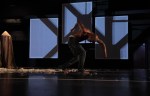
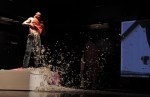
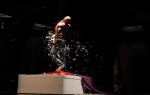
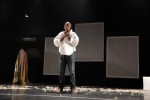

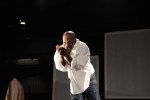

I met Elisio Pitta 20 years ago when he visited Rancho la Puerta to teach and do a capoeira demonstration. I had never seen capoeira before and was fascinated by the grace and power of the movements. He taught us some Brazilian folkloric dance also. We were all beginners, but he managed to get us all moving and enthusiastic in the few days he was our teacher. I have had the opportunity to learn from excellent teachers, but his talent to both teach and move was beyond compare. I never really attempted to learn the form, but I never forgot it either.
His career in dance has taken him around the world from his hometown, Bahia. He lives on a hill with a fantastic view of the Atlantic and has very deep cultural roots in the city. He has been performing a new dance of his own creation there this week, and soon will take the show on the road. Next month he will perform Othello in Shakespeare’s own country, in Liverpool England. Using Brazilian music and original choreography by Elisio he interprets the classic story of jealousy and regret. He dances the part of Othello and projects the other characters onto the stage in preproduced segments to tell the story of Desdemona’s ill fated murder and his subsequent remorse. He is using contemporary props and costuming in the production to go with his digital cast members. I asked him why he decided to be Othello and he told me that it is the Year of Shakespeare and he always wanted to do it. Classy.
I admire his extreme creativity and dedication to the art of dance. His natural talent is obvious, but he has used his talents and his strong cultural lineage to transcend boundaries. I think Shakespeare is proud of him. I am pleased to know such a talented and artistically ambitious man.
Flaunta was the second cousin of the goddess Aphrodite. She became the goddess of confidence. Her journey to her vocation to inspire and represent confidence was a story of self discovery. Aphrodite needed no outside assurance to know she was a great beauty. She exuded it. The young Flaunta was not convinced of her own powers, but passed through a jealousy of earth women who enjoyed and were confident in their own good looks. She studied the powerful and confident women, learning their secrets. Eventually her cousin would bestow the title and the powers of confidence goddess on Flaunta. She is active today in the complicated self image issues women face about appearance and competence. Being authentic and unique leads to the highest kind of confidence, as Tank Girl can attest. Confident women know:
Get to know Flaunta, and take her with you next time you need to look something or somebody right in the eye. Nothing says “I got this” like control of your gaze. Bluffing or not, the first impression you give will remain strong when you show self assurance.
 mermaidcamp