mermaidcamp
Keeping current in wellness, in and out of the water
You can scroll the shelf using ← and → keys
You can scroll the shelf using ← and → keys
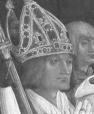
Jakob I
My 16th great-grandfather was from Baden-Baden, Germany. I have been to Baden by Vienna and Baden by Zurich, both fabulous historical hot springs. I have not visited the fancy German double Baden, but have always wanted to go. Now I have all the more reason:
Jacob I of Baden (15 March 1407, Hachberg–13 October 1453, Mühlburg), was Margrave of Baden-Baden from 1431 to 1453.
He was the elder son of Bernard I, Margrave of Baden-Baden and Anna von Oettingen. Jacob I was a man of deep religious beliefs, well-known as a founder of churches. He founded the monastery at Fremersberg and was a major benefactor of the Stiftskirche at Baden-Baden.
According his father’s precepts, only two of his sons were to be considered heirs of the margravate. Therefore only Karl and Bernhard received a secular education; the other children had a strict religious upbringing. Georg, after making a religious profession in his youth, returned briefly to the world, but in 1454 reverted to holy orders and later became Bishop of Metz.
Jacob I was the opposite of his father; Enea Silvio de Piccolomini (Pope Pius II) characterized him as famous among the Germans for his justice and intelligence.
In his early years he was ruler of the family possessions in Hohenberg, until at the age of 24 he succeeded to the government of Baden. He was described as a pugnacious knight and a frugal father of the state and was popular among the princes as a mediator. Both Emperor Sigismund and Emperor Frederick III, under whom he served, thought highly of him.
When as the result of a miscarriage his sister Agnes fled in the middle of a conflict about inheritance, the Margrave lost his claim to the Duchy of Schleswig. He was so angry that he confined Agnes for the rest of her life in the castle of Alt-Eberstein. (The incident is remembered as the “Double Disaster of Gottorf”).
When in 1427 the Treaty of Sponheim came into force, he gained possessions on the Moselle. In 1442 he bought for 30,000 guilders from the descendants of Walter von Geroldseck half the lordship of Lahr and Mahlberg.
Family and children
He married 25 July 1422 Catherine of Lorraine, daughter of Charles II, Duke of Lorraine and Margaret of the Palatinate. They had the following children:
Charles I, Margrave of Baden-Baden (d. 24 February 1475, Pforzheim).
Bernard II, Margrave of Baden-Baden (later beatified) (1428–12 July 1458, Moncalieri).
Johann (1430–9 February 1503, Ehrenbreitstein), Archbishop of Trier.
George (1433–11 February 1484, Moyen), Bishop of Metz.
Markus (1434–1 September 1478), abbot in Liège.
Margarete (1431–24 October 1457, Ansbach), married 1446 to Albert III, Margrave of Brandenburg.
Matilde (d. 1485), Abbess of Trier.
He also had an illegitimate son, Rudolf of Baden.
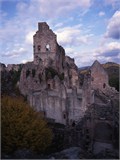
castle of birth
Jakob I Von Baden (1407 – 1453)
is my 16th great grandfather
Karl I Von Baden (1424 – 1475)
son of Jakob I Von Baden
Christof I VanBaden (1453 – 1527)
son of Karl I Von Baden
Beatrix Zahringen (1492 – 1535)
daughter of Christof I VanBaden
Sabine Grafin VonSimmern (1528 – 1578)
daughter of Beatrix Zahringen
Marie L Egmond (1564 – 1584)
daughter of Sabine Grafin VonSimmern
Richard Sears (1590 – 1676)
son of Marie L Egmond
Silas Sears (1638 – 1697)
son of Richard Sears
Silas Sears (1661 – 1732)
son of Silas Sears
Sarah Sears (1697 – 1785)
daughter of Silas Sears
Sarah Hamblin (1721 – 1814)
daughter of Sarah Sears
Mercy Hazen (1747 – 1819)
daughter of Sarah Hamblin
Martha Mead (1784 – 1860)
daughter of Mercy Hazen
Abner Morse (1808 – 1838)
son of Martha Mead
Daniel Rowland Morse (1838 – 1910)
son of Abner Morse
Jason A Morse (1862 – 1932)
son of Daniel Rowland Morse
Ernest Abner Morse (1890 – 1965)
son of Jason A Morse
Richard Arden Morse (1920 – 2004)
son of Ernest Abner Morse
Pamela Morse
I am the daughter of Richard Arden Morse
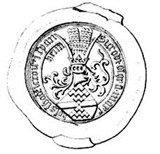
seal of Jakob I
I lived in Venezuela in the early 1960s. My father was manager of operations for Mene Grande Oil Company, aka Gulf Oil. I lived in San Tomé in a remote petroleum camp in the llanos. I lived as a petroleum princess and listened to Radio Havana because it was the only station that came in clearly. We lived an opulent life surrounded by fences and guards. Trinidadians usually worked as servants in our homes because they were bilingual. We had one very high lifestyle in every respect.
John Kennedy was shot before I moved to South America, which was unsettling. Race riots were taking place in the states, but we were isolated from that reality hanging out at our private social club in the tropics. We lived in extreme segregation, but thought nothing of it. The seeds of revolution are planted many years before they mature. The wealth discrepancy in South America was shocking, but since it was all to our advantage we were told it was inevitable. These experiences all became part of my knowledge of the world and later part of my politics. I distrust all imperialists and their motives.
With a simplistic agenda to end unbearable insecurity the students began to march last week in all the cities in Venezuela. The outcome of this battle will be significant and was long in the making.

MGO employee handbook

Sulgrave Manor

Sulgrave Manor
George Washington and I share some common ancestors. Robert Washington was the 4th great-grandfather of George Washington, first President of the United States. He sounds like a heavy duty brute, having torn down his local village and church for pasture land. They were friends with Henry VIII, who was quite the brute himself. I notice that Elizabeth Washington, my ancestor, marries into the Lanier family, a family of musicians from Henry’s court. I wonder if they had any knowledge of each other’s ancestors back in England. Since that was very important for status, my guess is that they did.
ROBERT WASHINGTON (1544 – 1623)
ROBERT WASHINGTON, the eldest son of Lawrence the builder and Amy nee Pargiter, born in 1544, died 1620 aged 76. Inherited Sulgrave Manor when his father died in 1584 with about 1250 acres at Sulgrave, Stuchbury, Woodford, Cotton, Hardingstone, Blakesley, Patishall, Ascote, Eastcote, Lower Boddington, Radway, Horley and Hornton in Oxon.
Married twice, firstly, in 1565 to Elizabeth, daughter and heiress of Walter Light (Lyte) of Radway Grange, Warwickshire, and a descendant of the Villiers family. The marriage is recorded in the original glass panel dating from about 1580 in the Great Chamber window where the W arms are impaled with the Lyte arms:As part of the marriage settlement Lawrence created an estate from two messuages (holdings) in Pattishill for his own, (L’s) use while Robert lived and after his death for the use of Elizabeth for life as her jointure. Use in this context usually means taking the revenue from rather than living in.
From Elizabeth acquired Radway Grange and title to the manors of Horley and Hornton Oxon.
Six sons and three daughters by Elizabeth. Eldest son Lawrence II born in 1565. Daughter Amye married Alban Wakelyn of Eydon, N’hants. 3rd son Walter granted Radway Grange by deed Nov 30th 1592 for peppercorn rent for 40 years after the death of Walter Light ; his marriage to Alice daughter of John Murden of Ratley is arranged in the following year and secondly, sometime before 1599, to Anne Fisher of Hanslope Bucks Clifford Smith says 3 more sons and 3 more daughters by her.
Together with Sir John Spencer was appointed a royal commissioner in Northants in 1598. Robert is usually called “esquire” in contemporary documents, a higher rank that that accorded to his father (gentleman).
In 1600, Robert bought the manor of Nether Boddington from his son-in-law, Albert Wakelyn. There was no house on the Nether Boddington manor.
Stuchbury was exploited for sheep – Robert apparently pulled down the parish church, parsonage along with “all or the most part of the said town and parish houses” before 1606.
In 1606 Robert Washington figured in an interesting exchequer case1. Robert Washington, -the patron of the rectory of Stuchbury, together with his two cousins, Robert Pargiter and George Mole (who also had an interest in the advowson), had instituted no clergyman to the living “by the space of three score years or thereabouts.” On the contrary, – they had pulled down “not only the parsonage house . . . and all or the most part of the said town and parish houses of Stuttesbury aforesaid, but also the parish church itself,” and had used the lands “for pasture for kine and sheep, to the great depopulation of the commonwealth and country thereabout.”2
Although he continued to live at Sulgrave, he made a settlement upon his eldest son Lawrence in May 1601, possibly as a result of his second marriage – to protect the interests of his first family – of the entailed portion of the estate i.e. manor of Sulgrave and manor and rectory of Stuchbury. Lawrence sold the Sulgrave manor demesne lands to Thomas Atkins, of Over Winchcombe, Buckinghamshire, on 20 August, 1605, retaining only the house and seven acres of land. With the consent of his father. Lawrence sold the reversion of the remainder on 1 March, 1610 to his cousin Lawrence Makepeace, son of Robert’s sister Mary and Abel Makepeace. Robert (and his heirs) retained the manor and rectory of Stuchbury until 1646, Nether Boddington to 1636 and Radway to 1654.
Robert died in 1619 and his will requests burial in Sulgrave Church. His second wife, Anne Fisher, continued to live at Sulgrave Manor house until 1625. She was buried at East Haddon, Northamptonshire, on 16 March. 1652. Robert was succeeded by his grandson, John, his son Lawrence having predeceased him in 1616.
Lawrence, Robert’s brother, born probably 1546, (possibly 56), became Registrar of the Court of Chancery and married firstly, in 1593 Mary Argall (nee Scott), widow of Richard Argall, who had died in 1588, leaving five sons and six daughters living. One of the sons was Sir Samuel Argall, who emigrated and was Deputy-Governor of Virginia in 1617-19. On Mary’s death in 1605, Lawrence married Martha Nuse. He died in 1619 aged either 63 or 73 (Ixxiii on his memorial) and is buried at Maidstone. Their son, another Lawrence, was knighted and, like his father, became Registrar of the Court of Chancery. He was the owner of Stonehenge. died in 1643 aged 64, and is buried at Garsdon. Wiltshire. Their daughter Mary married William Horspoole, a cousin of Sir Thomas Smythe, Treasurer Virginia Company (VMHB 90, 1982, Samuel Argall’s family, James D Alsop) and is buried at Maldon, near Cliveden.
Elizabeth
Anne married Edmond Foster of Hanslop co Bucks
Frances married John Tompson of Sulgrave
Magdalyn
BarbaraMary married Abel Makepeace of Chipping Wardon N’hants, parents of Lawrence Makepeace who purchased rights to Sulgrave from his uncle Lawrence II in 1610
Margaret married to Gerrard Hawtayne Esq second son of Edward Hawtayne of co Oxon
1.
Abstract printed by Mr. Ernest G. Atkinson in The Times 22 September, 1894,
2.
William Barcocke, clerk, versus Robert Washington and two others: Bills and Answers, Northants., Easter, 4 James I.
I am enthusiastic about Nextdoor.com. It has potential to become a tool of great value to fight crime and improve life. I invite everyone I know to start one for your neighborhood. I opened ours just a few days ago and we have gathered more than the minimum 10 members we need to have our site supported for free for our community. This is private, non commercial networking to improve the environment and create safer places to live. It is not connected to any government agency or political group. This start up knows that cities need this, and is developing the system with venture capital. It is brilliantly simple.
We have sunk to a new nadir in Tucson. Our neighborhood has a federally funded neighborhood watch consisting of only 5 households, for the sole purpose of willfully denying the presence of the charity scam, “Feeding the Homeless in Tucson’s Parks“. It is a sad state of affairs when your city will break federal revenue law, getting a grant to help a small group of white collar criminals break federal revenue law in front of everyone in the neighborhood. This makes it look like the best way to stay in any criminal business is to found a fake neighborhood watch to protect it, and help your local cops get a federal grant to help you deny that it is criminal to collect donations without reporting them to the IRS.
It is completely ironic to call this neighborhood watch when the majority has to watch the minority…and the authorities…openly break the law. This is why Nextdoor is an important way to clean up neighborhoods. When people know what is happening around them they can make improvements together for the benefit of all. When people live isolated lives, crime has more opportunity to exist. If there is a real neighborhood watch that succeeds in real life, I applaud you. In our case, we need to start by simply getting some neighbors to know their neighbors. That is progress in itself where I live.

Helvetia in Bern
Helvetia is the lady who holds the cantons of Switzerland in the palm of her hand. She is an evolution of Abundantia, and represents the confederacy. She presides over an extreme form of democracy in the heart of Europe. Her resources are many and very well managed. Her people are healthy wealthy and wise. Her needs are few. She gets by on a minimalistic budget that covers the Swiss Army, and leaves big taxation to the cantons. This allows her to live in relaxed elegance in comparison to her neighbors. For centuries the Swiss have depended on foreign labor by executing contracts that required the guest worker (many from Italy before the EU) to return to the home country several times a year. Hotels and resorts close the doors and the workers go home during soft tourism seasons. In season the hotels provided lodging and meals for the imported workers. Although the Helvetian Confederation did not join the EU it had to make a series of trade agreements in order to survive and thrive in the very middle of the EU countries. I used to spend a lot of time in Switzerland before the EU and I honestly did not think Europe would even pull it off in the beginning. I was not alone in this belief.
The Swiss are very liberal in social terms and conservative in fiscal terms. They are brilliantly efficient and endlessly frugal and creative. They have generously accommodated Tibetans, Africans, Tamil Tigers and other refugees, providing education and finding employment for many. Now they have an influx of Germans and Eastern Euros that have taken over much of the service segment. This is a cultural nightmare for Helvetia and her healthy economy. It is not so surprising to see that the rural populations are the one’s most opposed to the mass immigration. The Italian canton, Ticino, which is inundated with Italians who wish to stay voted with those in the countryside. They have preserved an individual culture in a confederacy with four official languages and do not wish to see history and tradition lost.
This is a small version of a big issue, which is why some are saying this could be the beginning of the end of the EU. I respect the Swiss who want to keep the identity and independence that is an integral part of their society. I used to tell my Swiss friends they need not vex themselves because they own the source of both the Rhine and the Rhone, the last clean water in Europe. They can simply do what they do best, and set up meters to measure and sell that water. Although that sounds outlandish now, there will be certain political and economic repercussions following this restriction of immigration. My bet is on Helvetia, who is wise and has the best interests of her people in mind. She will have to defend her confederacy now.
The son of an older Presbyterian minister and his much younger wife, Sylvester Graham became an orphan early in his life. His mother was committed to an insane asylum and his father died. He was admitted to Amherst, but left without graduating. He met the Reverend William Metcalf, founder of the first vegetarian church in Philadelphia, known as The Bible Christians. He was convinced to try vegetarianism and soon pronounced it to be the remedy for alcoholism. Graham was a crusader for the use of whole grains. He was outraged that beer and distilled spirits were using grains to create alcohol rather than whole grain foods. He was angry with bakers for using what was known as the “bolting cloth” a process that removed the bran from the flour. In 1837 he called physicians vampires in lectures given to his followers in Boston. He denounced the butchers and the bakers of the city, causing a revolt on the part of the aforementioned.
Today we know his name because the graham cracker is part of our American cuisine. The corn flake and other whole grain cereals followed the lead of Graham crackers. He became an ordained Presbyterian minister and an ardent opponent of the consumption of both alcohol and flesh. Since legal prohibition had been repealed in 1933 his views on alcohol were out of step with the times, and certainly nobody wanted to hear him go off on vegetarian diet when it was more unpopular. His hatred for the “bolting cloth” moved him to call it America’s shroud. Now that so many suffer from saccharine disease, his extreme beliefs that the removal of bran may seem prophetic. What is crazy is that the Graham cracker of today contains no whole grain. Unbleached white flour and sugar are the tasty main ingredient in our key lime pie crust, which would have made Sylvester freak out all over the place.
 Target Hacking Spreads-Teen Hacker In Russia (via Repost Video News)
Target hack spreads; report says at least six other U.S. retailers hit by malware
I have the news in my in box today that, although I have not been in a Target store for about 6 months, and have not shopped with them on line for years, my personal data has been lifted from their server. They inform you that they will help you monitor this intrusion for a year, but unknown bandits have your information and will, for the rest of your life, target you and sell information about you in order to hack your identity.
| You are a TARGET!!!!!! | |
|
Dear Target Guest,
As you may have heard or read, Target learned in mid-December that criminals forced their way into our systems and took guest information, including debit and credit card data. Late last week, as part of our ongoing investigation, we learned that additional information, including name, mailing address, phone number or email address, was also taken. I am writing to make you aware that your name, mailing address, phone number or email address may have been taken during the intrusion.
I am truly sorry this incident occurred and sincerely regret any inconvenience it may cause you. Because we value you as a guest and your trust is important to us, Target is offering one year of free credit monitoring to all Target guests who shopped in U.S. stores, through Experian’s® ProtectMyID® product which includes identity theft insurance where available
I have answered the mail and requested the year, which is entirely inadequate to deal with the issue at hand. The number of people who have been hacked at Target grows daily. Ironic that the whole thing is about targets. Have you been Targeted? How does it make you feel? I am not only no longer a customer of the store, I am into the idea of a class action law suit.

Audley End House
My 15th great-grandfather was a lawyer and a complete tool of Henry VIII. When Henry dissolved the English Catholic monasteries, Thomas was given the Abbey at Walden, which he made his mansion, Audley End House. He replaced Sir Thomas More as Speaker of the House of Commons.
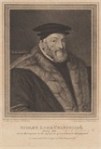

The 1st Lord Audley. Thomas Audley, 1st Baron Audley of Walden, KG, PC, KS (c. 1488 – 30 April 1544), Lord Chancellor of England, born in Earls Colne, Essex, the son of Geoffrey Audley, is believed to have studied at Buckingham College, Cambridge. He was educated for the law, entered the Middle Temple, was town clerk of Colchester, and was in the commission of the peace for Essex in 1521. In 1523 he was returned to Parliament for Essex, and represented this constituency in subsequent Parliaments. In 1527 he was Groom of the Chamber, and became a member of Wolsey’s household. On the fall of the latter in 1529, he was made Chancellor of the Duchy of Lancaster, and the same year Speaker of the House of Commons, presiding over the famous assembly styled the Reformation Parliament, which abolished the papal jurisdiction. The same year he headed a deputation of the Commons to the king to complain of Bishop Fisher’s speech against their proceedings. He interpreted the King’s “moral” scruples to parliament concerning his marriage with Catherine, and made himself the instrument of the King in the attack upon the clergy and the preparation of the Act of Supremacy. In 1531 he had been made a serjeant-at-law and king’s serjeant; and on 20 May 1532 he was knighted, and succeeded Sir Thomas More as Lord Keeper of the Great Seal, being appointed Lord Chancellor on the 26 January 1533. He supported the king’s divorce from Catherine and the marriage with Anne Boleyn; and presided at the trial of Fisher and More in 1535, at which his conduct and evident intention to secure a conviction has been criticised by some. Next year he was part of trial of Anne Boleyn and her “lovers” for treason and adultery. The execution of the king’s wife left him free to declare the king’s daughter Princess Elizabeth a bastard, and to marry Anne’s maid, Jane Seymour. Audley was a witness to the queen’s execution, and recommended to Parliament the new Act of Succession, which made Jane Seymour’s issue legitimate. In 1537 he condemned to death as traitors the rebels of the Pilgrimage of Grace. On 29 November 1538 he was created Baron Audley of Walden; and soon afterwards presided as Lord Steward at the trials of Henry Pole, Lord Montacute, and of the Marquess of Exeter. In 1539, though inclining himself to the Reformation, he made himself the King’s instrument in enforcing religious conformity, and in the passing of the Six Articles Act. On April 24, 1540 he was made a Knight of the Garter, and subsequently managed the attainder of Thomas Cromwell, Earl of Essex, and the dissolution of Henry’s marriage with Anne of Cleves. In 1542 he warmly supported the privileges of the Commons, but his conduct was inspired as usual by subservience to the court, which desired to secure a subsidy, and his opinion that the arrest was a flagrant contempt has been questioned by good authority. He resigned the great seal on 21 April 1544, and died on April 30, being buried at Saffron Walden, where he had prepared for himself a splendid tomb. He received several grants of monastic estates, including Holy Trinity Priory in Aldgate, London and the abbey of Walden, Essex, where his grandson, Thomas Howard, 1st Earl of Suffolk, built Audley End, doubtless named after him. In 1542 he endowed and re-established Buckingham College, Cambridge, under the new name of St Mary Magdalene, and ordained in the statutes that his heirs, “the possessors of the late monastery of Walden” should be visitors of the college in perpetuum. A Book Orders for the Warre both by Sea and Land (Harleian MS. 297, 144) is attributed to his authorship. He married Christina, daughter of Sir Thomas Barnardiston, and later Elizabeth, daughter of Thomas Grey, 2nd Marquess of Dorset, by whom he had two daughters. His barony became extinct at his death. Preceded by Sir Thomas MoreSpeaker of the House of Commons
1529–1533Succeeded by
Sir Humphrey Wingfield Preceded by
Sir Thomas More(Lord Chancellor)Keeper of the Great Seal
1532–1533 Succeeded by
The Earl of Wriothesley(Lord Chancellor)Lord Chancellor
1533–1544Preceded by
New CreationBaron Audley of Walden
Thomas Audley (1503 – 1544)
is my 15th great grandfather
Margaret Audley (1545 – 1564)
daughter of Thomas Audley
Margaret Howard (1561 – 1591)
daughter of Margaret Audley
Lady Ann Dorset (1552 – 1680)
daughter of Margaret Howard
Robert Lewis (1574 – 1645)
son of Lady Ann Dorset
Robert Lewis (1607 – 1644)
son of Robert Lewis
Ann Lewis (1633 – 1686)
daughter of Robert Lewis
Joshua Morse (1669 – 1753)
son of Ann Lewis
Joseph Morse (1692 – 1759)
son of Joshua Morse
Joseph Morse (1721 – 1776)
son of Joseph Morse
Joseph Morse III (1752 – 1835)
son of Joseph Morse
John Henry Morse (1775 – 1864)
son of Joseph Morse III
Abner Morse (1808 – 1838)
son of John Henry Morse
Daniel Rowland Morse (1838 – 1910)
son of Abner Morse
Jason A Morse (1862 – 1932)
son of Daniel Rowland Morse
Ernest Abner Morse (1890 – 1965)
son of Jason A Morse
Richard Arden Morse (1920 – 2004)
son of Ernest Abner Morse
Pamela Morse
I am the daughter of Richard Arden Morse

Margaret Audley
My 14th great-grandmother was Duchess of Norfolk. Elizabeth I beheaded her husband, who was her 5th cousin. She is buried in a church in Norwich.
Lady Margaret Howard 1540-1563/4
“The Virtuous Lady Margaret” was the daughter and sole heir of Thomas, Lord Audley of Walden and Elizabeth Grey. Lord Audley was a prominent Politician whose roles included Lord Chancellor to Henry VIII. Her first husband Lord Henry Dudley died before she was eighteen.
She subsequently married her cousin, Thomas Howard, 4th Duke of Norfolk, who had been widowed in 1557. Thomas was extremely rich and powerful and has been described as the “Premier Peer” in England between 1558 – 1568. The marriage was initially delayed whilst Norfolk’s lawyer negotiated in Rome for a Papal dispensation that would allow him to marry his cousin. Following the death of Queen Mary in 1558 and the accession of the protestant Queen Elizabeth the marriage went ahead without Papal approval. Subsequently in Elizabeth’s first parliament in 1559 the marriage received statutory ratification. Margaret brought a rich inheritance to the alliance, including Audley End in Essex.
During her short marriage she bore five children: two sons and three daughters. She died on 10th January 1564 three weeks after giving birth to her second son Lord William Howard, born on 19th December 1563. The monument, however, states she died 7th February 1563 ! This could be because although Margaret was buried with great dignity on the North Side of the Chancel in St John Maddermarket , she had no memorial there until this tablet was erected in 1791 by her descendant Lord John Howard of Walden. Although the monument here is very plain her effigy lies beside that of the Duke’s first wife Mary Fitzalan, on a splendid tomb in St Michael’s church, Framlingham Suffolk. A space had been left between the two figures, presumably for the effigy of their husband. He was never placed here having brought disgrace to the family and being beheaded for treason by Elizabeth I because of his attempts to marry Mary Queen of Scots.
‘
The Monument
This rather humble tablet was erected by Lord John Howard of Walden in 1791 in a style typical of the time; it was restored by Lord Howard de Walden in 1903.
Under the shield is quoted the Howard family motto ” Sola Virtus Invicta” – which translates to “Bravery Alone is Invincible.” The reference to “The virtuous Lady Margaret” on the monument could, however, be reference to an alternative translation “Virtue Alone is invincible”
Margaret Audley (1545 – 1564)
is my 14th great grandmother
Margaret Howard (1561 – 1591)
daughter of Margaret Audley
Lady Ann Dorset (1552 – 1680)
daughter of Margaret Howard
Robert Lewis (1574 – 1645)
son of Lady Ann Dorset
Robert Lewis (1607 – 1644)
son of Robert Lewis
Ann Lewis (1633 – 1686)
daughter of Robert Lewis
Joshua Morse (1669 – 1753)
son of Ann Lewis
Joseph Morse (1692 – 1759)
son of Joshua Morse
Joseph Morse (1721 – 1776)
son of Joseph Morse
Joseph Morse III (1752 – 1835)
son of Joseph Morse
John Henry Morse (1775 – 1864)
son of Joseph Morse III
Abner Morse (1808 – 1838)
son of John Henry Morse
Daniel Rowland Morse (1838 – 1910)
son of Abner Morse
Jason A Morse (1862 – 1932)
son of Daniel Rowland Morse
Ernest Abner Morse (1890 – 1965)
son of Jason A Morse
Richard Arden Morse (1920 – 2004)
son of Ernest Abner Morse
Pamela Morse
I am the daughter of Richard Arden Morse
Source: Wikipedia
Margaret Howard (née Audley), Duchess of Norfolk (1540 – 1564) was the sole surviving child[1] of Thomas Audley, 1st Baron Audley of Walden and Lady Elizabeth Grey, daughter of Thomas Grey, 2nd Marquess of Dorset and Margaret Wotton. Lady Elizabeth Grey was the aunt of Lady Jane Grey, de facto Queen of England for nine days in 1553 and, therefore, Margaret and Queen Jane were first cousins.
Margaret was a wealthy heiress and married first, without issue, Lord Henry Dudley, son of John Dudley, 1st Duke of Northumberland. Henry Dudley was killed at the Battle of St. Quentin, 20 August 1557
In December 1558, she became the second wife of Thomas Howard, 4th Duke of Norfolk, who was her fifth cousin, through their descent from Jacquetta of Luxembourg and Richard Woodville. Margaret’s line of descent came from the marriage of Elizabeth Woodville and John Grey, while Thomas Howard’s line of descent came through Elizabeth Woodville’s sister, Catherine, who had married Henry Stafford. They had four children, Elizabeth (who died as a child), Thomas Howard, 1st Earl of Suffolk, William, and Margaret. She died 9 January 1564, three weeks after the birth of her last child. She was buried at St. John the Baptist’s church at Norwich.


