mermaidcamp
Keeping current in wellness, in and out of the water
You can scroll the shelf using ← and → keys
You can scroll the shelf using ← and → keys

Rhode Island native
My 5th great-grandfather was born in Rhode Island. He was a blacksmith by trade, which is fascinating to me because items he made may still be buried in Rhode Island and New York. We will never know. He was in the militia during the Revolution, but his son served in his place for most of his time. He sold his shop and moved to upstate New York in 1779, where his granddaughter would meet and marry Daniel Rowland Morse. The rest is history.
Thomas Sweet (1732 – 1813)
is my 5th great grandfather
Thomas Sweet (1765 – 1844)
son of Thomas Sweet
Valentine Sweet (1791 – 1858)
son of Samuel Thomas Sweet
Sarah LaVina Sweet (1840 – 1923)
daughter of Valentine Sweet
Jason A Morse (1862 – 1932)
son of Sarah LaVina Sweet
Ernest Abner Morse (1890 – 1965)
son of Jason A Morse
Richard Arden Morse (1920 – 2004)
son of Ernest Abner Morse
Pamela Morse
I am the daughter of Richard Arden Morse
Thomas Sweet, son of James and Mary Sweet was a blacksmith, born in North Kingston, RI.
South Kingston, RI Deed Book 5 p. 639 dated 4-21-1757 states Daniel Stedman yeoman of S. Kingston for 160 pounds in bill of old tenor deeded 2 acres of land in So. Kingston to Thomas Sweet, blacksmith. April 1766 Thomas Sweet freeman of So. Kingston, RI Book 6 p. 383 Indenture 6-19-1766 between Thomas sweet blacksmith of S. Kingston and John Robinson for 150 pounds paid by Robinson – mortgages land in So. Kingston which dwelling house, blacksmith shop and Cole house. Paid in full, signed by John Robinson in 1769.
In 1779 Thomas Sweet sold the land, house and blacksmith shop to Thomas Champlin, Jr. for 1050 pounds. He moved to Albany Co. NY which became Rensselaer County. “Thomas Sweet, a Blacksmith, settled early at South Berlin” and “A blacksmith shop was opened by Thomas Sweet on the east side of the road, a short distance north of Sweet’s Corners”.
He was in the Militia of Rhode Island during the Revolutionary War period, but his son William substituted for him in all but one month in Newport, when William stated in his pension application that his father went for himself. His service is accepted by the DAR, my application approved, A819
Thomas served as a Corporal from RI in the Militia, under Capt. Samuel Potter. RI State Archives Index of Mil. & Nav. Recs. He resided in South Kingston, Washington Co., RI during the war.
He married first possibly Hannah Congdon by 1757, had one child, Thomas Jr., prior to his marriage to Frances Congdon in 1760, in RI.
He died in Rensselaer Co., NY March 26, 1813, in an accident by a falling tree in Little Hoosick, NY.
References:
Declaration of service for Revolutionary War of his son William Sweet.
Compendium of American Genealogy Vol. Vii p. 508
1790 US Census; NY; Albany Co;, StephenTown; p. 286; 1 male over age 16 in household
1800 Census NY, Rensselaer Co., Hoosick p. 16A
History of Rensselaer Co., town of Berlin
DAR Patriot Index Centennial Edition p. 2867.
June 24th is the special day honoring the fates. Fors, an ancient Roman goddess of luck was merged with Fortuna, the abundance goddess to create Fors Fortuna, the trifecta of luck. In neutral aspect this goddess functions in three distinct ways:
These three show shadow aspects when they are not honored. They become the Furies:
The fate sisters, in good moods and bad, share one eye and one existence. The saying blind luck may come from this idea. Fortune, by its very nature, can go either way. If it were stable rather than fickle it would cease to be luck. You may have some rituals or beliefs about good and bad luck that you rarely examine. This year on the 24th of June take some time to contemplate the role of luck in your life. What does the phrase “There but for fortune go you or I.” mean to you?

Fors Fortuna
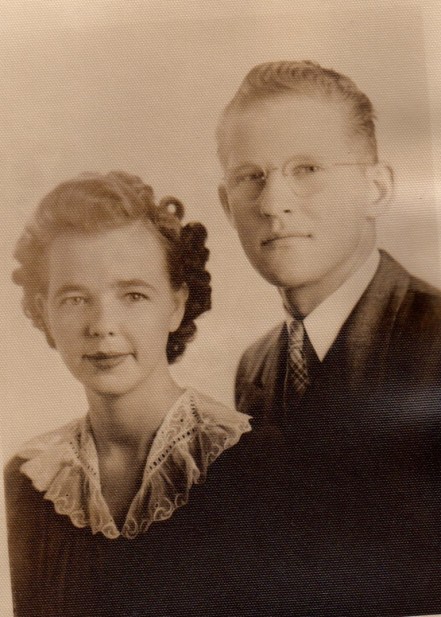
Dick and Ruby marry 1942
Men and women have coexisted in inequality for all of history. Treatment for women around the world is just now starting to bring the female population out of slavery to the male population. The serious wounds to culture, development and education can be healed, but only through a process of patience and forgiveness. In the developed world we struggle for equal pay, but in the third world females have a very hard time getting an education or determining their own fate. How do we make a path that will lead to respect and appreciation for both sexes in our societies? There are economic barriers as well as political practices that impede progress toward equality. Cultural beliefs about roles and appropriate careers change slowly without outside help. Figures show that educating women and making small business loans available to them is the best way to jump start local economies. Many great examples are popping up around the globe. Still, Boko Harum kidnaps and marries school girls. Violence against women continues, as does slavery and sex trafficking.
Tomorrow is Fathers Day, a time to commemorate the contributions of all fathers living and dead. I am extremely grateful all my forefathers survived in order that I might exist. I wonder about their politics. I have studied them throughout history and wonder about their secrets and inner beliefs. There is evidence of discord in some of my family history, between husbands and wives, but there are also examples of dedicated and happy families (according to history). My family was probably about average on the bliss and harmony scale.
I was fortunate to be born a boomer because women’s liberation as a socio/political movement in the United States gained momentum when I was a teen. I can clearly remember calling my father a male chauvinist pig when I was in high school, only partly joking. My parents wanted no liberation for my mother, but had mixed feelings about my own. They always said I could achieve anything, but still focused on dress code more than education. My mom scored some liberation in her 60’s because my parents took up hot air ballooning. Ruby was not only the ground crew, a sometime pilot, but most importantly, she could sew the balloon when it was damaged. My parents were exposed to younger people in the ballooning circles, and I noticed that my dad needed her as an equal in that situation. He started to treat her with a bit more respect in the balloon days. They were born in the 1920’s, so there was only so far they could be expected liberate. I suppose they went as far as they could toward equality.
My father had a stroke and pretty steep decline of his facilities which left him unable to handle finances. The problem was at that time my mom had never balanced their checkbook, let alone had any understanding of the investments/insurance/retirement plans they had. She was not really in shape to learn everything about finances at age 78. She learned Quicken and began to do the bill paying and simple tasks. I convinced them to move to Tucson to a retirement home so I could keep an eye on them. This worked well for a while until my dad’s health took another serious dive. He was in the hospital, looking very much like he might die when I asked him about his estate. He told me to ask his accountant. I called and learned that his accountant had no idea what all his assets were, or where they were. Neither did my dad. He did survive that scrape and lived for a few more years, but the crisis gave me the opportunity to find out that:
This reality hit me like a brick when I was already emotionally stressed about my dad and his near death. I managed to help them get their assets into a trust. By then they had to have separate property trusts drawn up to protect my mom from my father’s deeply speculative dealings. This was expensive, but the alternative was divorce after more than 60 years to protect my mom. The oil properties had to be legally described and placed into trust, then he stopped paying the cash calls. His lawyer told the partners he had nothing to contribute, which was true. Finally after about 3 years of negotiating the partners let him out of his obligations. I have no idea what happened to all the wells, but the deed was signed in Texas the day after my dad died in Tucson. His final act on earth was to be released from that piece of bad judgement.
My father believed that the price of oil could never go down over time. He plunged more money that he rationally had into that belief because he was a petroleum engineer. He had no financial sense, and by the time he started buying into those wells he had no sense of any kind. My mom had no protection and no way to guess how wacky his finances had become because he stayed in charge after he was incompetent. From that experience I learned a lot about finances and investments. Not only did I help them put their house in order and in trust, I put all my assets in trust. I am happy I learned enough to save my mother’s financial fate, and possibly my own. This Father’s Day I honor my dad and all his forefathers. Here’s hoping that their ideas of patrimony fade, for everyone’s sake.

Dick 1945

1000 Voices Speak for Compassion
Some very good examples were set for me early in life by teachers in school. My high school choir director extended great praise and patience to all his students. When you think about how awful a chorus of high schoolers can sound …..most of the time, this man was a true saint to struggle through each number until we finally could sing it. He loved music, and was still willing to hear it massacred year after year, day after day. He was generally good natured, and very dapper in his fashion. He was by far the best dressed teacher we had at our school, and seemed to be the most sophisticated somehow. He was generally fun and upbeat, but insisted on discipline in class. When he was upset with us he would say “Frank, C., Elephant, Coulter never forgets an infraction.” His stern delivery of that line was always enough to handle any issue. We never actually witnessed the elephant bring up past offenses. He worked to make our roles in the choir a constant source of pride and mutual understanding. He taught us all the value of practice, precision and harmony. He was a living example of patience as virtue.
As an adult I have been very fortunate to study in person with His Holiness the Dalai Lama of Tibet. He came to Tucson in September 1993 for a teaching on patience. That was my first introduction to the meditation practices of Tibetan Buddhism, which are complicated to say the least. I studied for a year previous to his visit to get some background and study under my belt before he arrived. He covered a lot of material and empowered us to Green Tara, all of which was new to me. The crash course was not intended to convey the entire teaching in a few days, but to instill the value of practice. Like my high school choir director, His Holiness teaches all kinds of people who have no previous experience or ability to meditate. He teaches each person and group from scratch, using the ancient texts on the Bodhisattva’s way of life. He reaches each mind according to the readiness of the student to comprehend. One question he took from an audience member was about the best way to begin a personal meditation practice. His answer was simple. He told her, “Be nice.”
Since 1993 I have made efforts to be nice, and have recognized that it is easier said than done. To transform anger into patience is the ultimate practice. If anger has no hold on your mind you are free. If what bothers you about people and life can be surmounted by a practice of patience in all things, you have reached Nirvana. This teaching, so pure, simple and true, provides a lifetime of practice. He taught us that the folks in your life who make you angry also teach you patience. They provide a special gift without which we could not become enlightened. Nipping anger in the bud, transforming it into patience, is compassion in action. Anger may be a natural sentiment, but it is helpful to nobody, least of all to the person who harbors it. Compassion is a conscious choice, starting with one’s own inner demeanor.
Each month on the 20th a round of compassion is raised here. Please join #1000Speak to add your voice to the choir.


Like his father Ebenezer served as Justice of the Peace in Fairfield County, Connecticut. He also served in the military and as deputy in the assembly. Late in life he married a very young woman.
Ebenezer Mead II was born in Greenwich on October 25, 1692, the eldest son of Ebenezer Mead and Sarah Knapp.
He was married on December 12, 1717, to Hannah Brown, the daughter of Peter Brown of Rye NY, and they had Ebenezer, Silas, Abraham, Jonas, Solomon, Deliverance, Amos, Edmund, Hannah, Jabez, Jared and Abraham.
On May 9, 1728, Ebenezer was commissioned a Lieutenant of the East Company, or Train-band, at Horseneck. On May 11, 1738, he was commissioned a Captain of the same company.
He was a Justice of the Peace for Fairfield County from 1733 to 1758, and was a deputy to the assembly in 1733, 1734, 1737 and 1738.
Late in life, in 1759, when he was approaching 70, he was married for a second time, this time to Naomi Weed, the daughter of Abraham Weed. She was about twenty years old at the time.
Ebenezer Mead’s will was dated June 3, 1772, and probated June 15, 1775. In it he mentions his wife Naomi and children Deliverance, Jared, Silas, Jonas, Solomon, Amos, Abraham, Jr.; his grandson Enoch Mead, granddaughter Hannah, and grandson Ebenezer, the children of his son Ebenezer, who had predeceased him. His executor was his son Jared. The witnesses were Daniel Smith, Joshua Smith, and Jesse Parsons.
Ebenezer Mead (1692 – 1775)
is my 7th great grandfather
Deacon Silas Meade (1730 – 1807)
son of Ebenezer Mead
Abner Mead (1749 – 1810)
son of Deacon Silas Meade
Martha Mead (1784 – 1860)
daughter of Abner Mead
Abner Morse (1808 – 1838)
son of Martha Mead
Daniel Rowland Morse (1838 – 1910)
son of Abner Morse
Jason A Morse (1862 – 1932)
son of Daniel Rowland Morse
Ernest Abner Morse (1890 – 1965)
son of Jason A Morse
Richard Arden Morse (1920 – 2004)
son of Ernest Abner Morse
Pamela Morse
I am the daughter of Richard Arden Morse
Summer is extreme in Tucson. We change many of our daily routines in order to deal with the heat and intense sun. In our household this means we seriously crank up our consumption of iced tea. We drink tea all year, usually iced, but in summer two of us consume gallons every day. I have been a highly satisfied customer of Adagio Teas for years. My orders have included fruit, herbal, and roiboos teas in the past. Recently I have read a lot about different kinds of teas, so I decided to expand my repertoire by tasting some new varieties. I have tried green tea in the past, but thought I did not like it. Perhaps I brewed it badly. I have become such a raving fan in a few weeks that I have given up my morning coffee. There is caffeine in green tea, so it does the job of waking me up, and my stomach seems to like it much better. I may return to coffee when winter comes, but for now I am very happy with my morning tea. Who knows how far I will take this exploration? I love the ritualistic treatment given to tea by the Asians, and the formality and style the Brits use when they serve tea. So far I have not developed any real tea drinking rituals, but one never knows how this could end.
The flavored varieties that converted me to a green tea lover are:
Cherry Green– this lively bright flavor is the one I choose for morning. It is delicious.
Calypso Green– This one has a hint of coconut and other tropical fruit, tasty for all day
I have also ordered some new green types to try and a green roiboos. Roiboos is probably my favorite flavor, and luckily it is extremely healthful. The green, unfermented roiboos is higher in antioxidants and other nutrients. It is very beneficial to the skin, and can be applied topically to heal burns and abrasions. After drinking healthy liquids all day and staying hydrated I have even found some green tea cocktails!!! At least one ingredient will be good for me!
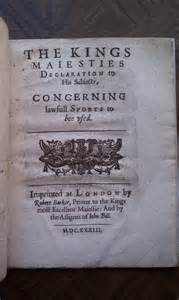
Book of Sports
When James I of England published the Book of Sports in 1617 it caused an uproar from the Puritans. The belief that no work or pleasure should take place on the sabbath was much debated at that time in Britain. The book was published after King James had his very own translation of the Bible released. Trouble was brewing in the British Isles that would eventually lead to the settlement of Plymouth Colony. The Puritans believed that all citizens must be required to attend religious services on Sunday, and they wanted them mandatory morning and evening on that day. Many of my own ancestors left England to live in Holland for a decade about that time, before sailing on the Mayflower to America. All the countries in Europe posed problems to their ideals except the Netherlands. There they could practice their severe brand of religion. There they built up strength to go to the new world.
The concept is taught to American children that these people came to America for religious freedom. That is only partially the case. They wanted to be free to dominate others and force them to follow Puritan rules. The freedom was just for their own religious beliefs, but did not apply to the beliefs of others. They were convinced of the righteousness of their logic. This made life in the new colony very contentious. It was easy to run afoul of the Pilgrim fathers who were all about sabbath and strict adherence.
Charles I reissued the Declaration of Sports in 1633, continuing the tradition of requiring attendance to religious services (in the Church of England) to qualify to dance, leap, or play sports on Sunday. There were a few sports not permitted on the sabbath such as bear and bull baiting and bowling. Charles I expanded the merriment to include local fairs and festivals on the list of sanctioned Sunday activities. England was trending Puritan in the 1630’s. In 1643 the book was publicly burned. When Charles II was restored to the throne after the English Civil War in 1660 the country was liberated from the strict sabbath rules and could once again party on Sunday afternoons.
When we think about sports and religion in America today we observe a very different story. Church attendance and membership are dropping off dramatically, but sports dominate the public attention. It is ironic to think that our initial colony was founded to make sure that Sunday would be sport free for everyone. I wonder what the Pilgrim fathers would think of the NFL and the NBA.
The term community policing has been tossed around in the media lately by experts and citizens of all kinds. This trending topic has been defined by the US Department of Justice:
Community policing is a philosophy that promotes organizational strategies, which support the systematic use of partnerships and problem-solving techniques, to proactively address the immediate conditions that give rise to public safety issues such as crime, social disorder, and fear of crime. Community policing is composed of three key components:
Partnerships – Collaborative partnerships between the law enforcement agency and the individuals and organizations they serve to develop solutions to problems and increase trust in police.
Organizational Transformation – The alignment of organizational management, structure, personnel, and information systems to support community partnerships and proactive problem solving.
Problem Solving – The process of engaging in the proactive and systematic examination of identified problems to develop and evaluate effective responses.
I hope incorporation of these policies will take place as soon as possible. Within the organizational transformation plan is a geographic approach to assignments. In other words, provide neighborhood cops who know and interact with a certain area by assigning them to that area. This is essential in my opinion, and would be helpful where I live. The advice given is to despecialize the force, creating a more generally skilled team to handle most situations. Problem solving and cooperation with the public have been missing elements to improving the safety in our city. Obvious ongoing crime would be obvious to any cop who patrolled here all the time. The force would see what we see, and even become known to the neighbors. These concepts will improve safety for both officers and the public.

Elizabeth Stafford
My 15th great-grandmother was married to a duke who treated her very badly. She was involved with court intrigue during the reign of Henry VIII.
Elizabeth Stafford was the daughter of Edward, 3rd duke of Buckingham (February 3,1478-May 17,1521) and Eleanor Percy (1470-1530). Robert Hutchinson’s House of Treason gives alternate life dates as 1493-September 4, 1558. Elizabeth was to have married one of her father’s wards, Ralph Neville, earl of Westmorland, at Christmas 1512, but shortly before that she acquired a new suitor in the person of the recently widowed Thomas Howard, earl of Surrey (1473-August 25,1554).
Buckingham offered his other daughters to Sussex, but the earl was determined to have Elizabeth, described by Jessie Childs in Henry VIII’s Last Victim: The Life and Times of Henry Howard, Earl of Surrey as “…passably pretty, with soft features, light colouring and a distinguished forehead….”
Early in 1513, Elizabeth married Surrey, bringing with her a dowry of 2,000 marks. They had five children:
Henry (1517-x.January 19,1547),
Mary (1519-December 9,1557),
Charles (d.yng),
Thomas (1528-1582), and a fifth child who died young and may have been named Muriel.
Elizabeth was often at court and became close friends with Catherine of Aragon. She carried Princess Mary to the font at the princess’s christening in 1516 and was a patron of the poet John Skelton, who describes Elizabeth and her ladies making a chapelet in the poem “A Goodly Garlande or Chapelet of Laurell.” When the earl of Surrey was appointed Lord Lieutenant of Ireland in 1520, he was ordered to take his entire family with him.
There they were exposed to war, disease, crowded conditions, and severe shortages of just about everything. To make matters worse, during their sojourn in Ireland, Elizabeth’s father was accused of treason and beheaded. In 1524, with the death of her father-in-law, Elizabeth became duchess of Norfolk. She continued to serve as a lady-in-waiting to the queen, at court for months at a time, but with the king’s growing determination to obtain a divorce, her role changed.
By 1530, Elizabeth was spying on her own husband, on the lookout for any information that would help Queen Catherine. By then, there were also problems in Elizabeth’s marriage. In 1526, Norfolk took Bess Holland, daughter of his chief steward, as his mistress, a long-term relationship which he did not trouble to keep secret from his wife.
Elizabeth continued to be vocal in her support of Catherine of Aragon. Norfolk, and most of the Howard family, favored the king’s plan to marry Anne Boleyn, whose mother was a Howard. Elizabeth went so far as to refuse to bear Anne’s train at her investiture as Marchioness of Pembroke and was conspicuously absent from both Anne’s coronation and the christening of Princess Elizabeth. In May,1533, Norfolk wrote to Elizabeth’s brother, Henry Stafford, asking him to take her in. Stafford refused, expressing the fear that “…her accustomed wild language…” would place him and his family in danger if he did so.
The matter came to a head on Tuesday of Passion Week, 1534. Norfolk arrived at Kenninghall, his principal residence, to find his wife in a rage because he was still keeping Bess Holland as his mistress. Norfolk’s response was to lock Elizabeth in her chamber, then banish her to Redbourne, a manor in Hertfordshire. Elizabeth referred to this as imprisonment, even though she had twenty servants and an allowance of three hundred marks per annum.
Legally Norfolk was within his rights to do as he wished with her. She tried three times for a reconciliation, but to no avail. Norfolk was not about to forgive some of the claims she had made, including one that he had assaulted her when she was pregnant with their daughter in 1519. Some of the charges may indeed have been “false and abominable lies,” but Norfolk was known to have a temper, too. In 1541, Elizabeth was still trying to regain freedom of movement, as well as a bigger allowance.
Her children, to her distress, sided with their father. Indeed, most people did. Wives were expected to put up with their husbands’ infidelities, not make a fuss about them. Upon Mary Tudor’s accession, Elizabeth returned to court and there was reunited with her husband, who had been in the Tower of London since 1547. He died at Kenninghall the following August.
Although both Elizabeth and Norfolk appear in effigy on the same monument in Framlingham, completed in 1559, only he is buried there. She was interred in the Howard Chapel in St. Mary’s Church, Lambeth, in December 1558. The epitaph written by her brother lauds her kindness and says she was to him “a mother, sister, a friend most dear.”
Biography:
“Marriage Sixteenth-Century Style: Elizabeth Stafford and the Third Duke of Norfolk” by Barbara J. Harris in Journal of Social History, 15/3 (1982).
Source– A WHO’S WHO OF TUDOR WOMEN: Stafford
Elizabeth Dutchess Norfolk Stafford Howard (1497 – 1558)
is my 15th great grandmother
Lady Katherine Howard Duchess Bridgewater (1495 – 1554)
daughter of Elizabeth Dutchess Norfolk Stafford Howard
William ApRhys (1522 – 1588)
son of Lady Katherine Howard Duchess Bridgewater
Henry Rice (1555 – 1621)
son of William ApRhys
Edmund Rice (1594 – 1663)
son of Henry Rice
Edward Rice (1622 – 1712)
son of Edmund Rice
Lydia Rice (1649 – 1723)
daughter of Edward Rice
Lydia Woods (1672 – 1738)
daughter of Lydia Rice
Lydia Eager (1696 – 1735)
daughter of Lydia Woods
Mary Thomas (1729 – 1801)
daughter of Lydia Eager
Joseph Morse III (1756 – 1835)
son of Mary Thomas
John Henry Morse (1775 – 1864)
son of Joseph Morse III
Abner Morse (1808 – 1838)
son of John Henry Morse
Daniel Rowland Morse (1838 – 1910)
son of Abner Morse
Jason A Morse (1862 – 1932)
son of Daniel Rowland Morse
Ernest Abner Morse (1890 – 1965)
son of Jason A Morse
Richard Arden Morse (1920 – 2004)
son of Ernest Abner Morse
Pamela Morse
I am the daughter of Richard Arden Morse
Elizabeth Howard (nee Stafford) (1494- 30 November1558) was the daughter of Edward Stafford, 3rd Duke of Buckingham and the wife of Thomas Howard, 3rd Duke of Norfolk.
Elizabeth was born in 1494, the eldest daughter of Edward Stafford, 3rd Duke of Buckingham (3 September1478-1521 and Eleanor Percy. Her paternal grandparents were Henry Stafford, 2nd Duke of Buckingham and Catherine Woodville. Her maternal ancestors were Henry Percy, 4th Earl of Northumberland and Maud Herbert. Her grandfather, the Duke of Buckingham, was executed in 1483 by King Richard III for treason, and in 1521, her own father suffered the same fate when he was beheaded on Tower Hill for treason against his king, Henry VIII. Elizabeth had two sisters, Mary, Lady Bergavenny and Catherine, Countess Westmoreland, and a brother, Henry Stafford, 1st Baron Stafford.
On 8 January1513, Elizabeth married Thomas Howard, earl of Surrey, who in 1524, would become the 3rd Duke of Norfolk. The marriage was his second. His first wife had been Anne of York, the daughter of Edward IV, but none of their children had lived beyond early infancy. Elizabeth bore her husband four surviving children but their marriage was unhappy and violent. He had taken as his mistress Bess Holland, who was her own laundress, and when Elizabeth protested, calling her “a churl’s daughter who was but a washer in my nursery for eight years” Howard savagely beat her. She later accused his mistress of striking her. They separated in 1533, the year Howard’s niece, Anne Boleyn, was crowned Queen of England. Elizabeth did not like Anne and was staunchly partisan in favour of Catherine of Aragon. In 1530, Elizabeth smuggled letters received from Italy to Catherine concealed in oranges Elizabeth also later told the Spanish Ambassador, Eustace Chapuys, that Howard had confided in her that “Anne would be the ruin of all her family”.. Anne, however, managed to win the favour of Elizabeth by arranging brilliant matches for the Howard children. Henry was married to the daughter of the Earl of Oxford, while Mary married the King’s illegitimate son, Henry FitzRoy, 1st Duke of Richmond and Somerset. Appeased, Elizabeth stopped plotting against Anne and returned to Court. She died on 30 November 1558 in Lambeth, London at the age of sixty-four. Elizabeth was the Dowager Duchess of Norfolk at the time of her death, her estranged husband, the Duke, having died four years earlier. She was buried on 7 December 1558 in Lambeth.
Elizabeth was often at court and became close friends with Catherine of Aragon. She carried Princess Mary to the font at the princess’s christening in 1516.
Elizabeth Stafford, Duchess of Norfolk, wife of Anne Boleyn’s uncle Thomas Howard, Duke of Norfolk

Elizabeth Stafford

sky
The systems now available to measure and monitor health are mind blowing. This slice of health care/technology is growing more popular each day. I started using Fitbit last fall to increase my movement. It is effective motivation to see performance increase over time, complete with graphs. I recently became most interested in the sleep measuring ability of my little wrist band.

MY SLEEP LOG
As you can see I am frequently awakened during the night. My dog needs to go out and I must walk down a flight of stairs to do the task, so it does disturb my slumber. I am working this week to push back towards longer deeper sleep by using honey. Last night on the 3rd trip down with the dog I drank a shot of honey and warm milk, which seemed to work pretty well. I am also napping after lunch when possible because at that time I zonk out easily. I do not pay for the advanced membership to Fitbit that provides constant reports and comparisons to your age group in the population. However, I am taking advantage of the offer to create a one week report for free. My results will be final on Saturday, and graphed. I feel very competitive and funny about this challenge. I want to see an improvement in my sleep in one week. This may prove to be irrational as a goal, but I am still trying it. I wonder if I can will myself to be a better sleeper in the long run. Over the last three days I have managed to increase my total time, but without the naps it would not have been the case. This is one challenge for which gearing up is against my better interests. How does one become a sleep champion?
Do you use any fitness monitoring devices or apps? Have you found the feedback helpful in changing your habits? What kind of sleep secrets have you learned, gentle reader? I am on a quest for better rest.
 mermaidcamp